Astronomy forum Connect with fellow astronomy enthusiasts!
Get started
Skip to content
Astronomy Magazine logo
  • Login / Register
  • Logout
  • Shop
  • Subscribe

  • News
  • Science
    • Solar System
    • Exoplanets
    • Stars
    • Milky Way
    • Galaxies
    • Exotic Objects
    • Cosmology
  • Observing
    • In The Sky
    • Upcoming Events
    • The Sun
    • The Moon
    • Planets
    • Comets
    • Deep-Sky Objects
    • Observing Basics
    • Telescopes and Equipment
    • Astrophotography
    • Gear Guide
    • This Week in Astronomy
  • Space Exploration
    • What’s Launching This Week
    • Human Spaceflight
    • Robotic Spaceflight
  • The Magazine
  • Ask Astro
  • Star Products
  • Login / Register
  • Logout
  • Shop
  • Subscribe

Observing

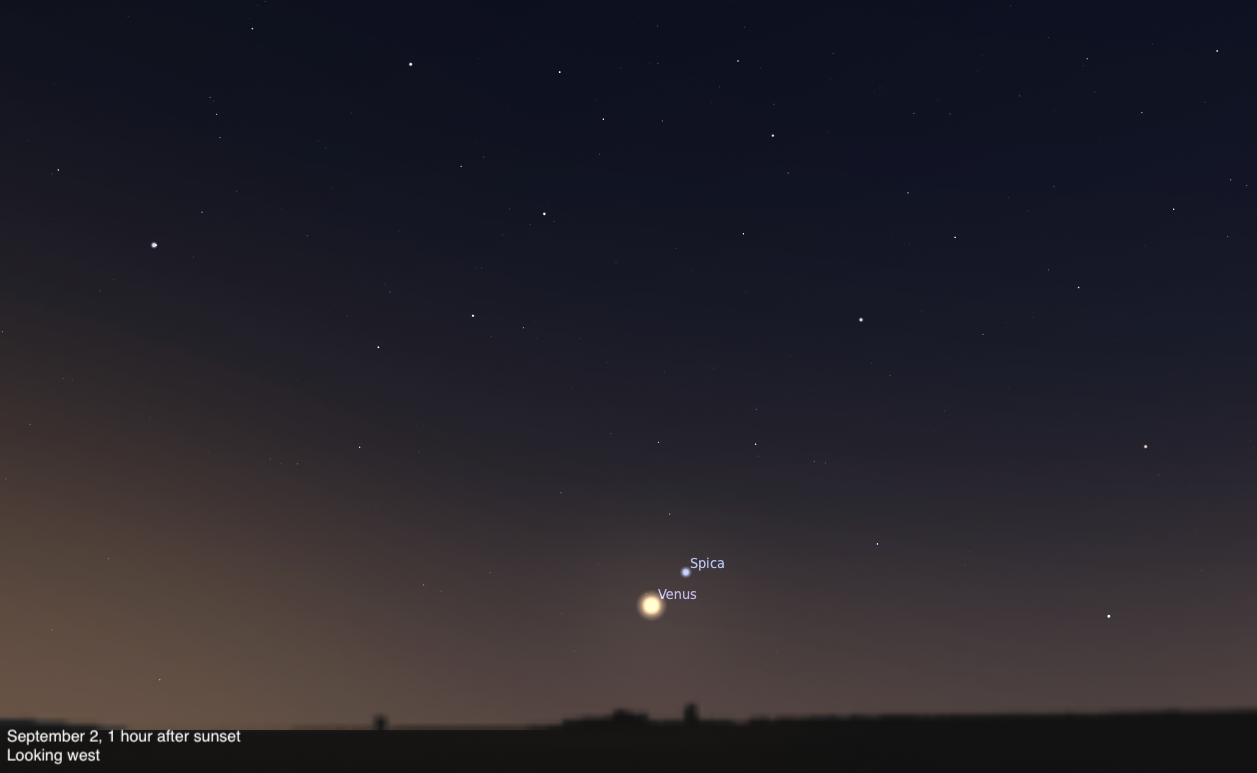
A sky chart showing the western sky on September 2, 2026, one hour after sunset. Venus shines brilliantly low in the center of the image, with the star Spica labeled as a smaller blue-white point just above it. Compared to two nights prior, both objects have shifted noticeably lower toward the horizon. The sky fades from deep blue-black above to a warm brown-orange twilight glow near the dark horizon silhouette.
Observing

The Sky Today on Wednesday, September 2: Venus south of Spica

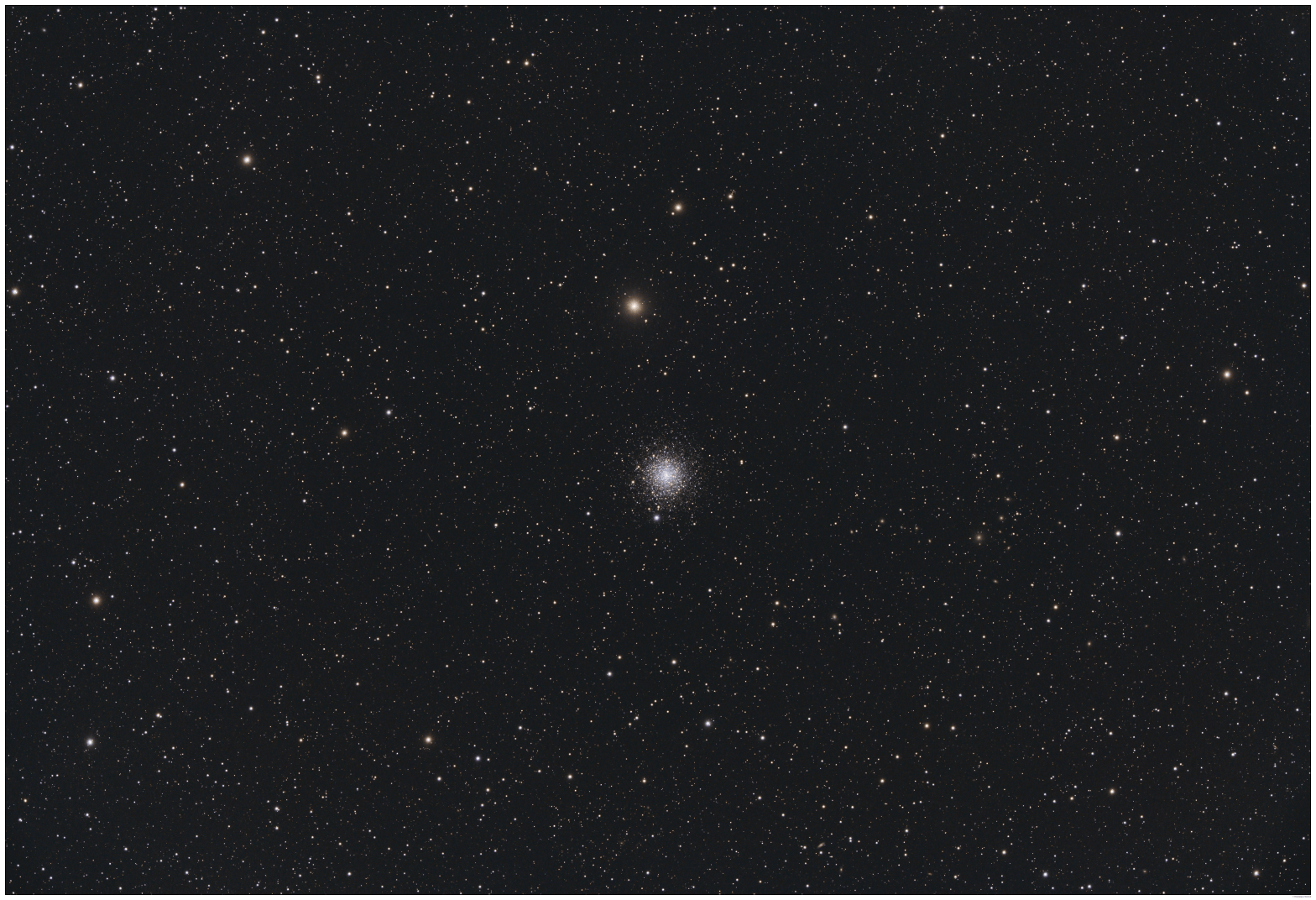
A telescopic photograph of M30, a globular cluster appearing as a compact, dense ball of white and blue-white stars near the center of the image, with a bright yellow-orange foreground star visible just above it. The cluster is set against a black sky scattered with numerous orange, yellow, and white foreground stars of varying brightness.
Observing

The Sky Today on Tuesday, September 1: Visit globular cluster M30

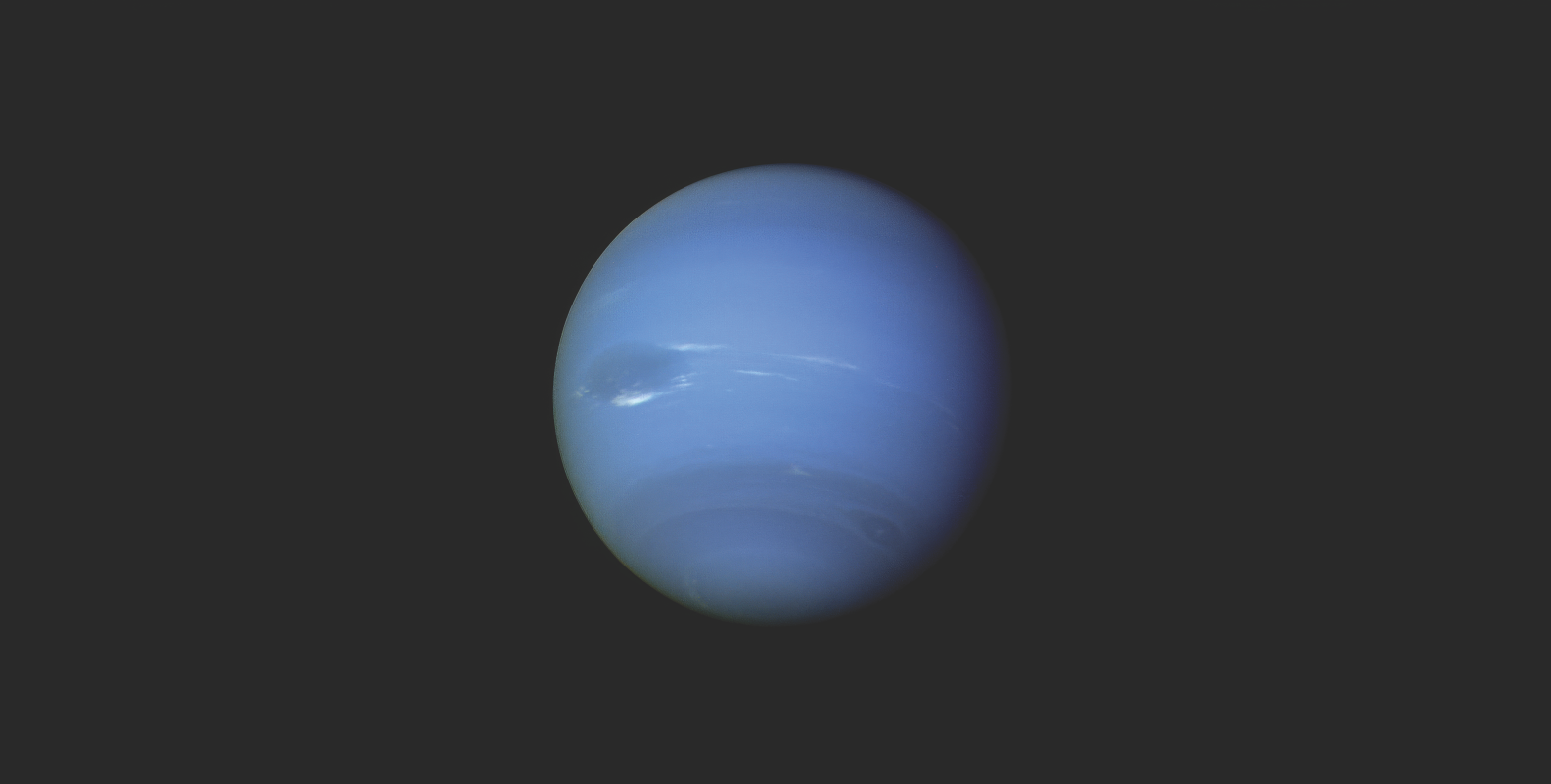
A pale blue Neptune centered against a dark gray background, showing faint darker banding and a bright wispy cloud feature near its equator.
Observing

September 2026: What’s in the sky this month?

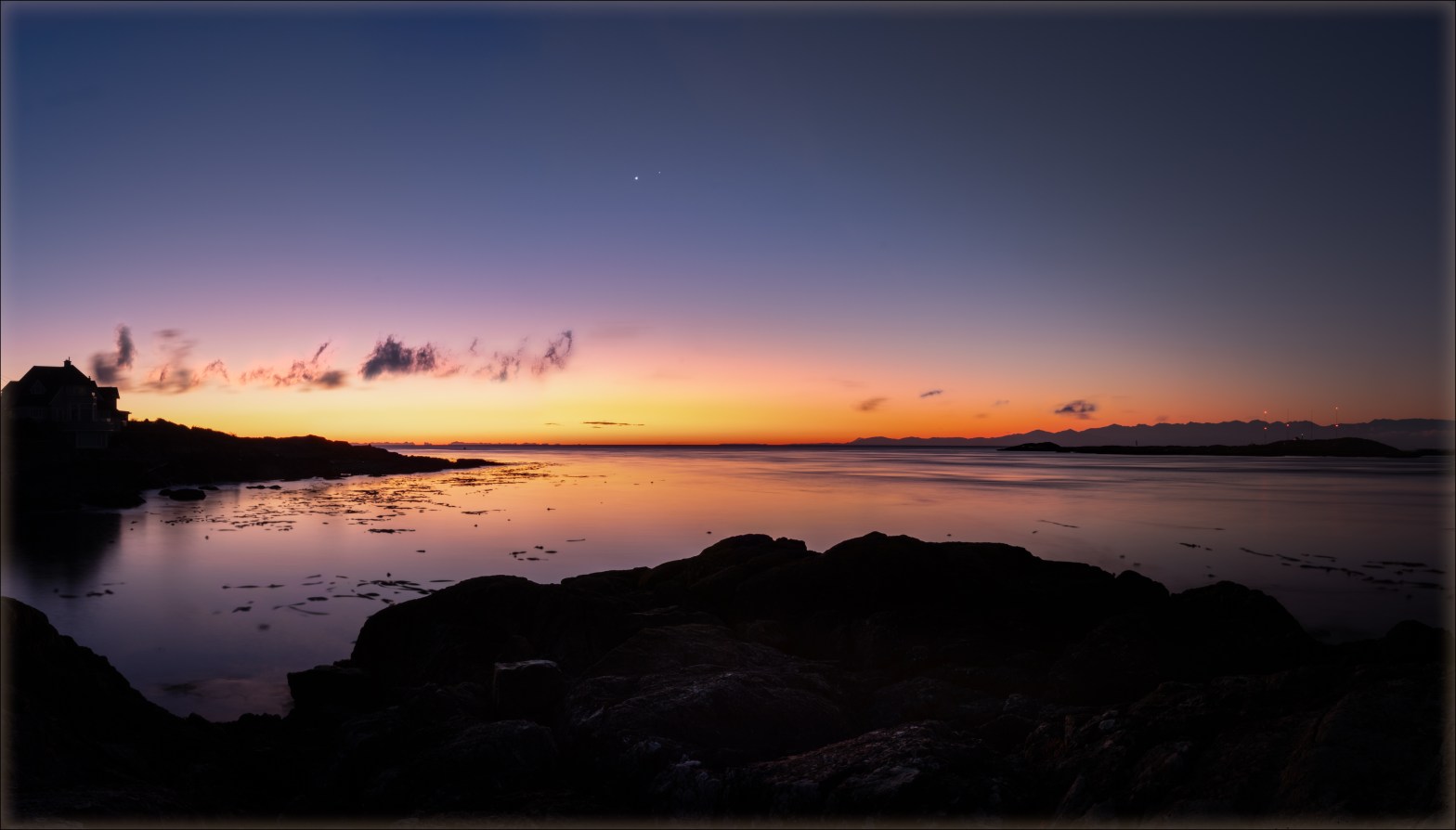
Bright Venus and the star Spica shine close together in a twilight sky over the Salish Sea, above a colorful orange-to-blue sunset gradient, with silhouetted rocky shoreline, a house, and distant mountains reflected in the calm water below.
Observing

September 2026: What’s in the Southern Hemisphere sky this month?

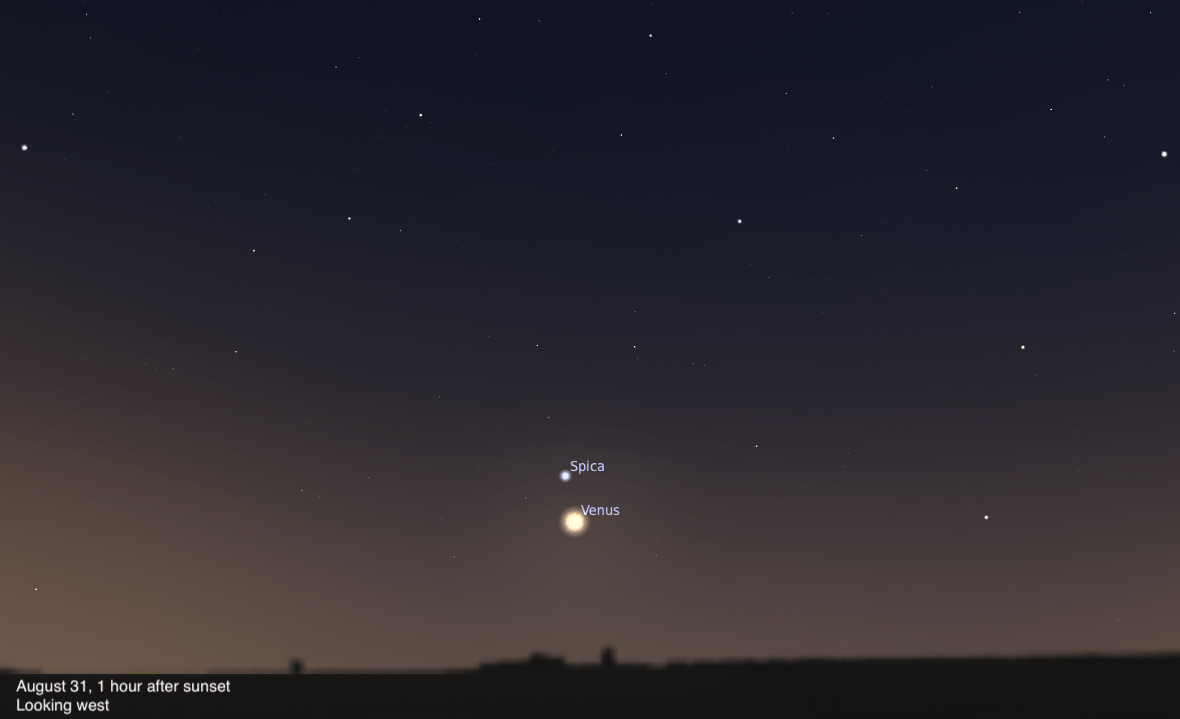
A sky chart showing the western sky on August 31, 2026, one hour after sunset. Venus shines brilliantly in the lower center of the image, with the star Spica labeled as a smaller blue-white point just above it. The sky fades from deep blue-black above to a warm brown-orange twilight glow near the dark horizon silhouette.
Observing

The Sky Today on Monday, August 31: Venus and Spica gather close

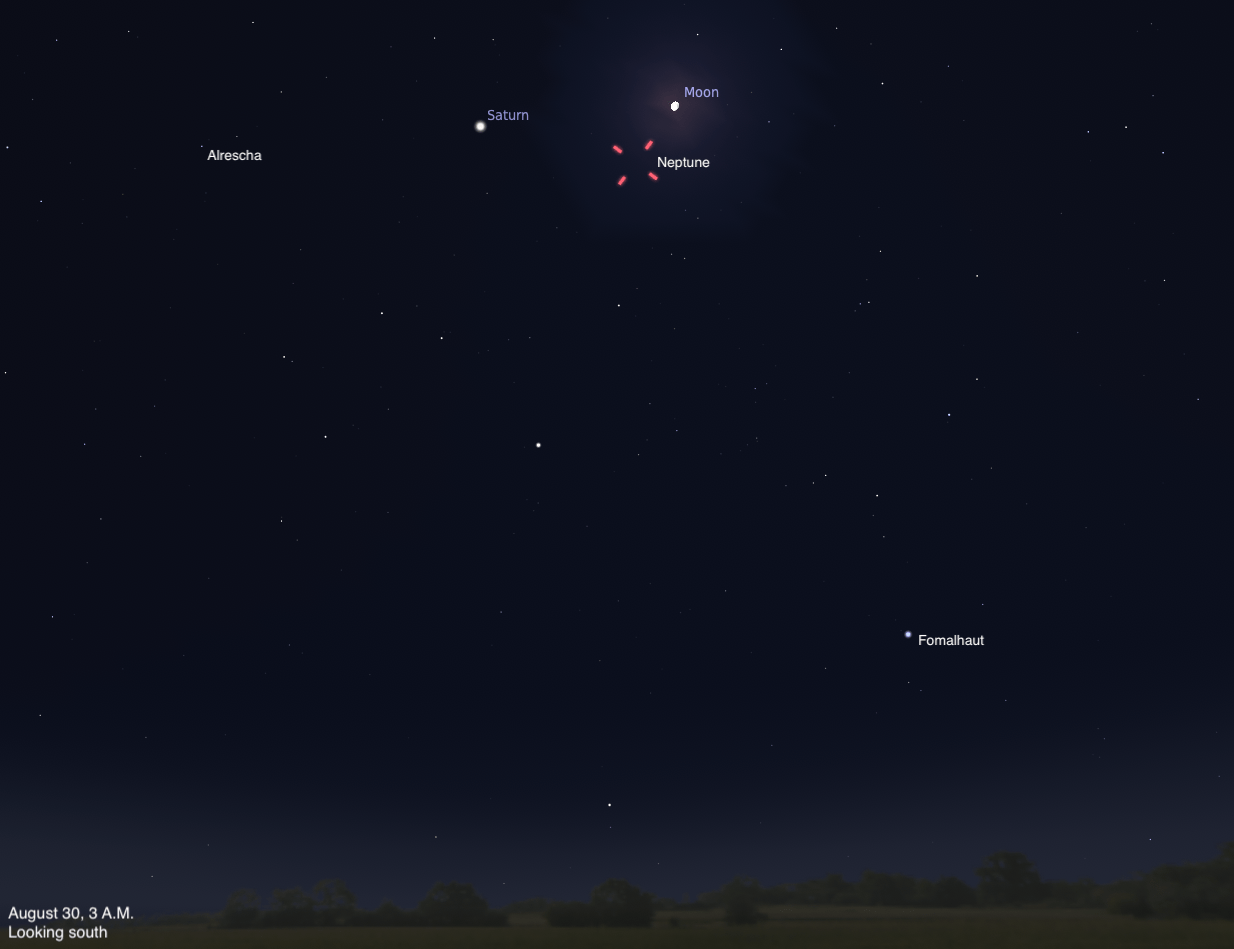
A sky chart showing the southern sky on August 30, 2026, at 3 A.M. The Moon glows brightly near the top center with Neptune highlighted by a red dashed circle just below it. Saturn is labeled as a bright point to the upper left. Fomalhaut is visible as a faint point in the lower right. The sky is deep blue-black, fading to a slightly lighter tone near the dark treeline silhouette along the bottom.
Observing

The Sky Today on Sunday, August 30: The Moon, Neptune, and Saturn

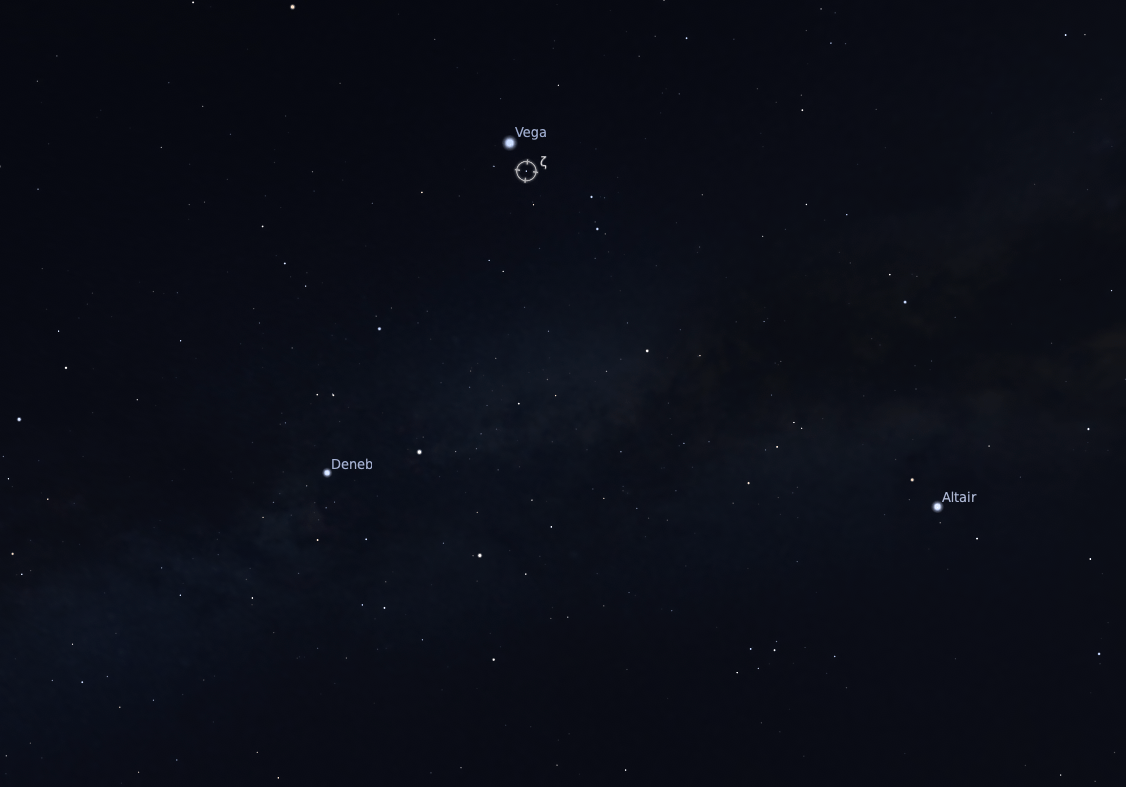
A sky chart showing the Summer Triangle asterism against a dark blue starry sky with a faint band of the Milky Way visible across the center. Vega is labeled near the top center and highlighted with a circular marker indicating Zeta (ζ) Lyrae just below it. Deneb is labeled to the lower left and Altair to the lower right. The background shows the diffuse glow of the Milky Way passing between the three stars.
Observing

The Sky Today on Saturday, August 29: Double star Zeta Lyrae

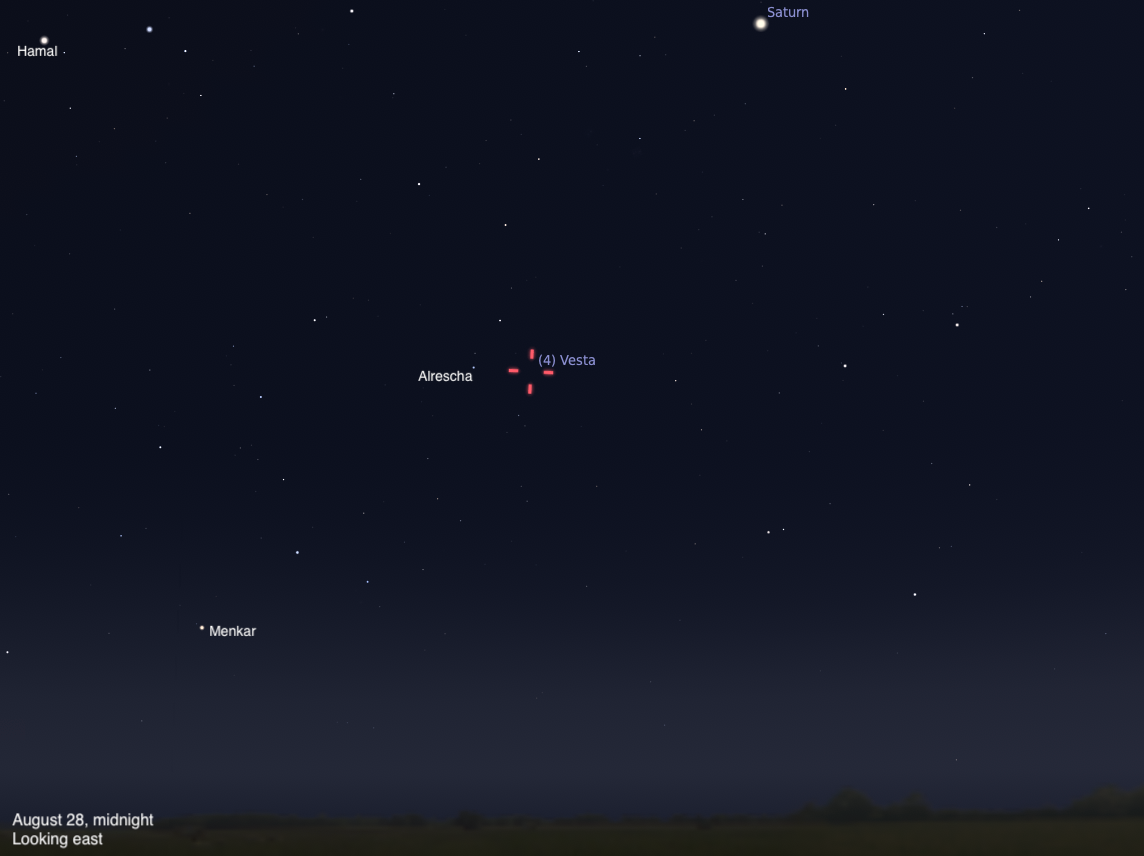
A sky chart showing the eastern sky on August 28, 2026, at midnight. The asteroid Vesta is highlighted with a red crosshair marker near the center of the image, labeled "(4) Vesta," with the star Alrescha labeled just to its left. Saturn glows as a bright point in the upper right, and the stars Hamal and Menkar are labeled in the upper and lower left respectively. The sky fades from deep blue-black above to a subtle twilight glow near the dark horizon silhouette.
Observing

The Sky Today on Friday, August 28: Vesta stands still

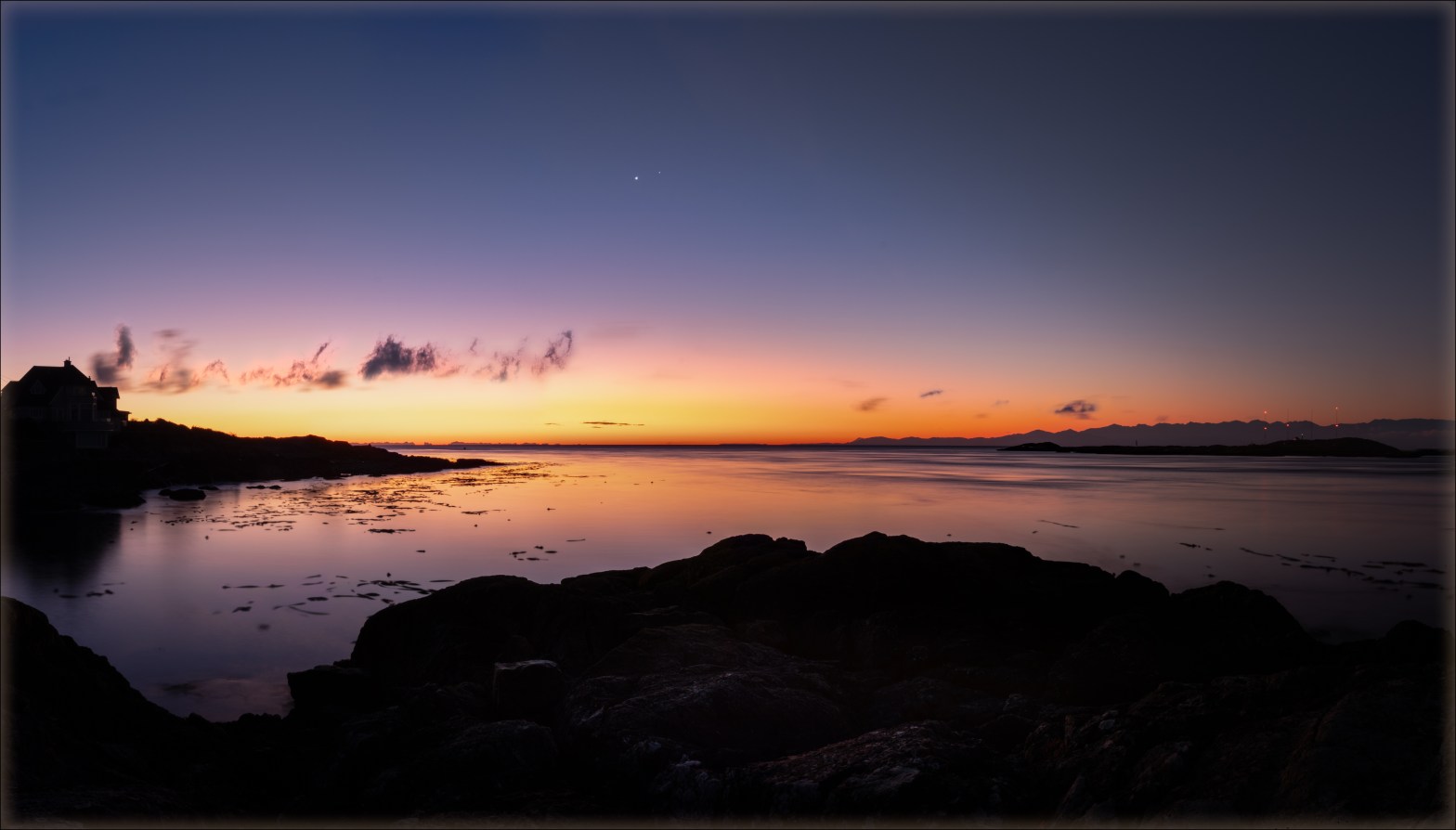
A panoramic twilight photograph taken along the rocky shore of the Salish Sea, looking west across calm water that mirrors the vivid sunset colors. Venus and Spica are visible as two close points of light in the deep blue sky above the center of the scene. The horizon glows in brilliant bands of orange and yellow, fading upward through purple to deep blue, with silhouetted clouds stretched across the middle sky. A silhouetted house is visible on the left, dark rocky outcroppings frame the foreground, and a distant mountain range is outlined against the orange glow on the right.
Sky This Week, The Sky This Week

The Sky This Week from August 28 to September 4: Venus and Spica meet

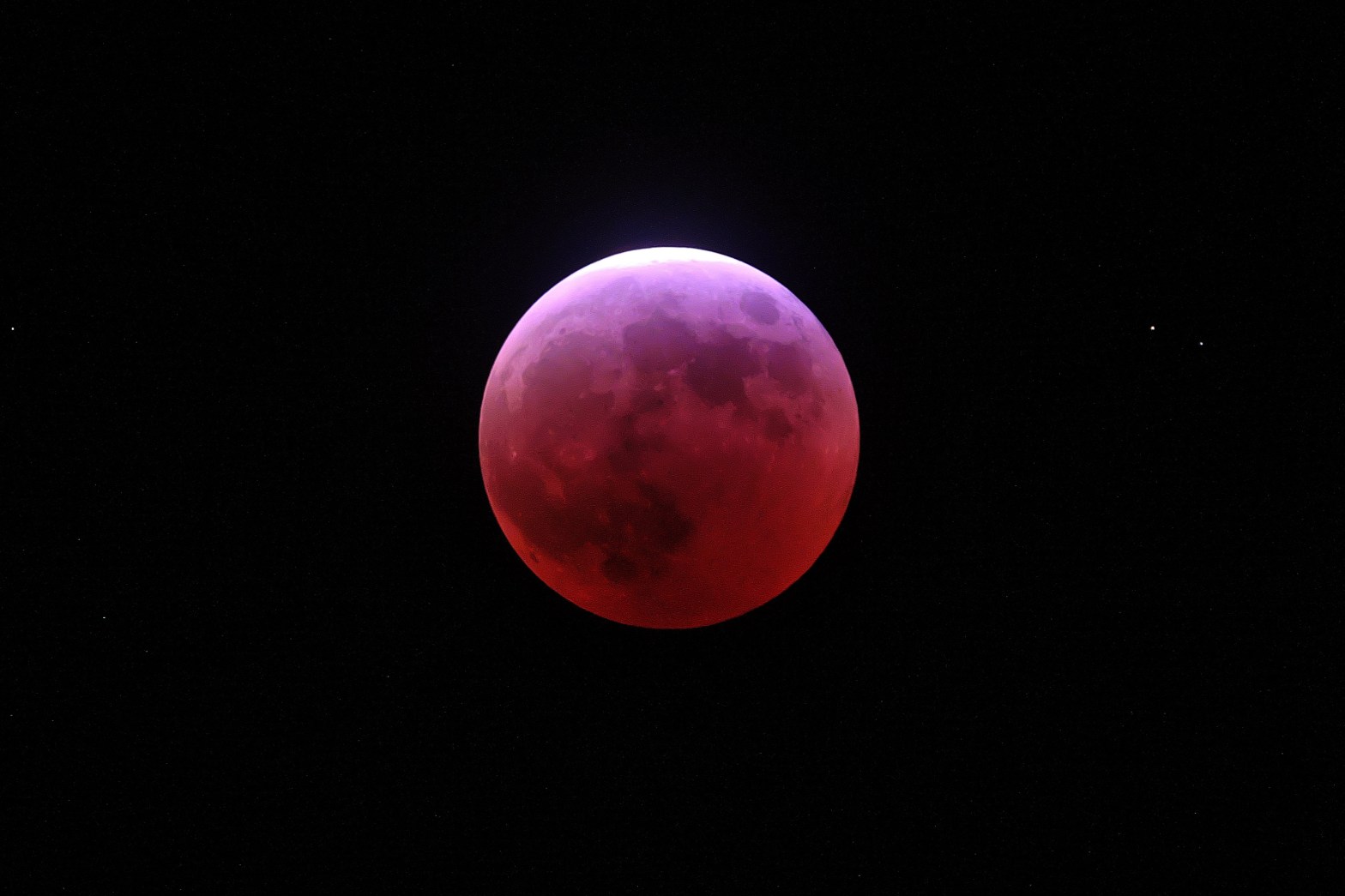
A photograph of a total lunar eclipse showing the Moon glowing in deep red and crimson hues — a blood moon — against a black sky. The Moon's surface features, including its darker maria regions, are still faintly visible through the red coloration. A thin sliver of brighter bluish-white light is visible along the upper edge, suggesting the Moon is just beginning to exit or enter Earth's umbral shadow.
Observing

The Sky Today on Thursday, August 27: A deep partial lunar eclipse

Astrophotography, Telescopes and Equipment

ZWO unveils the Seestar S50 Pro

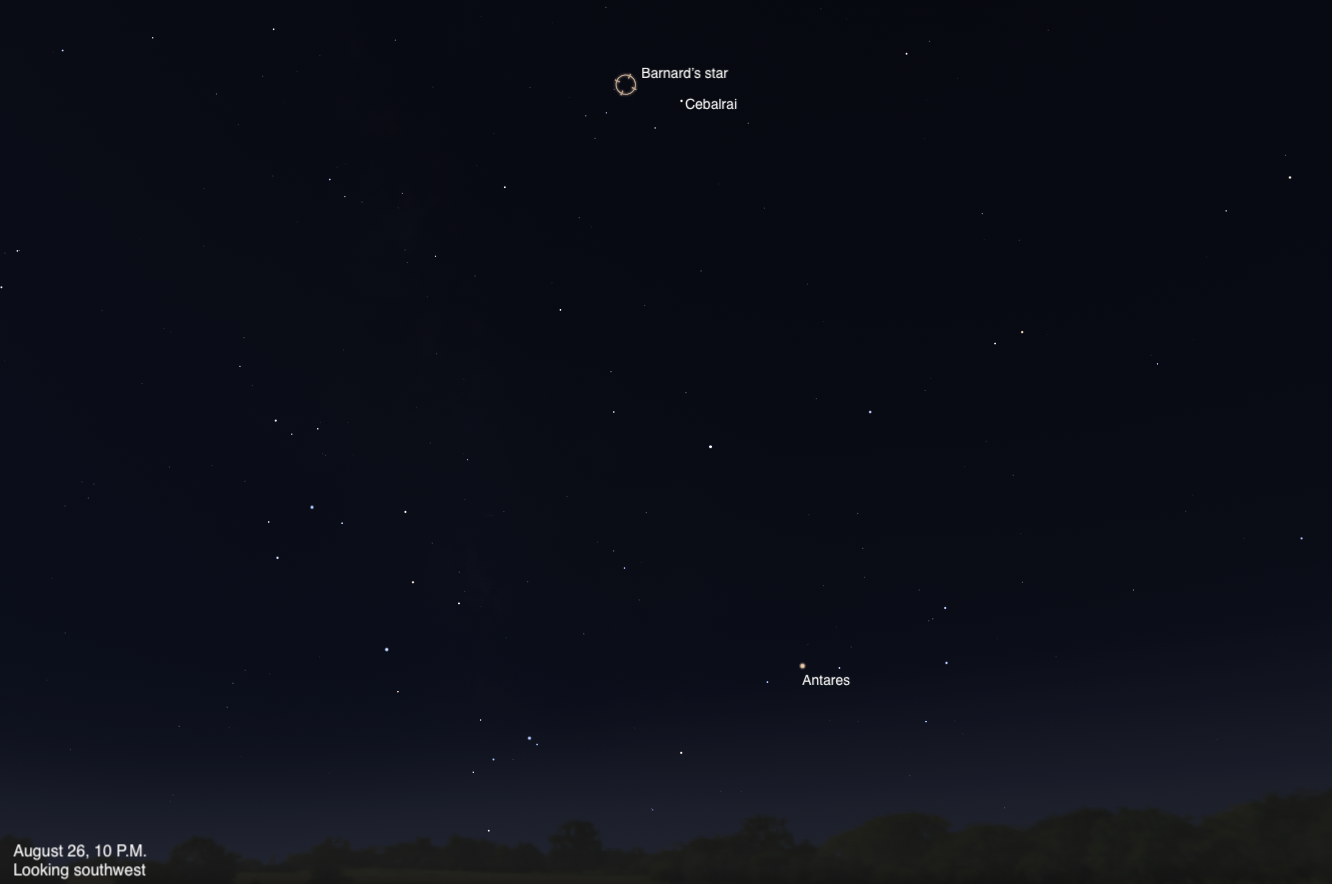
A sky chart showing the southwestern sky on August 26, 2026, at 10 P.M. Barnard's Star is highlighted with a circular marker near the top center, with the nearby star Cebalrai labeled just below it. The red supergiant Antares glows orange in the lower right. The sky is deep blue-black, fading to a slightly lighter tone near the dark treeline silhouette along the bottom.
Observing

The Sky Today on Wednesday, August 26: Catch Barnard’s star

Posts pagination

Newer posts 1 … 3 4 5 6 7 … 144 Older posts

Astronomy Newsletter

Get newsletters, updates and special offers via email from Astronomy.com!

Please enter a valid email address.
Astronomy Magazine logo
  • Facebook
  • LinkedIn
  • YouTube
  • Instagram
  • Twitter
  • About Us
  • Contact Us
  • Subscribe
  • Customer Service
  • Advertising
  • Terms of Use
  • Privacy Policy
  • Do Not Sell

@ 2025 Firecrown Media. All Rights Reserved.

More Sites from Firecrown Media Publisher logo
Scroll to Top

Sign In

New User? Create an Account

Why Sign In? Subscribers can access their digital magazine issues, and registered users can participate in our Community forums and galleries.

Please enter your email.
Please enter your password.

Lost your password?

Manage My AccountCustomer Support