Looking for a sky event this week? Check out our full Sky This Week column.
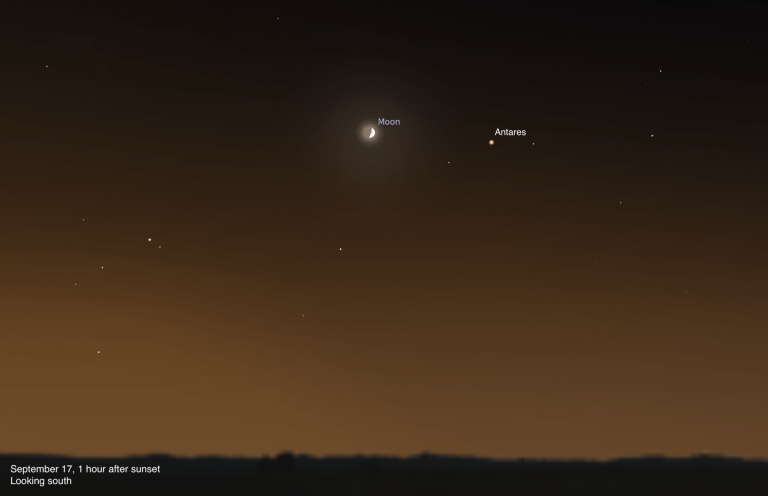
September 17: The Moon and the Scorpion
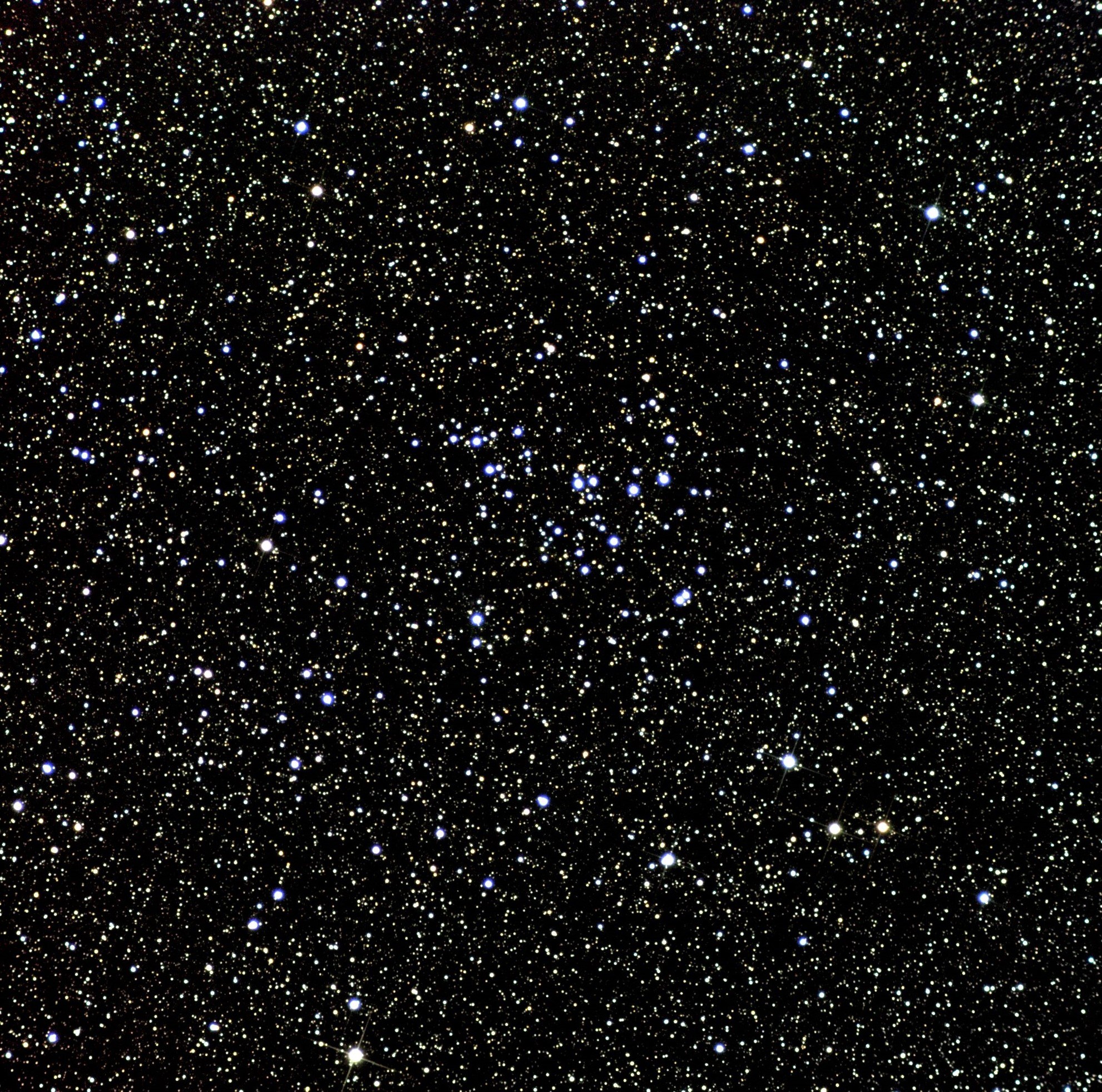
High in the eastern sky this evening you’ll find the zig-zagging constellation Lacerta, home to several lovely and relatively bright open star clusters. Tonight, let’s check out the brightest of those: magnitude 6.4 NGC 7243, also known as Caldwell 16.
A great small-telescope target, NGC 7243 is located about 2.6° west of magnitude 3.8 Alpha (α) Lacertae. It’s visible to the naked eye under dark conditions as a hazy patch of light, so once the Moon sets, see if you can spot it first without optical aid before swinging your telescope up for a better view. Stretching 21′ across, NGC 7243 will show several dozen stars in a small scope, with more becoming visible the larger your aperture. Its brightest star happens to sit right in the center of the cluster, shining at 8th magnitude.
This young group of stars lies nearly 2,900 light-years from Earth and is an estimated 250 million years old.
Sunrise: 6:44 A.M.
Sunset: 7:04 P.M.
Moonrise: 2:35 P.M.
Moonset: 11:20 P.M.
Moon Phase: Waxing gibbous (53%)
*Times for sunrise, sunset, moonrise, and moonset are given in local time from 40° N 90° W. The Moon’s illumination is given at 10 P.M. local time from the same location.
Alison Klesman is senior editor of Astronomy magazine. She holds a Ph.D. in astronomy and has studied a variety of topics, from minor planets to supermassive black holes.