Looking for a sky event this week? Check out our full Sky This Week column.
September 13: Venus, the Moon, and Spica
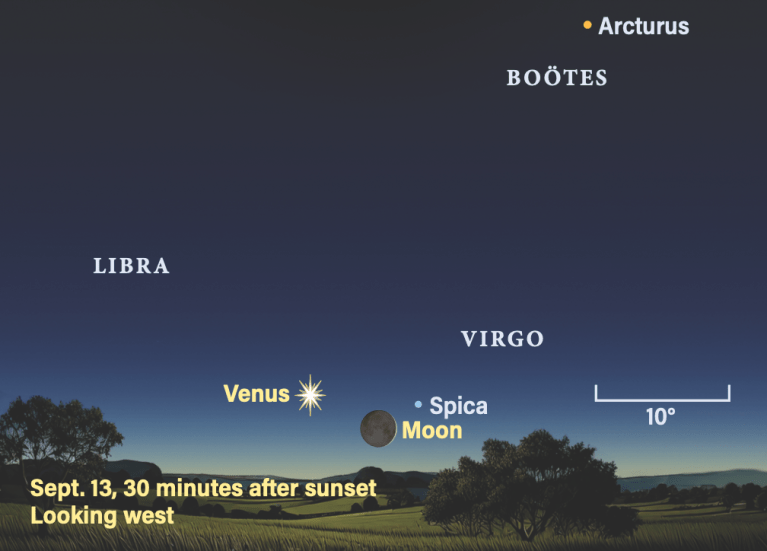
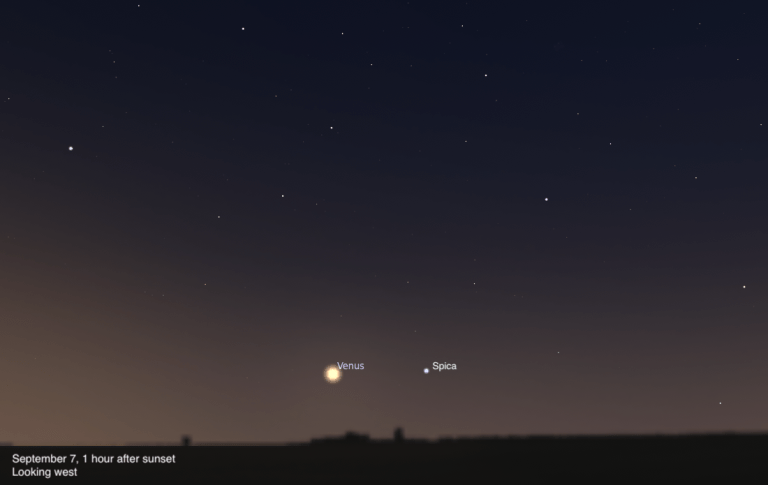
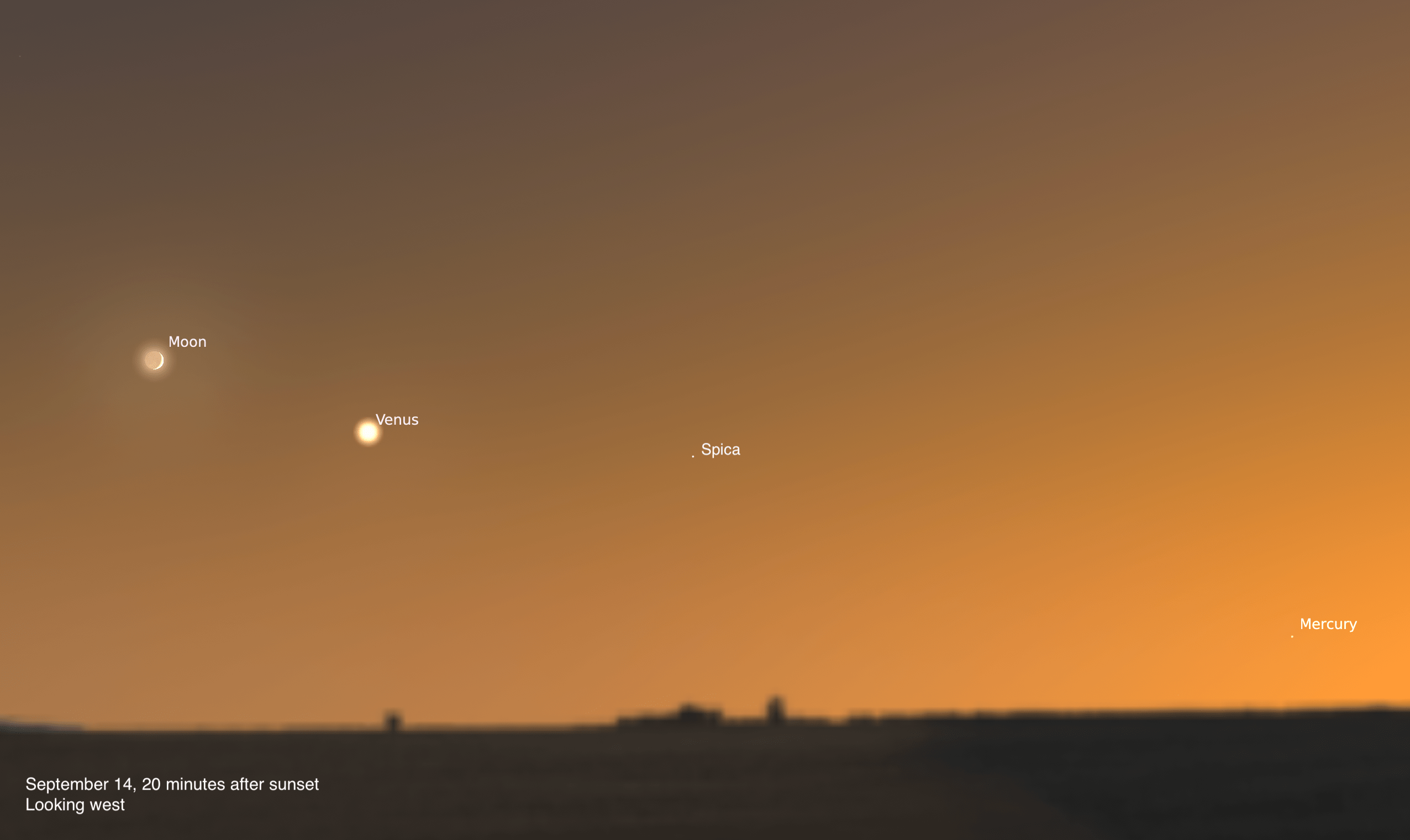
The Moon passes 0.5° due north of Venus at 7 A.M. EDT. In the evening sky, the pair is now standing in line with the tiny planet Mercury and the bright star Spica. If you caught the view last night, when Venus, the Moon, and Spica formed a triangle after sunset, compare that sight with the one that greets you tonight.
Mercury is now magnitude –0.5 — relatively bright, but still very low, setting less than 40 minutes after the Sun. About 20 minutes after sunset, you might catch the tiny planet hugging the western horizon if you’ve got a clear view free of obscuring trees or buildings. Getting up on a hill or other tall structure might help as well. You may need binoculars to locate it, only 2° high.
Venus won’t be hard to find — at magnitude –4.8, Earth’s sister planet will pop out of the twilight relatively early, and it’s still more than 5° high in the west 20 minutes after sunset. Tonight it lies just over 6° to the lower right of the crescent Moon, which now sits near the border of Virgo and Libra, where our satellite will be tomorrow.
Spica is another 9.1° to Venus’ lower right; at magnitude 1.0, the star may need a bit more time for the sky to darken enough for it to appear. But if you can catch it just before Mercury sets, you’ll be able to see all four objects in a line from upper left to lower right, bounded by the Moon at the top and Mercury at the bottom. Even once Mercury sets, you’ll have a bit of time to see the Moon, Venus, and Spica lined up, until Spica and then Venus sets around 8:15 P.M. local daylight time.
Sunrise: 6:40 A.M.
Sunset: 7:10 P.M.
Moonrise: 10:30 A.M.
Moonset: 8:37 P.M.
Moon Phase: Waxing crescent (17%)
*Times for sunrise, sunset, moonrise, and moonset are given in local time from 40° N 90° W. The Moon’s illumination is given at 10 P.M. local time from the same location.
As we near the autumn equinox, the zodiacal light is visible in the east before the sky begins to brighten with the oncoming dawn on September 15. So, the best time to look is in the few hours before sunrise from a dark location with little to no artificial lighting. It’s also best to wait until the Moon is out of the predawn sky — so now is definitely your chance.
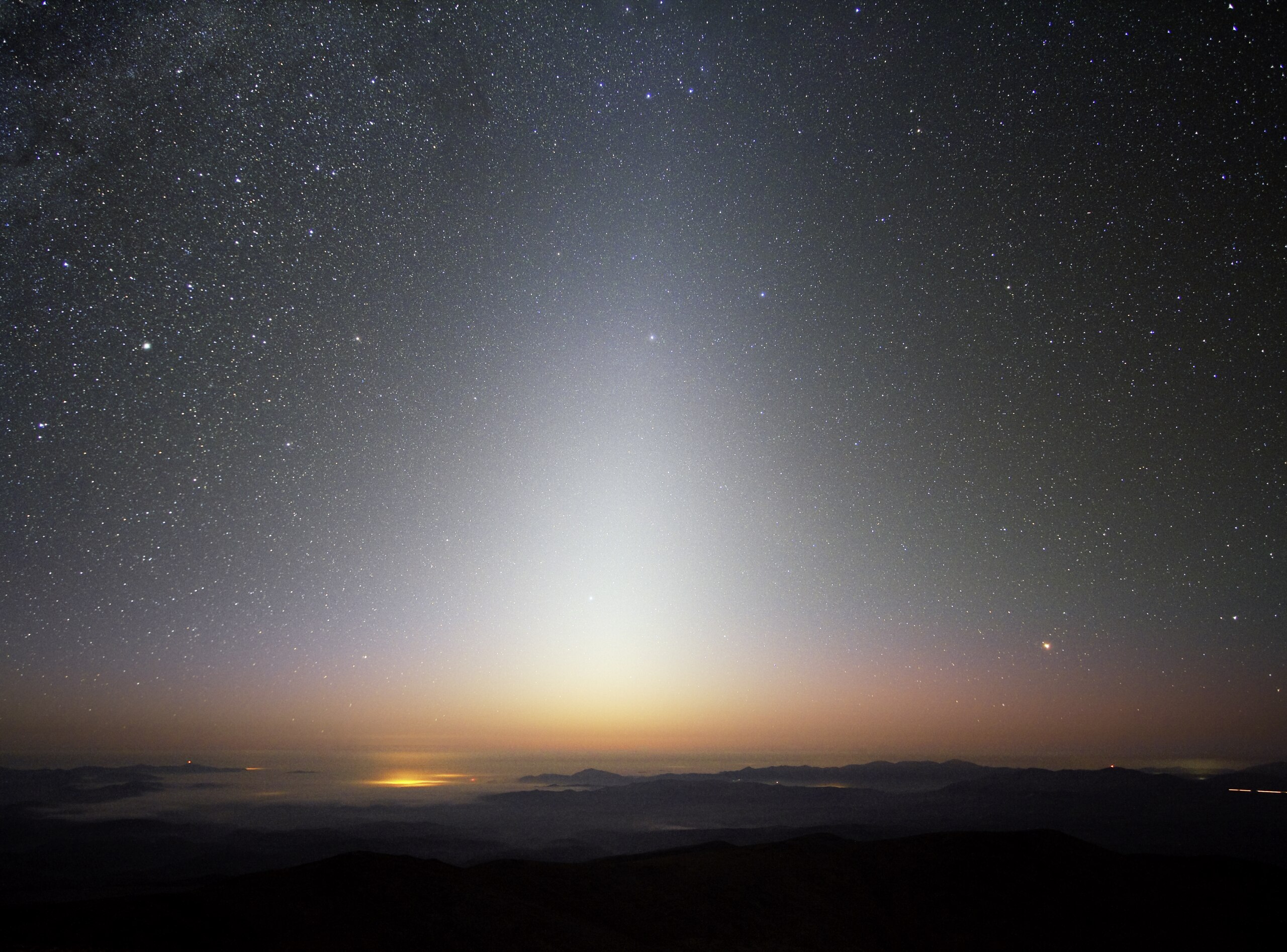
About two hours before sunrise, the head of Leo the Lion is just starting to peek above the eastern horizon, led higher up by Cancer, Gemini, and Taurus. Look for the zodiacal light along a line connecting these constellations — that’s where the ecliptic lies, so swing your gaze from lower left to upper right as you get higher above the horizon. The zodiacal light will be wider at its base and narrow higher in the sky as it comes to a point in Gemini or Taurus.
Alison Klesman is senior editor of Astronomy magazine. She holds a Ph.D. in astronomy and has studied a variety of topics, from minor planets to supermassive black holes.