Looking for a sky event this week? Check out our full Sky This Week column.
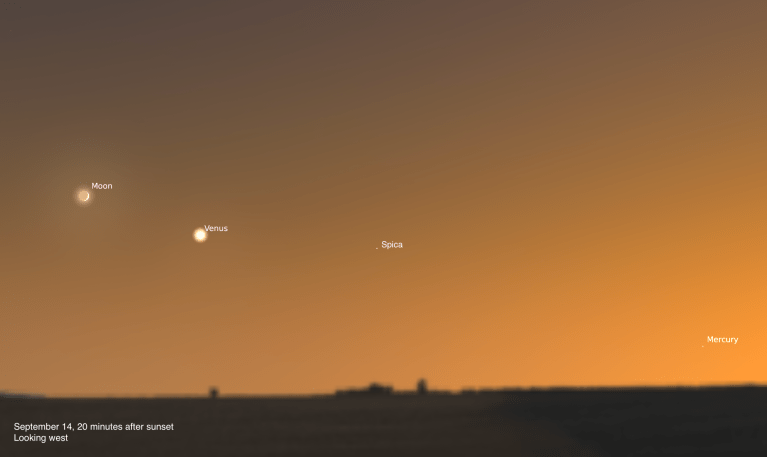
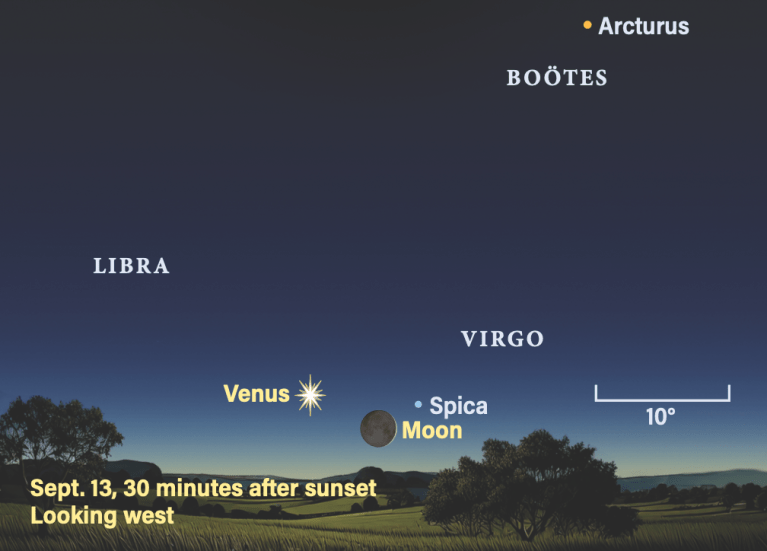
September 14: Connect four
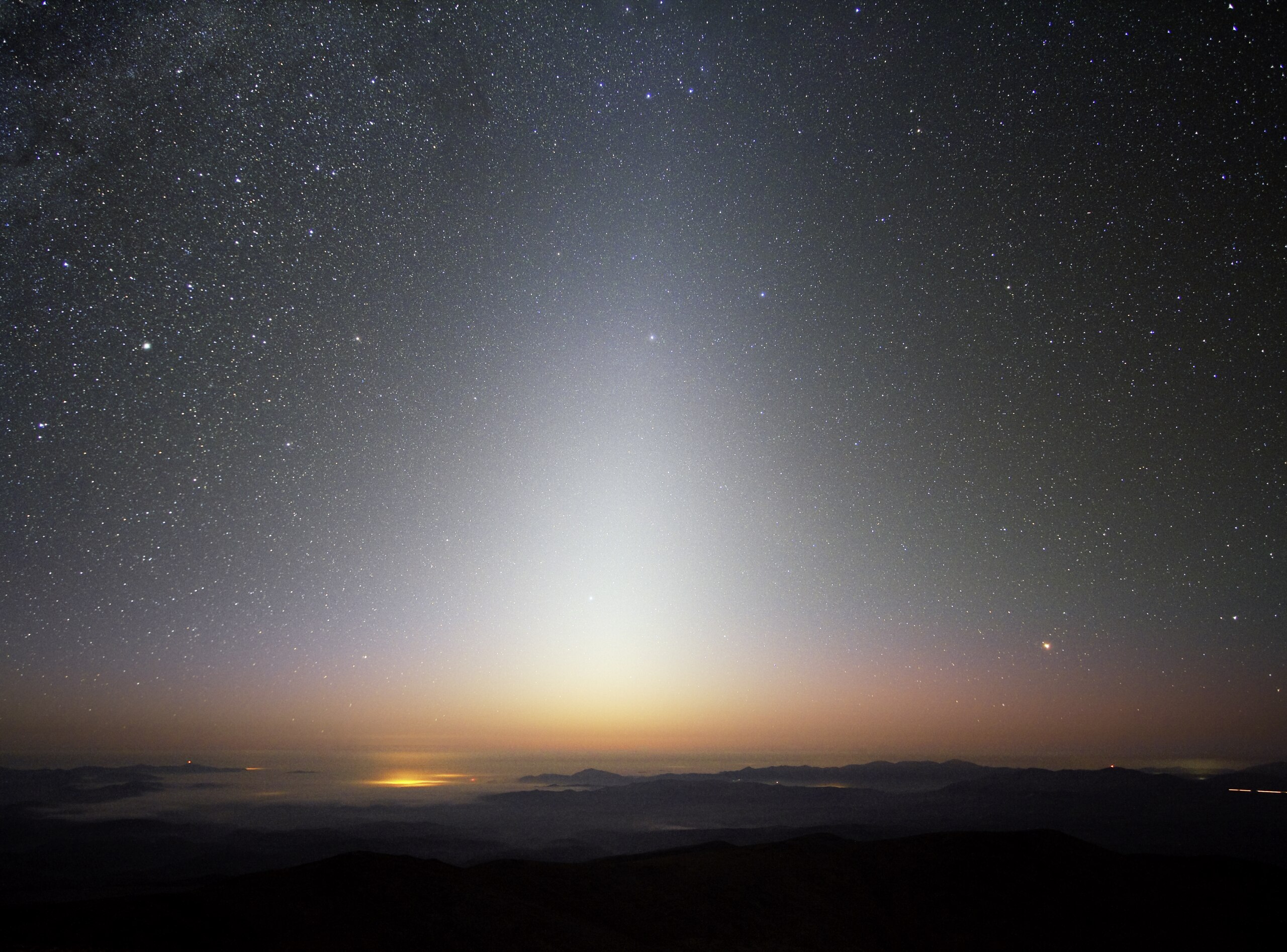
The time around the equinox is one of the best opportunities to catch sight of the ethereal zodiacal light, the soft glow generated by dust that orbits the Sun along the plane of the solar system, the ecliptic. That dust has been left by countless comets as they circle the Sun, losing material as they heat up when near our star. Over time, it settles into orbit along the ecliptic, and sunlight scattering off these fine grains creates a pyramid-shaped glow rising up from our horizon either before sunrise or after sunset, depending on the time of year.
Related: Does a comet’s period change because it loses mass every time it nears the Sun?
As we near the autumn equinox, the zodiacal light is visible in the east before the sky begins to brighten with the oncoming dawn. So, the best time to look is in the few hours before sunrise from a dark location with little to no artificial lighting. It’s also best to wait until the Moon is out of the predawn sky — so again, now is your chance.
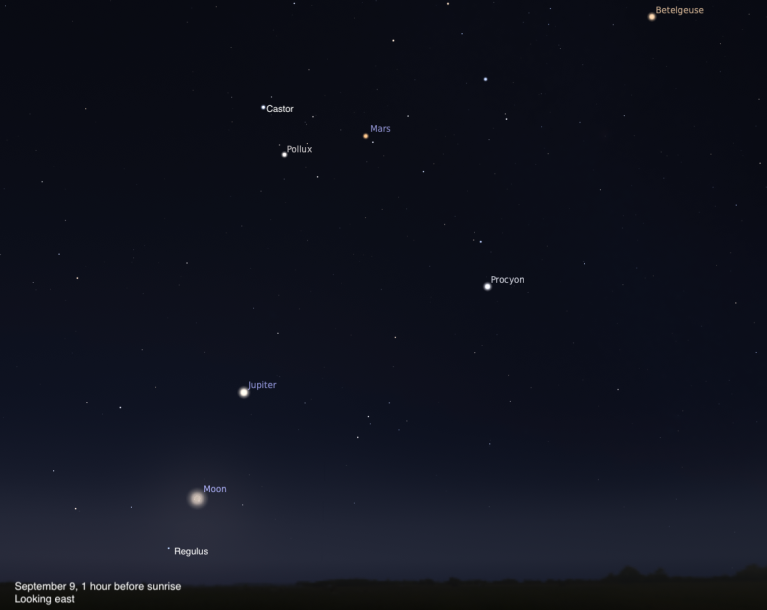
About two hours before sunrise, the head of Leo the Lion is just starting to peek above the eastern horizon, led higher up by Cancer, Gemini, and Taurus. Look for the zodiacal light along a line connecting these constellations — that’s where the ecliptic lies, so swing your gaze from lower left to upper right as you get higher above the horizon. The zodiacal light will be wider at its base and narrow higher in the sky as it comes to a point in Gemini or Taurus.
Sunrise: 6:41 A.M.
Sunset: 7:09 P.M.
Moonrise: 11:37 A.M.
Moonset: 9:09 P.M.
Moon Phase: Waxing crescent (25%)
*Times for sunrise, sunset, moonrise, and moonset are given in local time from 40° N 90° W. The Moon’s illumination is given at 10 P.M. local time from the same location.
Alison Klesman is senior editor of Astronomy magazine. She holds a Ph.D. in astronomy and has studied a variety of topics, from minor planets to supermassive black holes.