Looking for a sky event this week? Check out our full Sky This Week column.
May 30: Fly a cosmic kite
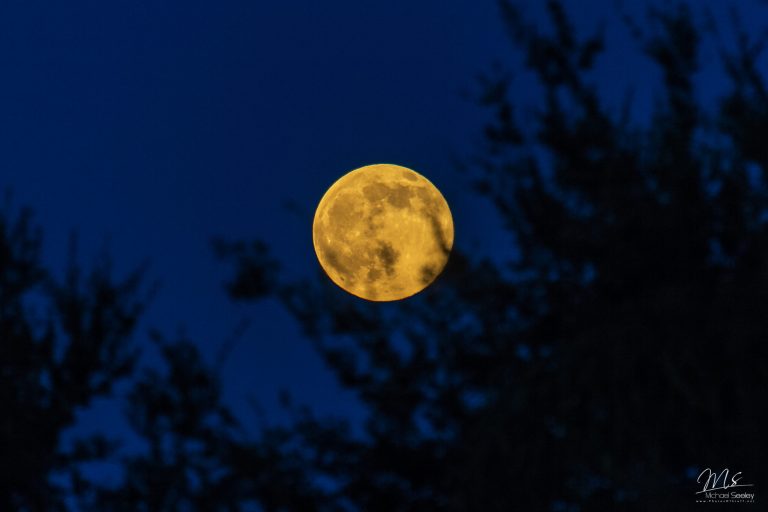
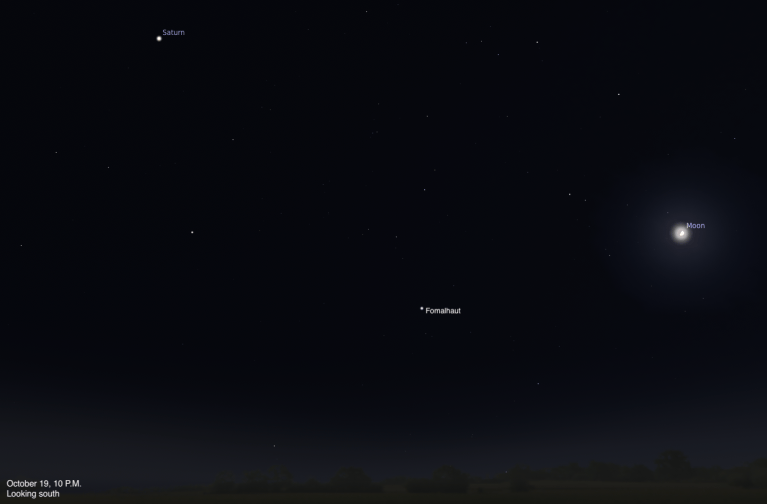
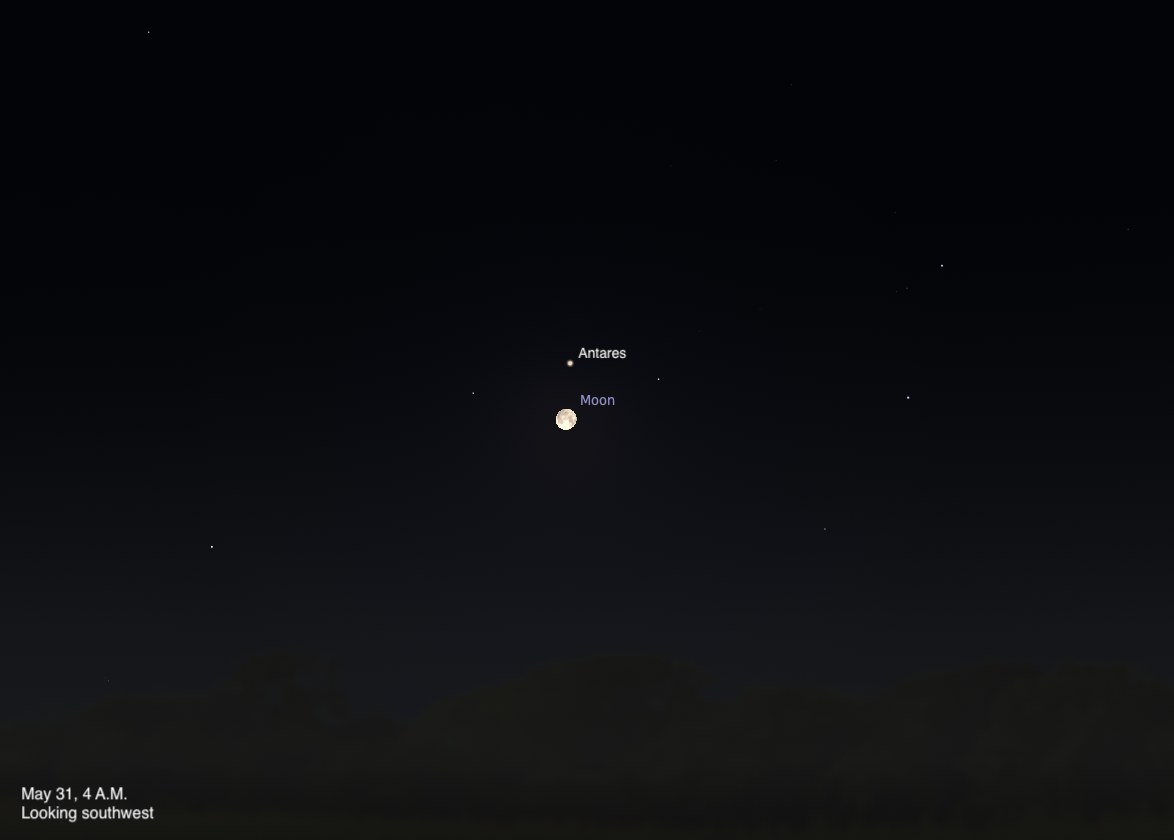
Full Moon occurs at 4:45 A.M. EDT on May 31, bringing us May’s second Full Moon and the first — and only — Blue Moon of 2026. Shortly after that, at 5 A.M. EDT, the Full Moon passes 0.4° south of Antares, as both are setting for East Coast observers. To best catch them, you’ll want to look earlier, around 3 or 4 A.M. local daylight time, when they are low but still easily visible in the southwest.
The Full Moon will be bright, but Antares is also bright, coming in at magnitude 1.1, so you should be able to make it out in the moonlit sky, just above our satellite’s position as the region sinks toward the horizon. This star, a red giant, is well known for its orangey-red hue, which is noticeable even with the naked eye. Antares marks the heart of Scorpius the Scorpion, and is named for its similar appearance to the Red Planet, Mars. The two can be easily mistaken for each other in the sky, but not today — when Mars rises around 4 A.M. local daylight time, it will be in the east, shining slightly dimmer than Antares at magnitude 1.3. The two aren’t visible together in the sky for long, as Antares is quite low in the west by the time Mars begins to rise out of the horizon haze on the opposite side of the sky, with sunrise also approaching.
By this evening, as the still-99%-lit Moon rises about an hour after sunset, it does so behind Scorpius, with Antares now far to our Moon’s upper right.
Sunrise: 5:34 A.M.
Sunset: 8:22 P.M.
Moonrise: 9:16 P.M.
Moonset: 5:16 A.M.
Moon Phase: Waning gibbous (99%)
*Times for sunrise, sunset, moonrise, and moonset are given in local time from 40° N 90° W. The Moon’s illumination is given at 10 P.M. local time from the same location.