Looking for a sky event this week? Check out our full Sky This Week column.
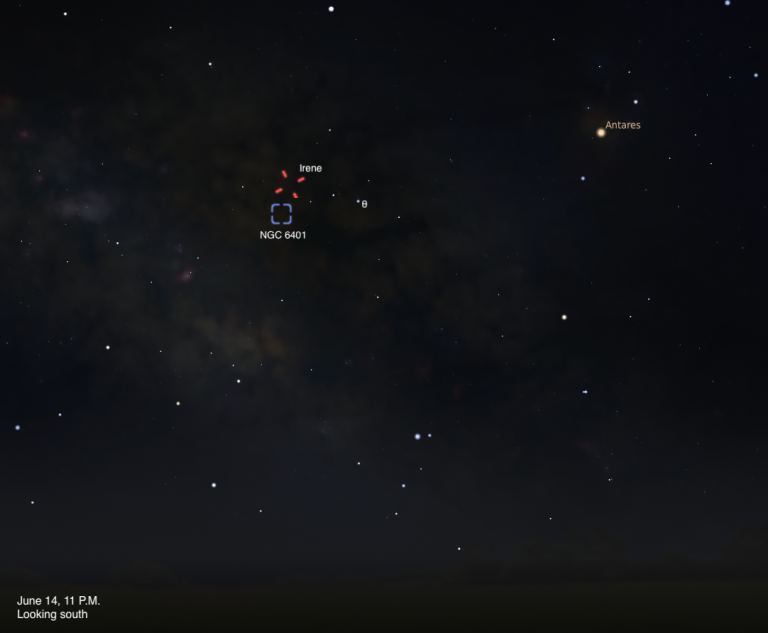
June 14: Irene nears opposition
This afternoon, Mercury reaches greatest eastern elongation at 4 P.M. EDT, standing 25° from the Sun. You’ll find the solar system’s smallest planet in the evening sky, now shining at magnitude 0.5.
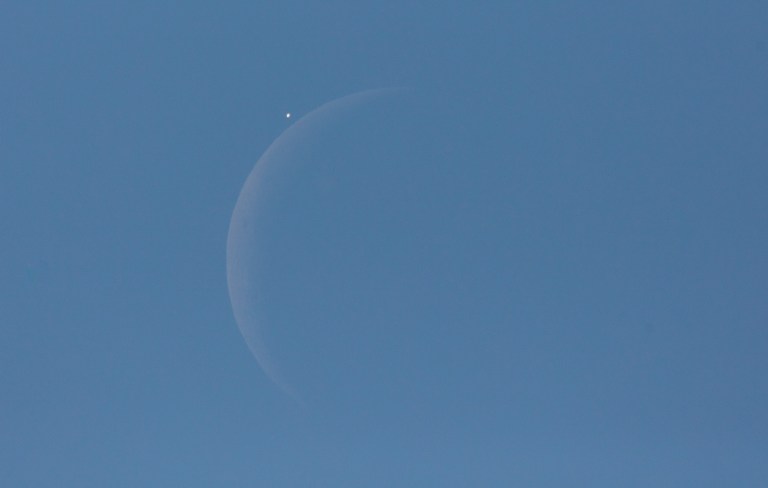
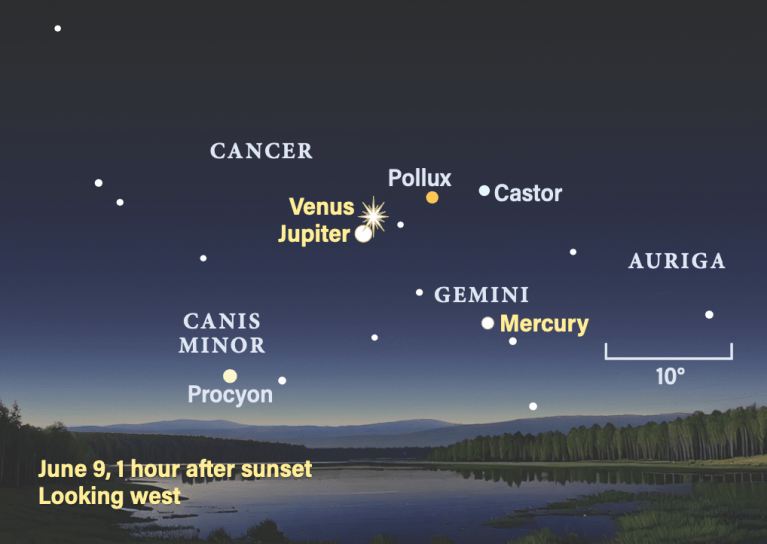
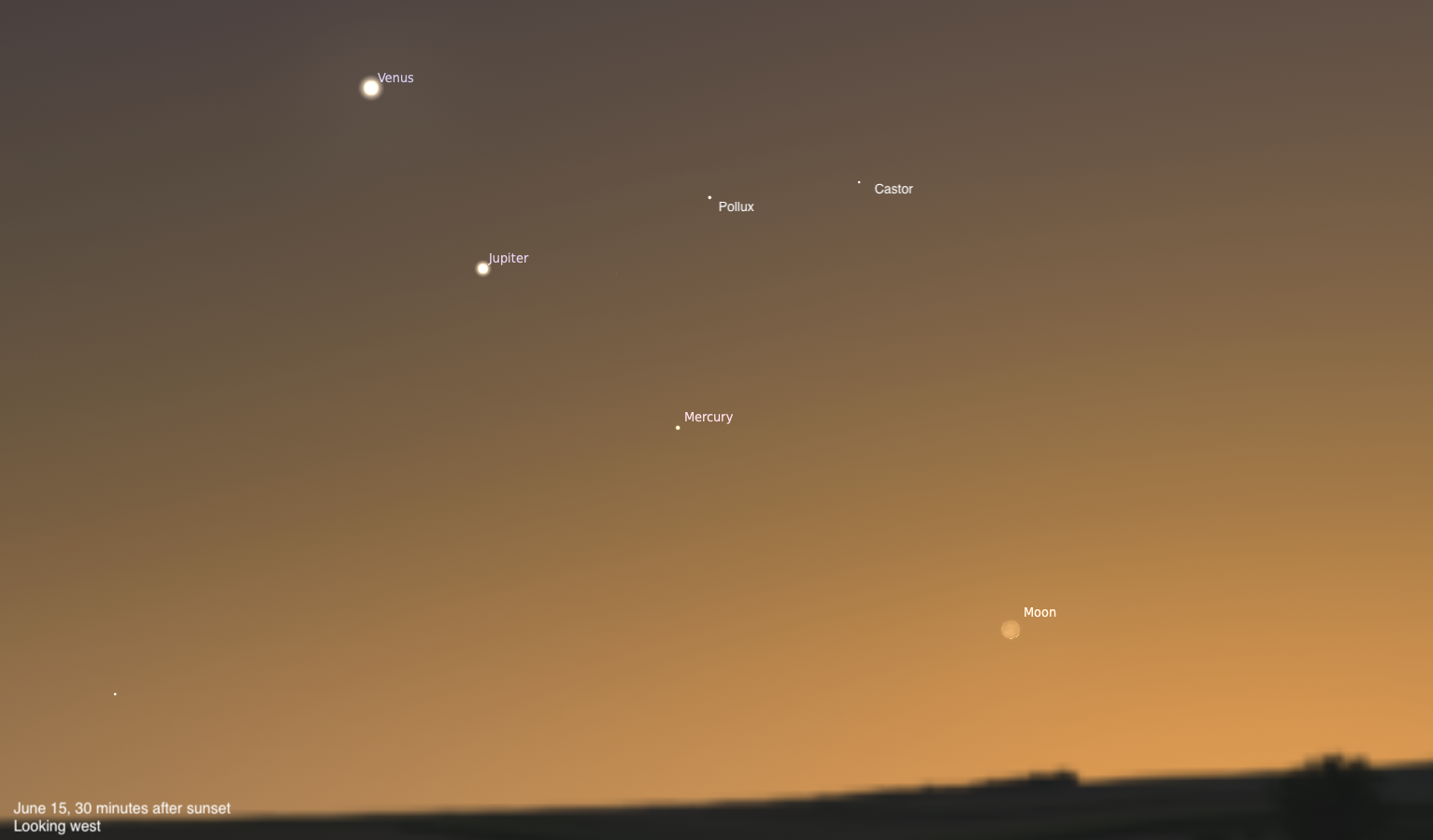
Half an hour after sunset, a delicate waxing crescent Moon — just 2% lit — is setting, just 5° above the western horizon. Mercury will pop out to the Moon’s upper left, sitting in the middle of Gemini the Twins. To Mercury’s upper left are brighter Jupiter and then Venus, shining at magnitudes –1.8 and –4.0, respectively.
After moonset, Mercury is the first planet to disappear, sinking below the horizon shortly after 10 P.M. local daylight time. Jupiter and Venus remain visible for at least half an hour more, with the latter staying aloft the longest, setting around 11 P.M. local daylight time.
Through a telescope, Mercury’s disk appears some 38% lit and spans 8” on the sky. Compare that first with Venus, which is 75% illuminated and 14” across. Jupiter dwarfs them both, its fully illuminated disk stretching 32” across. You may catch sight of the gas giant’s four Galilean moons — additionally, Io begins a transit around 9:50 P.M. CDT, with its shadow becoming visible on the cloud tops a little under an hour later, visible from the western half of the U.S.
Sunrise: 5:31 A.M.
Sunset: 8:30 P.M.
Moonrise: 5:36 A.M.
Moonset: 9:45 P.M.
Moon Phase: Waxing crescent (2%)
*Times for sunrise, sunset, moonrise, and moonset are given in local time from 40° N 90° W. The Moon’s illumination is given at 10 P.M. local time from the same location.
Alison Klesman is senior editor of Astronomy magazine. She holds a Ph.D. in astronomy and has studied a variety of topics, from minor planets to supermassive black holes.