2026 Astronomy Magazine Astrophotography Contest
See the winners!
Skip to content
Astronomy Magazine logo
  • Login / Register
  • Logout
  • Shop
  • Subscribe

  • News
  • Science
    • Solar System
    • Exoplanets
    • Stars
    • Milky Way
    • Galaxies
    • Exotic Objects
    • Cosmology
  • Observing
    • In The Sky
    • Upcoming Events
    • The Sun
    • The Moon
    • Planets
    • Comets
    • Deep-Sky Objects
    • Observing Basics
    • Telescopes and Equipment
    • Astrophotography
    • Gear Guide
    • This Week in Astronomy
  • Space Exploration
    • What’s Launching This Week
    • Human Spaceflight
    • Robotic Spaceflight
  • The Magazine
  • Ask Astro
  • Star Products
  • Login / Register
  • Logout
  • Shop
  • Subscribe

Author: Alison Klesman

Alison earned her bachelor’s degree in physics and master’s degree in earth, atmospheric, and planetary science from MIT. During this time, she completed several years of research in the field of planetary science, working on research topics that ranged from comets and asteroids to the atmosphere of Pluto. She earned her Ph.D. in astronomy from the University of Florida for work surveying active galactic nuclei in massive galaxy clusters, after which she focused on outreach at Spencer's Observatory in Tucson, Arizona. Asteroid 30286 Klesman (2000 HG61) is named after her. Alison has been with the magazine since 2016.
A golden Full Moon in a dark blue sky seen through the branches of a foreground tree.
Observing, The Moon

2026 Full Moon calendar: When to see the Full Moon and phases

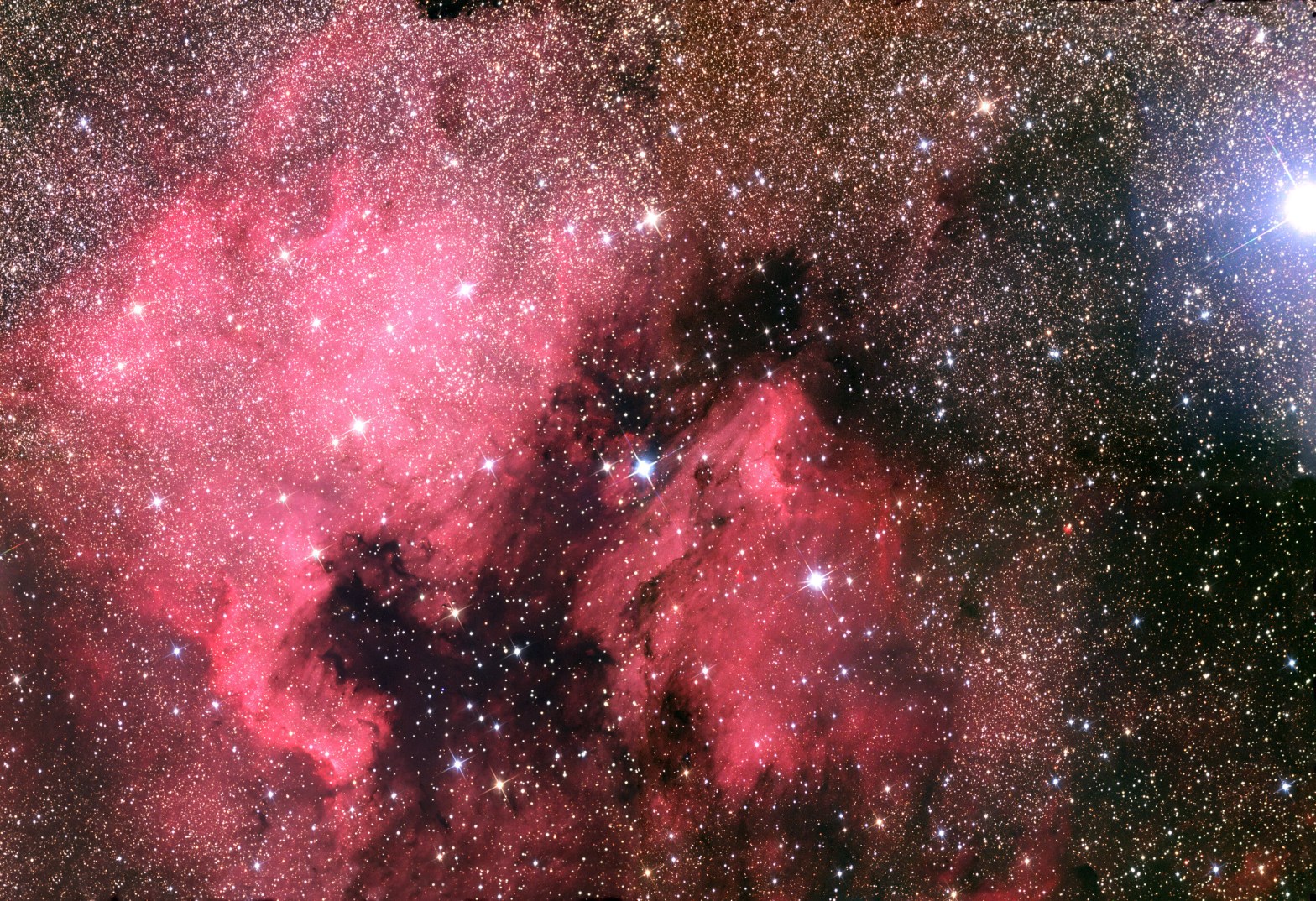
Photograph of the North America Nebula (NGC 7000) and the neighboring Pelican Nebula, a broad region of glowing pink-red hydrogen gas threaded with dark, jagged dust clouds. The larger pink nebula fills the left half of the frame, and the Pelican’s pink, wing-like ridge rises at center right beside a dark, star-speckled lane. A dense field of white, blue, and orange stars covers the entire frame, with a very bright blue-white star with diffraction spikes at the right edge.
Observing

The Sky Today on Friday, November 6: Nab the North America Nebula

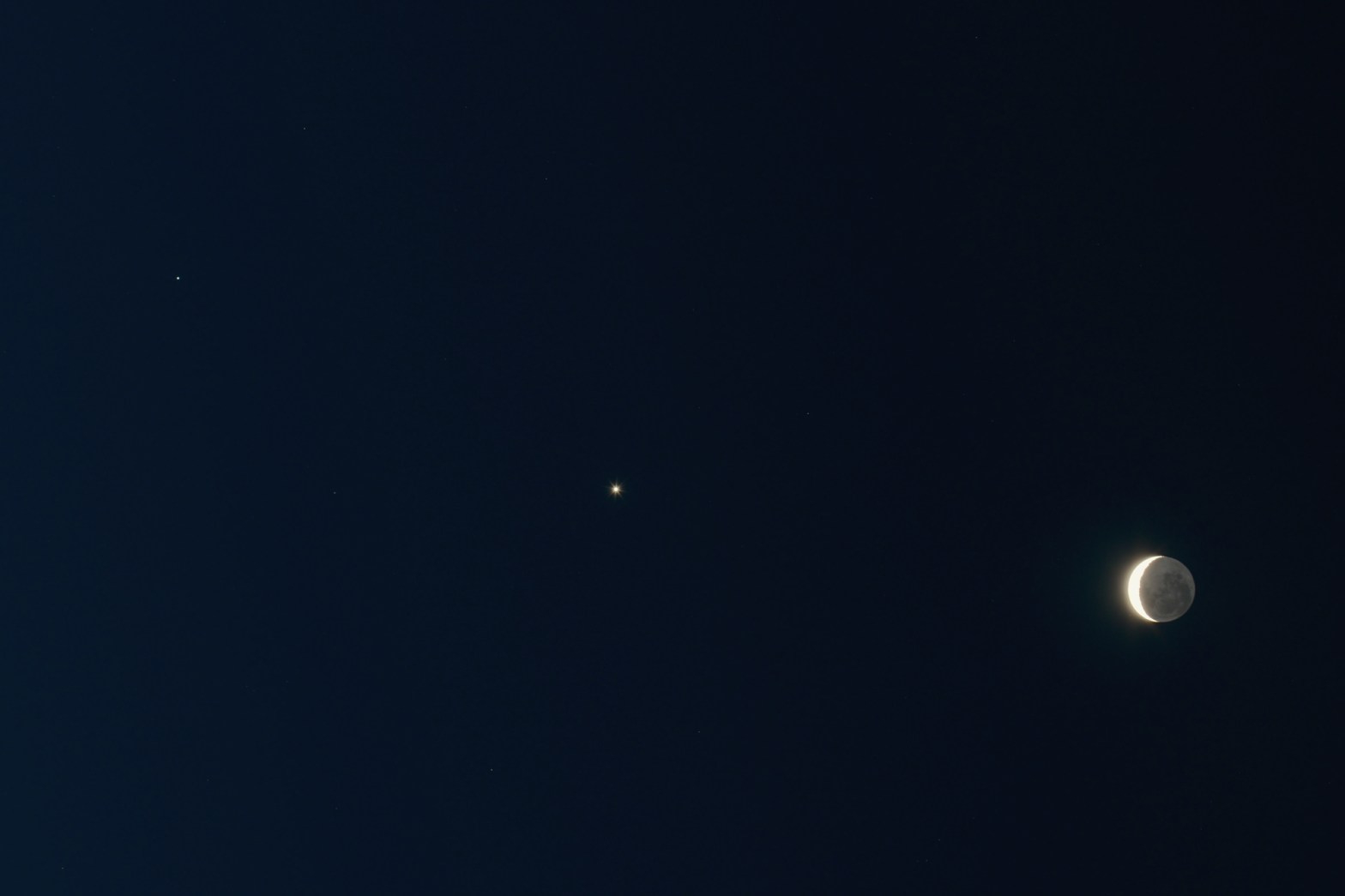
Photograph of a deep blue twilight sky with a thin crescent Moon at right, its bright sliver on the left edge and the rest of its disk faintly lit by earthshine. Venus shines as a bright, golden point at center, and a much fainter point, Spica, sits at upper left among a few scattered faint stars.
Sky This Week, The Sky This Week

The Sky This Week from November 6 to 13: Venus in the spotlight

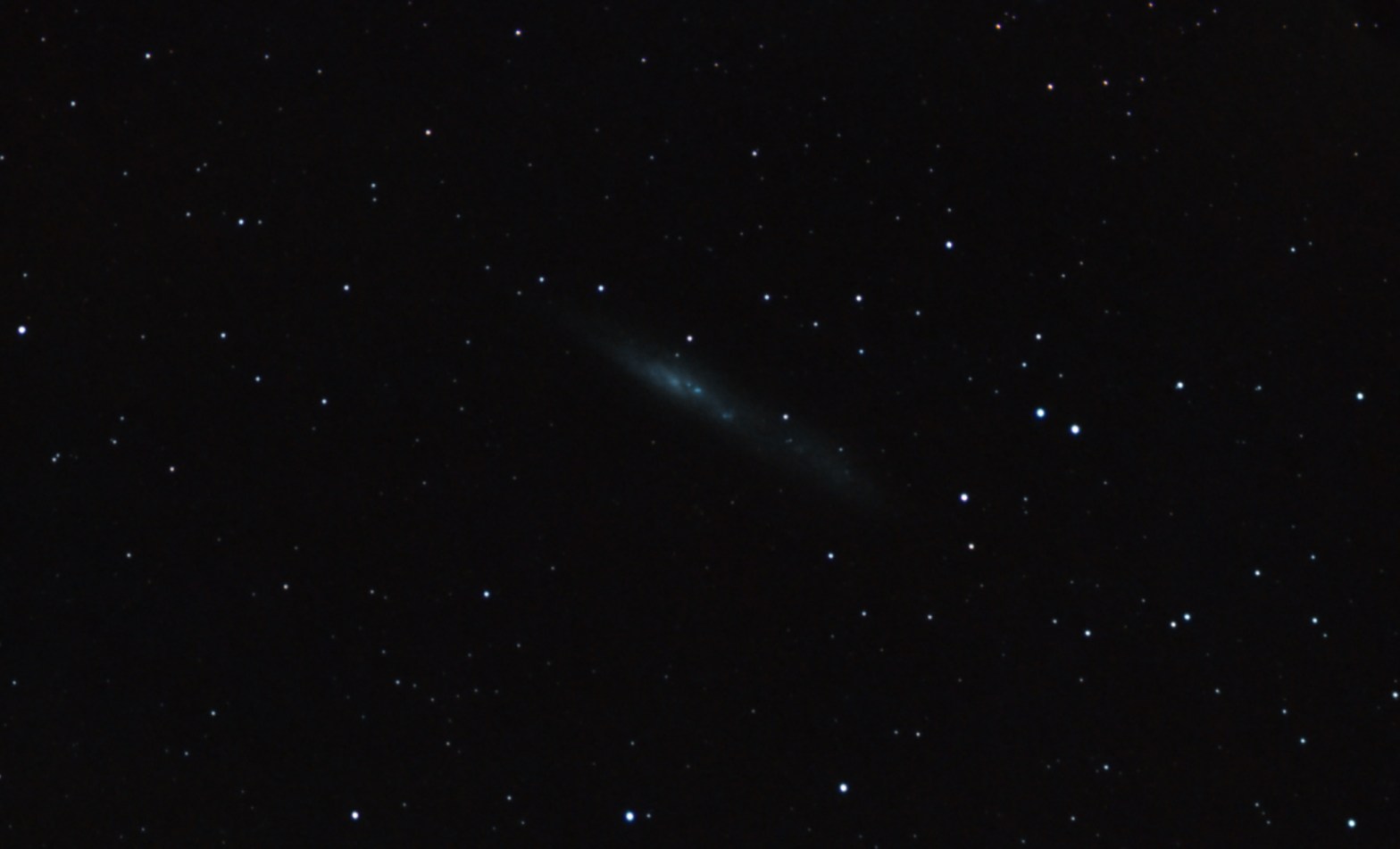
Photograph of the edge-on spiral galaxy NGC 55, a faint, elongated bluish smear tilted diagonally across the center of the frame from upper left to lower right, with a few brighter knots along its length. Numerous white and blue-white stars of varying brightness are scattered across the black background.
Observing

The Sky Today on Thursday, November 5: Smoke out the Southern Cigar

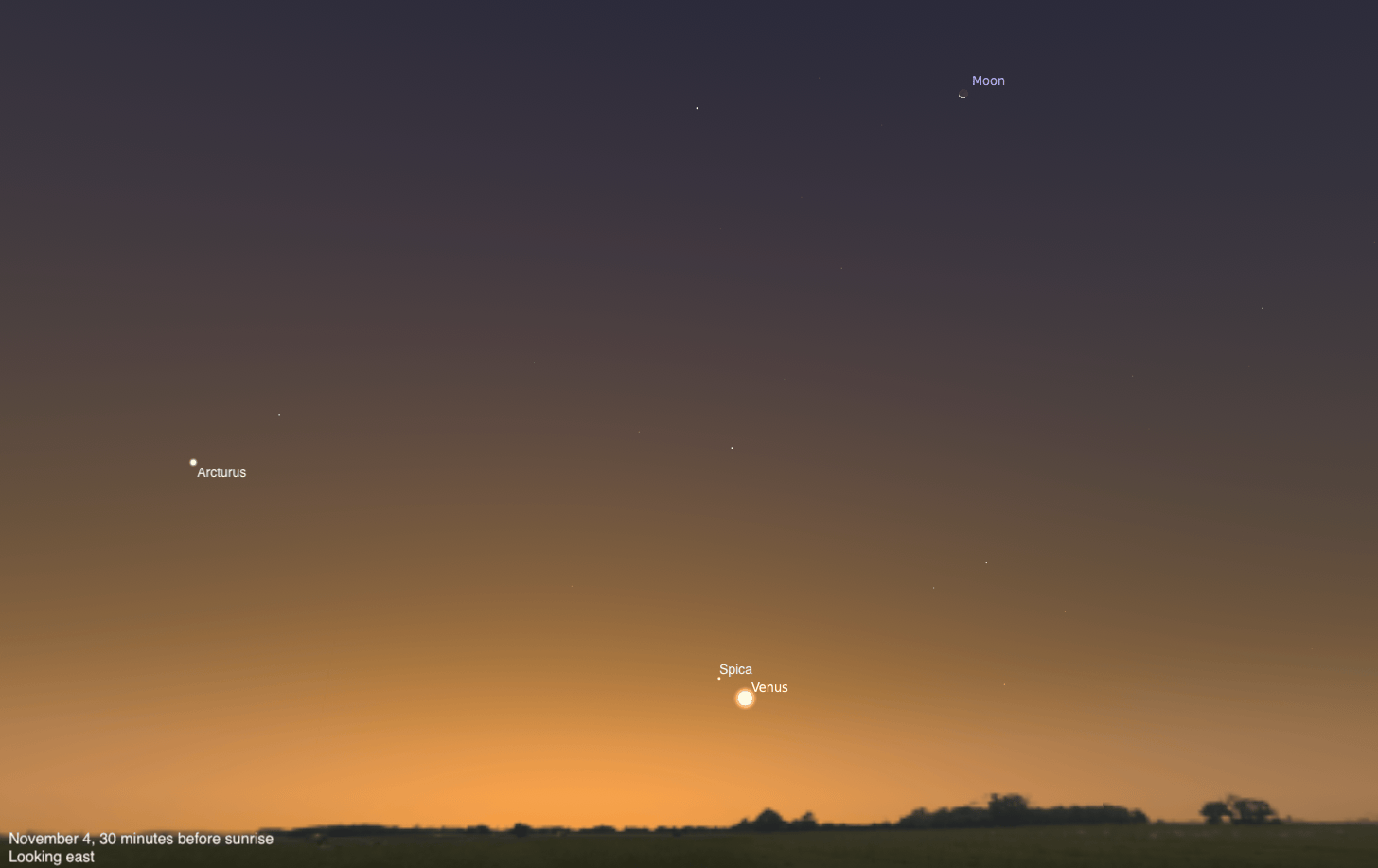
Simulated view of a predawn sky fading from dark purple at the top to a warm orange glow over a dark horizon with distant trees, dated November 4, 2026, 30 minutes before sunrise, looking east. Venus glows low near the horizon with Spica labeled just above and to its left. Arcturus is labeled at left, and a thin crescent Moon is labeled at upper right.
Observing

The Sky Today on Wednesday, November 4: Venus and Spica stand close

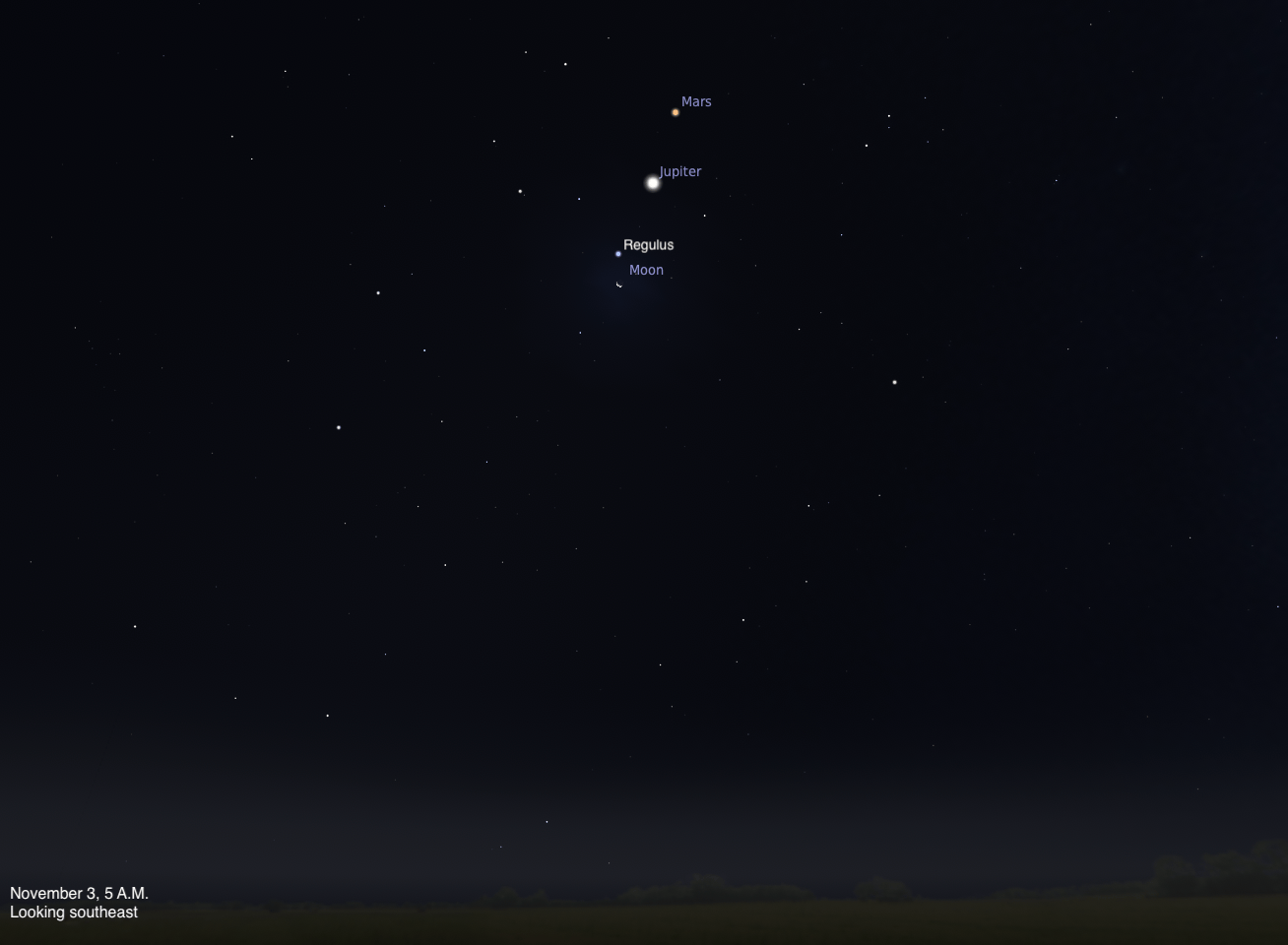
Simulated view of a dark predawn sky, dated November 3, 2026, 5 A.M., looking southeast. Mars and Jupiter are labeled near the top center, with Jupiter below Mars. A thin crescent Moon sits just below Regulus at center, and scattered fainter stars fill the rest of the frame.
Observing

The Sky Today on Tuesday, November 3: The Moon passes Regulus

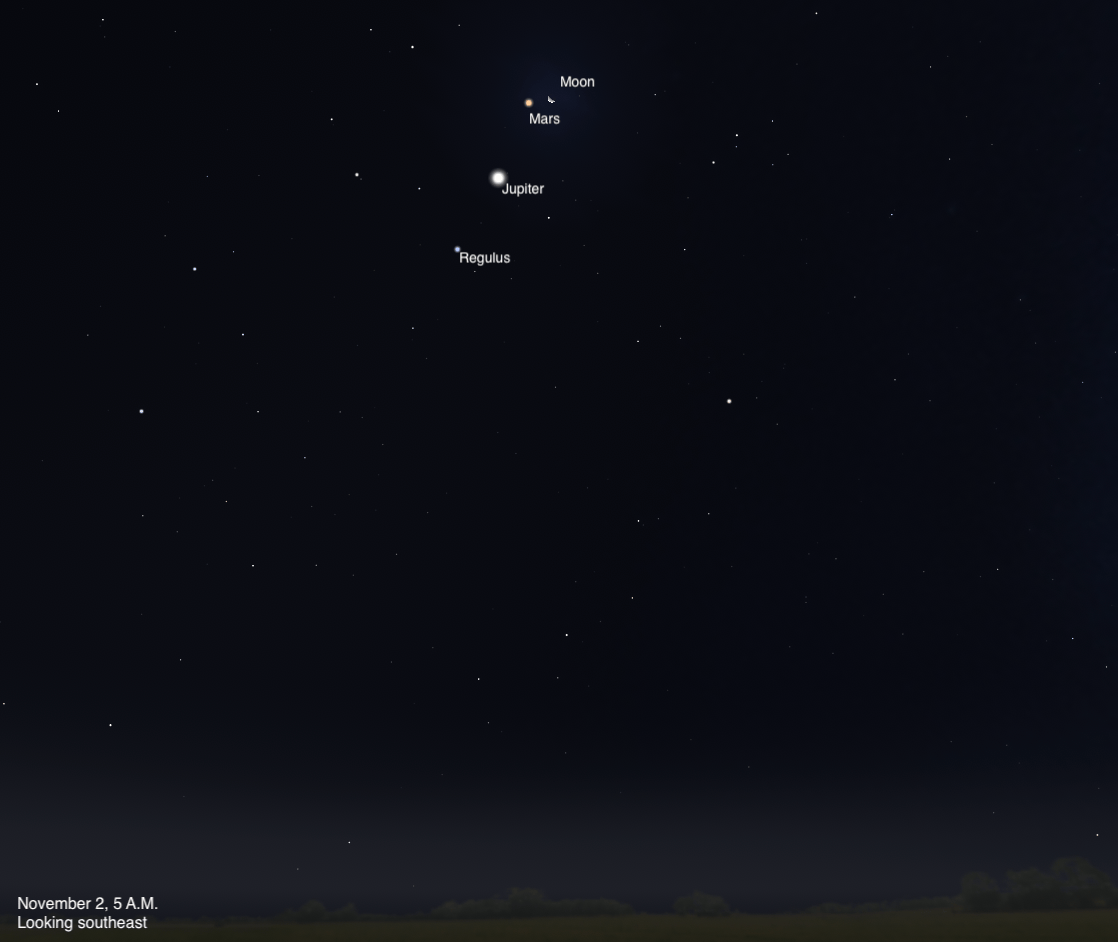
Simulated view of a dark predawn sky, dated November 2, 2026, 5 A.M., looking southeast. A thin crescent Moon and Mars are labeled close together at top center, with Jupiter labeled below them and Regulus just below Jupiter. Scattered fainter stars fill the rest of the frame.
Observing

The Sky Today on Monday, November 2: The Moon passes Jupiter and Mars

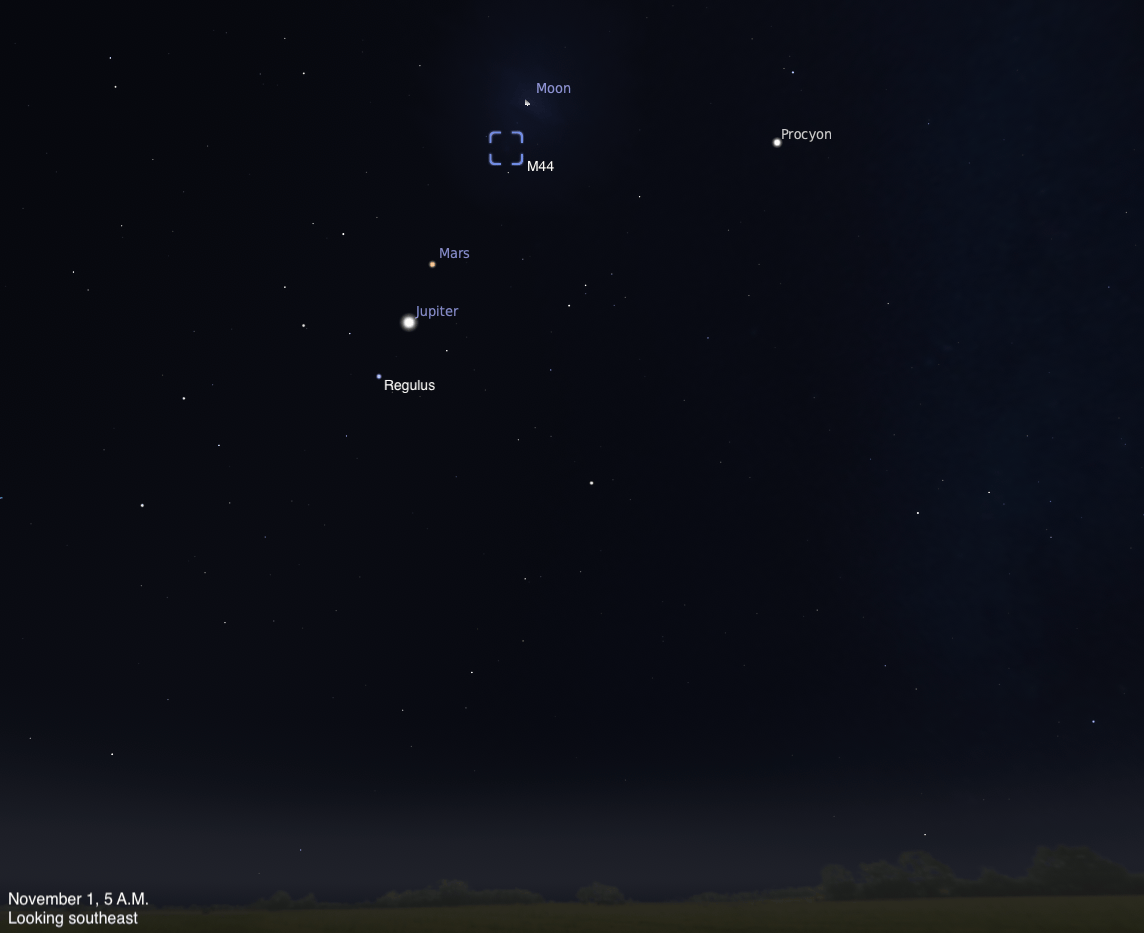
Simulated view of a dark predawn sky, dated November 1, 2026, 5 A.M., looking southeast. A thin crescent Moon is labeled at top center, with the open cluster M44 marked by a blue bracket just below it. Mars and Jupiter are labeled lower left of center, with Jupiter below Mars and Regulus just below Jupiter. Procyon is labeled at upper right.
Observing

The Sky Today on Sunday, November 1: The Moon in Cancer

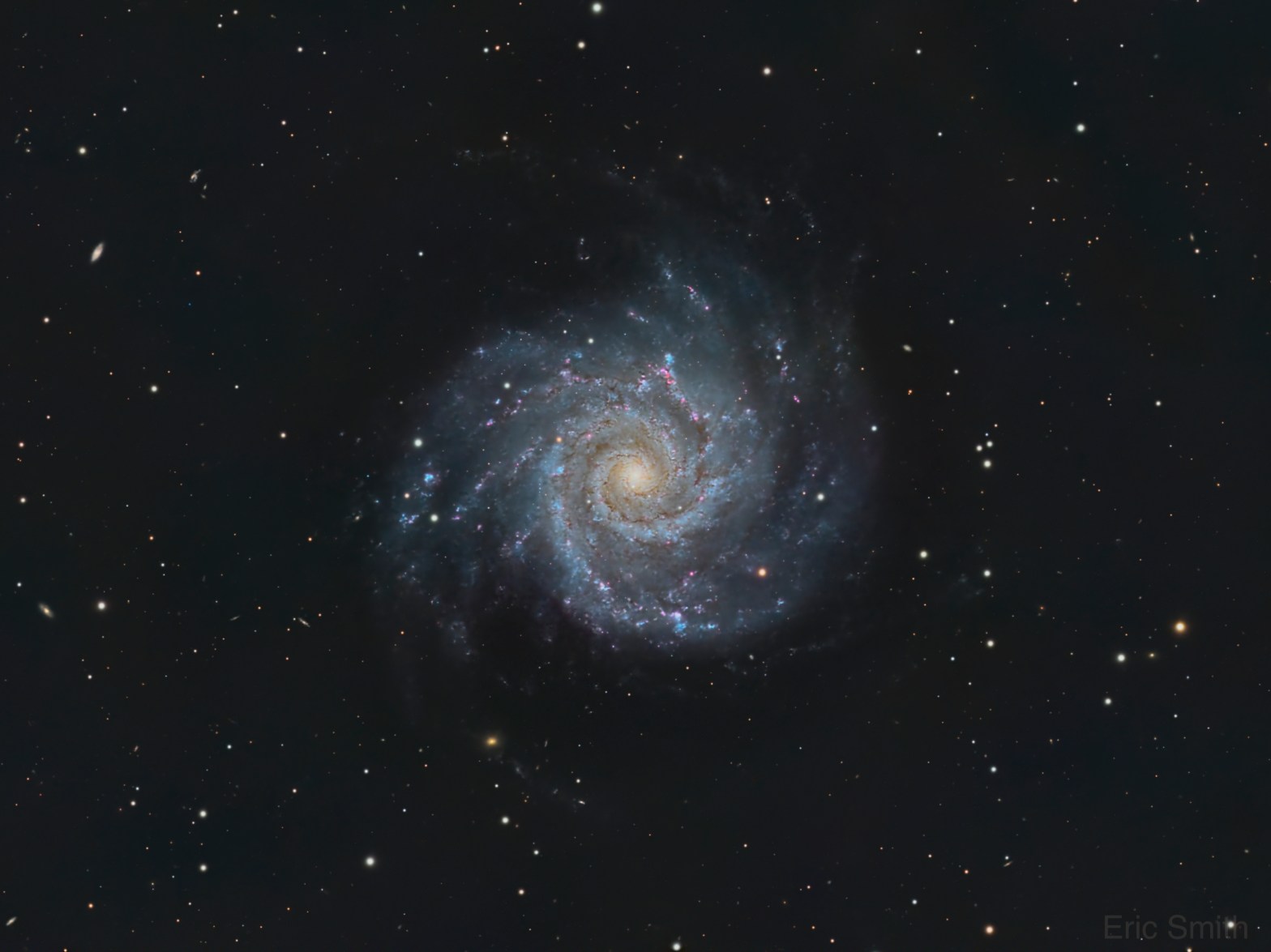
Photograph of the face-on spiral galaxy M74, with a golden-yellow core and tightly wound, blue-white spiral arms threaded with dark dust lanes and scattered pink star-forming regions. Numerous white and orange stars and a few small, distant galaxies are scattered across the black background.
Observing

The Sky Today on Saturday, October 31: Glimpse the ghostly Phantom Galaxy

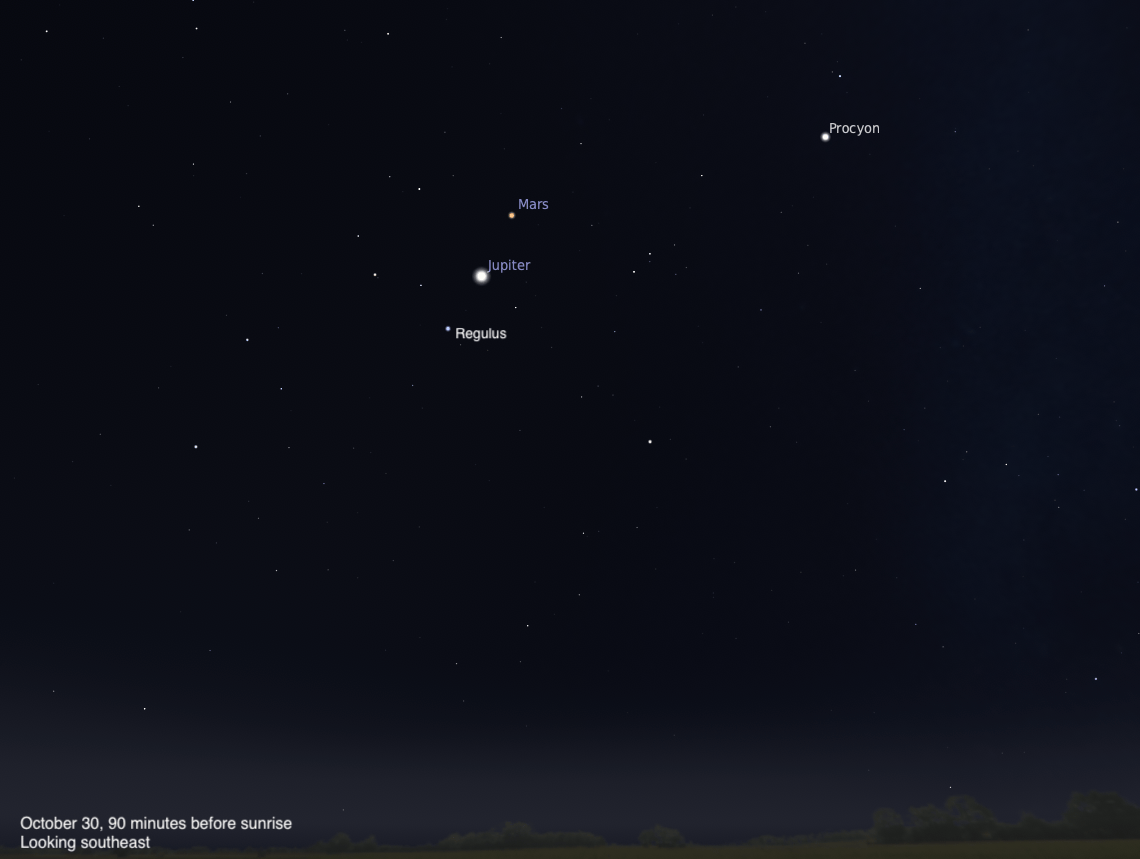
Simulated view of a dark predawn sky, dated October 30, 2026, 90 minutes before sunrise, looking southeast. Mars and Jupiter are labeled close together at upper left of center, with Regulus just below Jupiter. Procyon is labeled at upper right.
Observing

The Sky Today on Friday, October 30: Mars approaches Leo

Simulated view of a dark predawn sky, dated November 2, 2026, 5 A.M., looking southeast. A thin crescent Moon and Mars are labeled close together at top center, with Jupiter labeled below them and Regulus just below Jupiter. Scattered fainter stars fill the rest of the frame.
Sky This Week, The Sky This Week

The Sky This Week from October 30 to November 6: The Moon jockeys with Jupiter and Mars

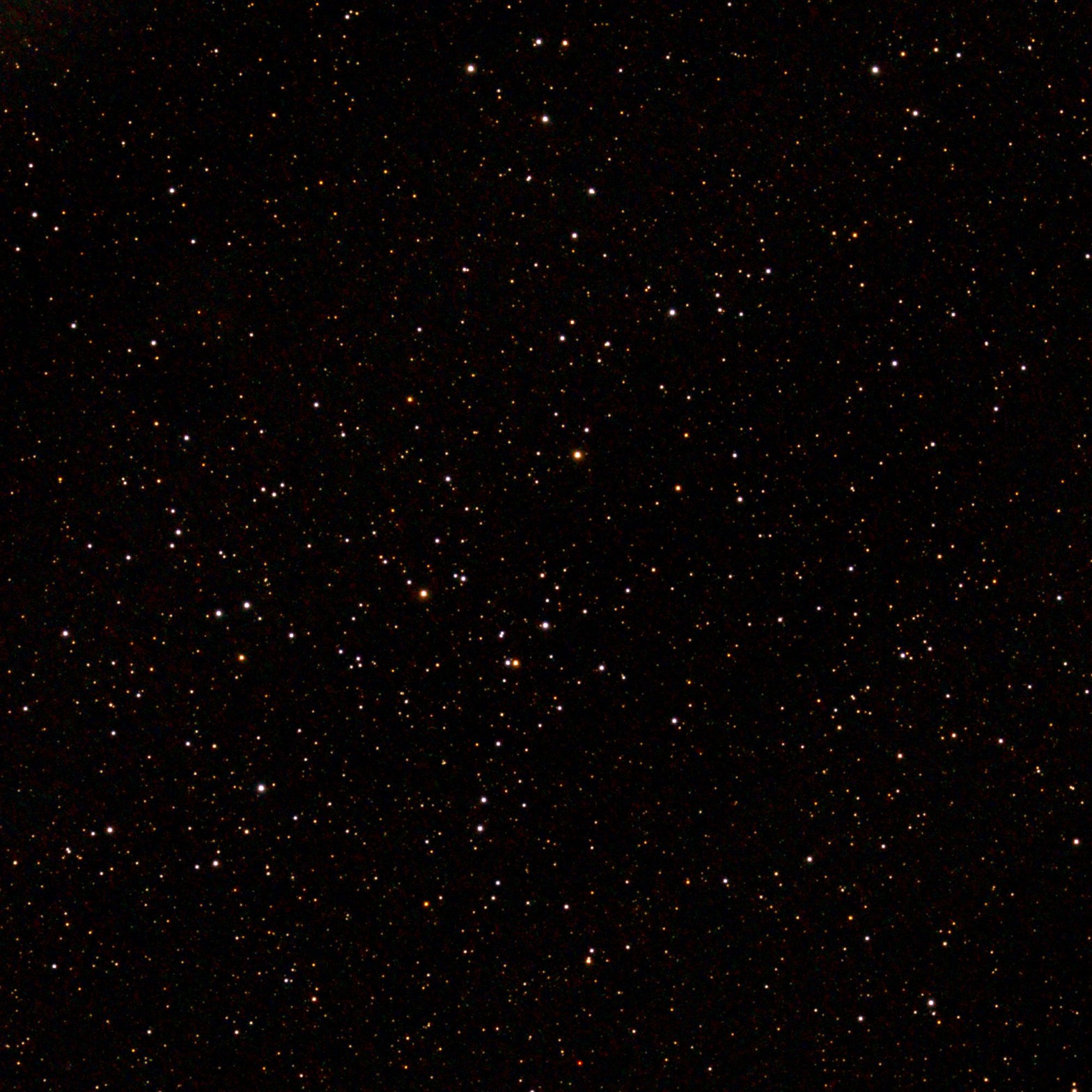
Photograph of the open cluster Collinder 463, a loose scattering of bright white and orange stars across the center of the frame, set against a black sky densely sprinkled with fainter stars.
Observing

The Sky Today on Thursday, October 29: Open cluster Collinder 463

Posts pagination

1 2 3 … 109 Older posts

Astronomy Newsletter

Get newsletters, updates and special offers via email from Astronomy.com!

Please enter a valid email address.
Astronomy Magazine logo
  • Facebook
  • LinkedIn
  • YouTube
  • Instagram
  • Twitter
  • About Us
  • Contact Us
  • Subscribe
  • Customer Service
  • Advertising
  • Terms of Use
  • Privacy Policy
  • Do Not Sell

@ 2025 Firecrown Media. All Rights Reserved.

More Sites from Firecrown Media Publisher logo
Scroll to Top

Sign In

New User? Create an Account

Why Sign In? Subscribers can access their digital magazine issues, and registered users can participate in our Community forums and galleries.

Please enter your email.
Please enter your password.

Lost your password?

Manage My AccountCustomer Support