Looking for a sky event this week? Check out our full Sky This Week column.
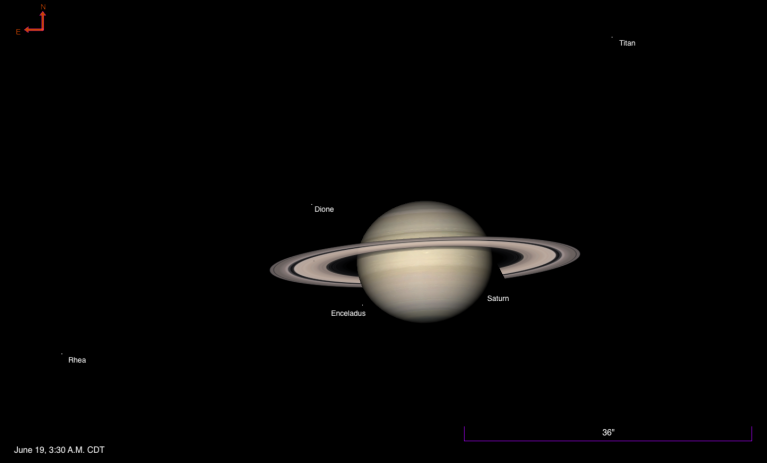
June 19: Dione crosses due north of Saturn
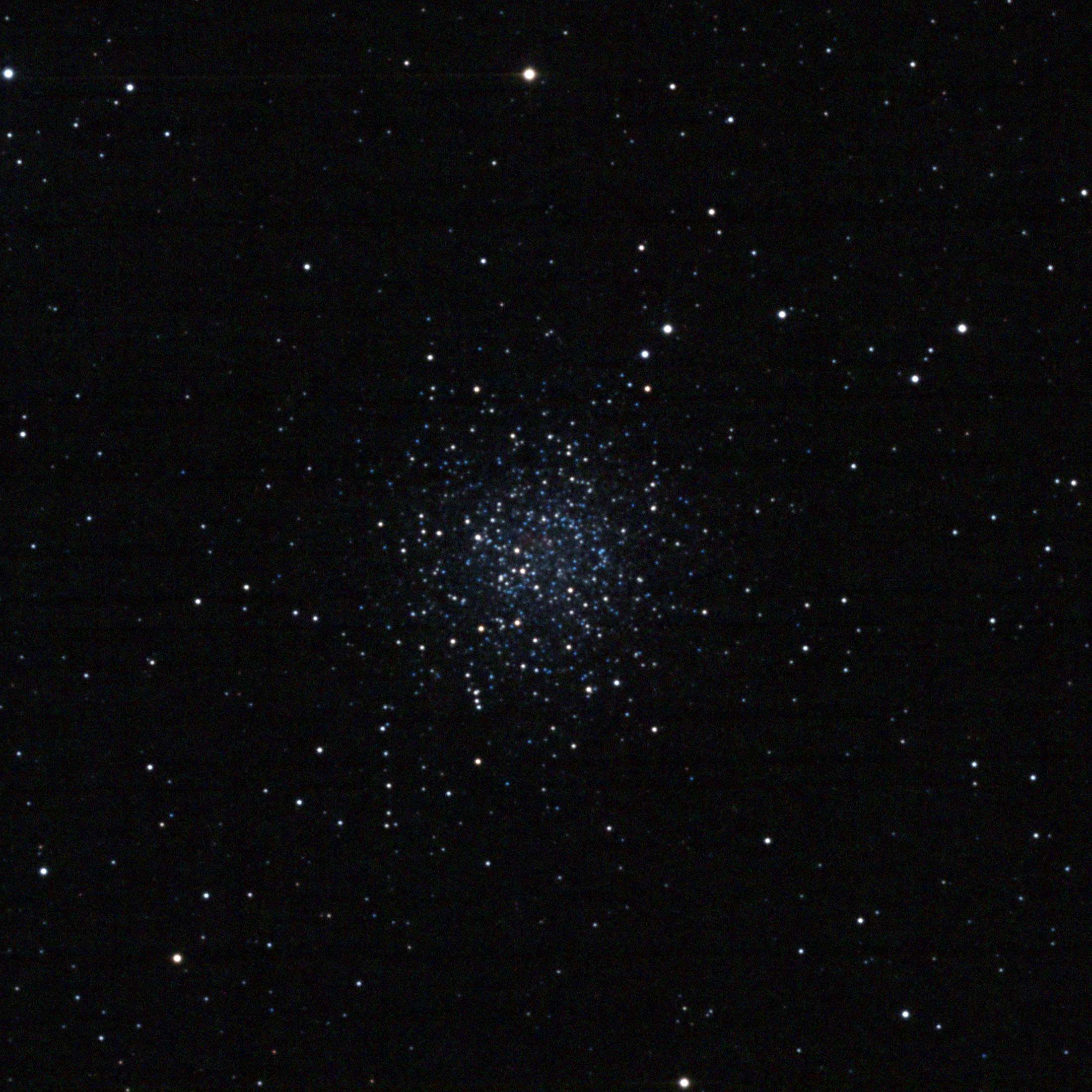
Highest in the south around 10:30 P.M. local daylight time is the constellation Libra, whose brightest star is Beta (β) Librae, also called Zubeneschamali. Nearly 12° below (south) of this star at that time is the constellation’s brightest deep-sky object, globular cluster NGC 5897. If you want a closer signpost, just move about 5° northeast of 3rd-magnitude Sigma (σ) Lib.
Glowing at mid-8th-magnitude, NGC 5897 is a wonderful target for any telescope, including smaller instruments. It’s also a popular astrophotography target. NGC 5897 is rather large, spanning about 12”, and has a loosely packed center. The cluster lies some 24,000 light-years away and is sometimes called the Ghost Globular for its resemblance to brighter M5 in Serpens.
Sunrise: 5:31 A.M.
Sunset: 8:32 P.M.
Moonrise: 11:51 A.M.
Moonset: 12:11 A.M.
Moon Phase: Waxing crescent (42%)
*Times for sunrise, sunset, moonrise, and moonset are given in local time from 40° N 90° W. The Moon’s illumination is given at 10 P.M. local time from the same location.
Alison Klesman is senior editor of Astronomy magazine. She holds a Ph.D. in astronomy and has studied a variety of topics, from minor planets to supermassive black holes.