Looking for a sky event this week? Check out our full Sky This Week column.
June 12: The Moon meets Mars
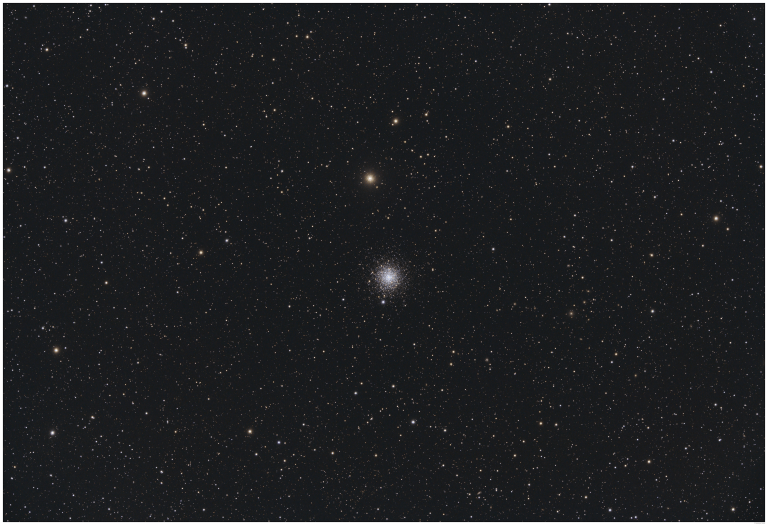
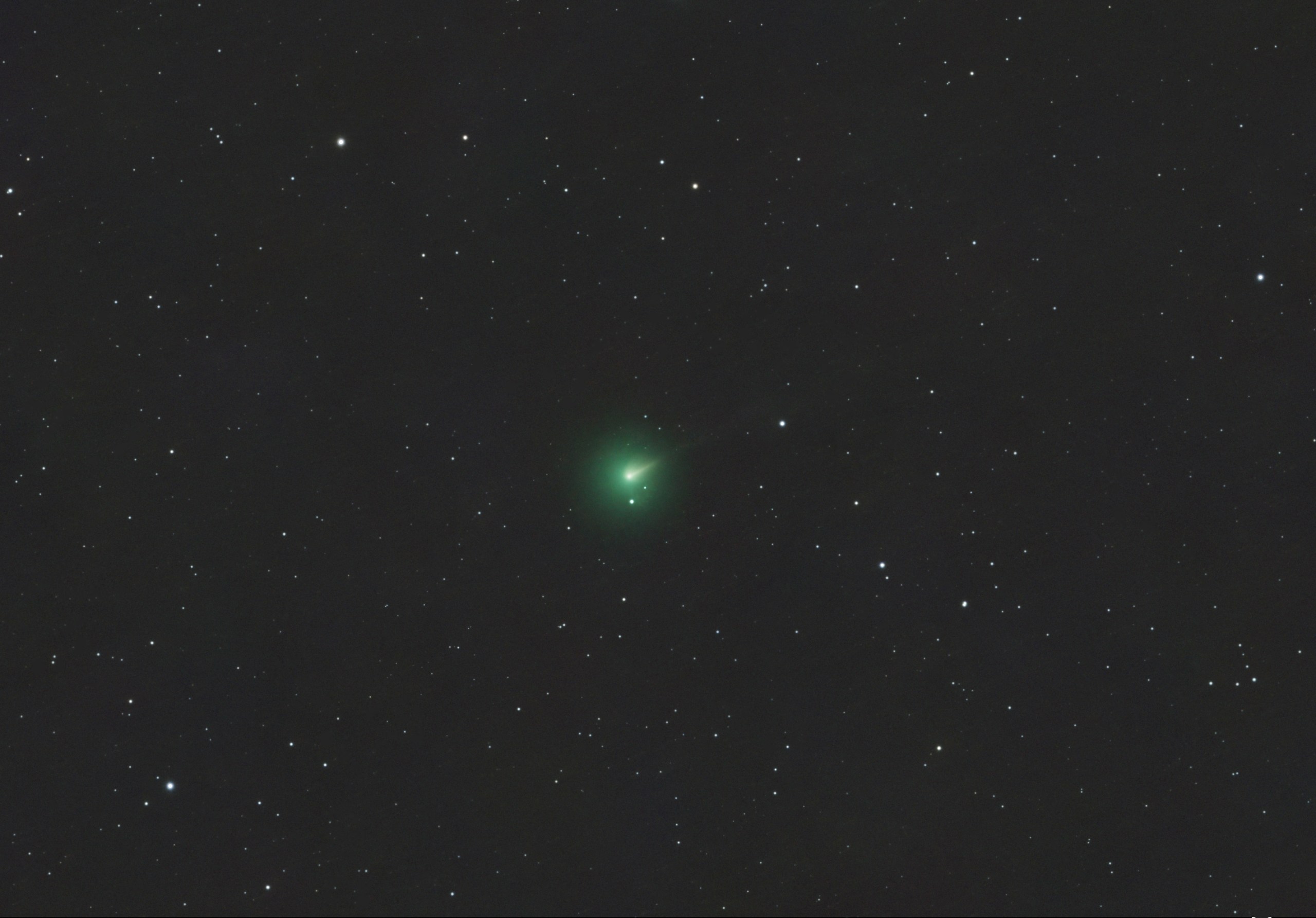
Turn your telescope toward southern Pisces this morning, where Saturn outshines any of the stars in this part of the sky. This is where Comet 220P/McNaught recently underwent an outburst, quickly brightening from 18th magnitude to nearly magnitude 8 in a single day! It has now begun to slowly fade, yet remains brighter than before the jump, recently recorded around 12th magnitude.
In the early-morning hours, you can find Comet McNaught 4.7° west of Saturn’s position, so take advantage of its location near the bright planet to find it. Look some two hours before dawn, when the comet is nearly 20° high in the east. The region will continue to rise as the sky brightens.
Comet McNaught, which has a period of roughly 5½ years, officially reaches perihelion (the closest point to the Sun in its orbit) tomorrow, June 14. It is expected to continue fading, but we could always see another surprise outburst, so stay tuned! And even as this comet fades, another — 10P/Tempel — is inbound for a late summer perihelion, and is becoming more favorable for viewing.
Sunrise: 5:31 A.M.
Sunset: 8:30 P.M.
Moonrise: 3:40 A.M.
Moonset: 7:27 P.M.
Moon Phase: Waning crescent (2%)
*Times for sunrise, sunset, moonrise, and moonset are given in local time from 40° N 90° W. The Moon’s illumination is given at 10 P.M. local time from the same location.
Alison Klesman is senior editor of Astronomy magazine. She holds a Ph.D. in astronomy and has studied a variety of topics, from minor planets to supermassive black holes.