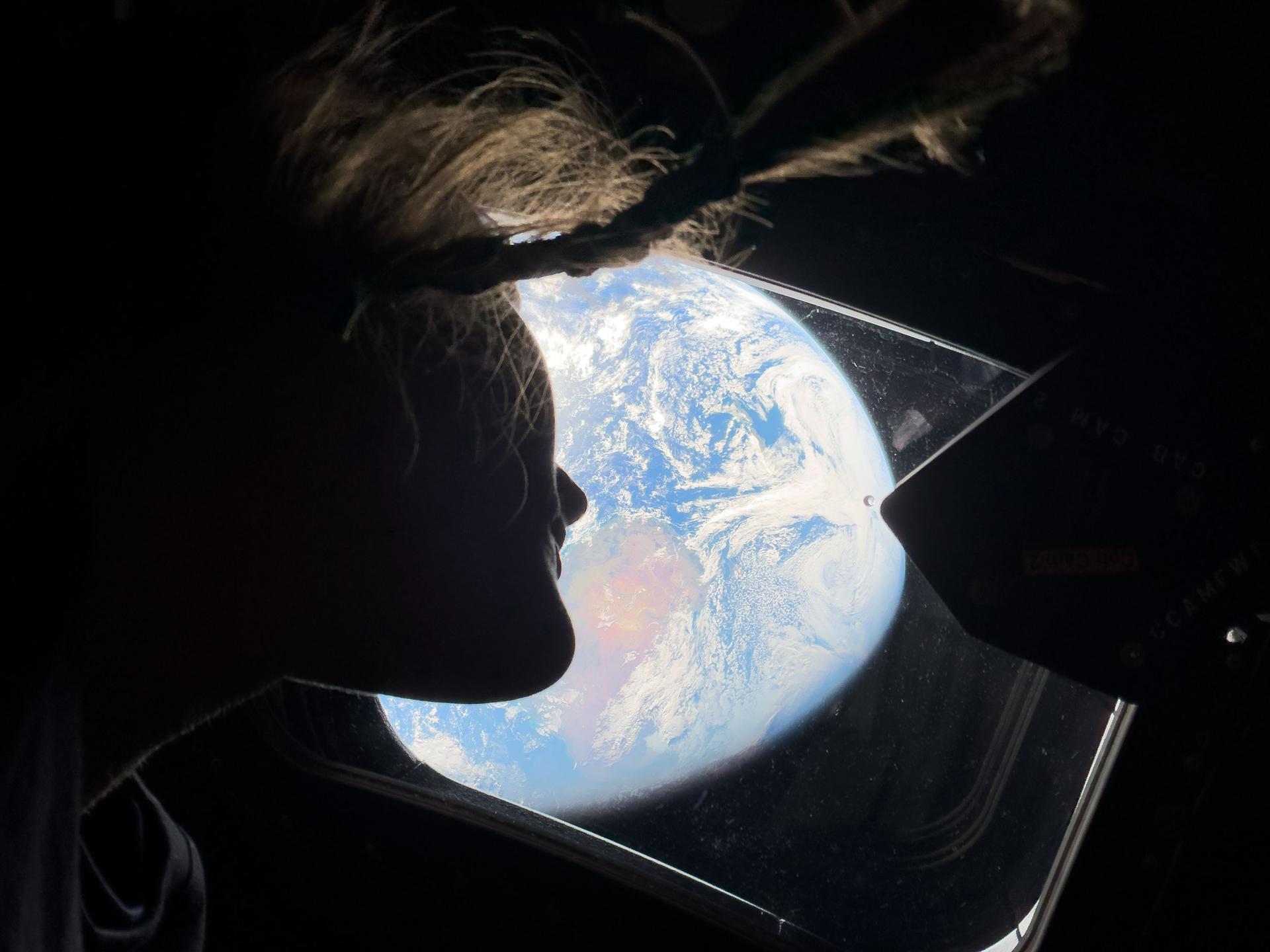
As the Artemis 2 mission unfolded in April, I found myself glued to NASA’s YouTube stream, in every room of our home. There were plenty of exciting events, from launch to lunar flyby to splashdown. But for me, the most thrilling moments weren’t what we saw. It was what we heard when the crew reacted to those sights: the farside of the Moon, a total solar eclipse, our own home planet. Their joyous exclamations were exhilarating. They reminded me of the same wonder I’ve heard when people look through a telescope and see the Moon or Saturn’s rings for the first time.
That’s the wonderful thing about space. It’s not just something we watch others explore — we can join in from our backyards. We can place our eyes in a stream of photons that, having traveled millions of light-years, end their journeys on our retinas, leaving an impression in our minds. With mirrors and an eyepiece, we can forge our own connection with the cosmos.
We’ve dedicated this issue to fostering that connection. In our cover story, Editor Emeritus Dave Eicher offers a year’s worth of objects to observe for all kinds of equipment, including smartscopes. Michael E. Bakich curates the greatest comets of this century and tours the oft-overlooked constellation Serpens. In a special section produced with our friends at Celestron, we provide a guide to buying a first telescope, while equipment guru Phil Harrington has compiled a primer on essential accessories. And on page 50, Stuart Atkinson brings us home with a story about observing and photographing perhaps the most fascinating object yet known: Earth.
Thank you for reading — and for finding us in this format. I want to thank Michael, a driving force behind this issue, who after two stints on the magazine’s staff is now a contributing editor. His writing on observing has shaped how generations of readers approach the night sky, and this issue wouldn’t be what it is without him.
We’ll have more on Artemis in an upcoming special issue.
I hope you enjoy this one.
Mark Zastrow
Editor-in-Chief