Looking for a sky event this week? Check out our full Sky This Week column.
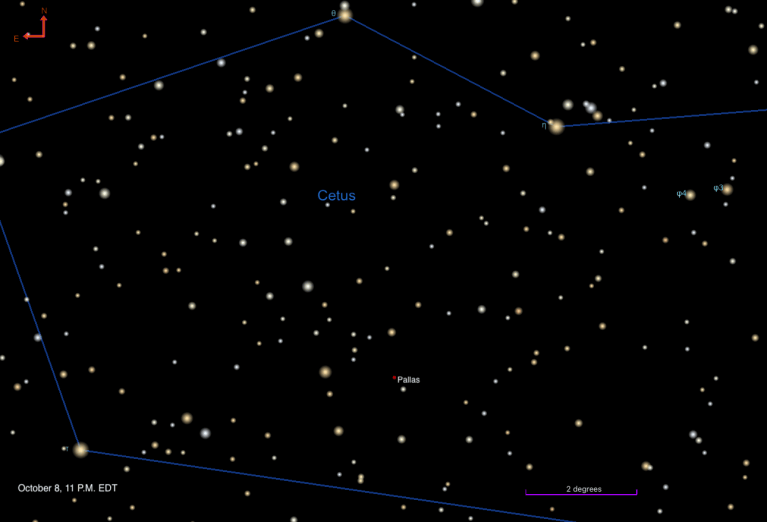
October 8: Perfectly placed Pallas
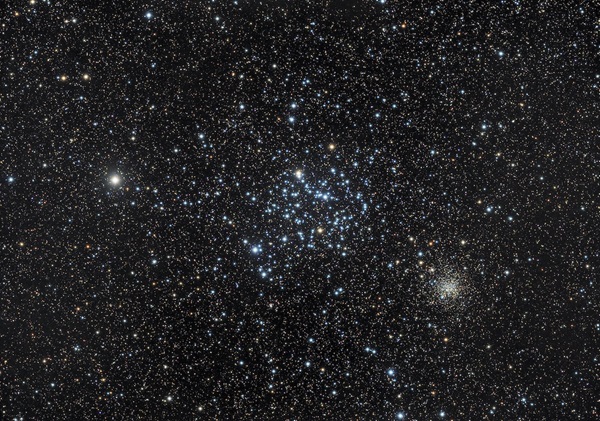
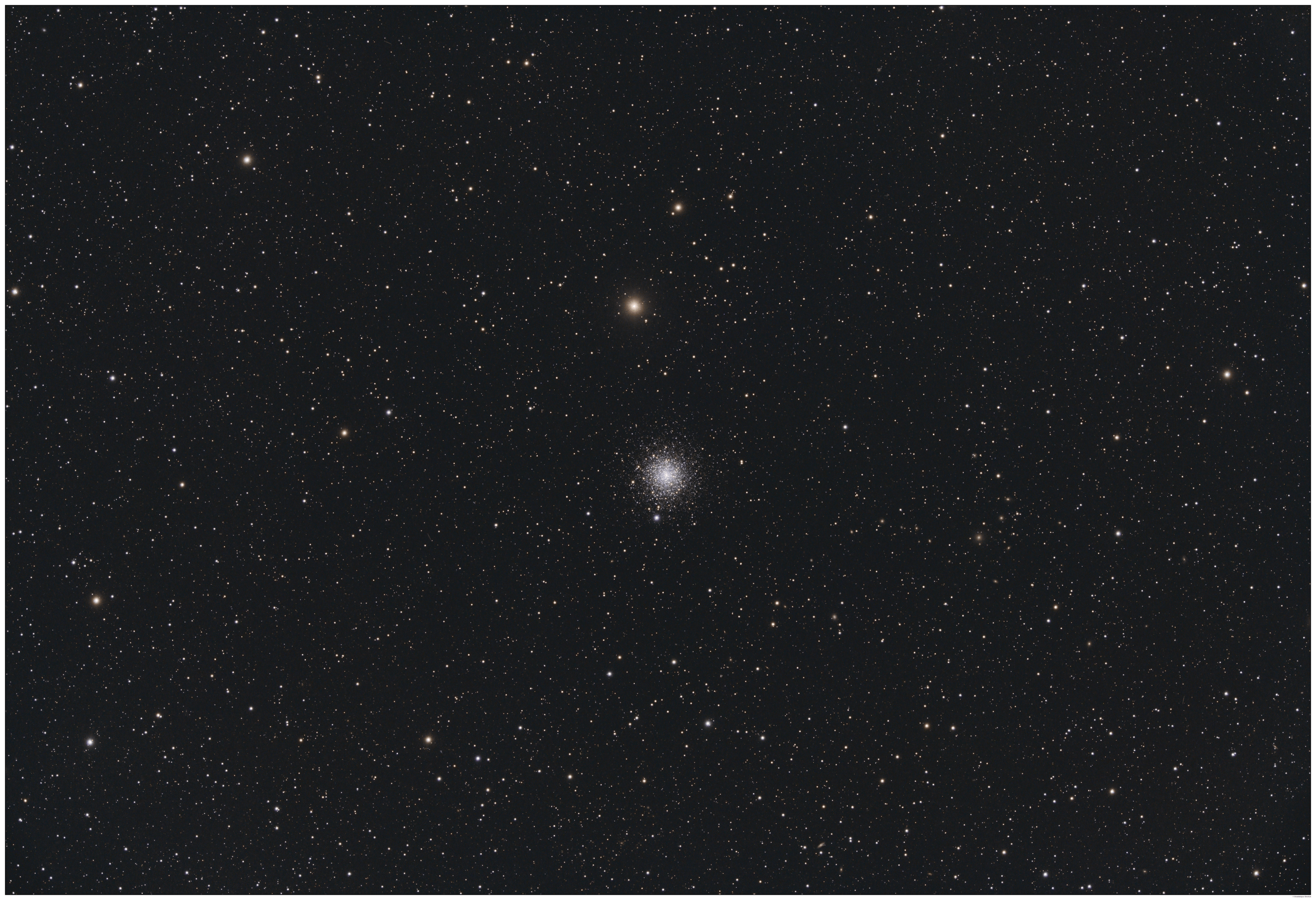
Swimming high above the southern horizon after dark, Capricornus the Sea Goat is home to just one Messier object: M30. This compact globular cluster shines at magnitude 7.2 and is perfectly positioned for viewing with binoculars or a small scope around 9:30 P.M. local daylight time this evening.
You can find M30 in the southeastern corner of Capricornus. It sits just over 3° east-southeast of 4th-magnitude Zeta (ζ) Capricorni. Spanning about 11’ in diameter, the cluster has a dense core of stars that is unresolvable in smaller scopes, but the outskirts of the cluster will easily separate into individual stars even with a 4-inch instrument. If you do have a larger telescope, do pull it out, as larger instruments reveal additional detail — especially in the cluster’s crowded central region.
Lying nearly 28,000 light-years from Earth, M30 is some 24,000 light-years from the center of our galaxy and orbits the Milky Way every 100 million years. Astronomers estimate this cluster is roughly 13 billion years old.
Sunrise: 7:04 A.M.
Sunset: 6:29 P.M.
Moonrise: 6:00 A.M.
Moonset: 5:49 P.M.
Moon Phase: New
*Times for sunrise, sunset, moonrise, and moonset are given in local time from 40° N 90° W. The Moon’s illumination is given at 10 P.M. local time from the same location.
Alison Klesman is senior editor of Astronomy magazine. She holds a Ph.D. in astronomy and has studied a variety of topics, from minor planets to supermassive black holes.