Mission Highlight: Crew-12
Editor’s Note: Due to weather, NASA has rescheduled the Crew-12 launch from Wednesday, Feb. 11, to no earlier than Thursday, Feb. 12 at 5:38 a.m. The new launch window has been updated in this story.
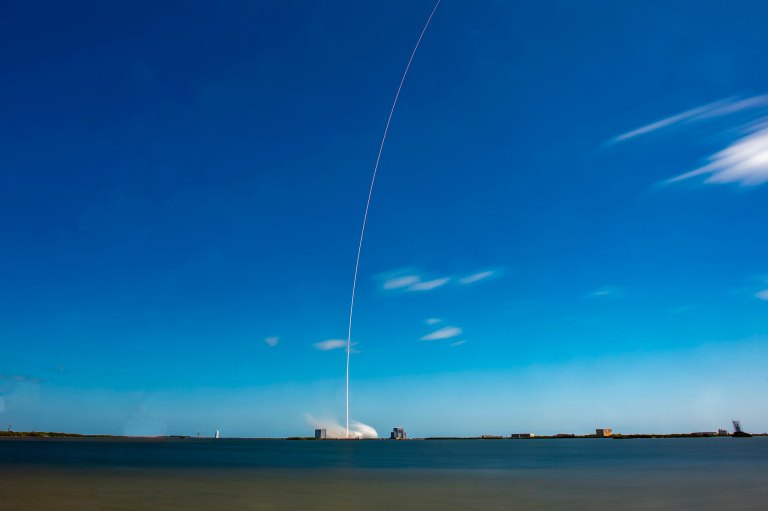
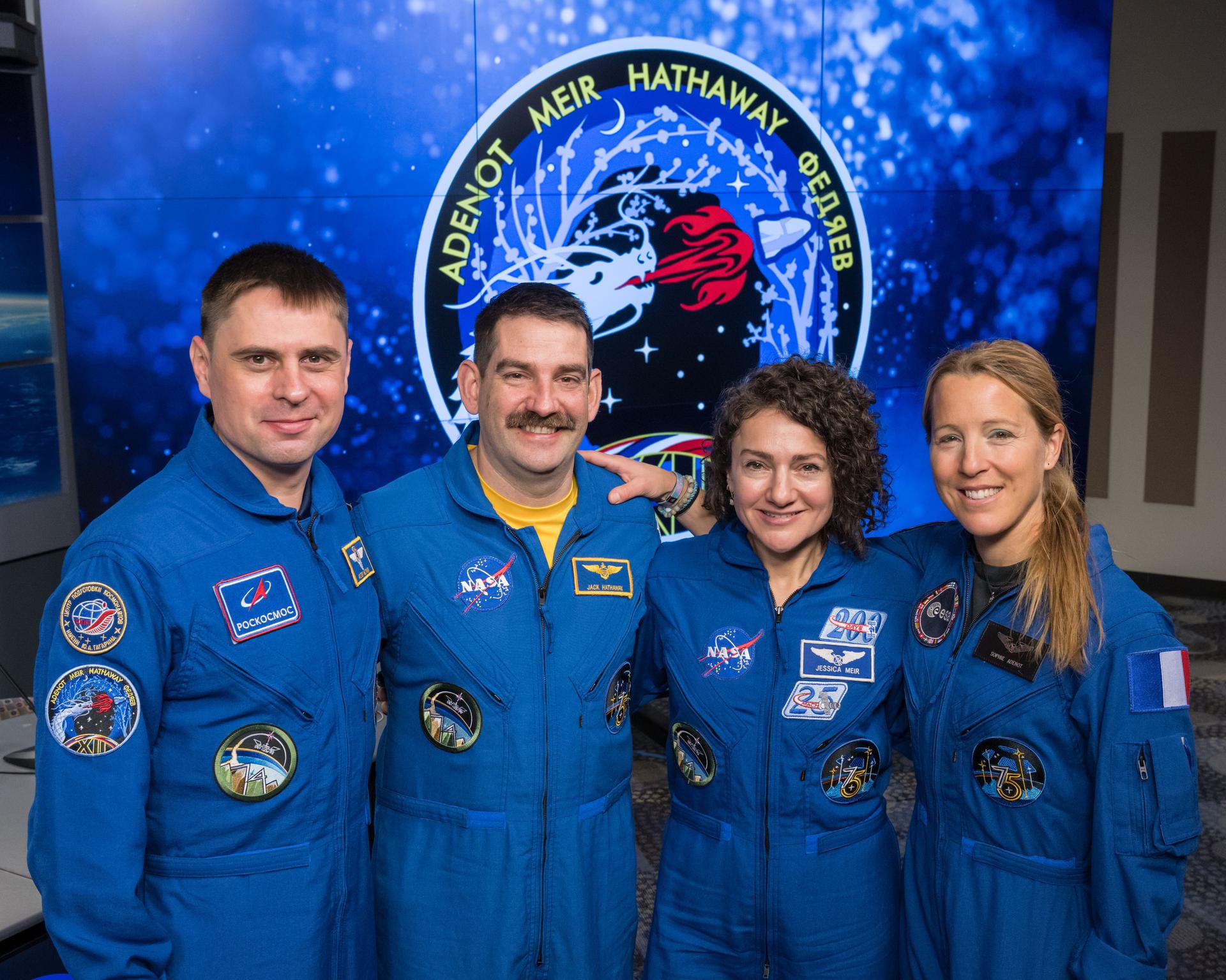
NASA and SpaceX are targeting Thursday, Feb. 12, at 5:38 a.m. EST for the launch of the Crew-12 mission from Space Launch Complex 40 at Cape Canaveral Space Force Station in Florida. The flight will carry an international team to the International Space Station (ISS), including NASA astronauts Jessica Meir (commander) and Jack Hathaway (pilot), European Space Agency (ESA) astronaut Sophie Adenot, and Roscosmos cosmonaut Andrey Fedyaev. The crew will fly aboard the Crew Dragon Freedom spacecraft, the fifth flight for the craft, which previously carried the Crew-4 and Crew-9 missions.
The launch follows the recent early return of the Crew-11 astronauts due to a medical situation, a shift that temporarily left the space station with a reduced crew and only one American aboard, NASA astronaut Chris Williams. To restore the station’s research capacity, NASA and SpaceX worked to move Crew-12 launch up from its Feb. 15 launch window. “It was a little bit more hectic for us than it normally would have been, but we fit everything in that we needed to,” Meir said in a Feb. 8 press conference, noting that the team adjusted its training to account for the expedited schedule.
During their long-duration stay, the crew will focus on science and technology demonstrations that prepare humanity for deep-space exploration, including a new exercise machine. ESA’s Enhanced Exploration Exercise Device (E4D) is a compact device that the entire crew will test during the mission. The E4D offers a wider range of exercise options than current equipment, including a rope system to allow astronauts to train pulling movements. The machine also features built-in cameras for immediate feedback and performance tracking, and serves as a technology demonstrator for the future Lunar Gateway.
Some of the crew will also participate in so-called “Manual Piloting” simulations. In an emergency, astronauts traveling to the moon or Mars might be required to land their spacecraft manually. The transition in gravity during that landing could be disorienting, especially after spending the duration of the flight in microgravity. To test how astronauts will handle this, members of Crew-12 will complete simulated lunar landings before, during, and after their stay on the ISS. These simulations will hopefully reveal how microgravity impacts the ability to safely land a vehicle on the moon. As Meir explained in the Feb. 8 press conference, “You’re looking at your fuel. You know, you’re steering over to your landing site. The goal … is to understand what these gravitational transitions will do to a human’s ability to perform those kinds of activities.”
Other missions this week
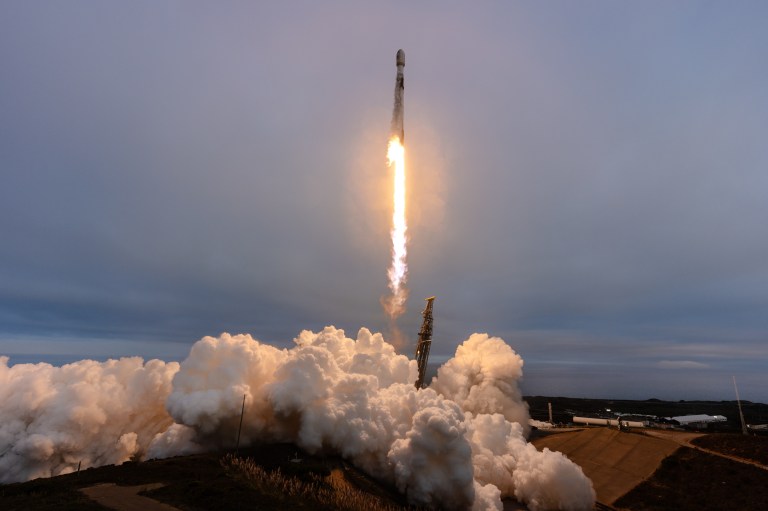
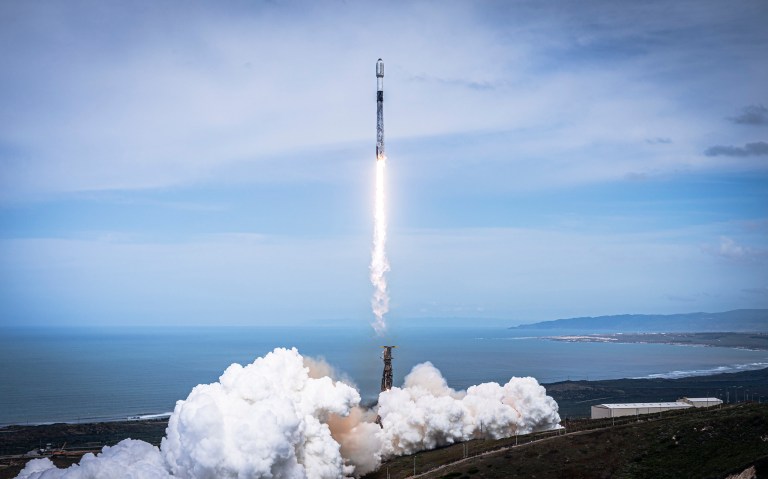
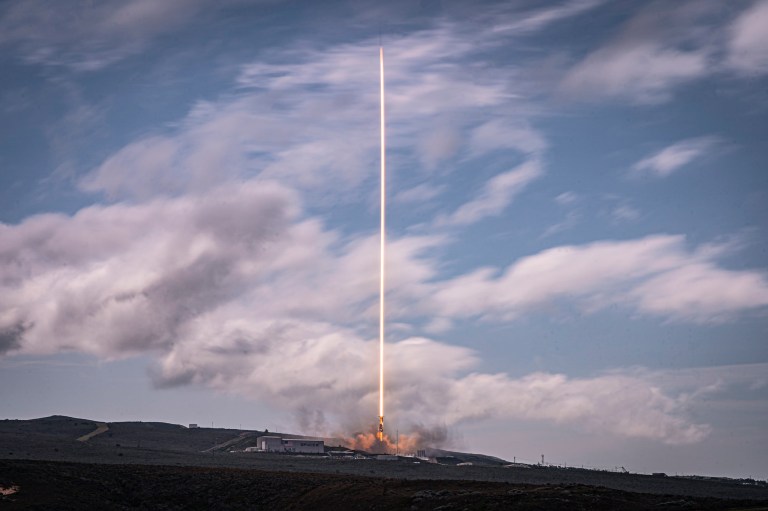
On Wednesday, Feb. 11, SpaceX is scheduled to launch the Starlink Group 17-34 mission from Vandenberg Space Force Base in California at 9:07 a.m. EST. The Falcon 9 first-stage booster will attempt a landing on the droneship Of Course I Still Love You in the Pacific Ocean.
On Thursday, Feb. 12, a Jielong 3 rocket is scheduled to lift off from the Haiyang Oriental Spaceport in China at 1:30 a.m. EST, carrying an unknown payload into orbit for Chinarocket.
Later in the morning, a Vulcan VC4S rocket is scheduled to launch from Cape Canaveral Space Force Station on Thursday, Feb. 12, at 3:30 a.m. EST. This mission, designated USSF-87, will deploy the Geosynchronous Space Situational Awareness Program (GSSAP) 7 and 8 satellites for the United States Space Force to enhance its space surveillance.
On the other side of the globe, Roscosmos is preparing a Proton-M rocket to launch the Elektro-L n°5 weather satellite from the Baikonur Cosmodrome in Kazakhstan on Thursday, Feb. 12 at 3:52 a.m. EST.
Wrapping up Thursday’s busy launch schedule, Arianespace will debut the Ariane 64 rocket (a more powerful variant of the Ariane 6) from the Guiana Space Centre in French Guiana at 11:45 a.m. EST, carrying a large-scale deployment of satellites for Amazon’s Project Kuiper – a first for Arianespace.
Closing out the week on Valentine’s Day, Saturday, Feb. 14, a couple of Starlink launches take flight. The first will lift off from Cape Canaveral at 12:00 a.m. EST with the booster slated to land on the droneship A Shortfall of Gravitas, followed by a second launch from Vandenberg at 5:00 p.m. EST targeting a landing on Of Course I Still Love You.
Last week’s recap
The first week of February was defined by a steady cadence of launches.
On Monday, Feb. 2, SpaceX successfully launched the Starlink Group 17-32 mission from Vandenberg at 10:47 a.m. EST. This was followed on Thursday, Feb. 5, by a Russian military launch as a Soyuz 2.1b sent a classified Cosmos payload into orbit from the Plesetsk Cosmodrome at 1:59 p.m. EST.
On Friday, Feb. 6, China Aerospace Science and Technology Corporation (CASC) launched an experimental spaceplane aboard a Long March 2F rocket from the Jiuquan Satellite Launch Center at 10:58 p.m. EST. The Chinese government has kept information about the mission and the vehicle relatively secret, but it’s thought to be modeled after the U.S. Space Force’s X-37B. This mission marks its fourth launch, with previous flights appearing to deploy small companion satellites while in orbit, according to reporting from Space News. The week concluded on Saturday, Feb. 7, with SpaceX launching the Starlink Group 17-33 mission from Vandenberg at 3:58 p.m. EST.
Looking ahead
On Tuesday, Feb. 17, SpaceX is slated to launch the Starlink Group 10-36 mission from Cape Canaveral at 5:00 p.m. EST.
On Wednesday, Feb. 18, the SpaceX cadence continues with the Starlink Group 17-25 mission launching from Vandenberg at 3:00 a.m. EST. Later that evening, Firefly Aerospace is scheduled to launch its Alpha rocket on the “Stairway To Seven” mission from Vandenberg at 7:50 p.m. EST.
On Thursday, Feb. 19, SpaceX is targeting 9:56 p.m. EST for the launch of the Starlink Group 6-104 mission from Cape Canaveral.
On Friday, Feb. 20, the Indian Space Research Organisation (ISRO) is scheduled to launch the EOS-05 Earth observation satellite aboard a GSLV Mk II rocket from the Satish Dhawan Space Centre at 5:30 a.m. EST.