Astronomy forum Connect with fellow astronomy enthusiasts!
Get started
Skip to content
Astronomy Magazine logo
  • Login / Register
  • Logout
  • Shop
  • Subscribe

  • News
  • Science
    • Solar System
    • Exoplanets
    • Stars
    • Milky Way
    • Galaxies
    • Exotic Objects
    • Cosmology
  • Observing
    • In The Sky
    • Upcoming Events
    • The Sun
    • The Moon
    • Planets
    • Comets
    • Deep-Sky Objects
    • Observing Basics
    • Telescopes and Equipment
    • Astrophotography
    • Gear Guide
    • This Week in Astronomy
  • Space Exploration
    • What’s Launching This Week
    • Human Spaceflight
    • Robotic Spaceflight
  • The Magazine
  • Ask Astro
  • Star Products
  • Login / Register
  • Logout
  • Shop
  • Subscribe

Observing

Composite photograph of a deep blue night sky above a grove of dark pine and deciduous trees beside a small pond on a grassy, golf-course-like landscape. Nearly a dozen thin green-teal Orionid meteors streak across the sky, most angled diagonally from upper left to lower right. The constellation Orion, including its Belt and the glowing Orion Nebula, appears at left of center. A pale glow of light pollution along the horizon, with a few orange and white lights reflecting on the pond, brightens the sky behind the trees.
Sky This Week, The Sky This Week

The Sky This Week from October 16 to 23: The Orionid meteor shower peaks

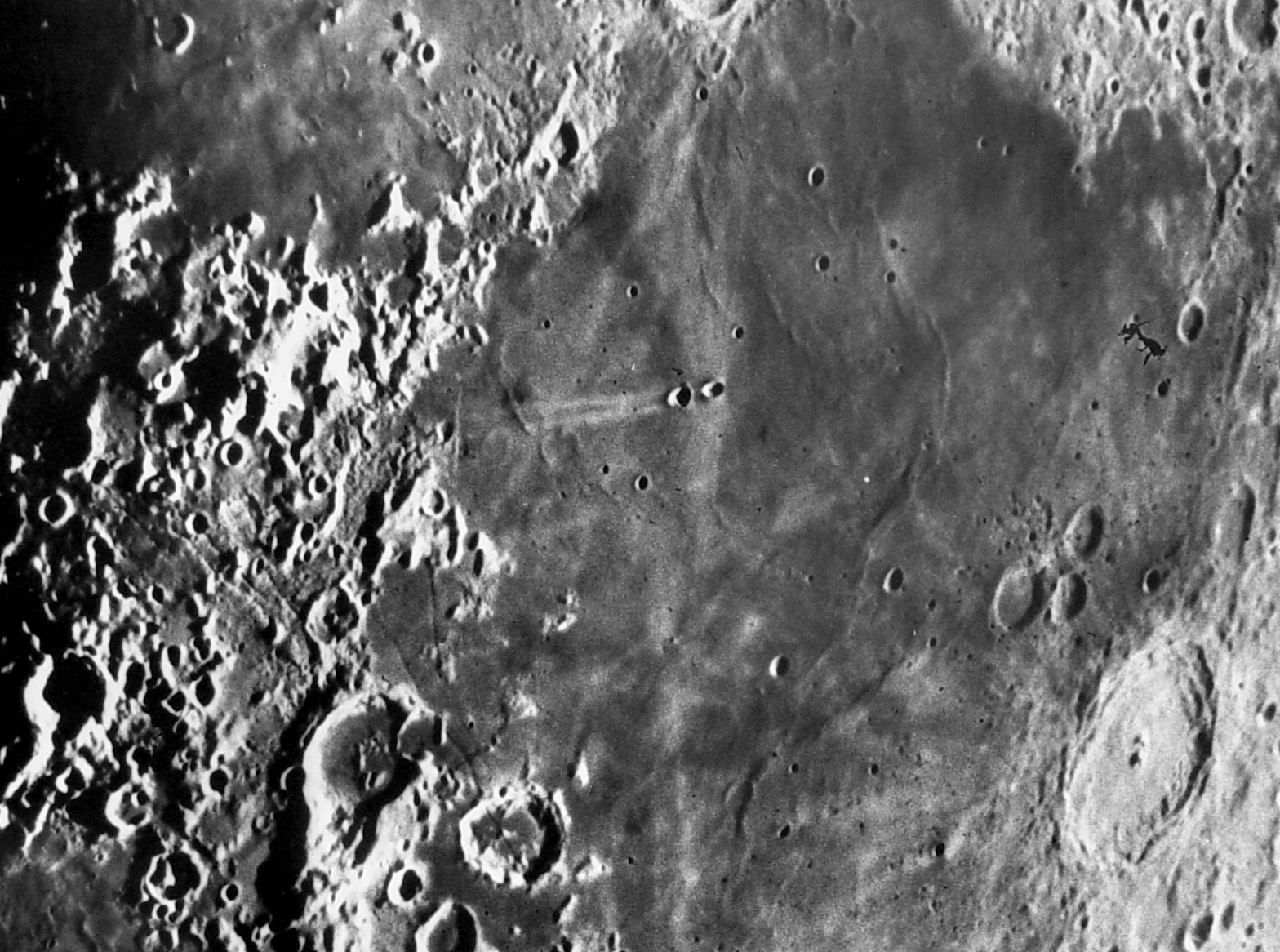
Black-and-white photograph of a region of the Moon's surface, showing a broad, dark, smooth lava plain at center bordered by rugged, heavily cratered highlands at left. Numerous small craters dot the plain, a bright ray-like streak runs near a pair of craters at center left, and a large, shallow crater with terraced walls sits at lower right. A small dark smudge or speck appears at upper right.
Observing

The Sky Today on Thursday, October 15: Double crater Messier

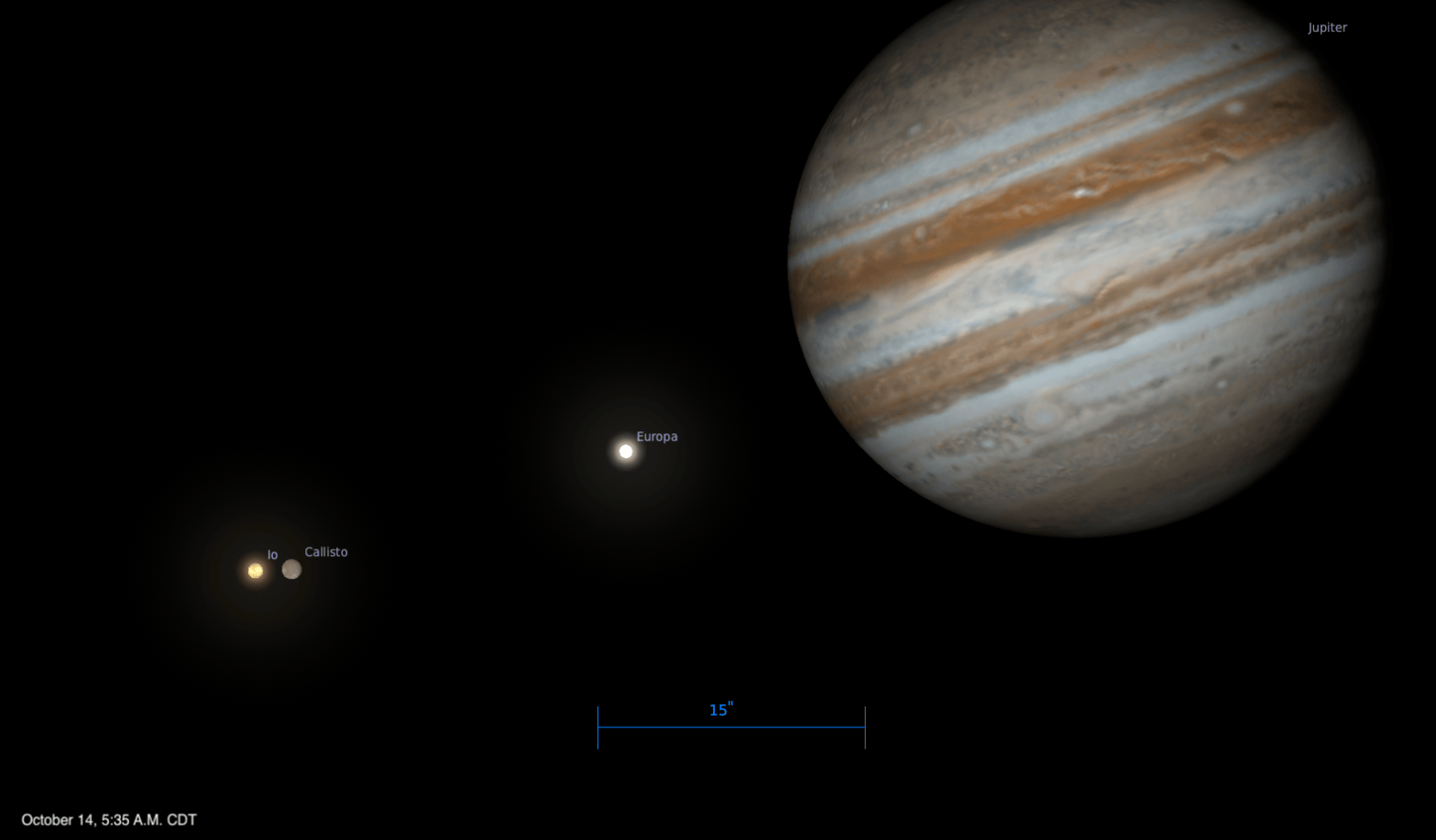
Telescopic simulation of Jupiter and its moons, dated October 14, 2026, 5:35 A.M. CDT. Jupiter appears at upper right with its tan, brown, and white cloud bands, while Europa is labeled as a bright point at center. Io and Callisto are labeled close together at left, with Io glowing yellow-white and Callisto appearing as a small gray disk. A 15 arcsecond scale bar sits at bottom center.
Observing

The Sky Today on Wednesday, October 14: Io covers Callisto

Features, Gear Guide, Telescopes and Equipment

Our 16th annual star products

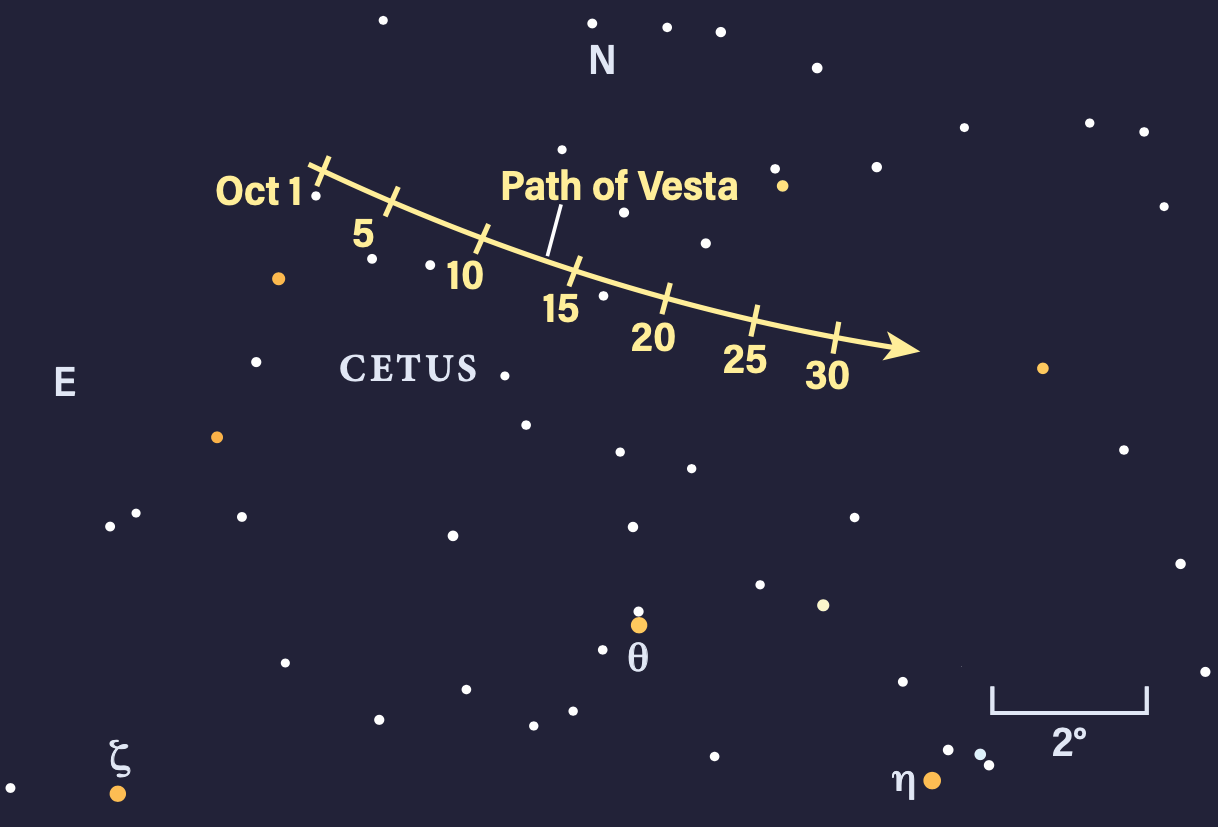
Path of asteroid Vesta in October 2026
Observing

The Sky Today on Tuesday, October 13: Vesta at opposition

Deep-Sky Objects

Autumn observing targets for large telescopes

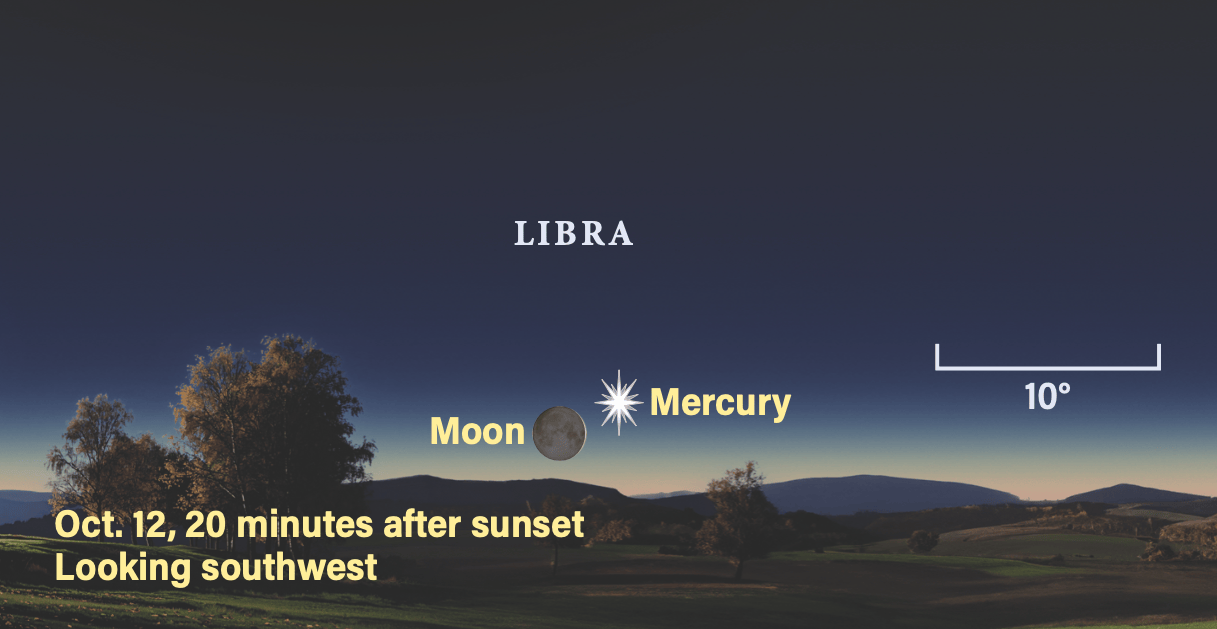
The sky on October 12, 2026, 20 minutes after sunset, looking southwest
Observing

The Sky Today on Monday, October 12: Mercury at greatest elongation

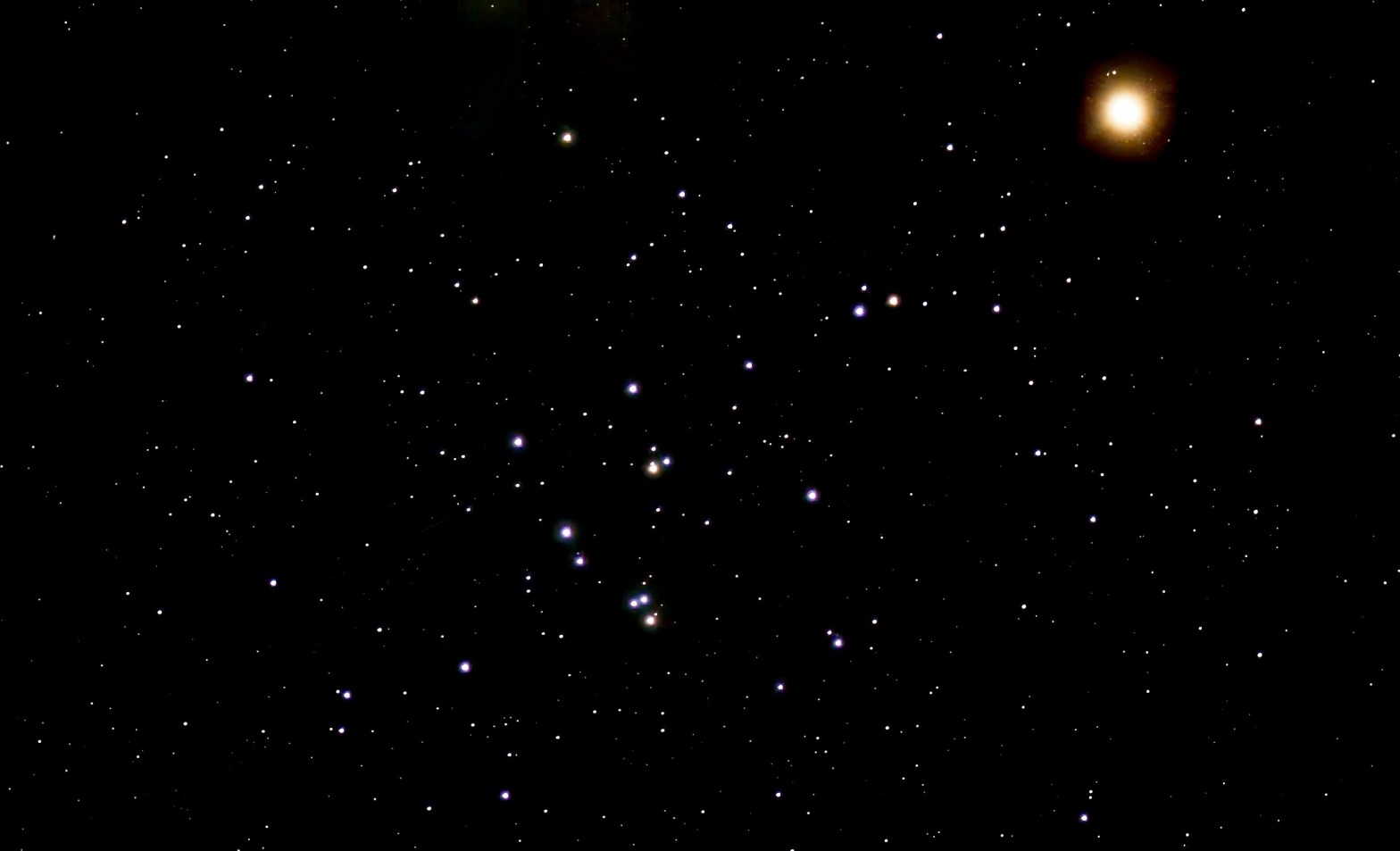
Photograph of the Beehive Cluster (M44) as a loose scattering of blue-white stars with a few orange stars across the lower center of the frame, set against a black sky filled with fainter stars. Mars appears at upper right as a bright, glowing orange-red disk.
Observing

The Sky Today on Sunday, October 11: Mars meets the Beehive

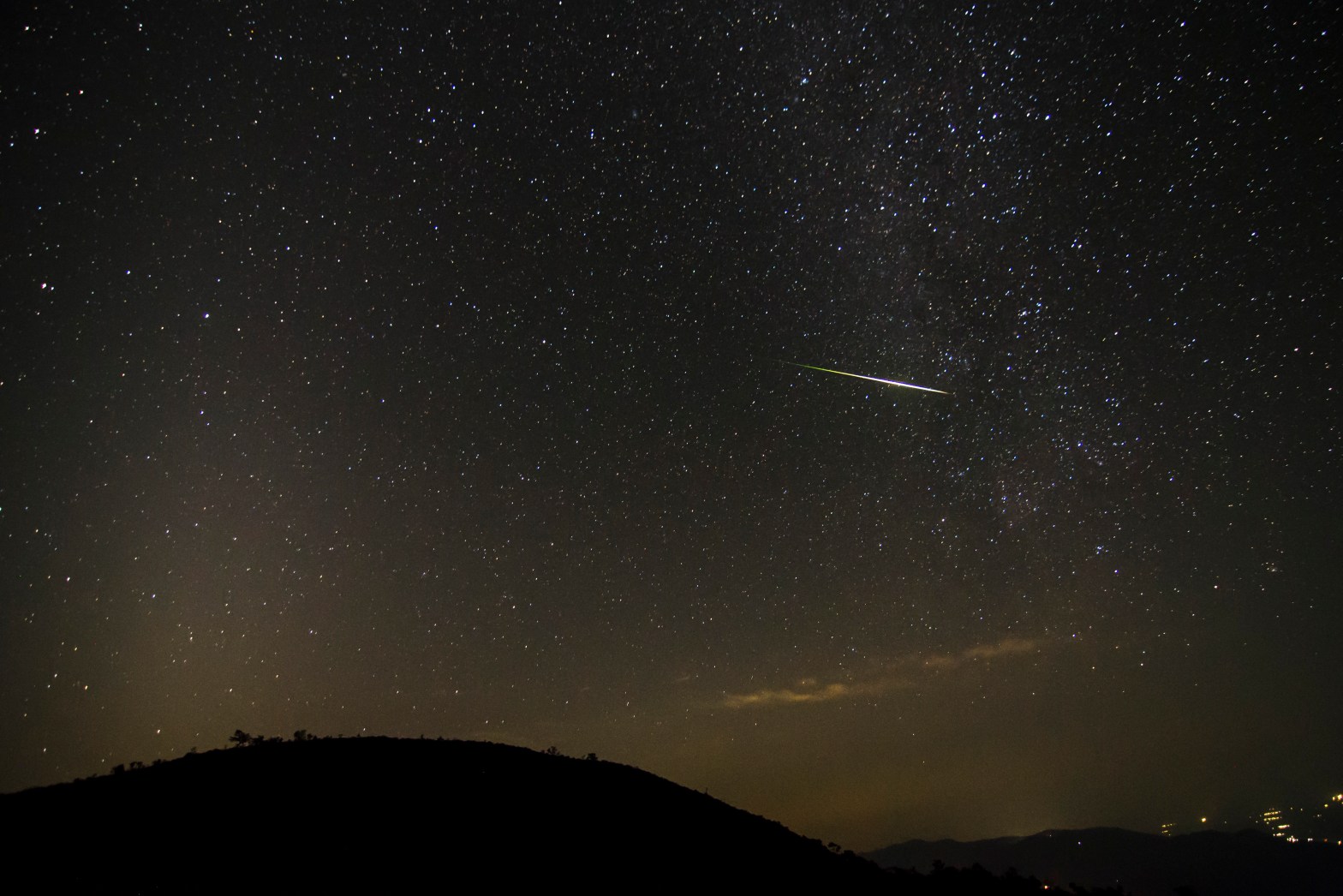
Photograph of a star-filled night sky over the dark silhouette of a hill, with a bright green-yellow Orionid meteor streaking diagonally at center right. The Milky Way is visible at upper right, a faint tan glow of zodiacal light rises from the horizon, thin clouds lie low at right, and a few distant town lights appear at lower right.
Observing

The Sky Today on Saturday, October 10: Catch the zodiacal light

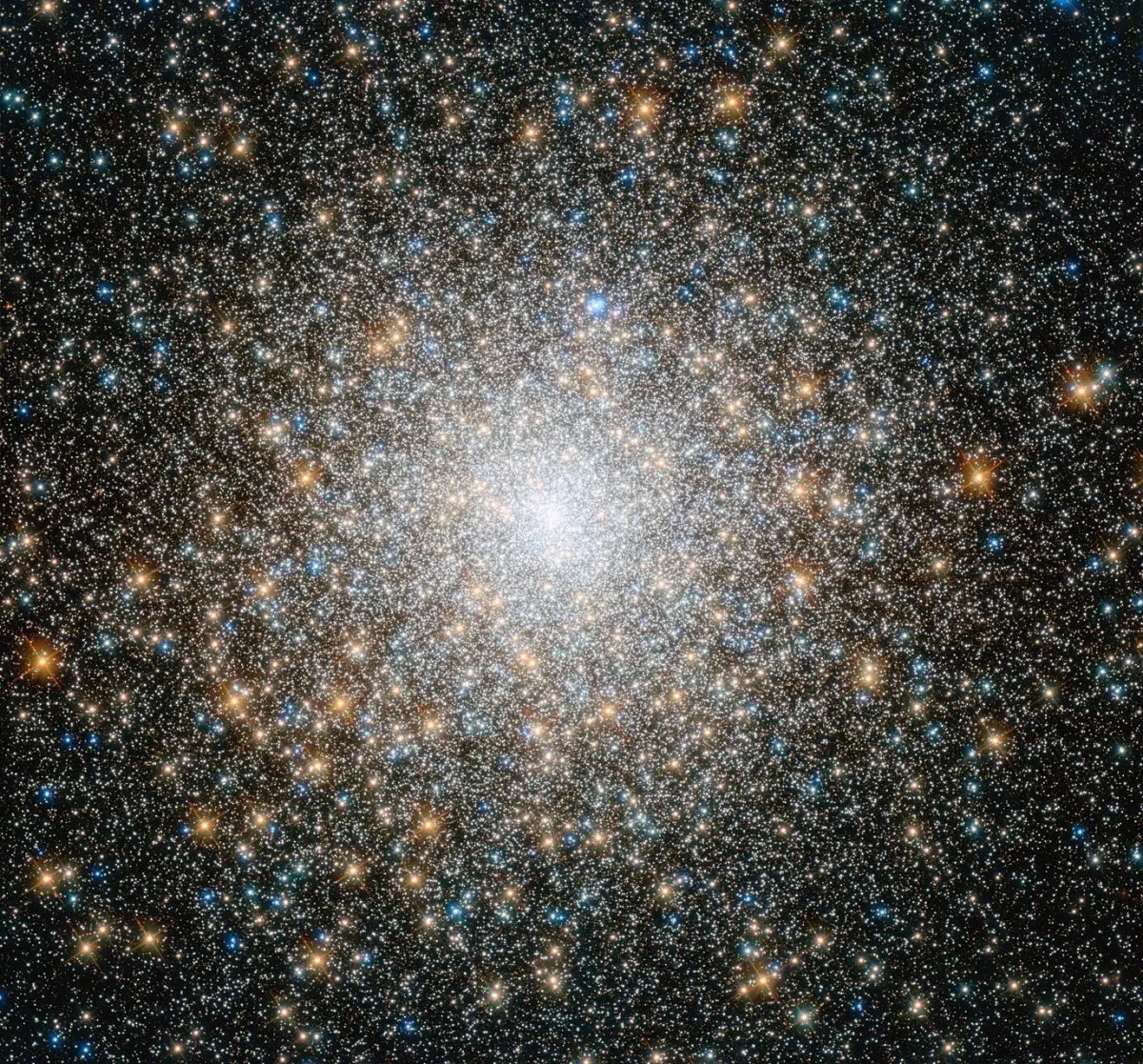
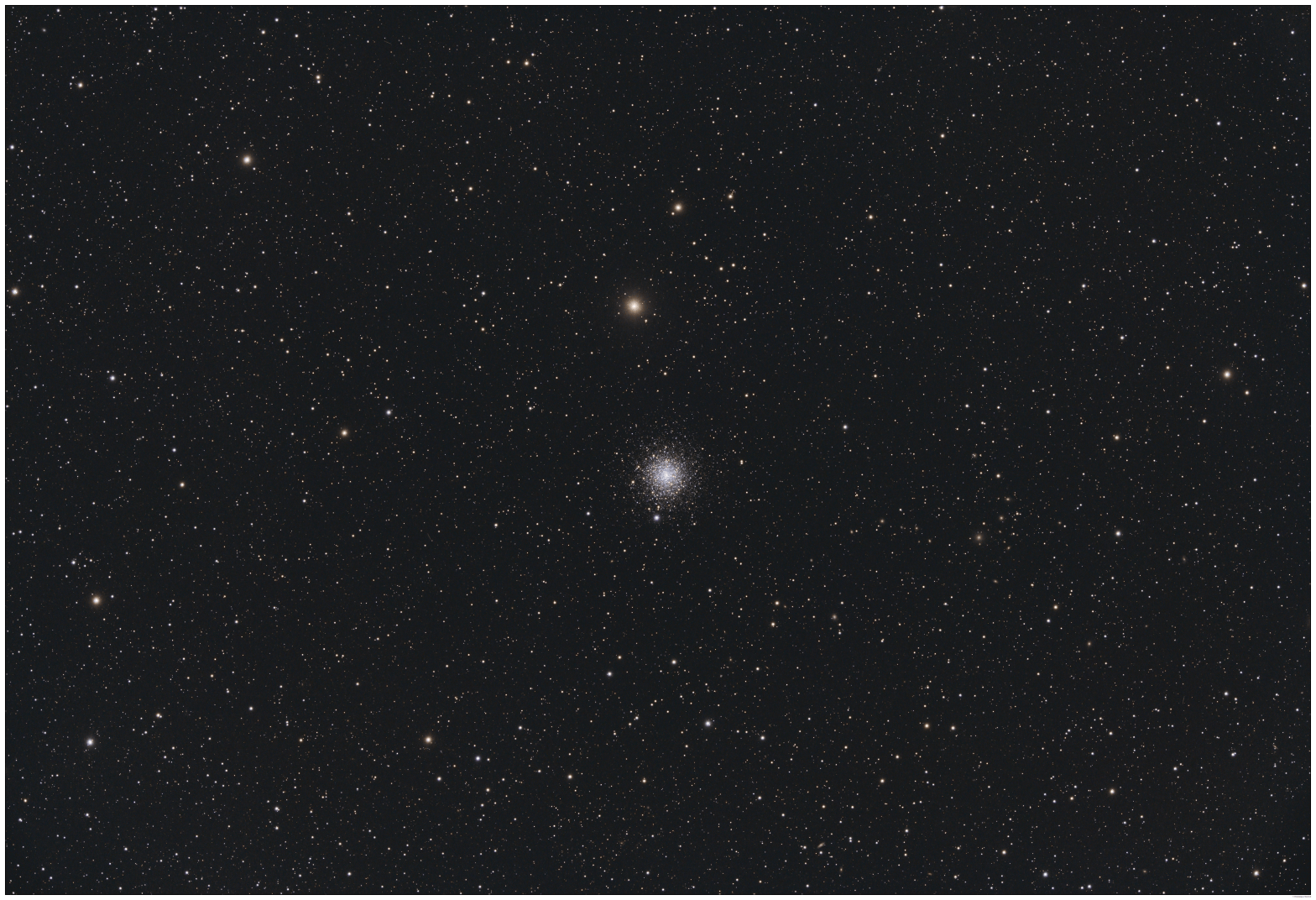
Grayscale astrophotograph of a dense globular star cluster at center, appearing as a bright concentrated ball of tightly packed stars that thins into a loose scattering of stars toward the edges, set against a sparse field of background stars.
Observing

The Sky Today on Friday, October 9: Dense, ancient M30

Photograph of the Beehive Cluster (M44) as a loose scattering of blue-white stars with a few orange stars across the lower center of the frame, set against a black sky filled with fainter stars. Mars appears at upper right as a bright, glowing orange-red disk.
Sky This Week, The Sky This Week

The Sky This Week from October 9 to 16: Mars passes through the Beehive

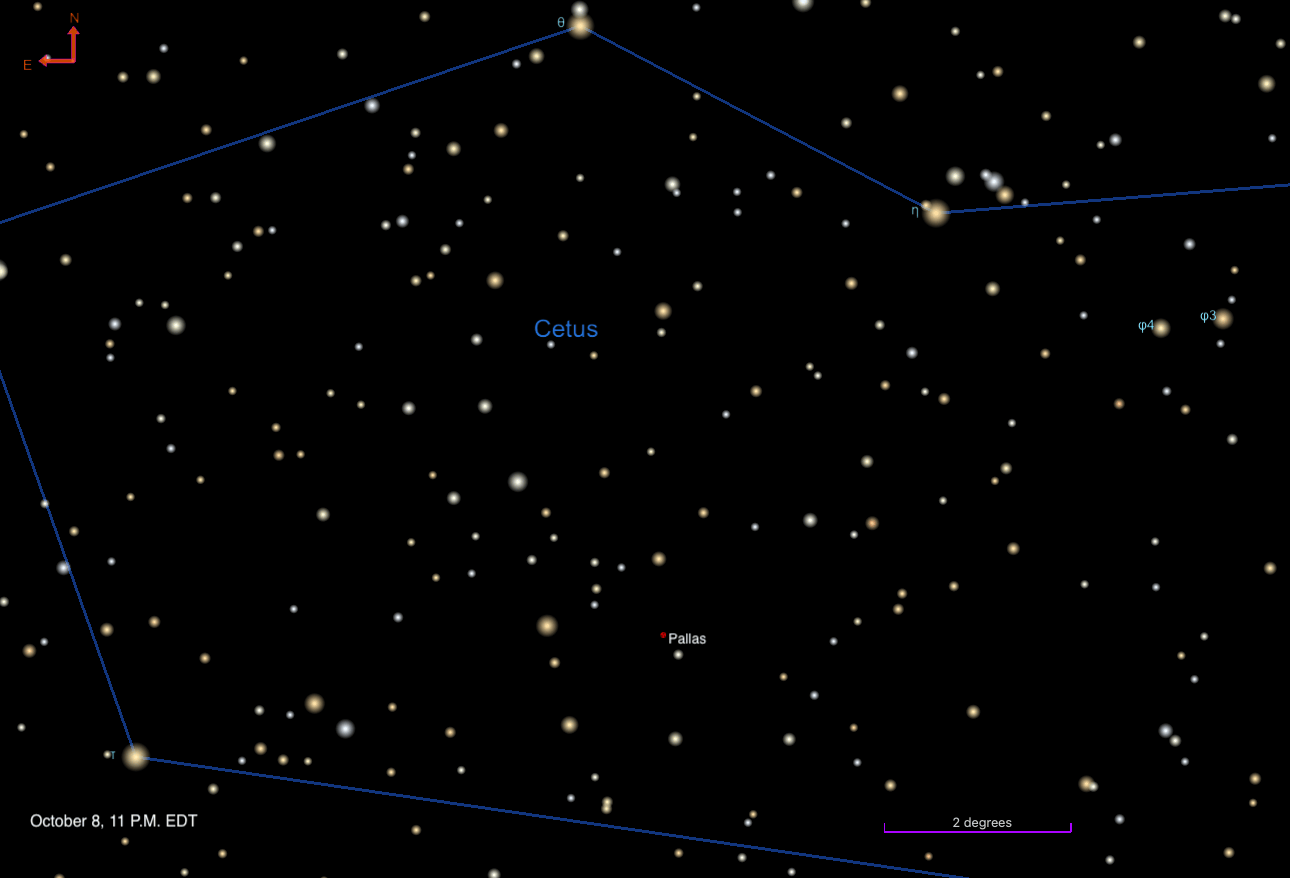
Star chart of the constellation Cetus outlined in blue with labeled stars theta, eta, phi4, phi3, and tau, dated October 8, 2026, 11 P.M. EDT. The asteroid Pallas is marked as a small red dot near the center of the constellation among numerous pale yellow and white field stars. A compass arrow indicates north and east at upper left, and a 2 degree scale bar sits at lower right.
Observing

The Sky Today on Thursday, October 8: Perfectly placed Pallas

Posts pagination

Newer posts 1 2 3 4 … 147 Older posts

Astronomy Newsletter

Get newsletters, updates and special offers via email from Astronomy.com!

Please enter a valid email address.
Astronomy Magazine logo
  • Facebook
  • LinkedIn
  • YouTube
  • Instagram
  • Twitter
  • About Us
  • Contact Us
  • Subscribe
  • Customer Service
  • Advertising
  • Terms of Use
  • Privacy Policy
  • Do Not Sell

@ 2025 Firecrown Media. All Rights Reserved.

More Sites from Firecrown Media Publisher logo
Scroll to Top

Sign In

New User? Create an Account

Why Sign In? Subscribers can access their digital magazine issues, and registered users can participate in our Community forums and galleries.

Please enter your email.
Please enter your password.

Lost your password?

Manage My AccountCustomer Support