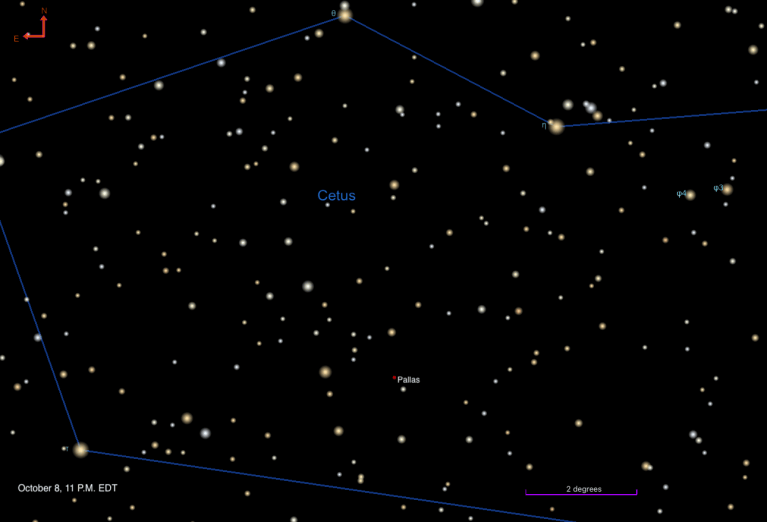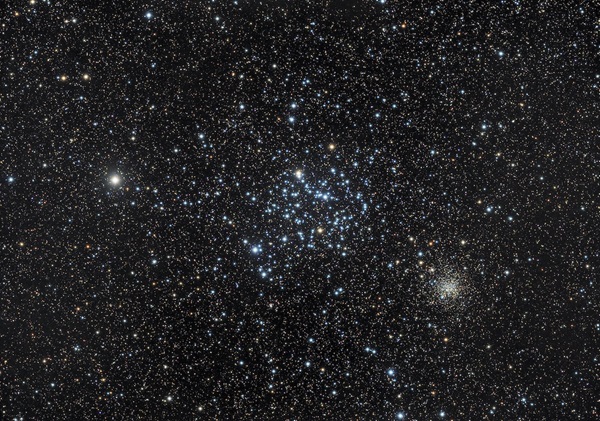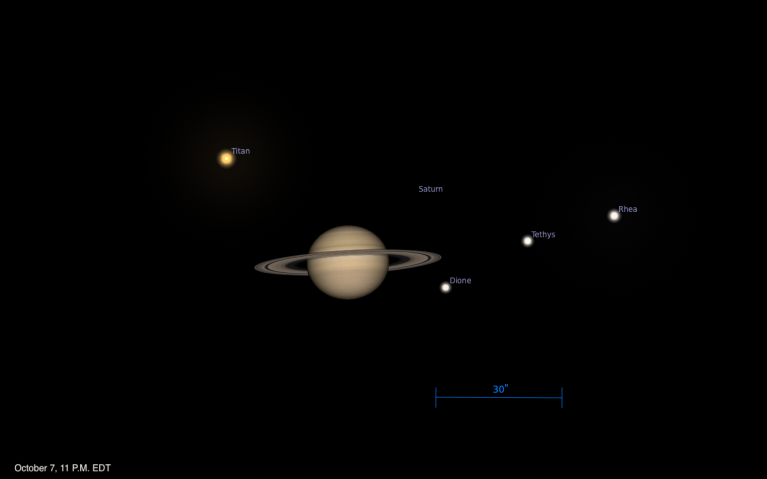
Looking for a sky event this week? Check out our full Sky This Week column.
October 10: Catch the zodiacal light
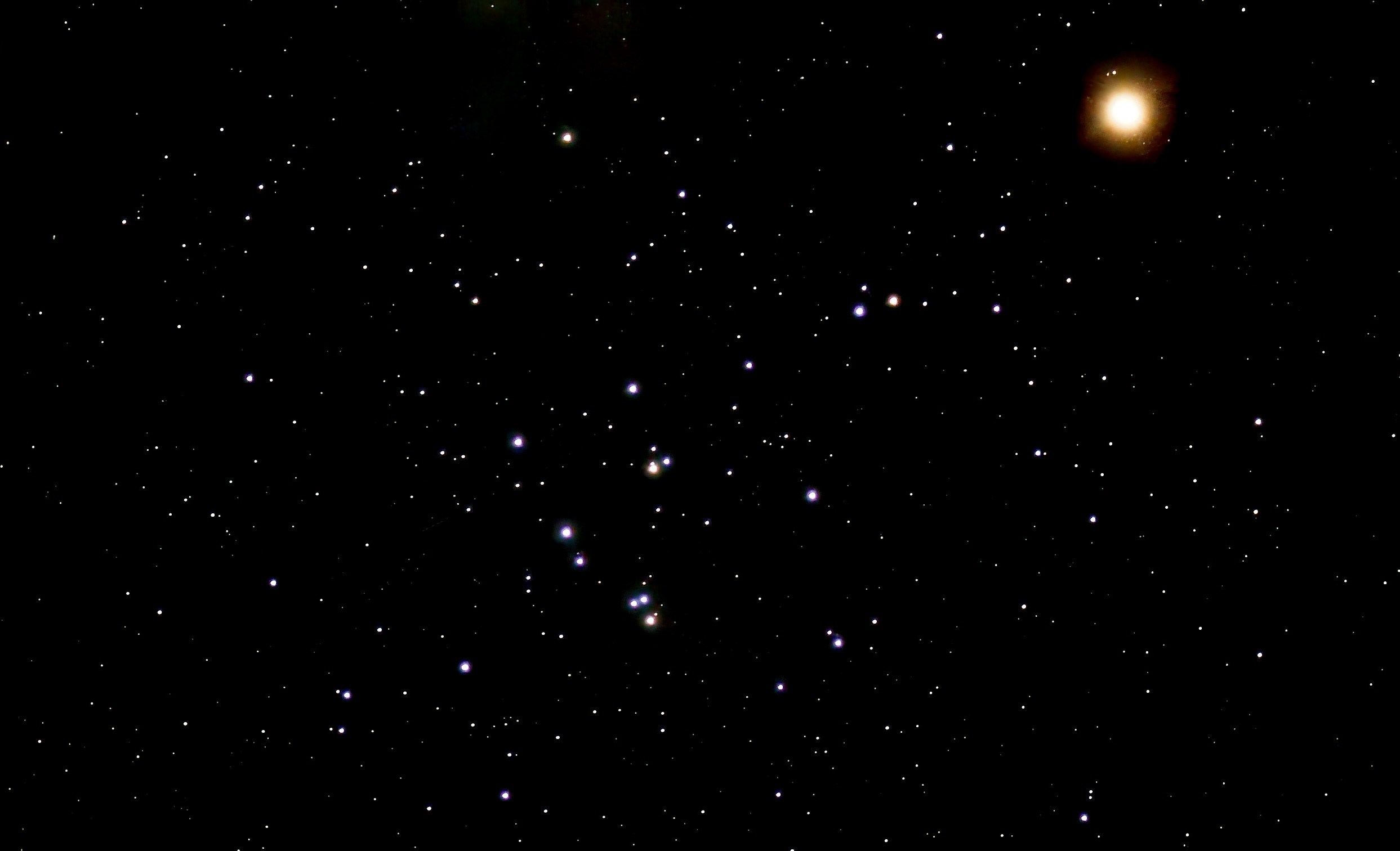
Early risers can catch a stunning sight this morning as magnitude 1.1 Mars makes its way through the Beehive Cluster (M44) in central Cancer.
Rising around 1 A.M. local daylight time, Mars is already 30° high in the east by 4 A.M. If you’re observing from a particularly dark site, you may be able to see the Beehive’s stars without optical aid — they shine collectively at magnitude 3.7, well within naked-eye range. This nearby open cluster is also quite large, spanning nearly 100’ on the sky, and appears as a fuzzy glow without optical aid. It has been known since antiquity and has carried several names, including Praesepe, which is Latin for manger.
Pull out binoculars or any size telescope, and you’ll get a clearer view of the Red Planet floating amid a gaggle of pinprick white and blue stars. Within 10 minutes or so, you’ll be able to note the bright, orange-hued planet’s motion through the cluster, as Mars appears to track across the sky while the more distant stars appear fixed. Make a few sketches or snap a couple of photos over the course of just an hour, and you’ll definitely see the difference.
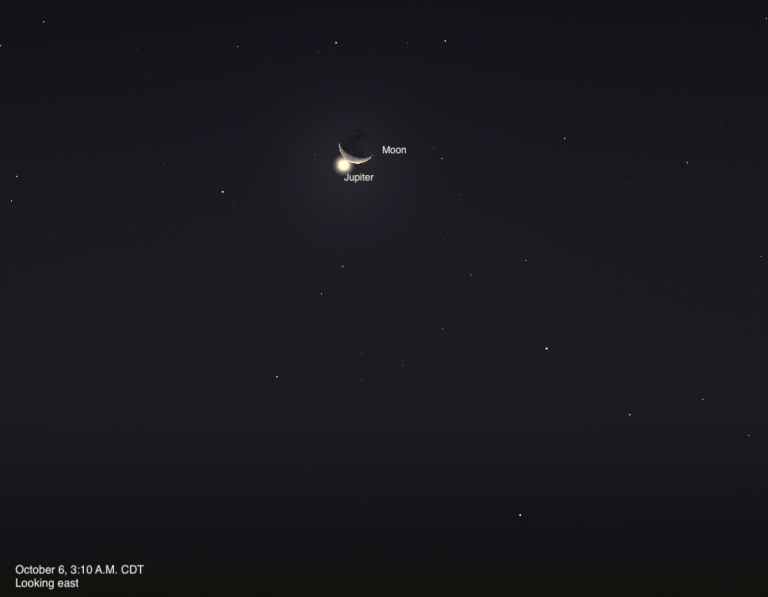
Closer to the horizon, bright Jupiter leads the constellation Leo into the sky, standing near the border the Lion shares with the Crab. Take a wide-field nightscape photograph, and you’ll be able to catch both planets in the predawn sky.
The Moon passes 3° north of Venus at 11 P.M. EDT, although neither is above the horizon at that time. The pair sets just minutes after sunset, meaning you likely won’t be able to catch Venus at all. You can, however, spot the crescent Moon setting in the west at the same time the Sun is disappearing from view as well.
Sunrise: 7:07 A.M.
Sunset: 6:26 P.M.
Moonrise: 8:13 A.M.
Moonset: 6:38 P.M.
Moon Phase: Waxing crescent (2%)
*Times for sunrise, sunset, moonrise, and moonset are given in local time from 40° N 90° W. The Moon’s illumination is given at 10 P.M. local time from the same location.
Alison Klesman is senior editor of Astronomy magazine. She holds a Ph.D. in astronomy and has studied a variety of topics, from minor planets to supermassive black holes.