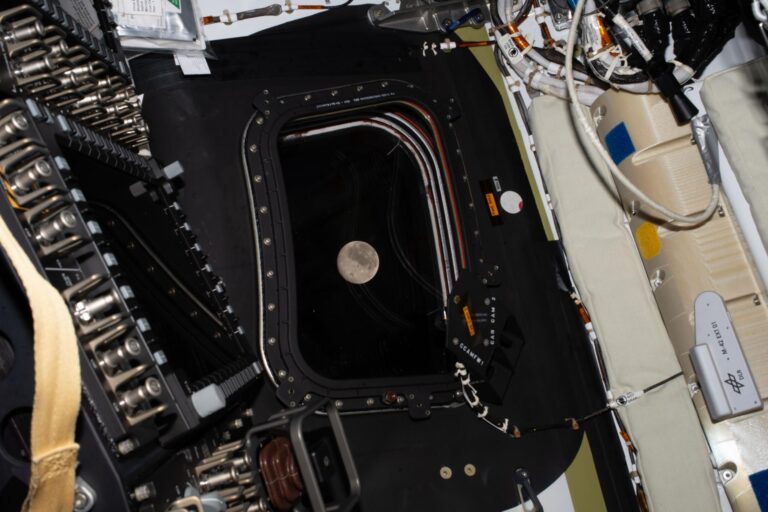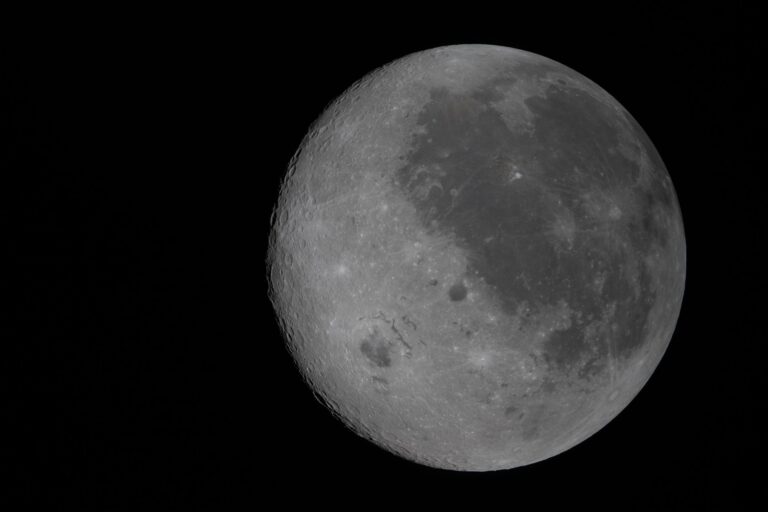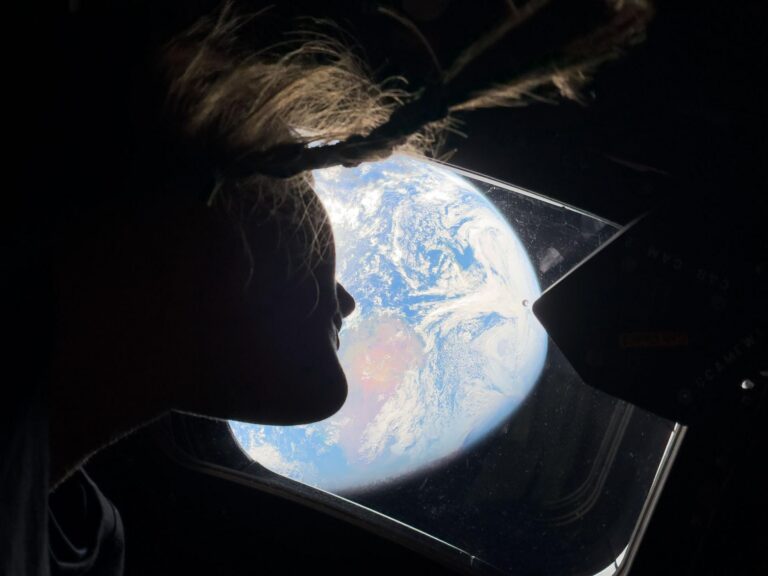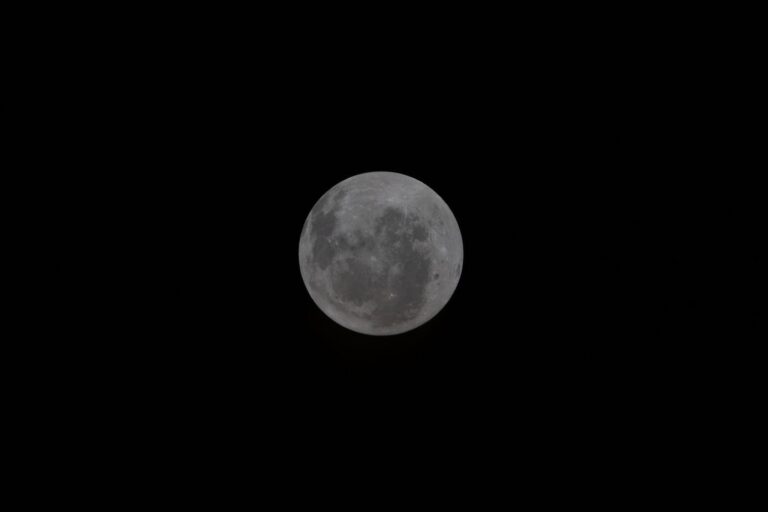
Today marks day 6 of flight for the Artemis 2 crew, who are preparing to make the first human lunar flyby since Apollo 17 in 1972. Here’s how to watch nearly every moment of it and track the spacecraft Integrity from your smartphone or computer.
Track Integrity’s every move
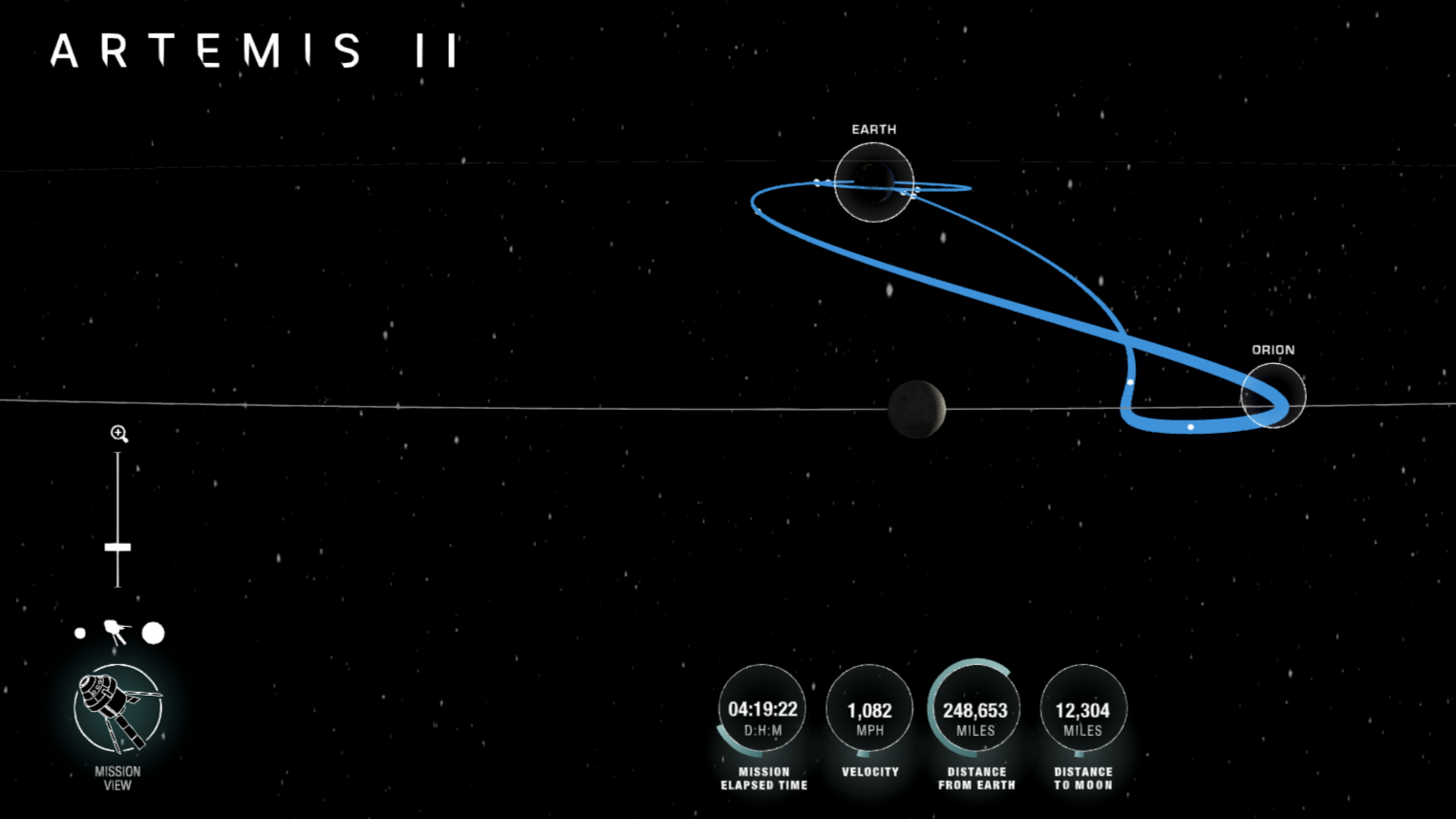
Want to follow the spacecraft’s exact position as it swings around the Moon? NASA’s Artemis Real-time Orbit Website (AROW) lets anyone with internet access track where Orion is, including its distance from Earth, distance from the Moon, speed, and elapsed mission time — the same data being fed to Mission Control in Houston.
AROW is available online and through the NASA mobile app. On the desktop version, you can toggle between a simulated camera fixed outside Orion and an overall mission view. In the Orion camera view, you can rotate around to see the Moon, the Sun, and Earth in relation to the spacecraft. Switch to the mission view, and you can center on Earth, the Moon, or Orion itself to get a sense of how everything relates in real time.
The mobile app offers the same viewing options with one addition: an augmented reality mode that shows you exactly where Orion is relative to your physical location on Earth. After a brief calibration sequence, on-screen indicators direct you where to move your phone to find Orion in the sky. Just keep in mind that depending on the Moon’s and Orion’s current position, the craft may appear to be coming straight up through the floor.
Watch the flyby live
Live coverage of the lunar flyby began at 1 p.m. EDT on NASA+, Amazon Prime, Apple TV, Hulu, Netflix, HBO Max, and Roku, alongside continuous coverage on NASA’s YouTube channel. NASA cameras mounted on Orion’s solar arrays will stream live views of the Moon throughout the event, though image quality may vary depending on distance and bandwidth.
There are several key moments to look out for. At 1:56 p.m. EDT, the crew surpassed the distance record previously set by Apollo 13 in 1970, reaching a maximum of 252,760 miles (406,778 kilometers) from Earth.
During the flyby, the crew will make detailed observations of geologic features on the lunar surface. Those lunar observations kick off at 2:45 p.m. EDT.
At 6:45 p.m. EDT, Earth will move behind the Moon from Orion’s perspective — an “Earthset.” LOS (loss of signal) begins around 6:44 p.m. EDT as Orion passes behind the Moon. The apex of the mission — closest approach to the Moon at just 4,070 miles above the surface — occurs at 7:02 p.m. EDT, right in the middle of that roughly 40-minute LOS window.
Communication is expected to be restored at 7:25 p.m. EDT. Nearly simultaneously, the astronauts will see “Earthrise” — Earth coming back into view on the opposite edge of the Moon. To close out the night, the crew will witness a solar eclipse from space, with the Sun passing behind the Moon from 8:35 to 9:32 p.m. EDT, before lunar observations wrap up at 9:20 p.m. EDT