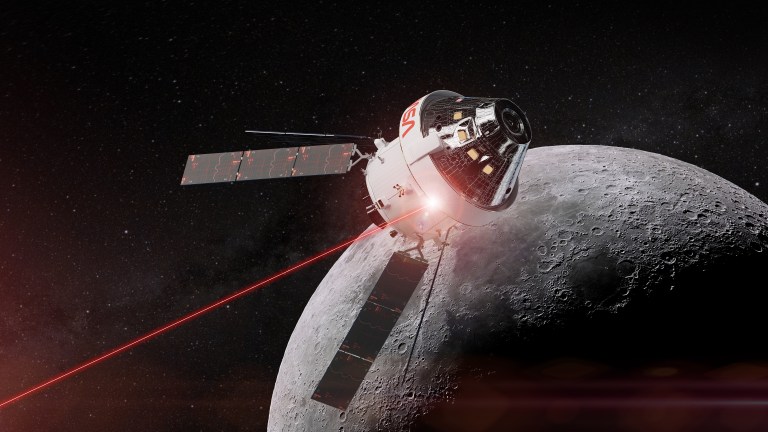
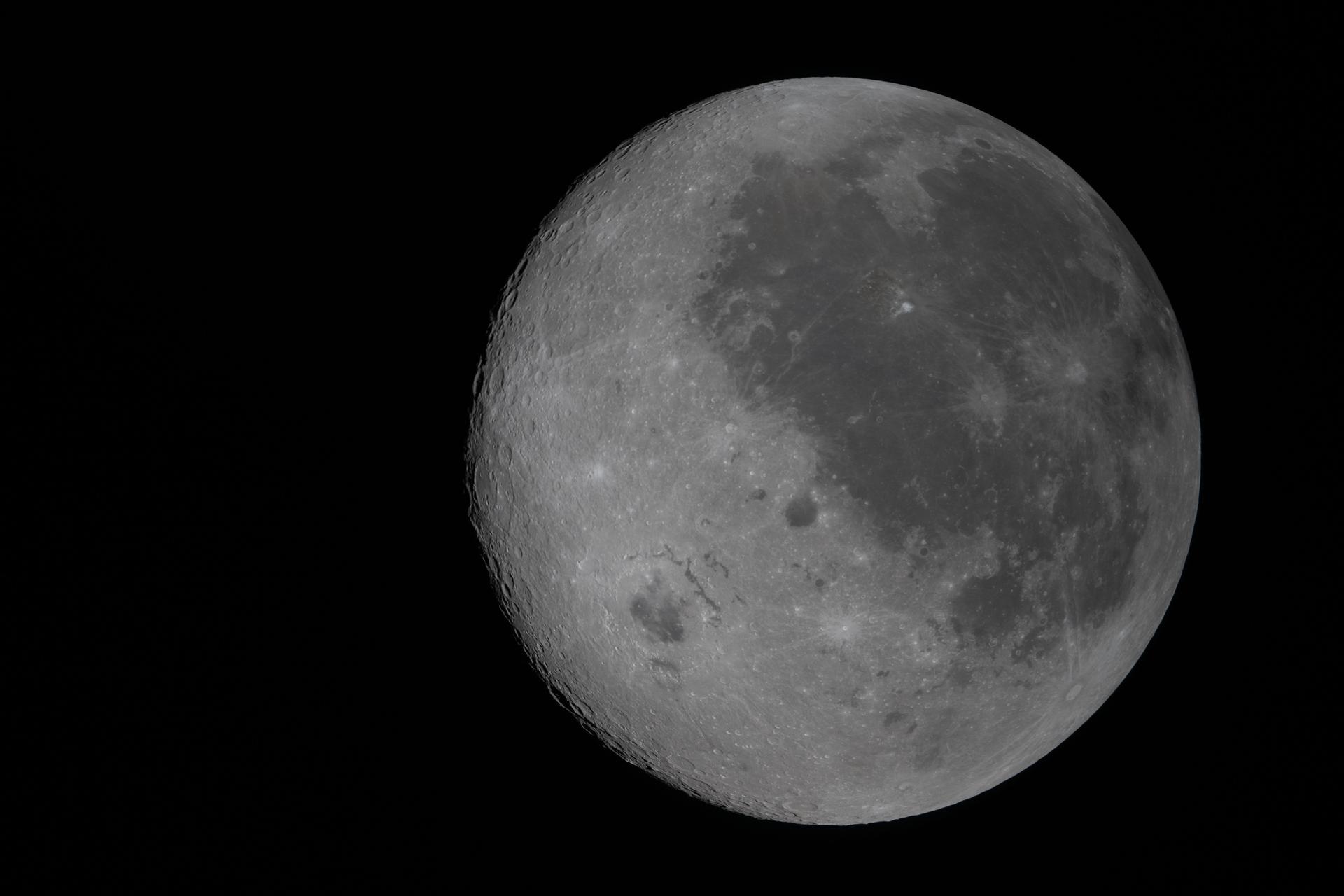
Four astronauts have flown around the Moon today, the first crewed lunar mission since Apollo 17 in 1972. The seven-hour flyby took them farther from Earth than any humans in history — roughly 252,000 miles (406,000 kilometers) away, surpassing the record previously held by Apollo 13. The Artemis 2 crew of Reid Wiseman, Victor Glover, Christina Koch, and Jeremy Hansen passed within roughly 4,067 miles (6,545 kilometers) of the surface before swinging back towards Earth for an April 10 splashdown.
After passing behind the Moon from Earth’s perspective, out of ground contact for roughly 40 minutes, the crew then experienced a total solar eclipse from their perspective, flying into the Moon’s shadow. They experienced 50 minutes of totality, taking images and reporting on the appearance of the solar corona.
The crew has now started its return journey to Earth, and is scheduled to splash down in the Pacific Ocean off of Baja California on April 10 at around 8:17 p.m. EDT (5:17 p.m. PDT)
To get up to speed on the mission, check out our complete guide to Artemis 2 and explore the full mission timeline.
Our flyby live coverage has ended. Check back at Astronomy.com for the latest updates through the mission’s splashdown April 10.
Live updates
9:45 p.m. EDT: The science team signs off.
During the flyby, most of the communications from Houston have been handled not by the usual rotation of capsule communicators (CapComs in NASA parlance) but by Kelsey Young, who heads the mission’s science team. Young just signed off for evening, effectively marking the end of the flyby science campaign.
She told the crew: “I can’t say enough how much science we’ve already learned and how much inspiration you provided to our entire team, the lunar science community, and the entire world with what you were able to bring today. You really brought the Moon closer for us today — can’t say thank you enough. Signing off, and can’t wait to talk to you tomorrow morning.”
And with that, we are going to sign off, too. Thanks for joining us on our live coverage. Check back at Astronomy.com for the coverage of Artemis 2 through splashdown April 10.
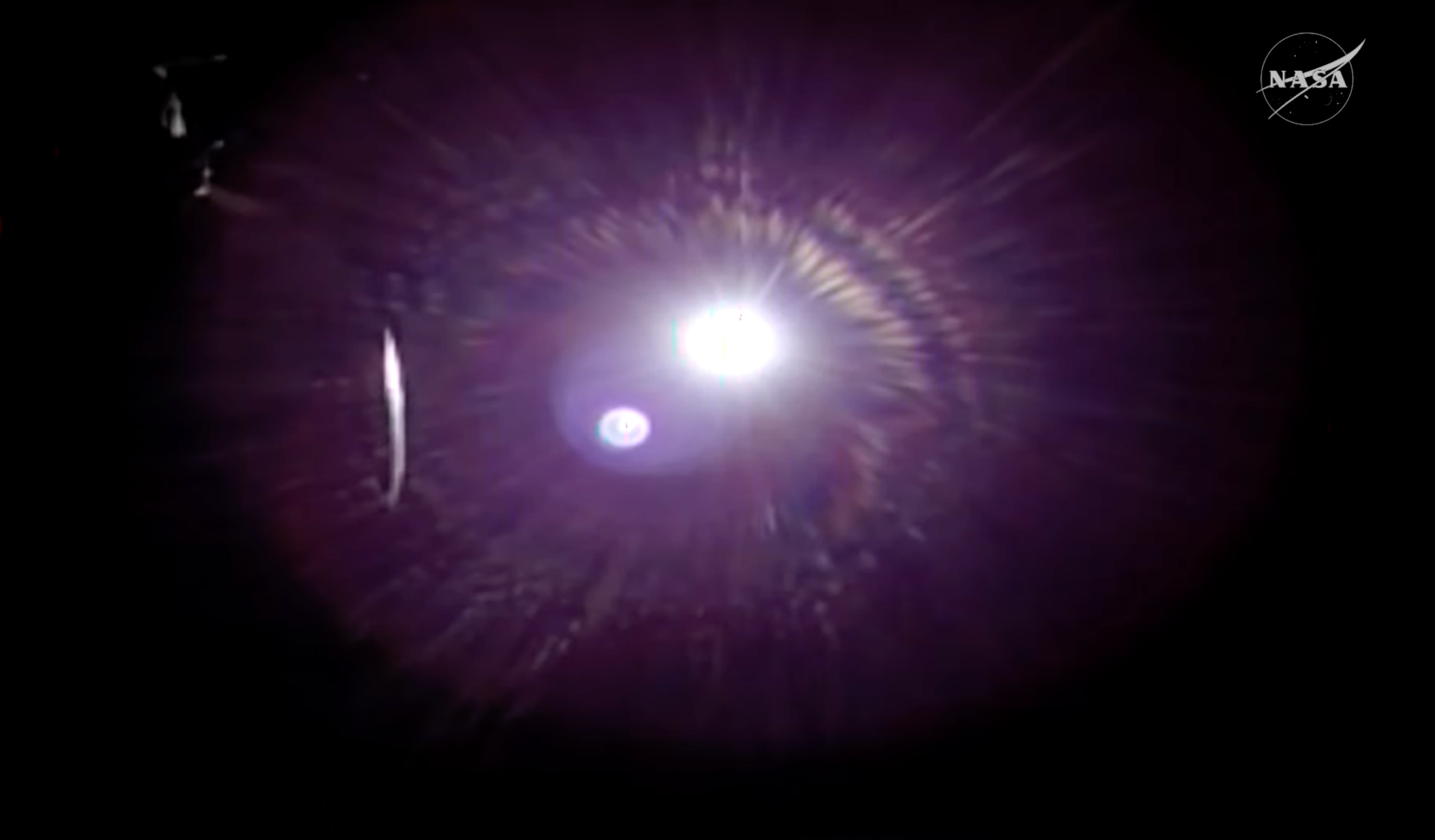
9:35 p.m. EDT: The eclipse is over. Now the wait for images begins
There would have been no diamond ring for the astronauts, due to the overwhelming relative apparent size of the Moon, but there was a brilliant burst of light captured on the video feed as Integrity emerged back into sunlight.
So far, all we’ve seen is the relatively grainy video feed, which is what we have been posting in this live story. The images from the astronaut’s cameras will come later. They have to be transferred and transmitted to the ground, which can be a slow process in deep space. (No Starlink out there, yet.) But we can’t wait to see what they bring. To see the latest, check out the Artemis 2 gallery on NASA’s website or the Johnson Space Center’s Flickr account.
9:28 p.m. EDT: An eclipse safety reminder
The science team is helping the crew practice safe eclipse viewing habits, assuring the astronauts they will remind them when they need to stop looking through the viewfinder of their Nikon D5 camera, and when they need to put their eclipse glasses on. (Always wear eclipse glasses when viewing any stage of an eclipse except totality!)
The solar corona is now emerging from the other side of the Moon, and Glover has given a couple evocative descriptions of it: First, describing the streamers as “baby hair” as they began to peek out from behind the Sun. Then, as they grew longer: “It’s almost as if it were reaching out for Venus or for the Earth. If you’ve ever seen the spotlight off the top of the Luxor at night in Las Vegas, this looks like what that wants to be when it grows up.”
9:11 p.m. EDT: ‘It’s glowing behind the entire Moon’
The crew of Artemis 2 is still experiencing totality, in the Moon’s shadow. It turns out that shadow isn’t as dark as they expected. Mission Specialist Jeremy Hansen reports: “The entire Moon is lit up. It’s glowing behind the entire Moon. I thought it would look, you know, dark against the black sky or deep space. But the Sun is lighting up the entire limb of the Moon. You can see the entire perimeter of it.
“And even now, with the Sun far behind the Moon, you can see — still get little bits of topography around the entire limb, just bumps as you go around it. And … the glow around the Moon, once your eyes adjust, is easily ten widths, or diameters, of the Sun around the entire Moon.”
This glow could be due to light reflecting off of a cloud of dust that surrounds the Moon, which scientists think can be lofted from the Moon’s surface by micrometeoroid impacts.
Wiseman adds: “No matter how long we look at this, our brains are not processing this image in front of us. It is absolutely spectacular. Surreal.”
9:04 p.m. EDT: In their latest dispatch, the crew reports having seen four impact flashes — flickers of light from meteor impacts on the Moon’s nightside — two each by Wiseman and Hansen.
The mission’s science lead Kelsey Young replied: “I literally just looked at the SER [Science Evaluation Room] and they were jumping up and down literally.”
The crew reported seeing the impact flashes on and south of the equator on the Earth-facing side of the Moon.
The fact that these meteoroids smashed into the nearside of the Moon is good news for researchers. As Kelsey Young reminded the crew, citizen scientists on Earth are currently monitoring the Moon for impact flashes. If they were on the nearside, there is a chance that amateur astronomers saw them, too, which would let them cross-check and compare their observations.
8:54 p.m. EDT: ‘We just went sci-fi.’
Earthshine is light reflected off of the daytime side of Earth. So although Integrity remains in the Moon’s shadow, light that bounces off the Earth can still provide some illumination for the crew.
It sounds like the crew is surprised at just how bright earthshine is for them — Glover is reporting that it is bright enough to see the nighttime side of the Moon. He also notes — like legions of photographers before him — that it just doesn’t look quite as amazing on the camera as it does to the eye.
“The camera settings for earthshine are challenging. I think it’s challenging to capture what we’re seeing — we’re just not picking up on the cameras.
“After all the amazing sights that we saw earlier, this just looks unreal. We just went sci-fi. This has — it just looks unreal. … You can actually see a majority of the globe. It is the strangest-looking thing, that you can see so much on the surface.”
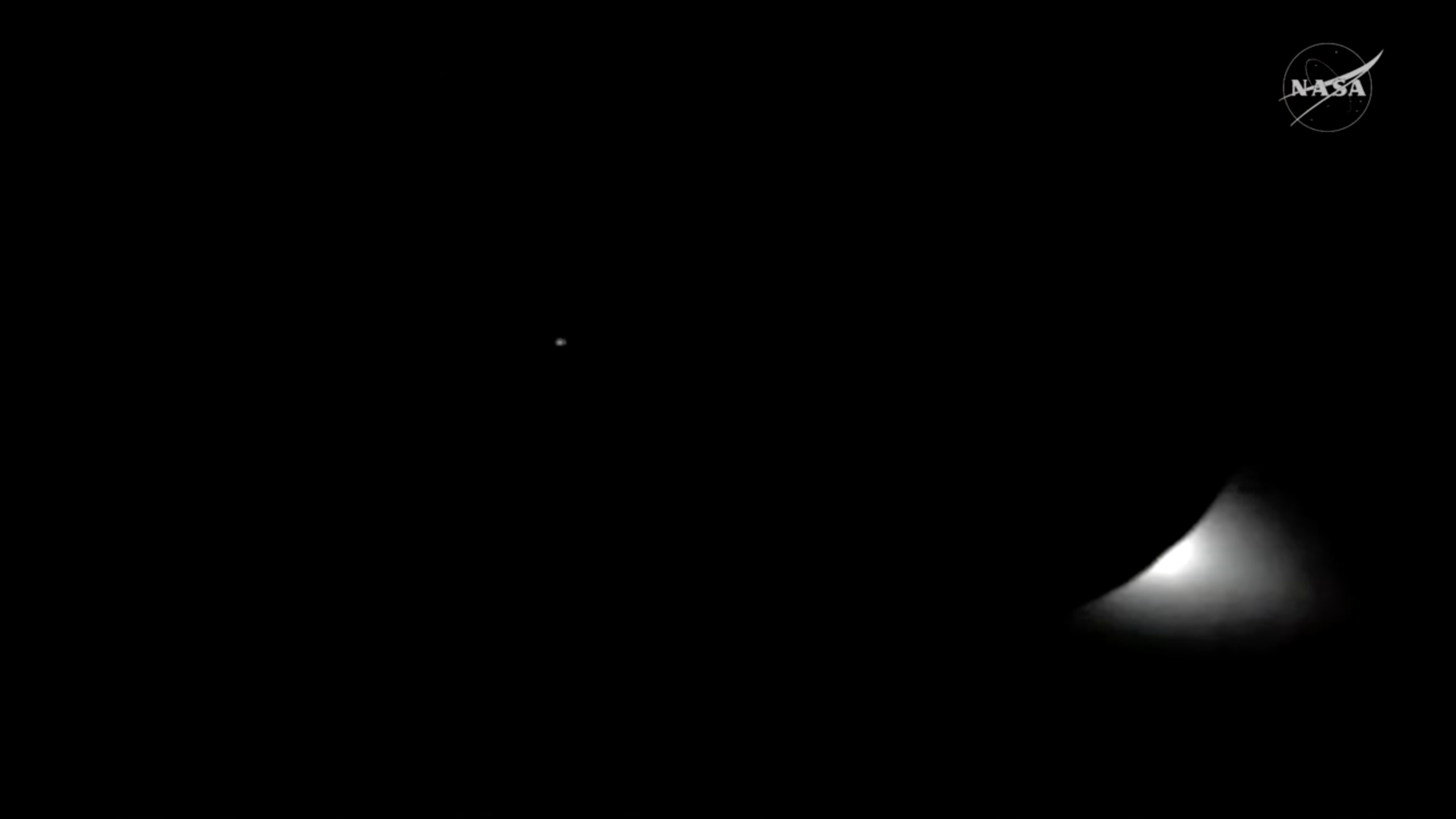
8:49 p.m. EDT: Victor Glover has radioed down a description of the beginning of totality:
“Houston, Integrity, in the blind. This continues to be unreal.
“The Sun has gone behind the Moon, and the corona is still visible. And it’s bright, and it creates a halo almost around the entire Moon.
“When you get to the Earth side, it’s — the earthshine is already showing. I mean, almost seconds after the Sun set behind the Moon, you could see earthshine. The Earth is so bright out there and the Moon is just hanging in front of us, this black orb out in front of us — now, not the blackness, but the grey that blends and drifts into the blackness. We can see stars and planets behind it. … You can still see the horizon lit up brighter where the Sun set on that side of the Moon. And earthshine is very distinct and it creates quite an impressive visual illusion. Wow, it’s amazing.”
8:35 p.m. EDT: Artemis 2 has flown into the shadow of the Moon and is now experiencing totality — but this total eclipse is unlike any we can see from Earth, where the Moon just barely covers up the disk of the Sun. the crew’s perspective, the Moon is five times larger than the Sun. But they will still have an opportunity see the solar corona, the outermost layer of the Sun’s atmosphere. Scientists want to know how much detail they can see — streamers and coronal loops.
7:45 p.m. EDT: The crew is now in a scheduled rest period — taking a breather after the intensity of the lunary flyby observations. Next up: a total solar eclipse, where the Moon will blot out the Sun from the spacecraft’s perspective, which will begin at around 8:35 p.m. EDT.
7:32 p.m. EDT: Artemis checks in
“It is so great to hear from Earth again,” said Christina Koch, in Artemis 2’s first exchange with Houston after emerging from behind the Moon.
She added: “When we burned this burn towards the Moon, I said that, ‘We do not leave Earth, but we choose it.’ And that is true. We will explore. We will build ships, we will visit again. We will construct science outposts. We will drive rovers. We will do radio astronomy. We will found companies. We will boost our industry. We will inspire.
“But ultimately, we will always choose Earth. We will always choose each other.”
Houston replied: “Integrity, from Earth, our single system — fragile and interconnected — we copy. Those of us that can are looking back.”
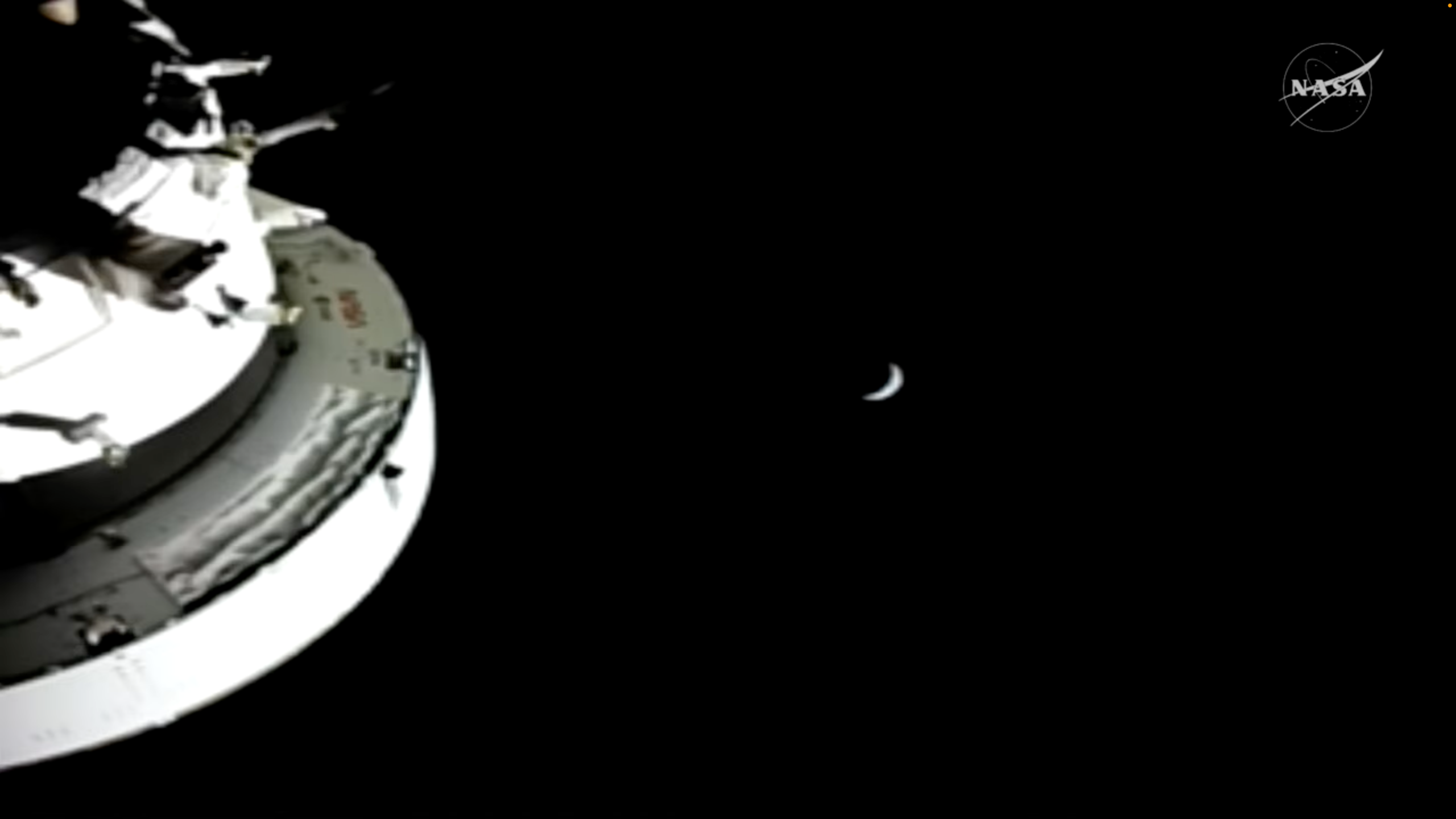
7:26 p.m. EDT: Signal has been reestablished with Artemis 2, the video link shows a crescent Earth, and the crew of four are on their way home.
7:23 p.m. EDT: Mission Control is standing by to reacquire signal from Artemis 2.
7:21 p.m. EDT: Artemis 2 has reached its point of closest approach to the Moon. According to the NASA broadcast, the latest data indicates that comes at a distance of 4,067 miles (6,545 kilometers) from the surface.
The Integrity spacecraft is still out of contact with Earth on the farside of the Moon. Around the same time the crew reacquires signal, they are expected to observe Earthrise — a crescent Earth emerging from behind the Moon, and a reprise of the famous scene captured by Apollo 8.
6:58 p.m. EDT: Loss of signal
Artemis 2 is out of contact with Earth, over the lunar farside, where radio signals are blocked by the Moon. NASA expects to reestablish radio contact with Integrity around 7:25 p.m. EDT.
While the crew is on the farside, they will have an opportunity to observe objects that pique their own interest — as opposed to following the science target plan. They will also spend a few minutes observing the nightside of the Moon for small impacts of meteoroids, which would give off small flashes of light amid the darkness that could be visible to the human eye.
6:05 p.m. EDT: Artemis 2 at ‘Full Moonjoy’
One of the catchphrases this mission has coined is “moonjoy,” which, as best as we can tell, traces to the astronauts’ first reaction to viewing a sliver of the Moon’s farside. After a particularly enthusiastic report from Commander Reid Wiseman, CapCom Jacki Mahaffey, quipped, “Copy, Moonjoy.”
A short while ago, Pilot Victor Glover radioed down to the science team, “We are now seeing a half Moon.” Houston replied: “Thank you, Victor. We are happy to hear it and we see half Moon — full moonjoy.”
5:48 p.m. EDT: Koch describes an ‘overwhelming’ moment
At the end of her shift-end report, Mission Specialist Christina Koch radioed to Houston:
“At one point, towards the end of the images of my time in window three, I just had an overwhelming sense of being moved by looking at the Moon. It lasted just a second or two, and I actually couldn’t even make it happen again. But something just drew me in suddenly to the lunar landscape; it became real. And the truth is, the Moon really is its own body in the universe. It’s not just a poster in the sky that goes by — it is a real place. And when we have that perspective and we compare it to our home of the Earth, it just reminds us how much we have in common. Everything we need, the Earth provides, and that in and of itself is somewhat of a miracle. And one that you can’t truly know until you’ve had the perspective of the other.”
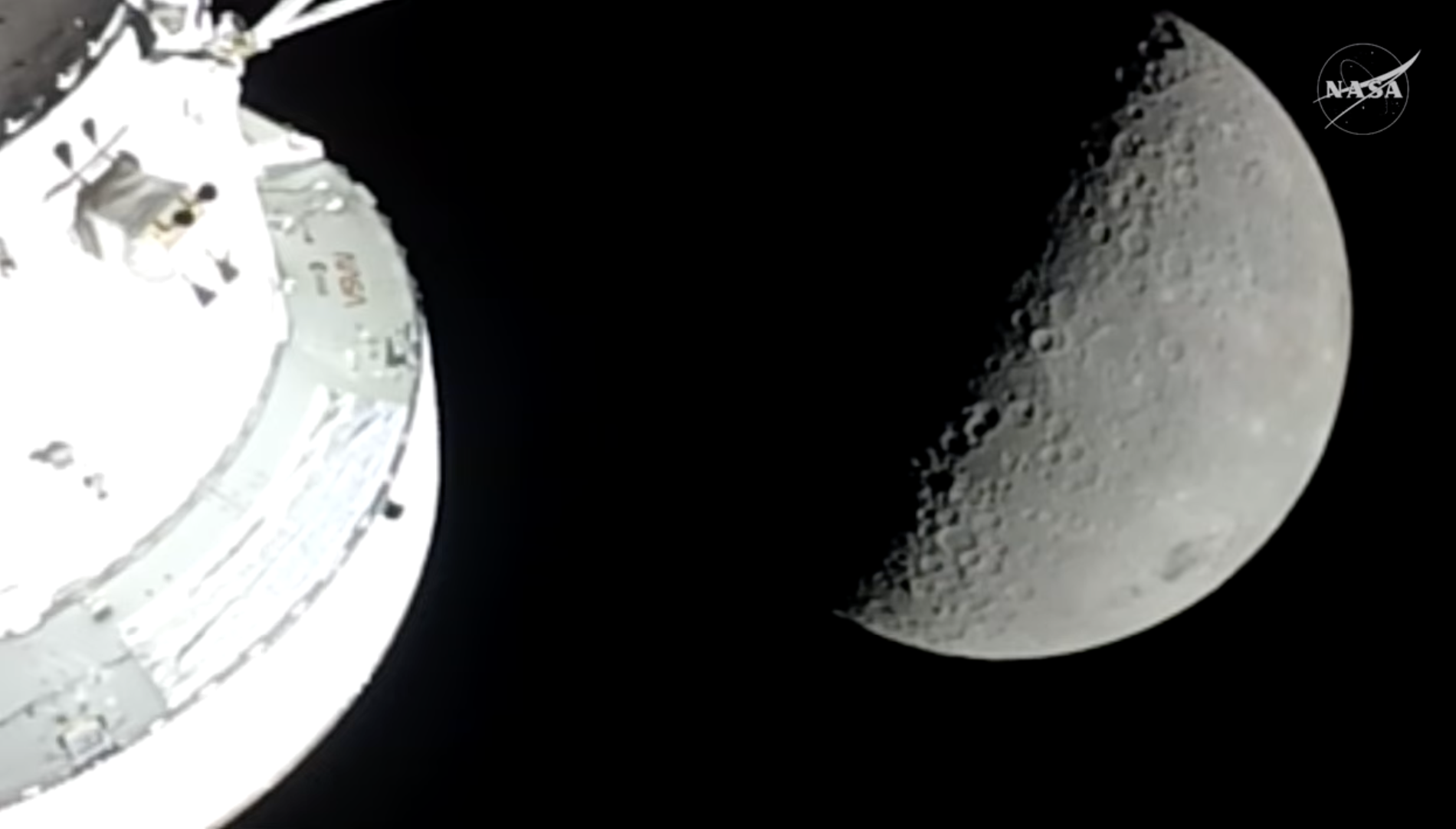
5:44 p.m. EDT: The crew are swapping back and forth between observation roles — taking photographs with telephoto lenses — and support roles, in which they narrate what they see to Mission Control. During one of the shift changes, the science team allowed the crew to debrief among themselves. Christina Koch just radioed down to say how helpful it was to compare notes, particularly about some areas in which they’re seeing colors — which they often describe as greenish and brown hues — both in the lava plains (mare) and the lunar highlands.
5:00 p.m. EDT: Mission Specialist Jeremy Hansen had this to add about the terminator:
“But, man, when you look at the terminator it is just, like, impossibly rugged. And it reminds you that the whole farside is that way. It’s just the terminator is really bringing out the shadows and the hills, the valleys, and it is just unbelievable. It’s like no surface of the Moon is not marked by meteor impact. And it is very impressive to look at that. You realize that that is true across the whole farside — you just can’t see it due to the Sun illumination right now.”
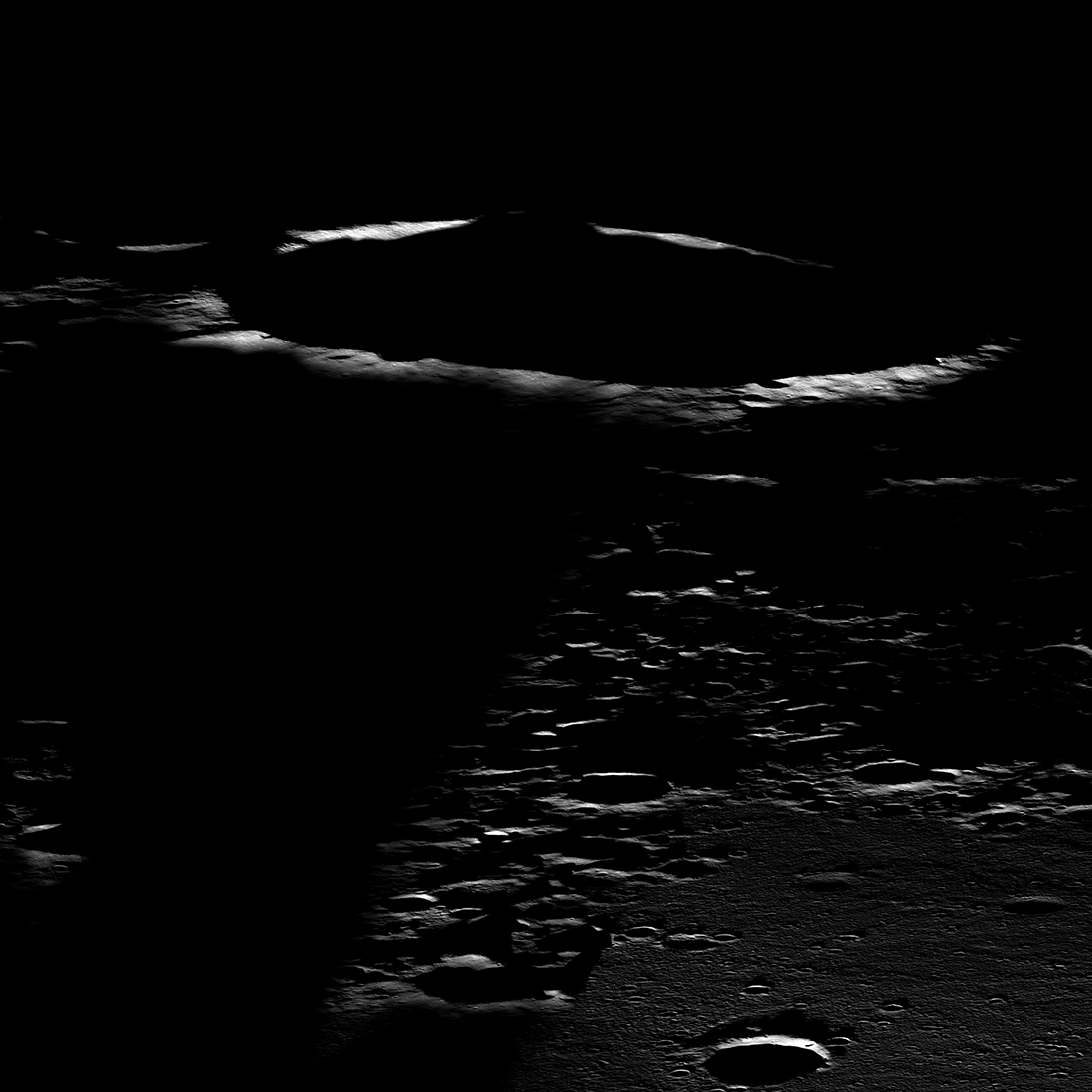
4:14 p.m. EDT: Pilot Victor Glover described the view as Artemis flies over the Moon’s terminator — the dividing line between the sunlight and daylight side, where the Sun casts long shadows across mountainous terrain: “I wish had some more time to just sit here and describe what I’m saying. But the terminator right now is just fantastic. It is the most rugged that I’ve seen it from a lighting perspective. There are little islands — there are islands of terrain out there that are completely surrounded by darkness, which indicates some real variation in terrain.”
He added: “And then one of the craters further to the south of Babylon, maybe halfway down to the south pole … there’s like two island rays pointing off to the west and north that indicate very high ridges and very deep canyons coming up out of that crater. So again, just some really interesting visual illusions going on with the shadows there.”
The photo below is not from the Artemis mission — it’s an archival photo taken by a NASA orbiter in 2019 — but it shows some of the kinds of shadow effects that Glover is describing that occur at the terminator due to the extreme lighting conditions.
Artemis 2 science lead Kelsey Young radioed back: “Oh my gosh, that was an amazing picture you just painted. I glanced over at the SER video and I literally saw fist pumps in the air. Those types of observations are things that humans are uniquely able to contribute.”
The SER refers to the Science Evaluation Room, the “backroom” behind Mission Control where the science team has gathered to take in the crew’s reports and advise them in real time.
3:55 p.m. EDT: What is the crew actually looking for?
One of the key characteristics the crew is verbally reporting as they survey the lunar surface is how bright — or reflective — it is. Scientists call this the albedo of a material.
In photographs, the Moon’s brightness may not appear to vary much — grey to dark grey. But we know from the Apollo astronauts before them that these variations in brightness can be much more dramatic to the human eye than in the photographs they bring back.
Changes in albedo also provide insight into the Moon’s history. As lunar soil sits in harsh sunlight, it tends to fade in brightness. But when a meteorite impacts the Moon and surfaces fresh material, that debris can appear much brighter.
Mission Specialist Christina Koch called down to the science team to report just how bright some of these small impacts can be: “When you look at the Moon, something I’ve never seen in photographs before is very apparent: All the really bright new ones are super tiny. Most of them are pretty small. There are a couple that really stand out, obviously. And what it really looks like is a lampshade of tiny pinprick holes and a light shining through. They are so bright compared to the rest of the Moon.”
3:29 p.m. EDT: The Artemis 2 craft is currently just northwest of Orientale Basin and east of Ohm Crater. The crew is working through observations of Orientale, Aristarchus Plateau, Ohm, and the mysterious swirl of Reiner Gamma.
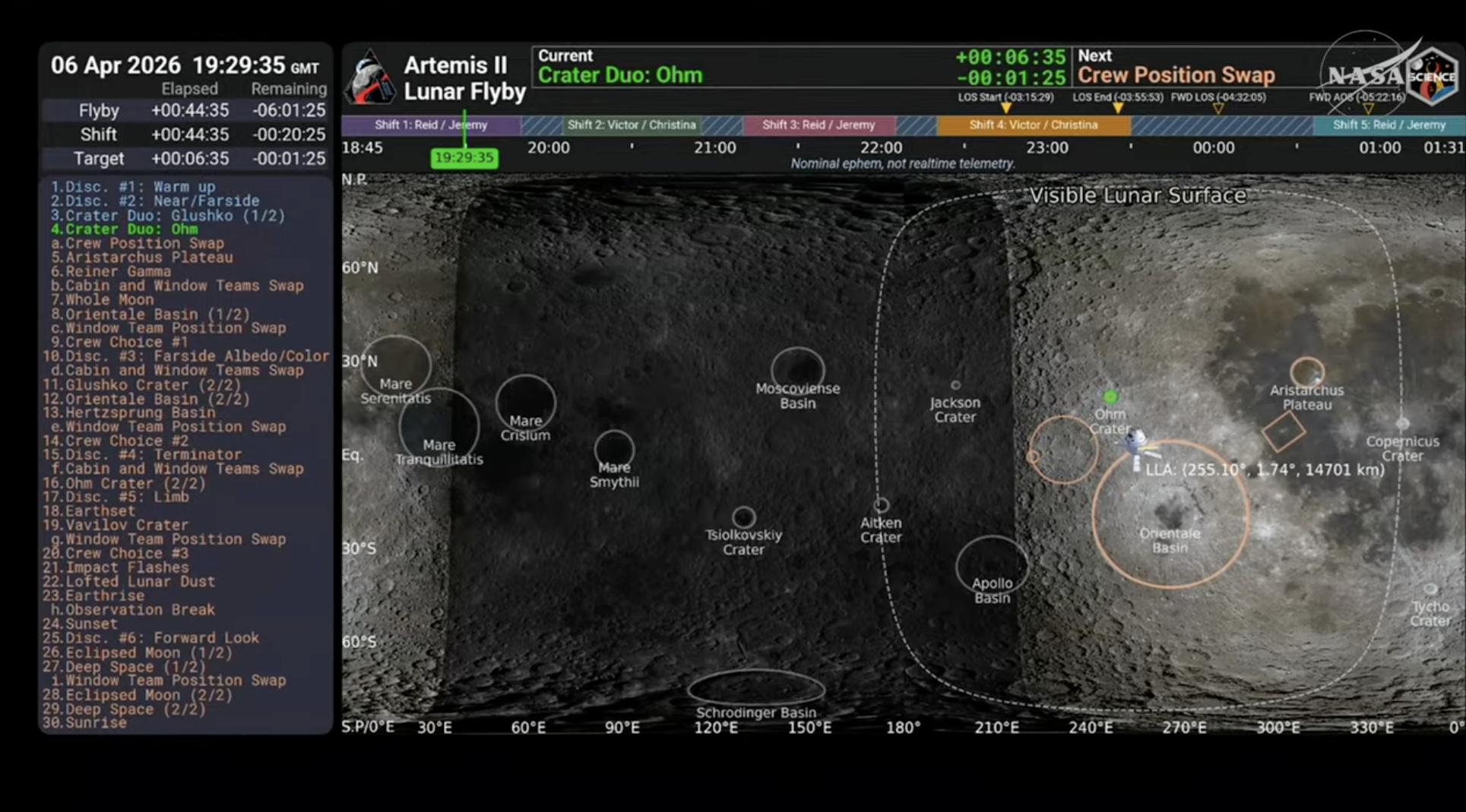
3:14 p.m. EDT: The Artemis 2 crew has a detailed and highly choreographed set of observations that the mission’s science team has prepared for them. Mission specialist Christina Koch shared some initial reactions to one of the science targets, Hertzsprung Crater, on the Moon’s farside: “We just had a huge moment realizing that Hertzsprung is about the same size as Orientale. We’re really excited about this target.”
Kelsey Young, the mission’s science lead, replied, “You nailed it on why we added Hertzsprung. You’ll see in the prompts — we’re looking for comparisons to the comparatively much older Hertzsprung compared to the younger Orientale. Great words.”
2:58 p.m. EDT: A record broken, and an emotional commemoration
Immediately after Hansen made his remarks on breaking Apollo 13’s distance record, an extraordinary moment on the comms followed when Hansen proposed names for two fresh, unnamed craters the crew has been observing — one in honor of “our great spacecraft, Integrity,” and another in honor of Commander Reid Wiseman’s late wife, Carroll, who died of cancer in 2020.
Hansen described the location of the proposed Integrity crater: “And so if you were to look at Orientale on the far side and then draw a line straight up to Ohm on the farside, relatively in the middle is an unnamed crater and we would like to suggest it be called Integrity in the future.”
Then, his voice growing thick with emotion, he said:
“And the second one, and especially meaningful for this crew, is a number of years ago, we started this journey in our close-knit astronaut family and we lost a loved one. And there is a feature in a really neat place on the Moon, and it is on the nearside/farside boundary. In fact, it’s just on the nearside of that boundary, and so at certain times of the Moon’s transit around Earth, we will be able to see this from Earth. And so we lost a loved one. Her name was Carroll, the spouse of Reid, the mother of Katie and Ellie. And if you want to find this one, you look at Glushko, and it’s just to the northwest of that, at the same latitude as Ohm, and it’s a bright spot on the Moon. And we would like to call it Carroll.”
This was followed by 45 seconds of silence from Mission Control.
Then CapCom Jenny Gibbons replied: “Integrity and Carroll Crater. Loud and clear. Thank you.”
2:42 p.m. EDT: The Artemis crew officially broke the distance record previously held by Apollo 13 for the farthest humans have traveled from Earth at 1:56 p.m. EDT. CapCom Jenny Gibbons, a Canadian astronaut and member of Artemis 2’s backup crew, radioed the crew to notify them of the milestone:
“Integrity crew, on April 15th, 1970, during the Apollo 13 mission, three explorers set the record for the farthest distance humans have ever traveled from our home planet. At that time, over 55 years ago, Lovell, Swigert, and Haise flew 248,655 statute miles away from Earth. Today, for all humanity, you’re pushing beyond that frontier. Integrity, over to you.”
Fellow Canadian Space Agency astronaut Jeremy Hansen replied: “Yeah, from the cabin of Integrity here, as we surpass the furthest distance humans have ever traveled from planet Earth, we do so in honoring the extraordinary efforts and feats of our predecessors in human space exploration. We will continue our journey even further into space before Mother Earth succeeds in pulling us back to everything that we hold dear. But we most importantly choose this moment to challenge this generation and the next to make sure this record is not long-lived.”
How to watch
Live coverage of the lunar flyby began at 1 p.m. EDT on NASA+, Amazon Prime, Apple TV, Hulu, Netflix, HBO Max, and Roku, alongside continuous coverage on NASA’s YouTube channel.
What to expect
There are several key moments to look out for. At 1:56 p.m. EDT, the crew surpassed the distance record previously set by Apollo 13 in 1970, reaching a maximum of 252,760 miles (406,778 kilometers) from Earth.
During the flyby, the crew will make detailed observations of geologic features on the lunar surface. Those lunar observations kick off at 2:45 p.m. EDT.
At 6:45 p.m. EDT, Earth will move behind the Moon from Orion’s perspective — an “Earthset.” LOS (loss of signal) begins around 6:44 p.m. EDT as Orion passes behind the Moon. The apex of the mission — closest approach to the Moon at just 4,070 miles above the surface — occurs at 7:02 p.m. EDT, right in the middle of that roughly 40-minute LOS window.
Communication is expected to be restored at 7:25 p.m. EDT. Nearly simultaneously, the astronauts will see “Earthrise” — Earth coming back into view on the opposite edge of the Moon. To close out the night, the crew will witness a solar eclipse from space, with the Sun passing behind the Moon from 8:35 to 9:32 p.m. EDT, before lunar observations wrap up at 9:20 p.m. EDT