The Artemis program has been plagued by delays and technical issues on the ground. But Artemis 2 has already shown that when the crewed Orion craft is in space, in the hands of a skilled pilot, it flies beautifully.
If you stayed up to watch the Artemis 2 launch last night, you saw this in action in the form of the proximity operations demonstration. This choreographed series of maneuvers by Pilot Victor Glover unfolded just hours after liftoff and marked the first time that the craft has been flown manually.
But what exactly were the astronauts doing, and why does it matter for NASA’s plans to return humans to the Moon?
The hardware
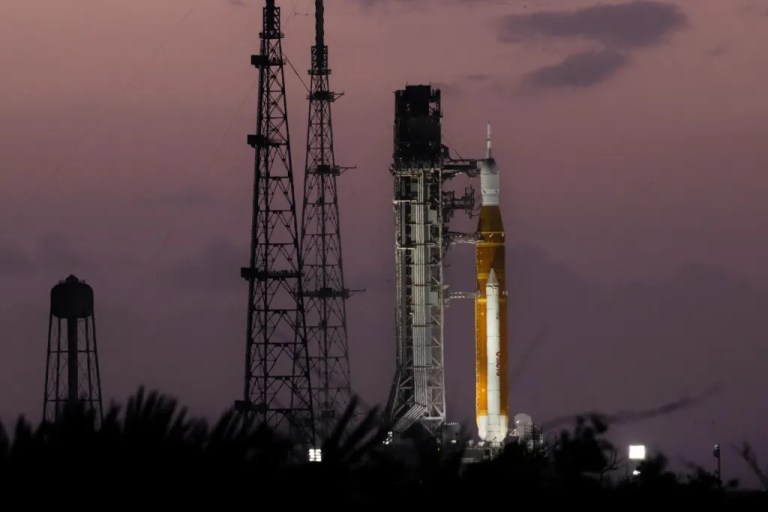
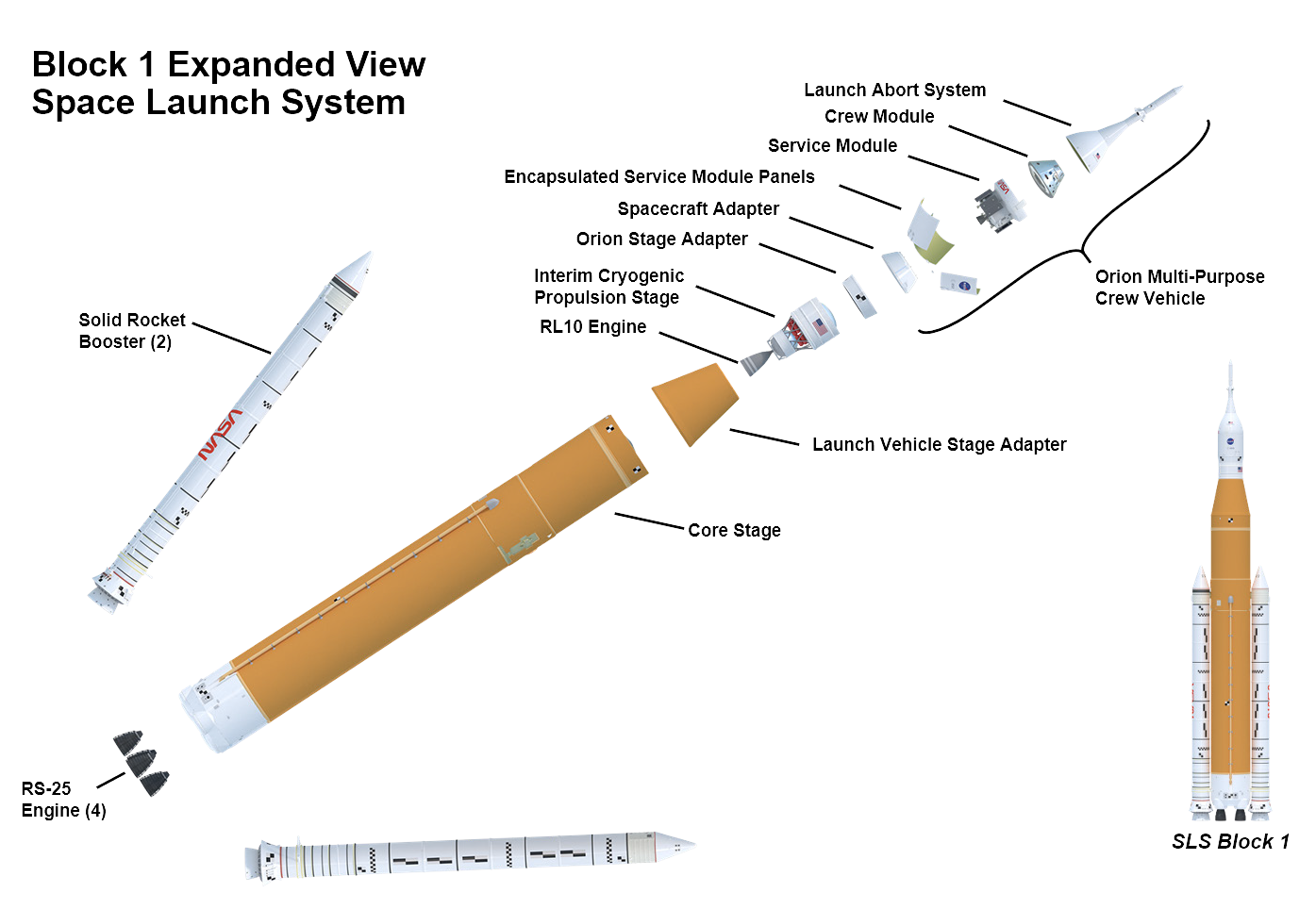
To understand the proximity operations demonstration, it helps to know the three pieces of hardware involved. The Space Launch System (SLS) is NASA’s rocket, 322 feet tall, generating 8.8 million pounds of thrust at liftoff. At its base is the core stage, powered by four RS-25 engines and flanked by two solid rocket boosters. Above that sits the Launch Vehicle Stage Adapter (LVSA) — a cone-shaped structure that connects the core stage below to the Interim Cryogenic Propulsion Stage (ICPS) above.
Above the ICPS sits the Orion Stage Adapter, and above that, the Orion crew capsule itself — named Integrity for this mission — which carries the four astronauts through Earth orbit and on to the Moon.
Once the SLS core stage and its boosters burn out during ascent, the core stage and LVSA separate together as one unit, leaving the ICPS, Orion Stage Adapter, and Integrity to continue on. The ICPS fires twice: the first burn raises the apogee — the highest point of Integrity‘s elliptical orbit around Earth — and the second raises the perigee, the lowest point. Together, this boosts Integrity into a stable high Earth orbit.
With both burns complete, the ICPS separates from Integrity for good — and that moment, roughly three hours into the mission, was also the starting point for Artemis 2’s first major test.
Test flight within a test flight
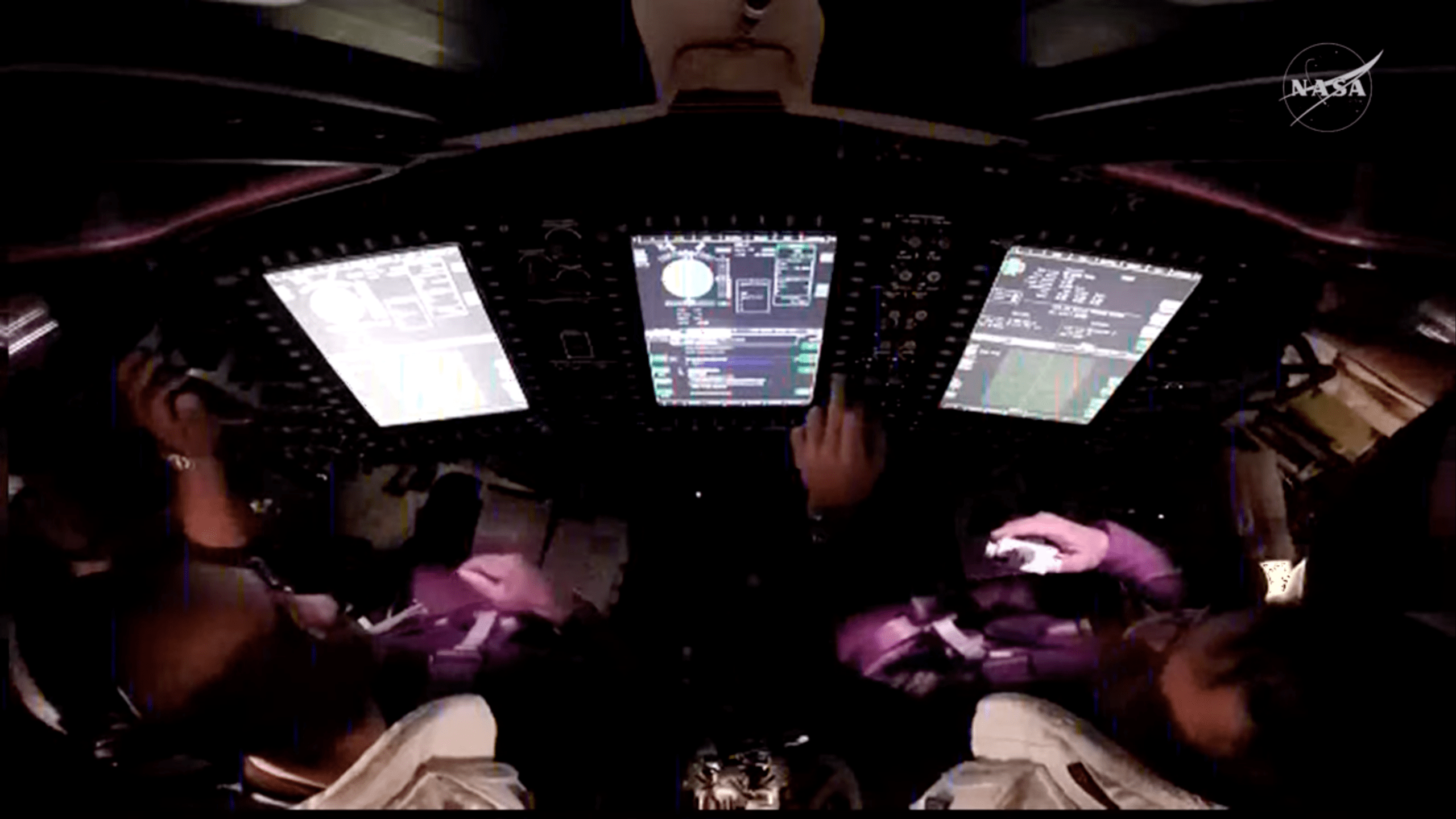
With Mission Control Houston giving a go, commander Reid Wiseman and pilot Victor Glover took manual control of Integrity and used the now-detached ICPS as a stand-in target — essentially practicing a docking run without actually docking. The roughly 70-minute exercise relied entirely on Integrity’s onboard navigation sensors and reaction control thrusters.
After an automated backflip to face the ICPS, Integrity stopped about 300 feet out. “I see it! Look at that!” one of the astronauts exclaimed as Integrity spun around. “Woo-hoo!”
Glover took the hand controller and began closing in, using a two-foot docking target mounted inside the top of the ICPS as his aim point — visible in the docking camera as a bullseye as Integrity approached the barrel end of the stage. At close range — around 30 feet — the crew assessed how Integrity handled in tight proximity, then backed off and repeated the exercise on a second target mounted on the side of the stage.
Throughout, Glover gave a running commentary on how the ship was handling. “Like we’re driving on a rocky road, but much quieter than in the sim.” Later, as he flew Integrity around to the side of the ICPS, he called out: “I can see the side docking target. That is a good looking American flag.”
As the prox ops demo drew to a close, Glover declared, “Overall, guys, this flies very nicely. … Very precise.” He continued: “The response is quite immediate. Not all the axes are even. Roll is very, very slow. But pitch and yaw are very snappy and responsive. And when you have the zoom set right [on the docking camera], you could see very small motions, and so translations are all quite tight and very nicely balanced.”
At the conclusion of the demo, Glover signed off: “Nice vehicle.”
Mission Control responded: “Good job, Victor, to the entire crew. And we enjoyed your excitement at seeing ICPS out the window.”
At the conclusion, Integrity performed an automated departure burn to safely move away. The ICPS then fired its own disposal burn and re-entered Earth’s atmosphere over a remote area of the Pacific Ocean.
Why it matters
Every future Artemis mission that puts boots on the Moon depends on Orion being able to dock with another spacecraft. The next mission — Artemis 3, now redesigned as a low Earth orbit test flight in 2027 — will have the crew rendezvous and dock with SpaceX’s Starship Human Landing System, and potentially Blue Origin’s Blue Moon lander. Neither docking has ever been attempted. Wednesday’s proximity ops test was the first real-world data point on how Orion handles that kind of close-quarters maneuvering with astronauts at the controls, rather than in a simulator.
Artemis 4, currently planned for 2028, would be the first actual crewed lunar landing. After that, NASA is targeting semiannual surface missions as it works toward a permanent Moon base — a three-phase, $30 billion project the agency hopes to begin laying groundwork for later this decade. All of it depends on Orion reliably finding, approaching, and docking with other spacecraft. Wednesday’s test was the first real data on how it performs with astronauts at the controls.