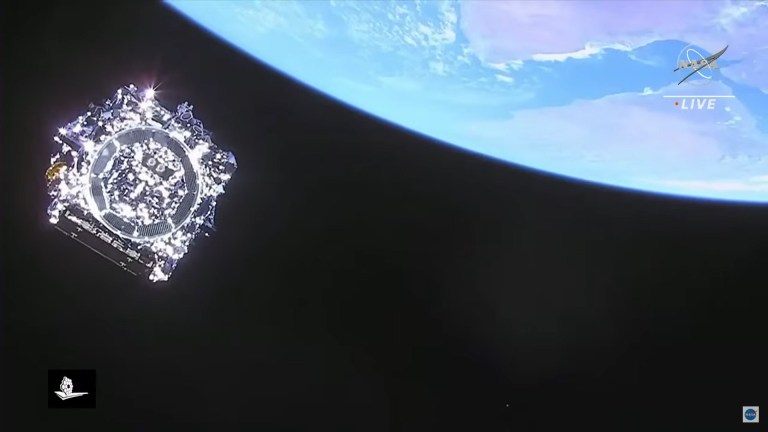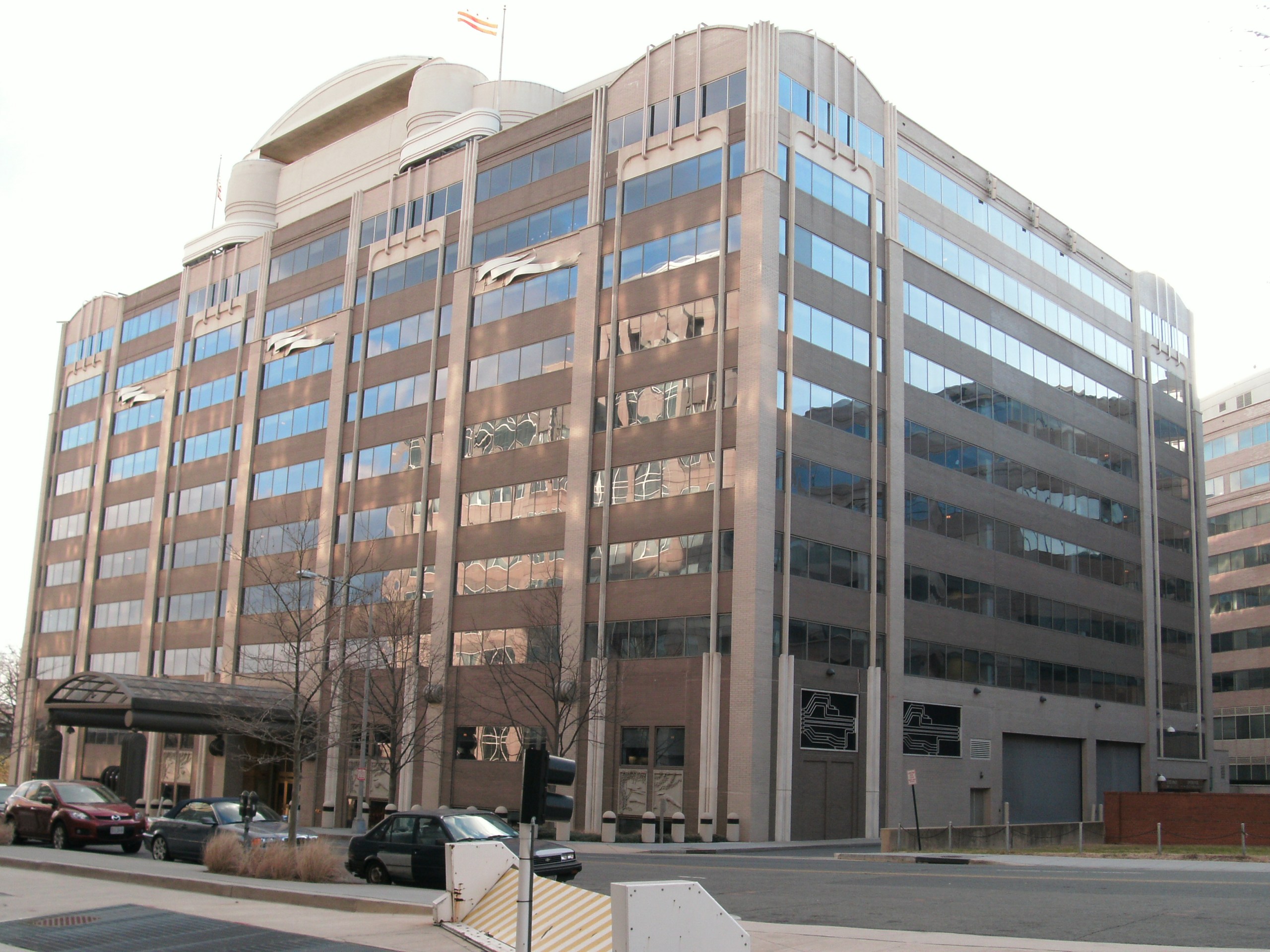
On July 9, the Federal Communications Commission (FCC) approved Reflect Orbital’s application to launch and operate Earendil-1, a demonstration satellite carrying a 59×59 foot (18×18 meter) mirror designed to beam concentrated sunlight onto targeted spots on the ground at night.
The approval clears the California startup to test the technology for up to two years, over the objections of the American Astronomical Society (AAS) and dozens of other scientific and dark-sky organizations, which petitioned the agency to deny the license.
Sunlight for sale
Reflect Orbital’s pitch is to provide sunlight without limits — whenever and wherever a user might need it. The company’s long-term ambition is a constellation of up to 50,000 orbiting mirrors that could extend solar panel output past sunset, light disaster zones, or replace streetlights. Earendil-1 is the proof-of-concept. It’s a satellite with a deployable reflector projecting a roughly 3.1-mile-wide (5 kilometers) beam of light that Reflect Orbital says will only ever illuminate its intended target.
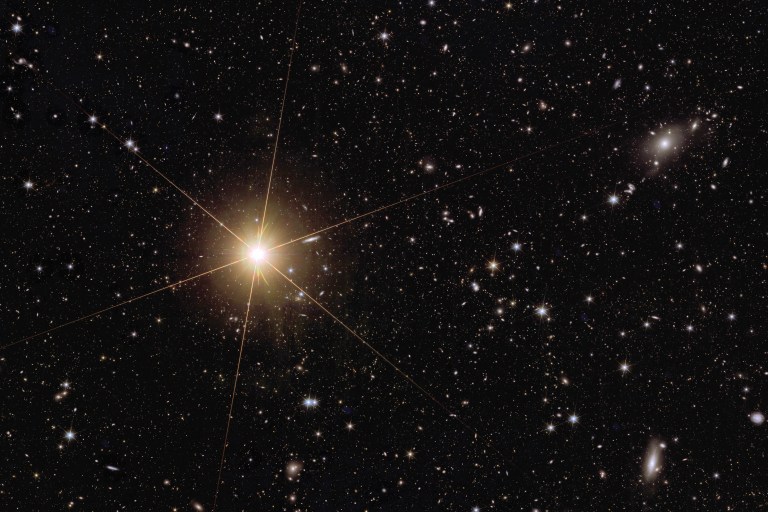
But even if that light is only directed to its target, the satellite would be the brightest ever launched according to a European Southern Observatory (ESO) study. To an observer outside the reflected beam, the satellite would appear as bright as Venus — and inside the beam four times brighter than a full moon. AAS argued in a public statement that the satellite puts research telescopes at risk, could momentarily blind pilots or drivers, and “as Reflect Orbital stated in its own FCC filings — [could cause] potential permanent eye damage to anyone looking through a mid-sized telescope.” Scale that up to a future fleet in the tens of thousands and the danger compounds.
In its decision, the FCC’s Space Bureau wrote that approving Reflect Orbital’s application “serves the public interest,” citing the 1934 Communications Act’s stated policy to “encourage the provision of new technologies and services to the public.” The FCC concluded that Reflect Orbital’s satellite counts as exactly that kind of technology — something the FCC thinks it should actively be supporting.
The agency also found that Reflect Orbital’s radio operations won’t interfere with other licensed spectrum users and that its debris-mitigation and deorbit plans meet existing safety thresholds.
On the concerns raised by scientists and dark-sky advocates — light pollution, interference with research telescopes, eye safety for anyone looking through a large telescope — the Bureau said those effects are outside its jurisdiction, since its authority extends to radio-frequency spectrum and debris, not to what a satellite does with sunlight once it reaches orbit.
The FCC is not required to conduct an environmental review for satellite launches. A categorical exclusion under the National Environmental Policy Act (NEPA) in place since 1986 means satellite launches aren’t considered as having a potentially negative impact on the environment.
A gap in the rules
So if these concerns aren’t the job of the FCC, then whose job are they? Well — nobody’s, really. American commercial space activity is licensed through three agencies in a system built for an older space industry: The FAA covers launch and reentry, the FCC covers spectrum, and NOAA covers Earth-imaging satellites. According to Brian Weeden, who directs commercial space research at the Aerospace Corporation’s Center for Space Policy and Strategy, new categories of missions — “commercial space stations, commercial lunar landers, rovers on the Moon, satellite servicing” — don’t fit easily into those three buckets.
Weeden calls the resulting mismatch a “wicked problem,” a public-policy term for a complicated issue with no easy solution. Washington has spent a decade trying to solve it through various mission-authorization proposals that have yet to become law. Effectively, emerging technology is too new for the old rulebook, and nobody in Washington has agreed on who should write the new one.
In its statement after the ruling, the AAS expressed its frustration with that gap. “The American Astronomical Society (AAS) is dismayed by the Federal Communications Commission (FCC) decision on 9 July to grant a license to Reflect Orbital,” they said. “We are further dismayed to see no requirement for a formal coordination agreement to protect federally funded astronomical facilities,” they continued — noting that the FCC has historically required such agreements between satellite operators and the National Science Foundation when federally funded observatories are at risk.
Reflect Orbital has not filed for the larger 50,000 mirror constellation yet, and the FCC has stressed that approving Earendil-1 doesn’t predetermine the outcome of any future application. When one arrives, the Commission says it will be “reviewed on its own merits, consistent with Commission rules, policy, and precedent.”