If a train leaves the station in Exeter, England, headed south toward Newton Abbot five years before the railway line opens, how long until anyone figures out that it didn’t happen?
Well, evidently about 155 years. A report on magnetic storms, published in Nature in 1871, described an incident thought to be the earliest recorded case of space weather interfering with human technology. According to the report, “On the 18th of October 1841, a very intense magnetic disturbance was recorded, and amongst other curious facts mentioned is that of the detention of the 10.5 p.m. express train at Exeter sixteen minutes.” The only problem: The railway line in question didn’t exist in 1841. In a paper published Sept. 16 in the journal Space Weather, an international team led by Lancaster University in England uncovered that the event occurred seven years later, meaning it was not the earliest such event.
RELATED: Our planet’s electronic vulnerability
“The Exeter train delay is a fascinating story because it sits right at the point where emerging technologies first began to encounter the realities of the space environment. By combining historical archives with scientific observations, we’ve been able to show that the event almost certainly happened in 1848 rather than 1841,” said Jim Wild, professor of space physics at Lancaster University and the study’s lead author, in a statement.
How space weather impacts technology
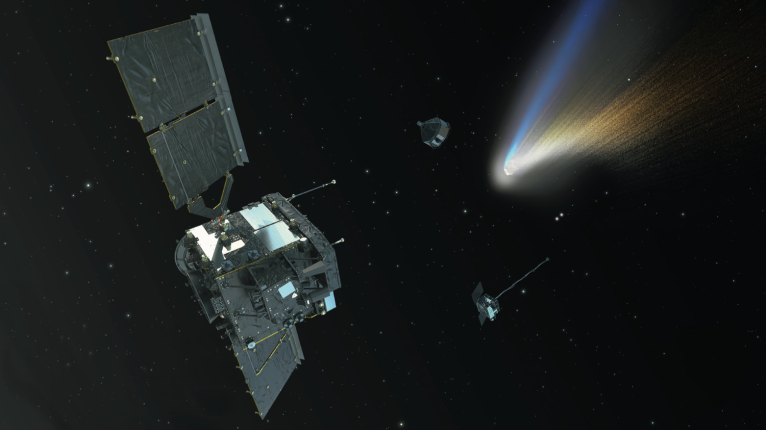
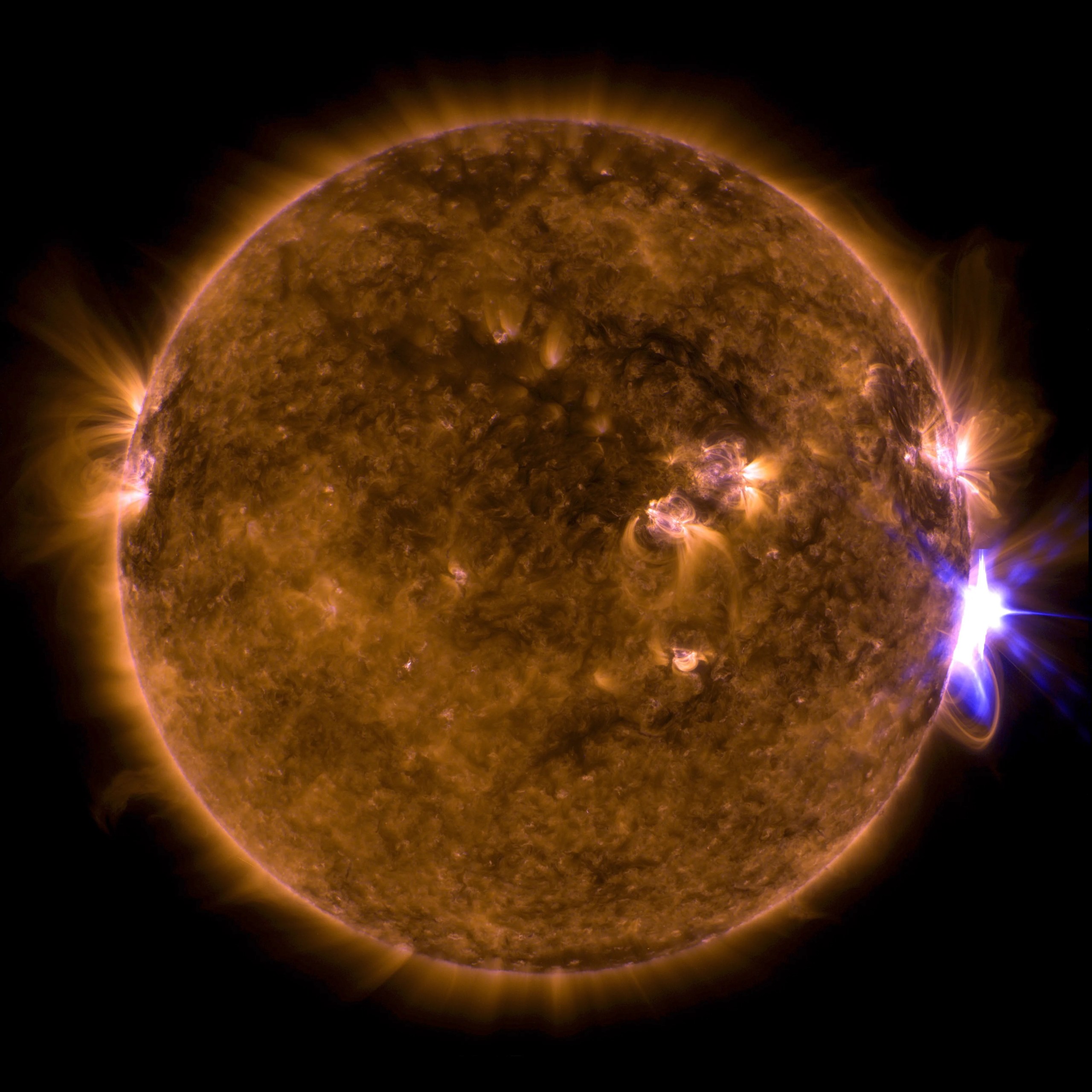
Space is filled with high-energy radiation particles released by the Sun in the form of solar flares and coronal mass ejections, and also by distant events like supernovae that constantly bombard Earth. When large amounts of solar energy strike Earth in the form of geomagnetic storms, the particles can interfere with technology by inducing current in power lines or scrambling signals.
Victorian railways were among the first technologies to feel the effects of space weather. Train operators used electric telegraphs to signal the trains — orchestrating their arrivals and departures and preventing collisions. Though the electric telegraph system was invented in the 1830s, it didn’t become widespread for railway signaling until the invention of better batteries, by John Daniell and William Grove in 1843, allowed for transmission across greater distances. Throughout the latter half of the 1840s, the technology spread rapidly and became ubiquitous. Interestingly, that spread came during a lull in solar activity, just before solar cycle 9 surged in 1847 and stayed high through 1848.
The most famous disruption came during solar cycle 10 in 1859. On Sept. 1, amateur astronomer Richard Carrington saw a burst of light erupt from the Sun — the first solar flare anyone had recorded. That flare sent a coronal mass ejection — a massive cloud of plasma and magnetic field — rushing toward Earth, ultimately striking the atmosphere around 17 hours later. The resulting geomagnetic storm, now called the Carrington Event, was one of the most powerful on record. Aurorae shimmered as far south as the Caribbean and the Carrington Event disrupted telegraph systems around the world.
Who came first?
But Carrington wasn’t the first. The earliest credible report dates to March 19, 1847. That night, a brilliant aurora lit up British skies. English civil engineer W.H. Barlow described the event to the Royal Society in London the following year, saying he witnessed “spontaneous electrical currents” surging through the Midland Railway’s telegraph wires near Derby, England.
Then, in 2013, William B. Cade III, professor of space physics at Baylor University, rediscovered the 1871 Nature report and flagged it as an even earlier example of space weather interfering with technology — possibly even the earliest. According to the report, the 10:05 P.M. express from Exeter was held at the station for 16 minutes on Oct. 18, 1841. Signalers used needle telegraphs to confirm whether train lines were clear. Sending a current down the wire made a needle swing on the instrument at the far end, and its position meant clear or occupied. But that night, a magnetic disturbance induced stray currents in the wires, leaving the instruments unreadable. The next morning, the station’s baffled superintendent blamed someone “playing tricks with the instruments.” Cade’s findings were published in the journal Space Weather on Aug. 27, 2013.
Reopening the case
Now, 13 years later, Cade is one of the co-authors on the new study that took a closer look at that claim. The team found that the 1841 date doesn’t hold up. For one, the rail line from Exeter through Starcross didn’t open until May 30, 1846. And records from the Greenwich magnetic observatory in London — now the Royal Observatory Greenwich — logged nothing unusual on Oct. 18, 1841.
So the team checked old train timetables. A 10:05 P.M. train left Exeter toward Starcross only from March 1848 to July 1849. In that window, Oct. 18, 1848, stood out. Greenwich recorded a strong magnetic storm that night and auroras lit up the skies over Britain. Between 1847 and 1849, Temple Chevallier, a British clergyman and astronomer, was making routine observations of sunspots. In his journal from Oct. 19, 1848, he sketched an unusually large group of sunspots — indicative of an increase in solar activity. All the evidence, the team argues, points to the fact that “1848” was simply a typo — misprinted as “1841.”
Setting the record straight
Fixing a 155-year-old typo might seem trivial. But the 1848 event was one of the first examples of solar storms’ effect on human technology — an issue that still threatens human infrastructure today. Along with the other evidence conspiring against it, the original 1841 date fell before Daniell’s and Grove’s batteries were introduced and electric telegraph use was widespread. The corrected date also fits into a larger pattern of disturbance events. When solar cycle 9 surged in 1847, the first reports of trouble followed: Barlow’s Midland Railway incident in 1847, Exeter in 1848, and issues with telegraph lines in Tuscany, Italy, a month after Exeter.
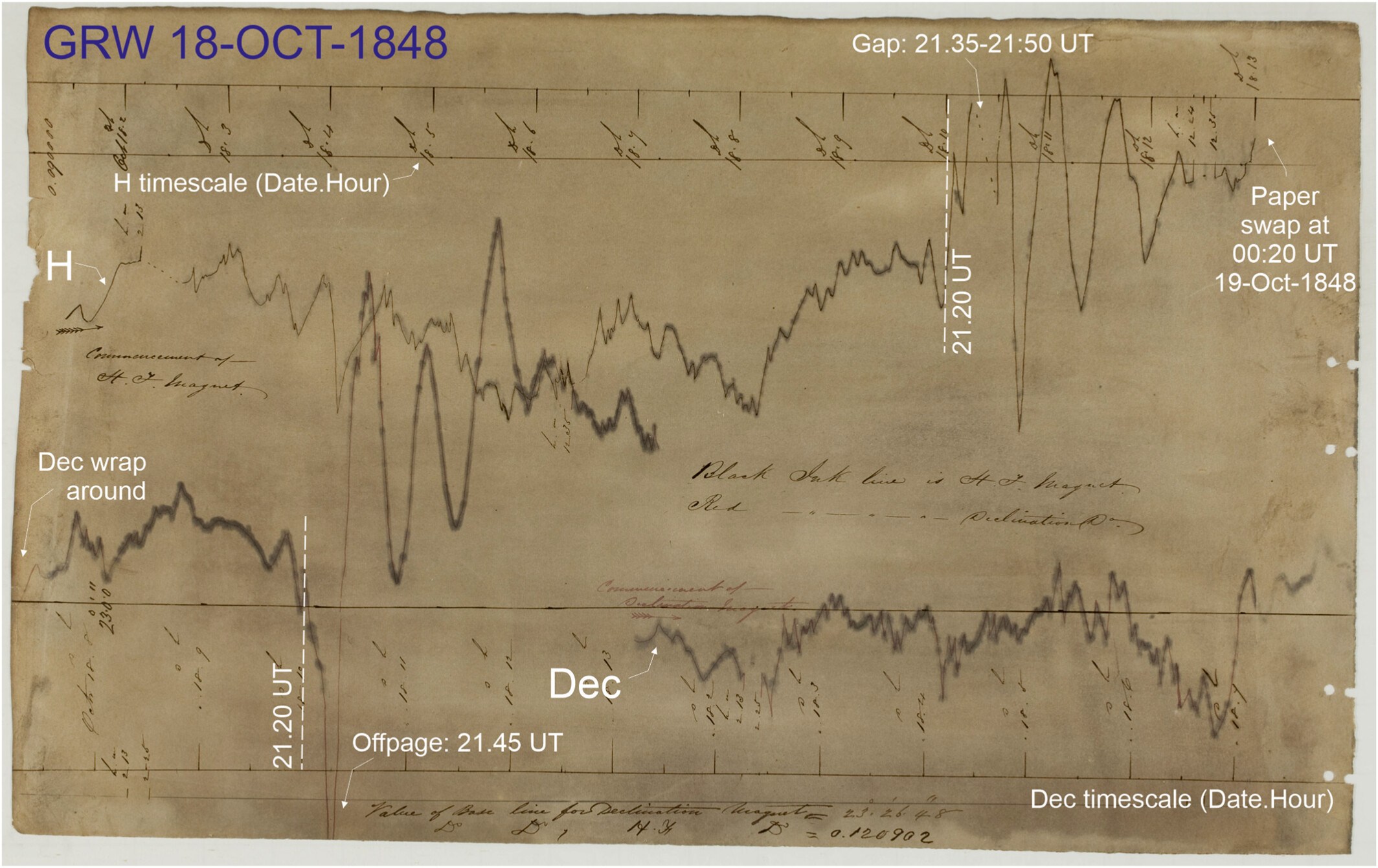
“Although this means it is not the earliest recorded space weather impact, it remains one of the first clear examples of solar activity disrupting critical infrastructure,” Wild said. “It also demonstrates the value of combining scientific records with contemporary newspaper reports and archival documents when reconstructing historic space weather events.”
A late train is certainly annoying, but it’s not a catastrophe. Today, the stakes are higher. The modern world runs on electronics like power grids, the internet, and GPS. A storm on the scale of the Carrington Event could disrupt all of them. Forecasting has come a long way since the 1800s, but “the modern technologies we depend on are also much more vulnerable to solar storms,” said Mike Hapgood, study co-author and space weather expert at RAL Space in England, in the press release. Understanding past storms, he added, is key to preparing for future ones, especially as a new solar cycle ramps up in the 2030s.
Brooks Mendenhall is a staff writer at Astronomy, based in Chattanooga, Tennessee, fueled by an unending curiosity about the universe. A former classroom teacher, he has a knack for breaking down complex concepts for a wide audience.