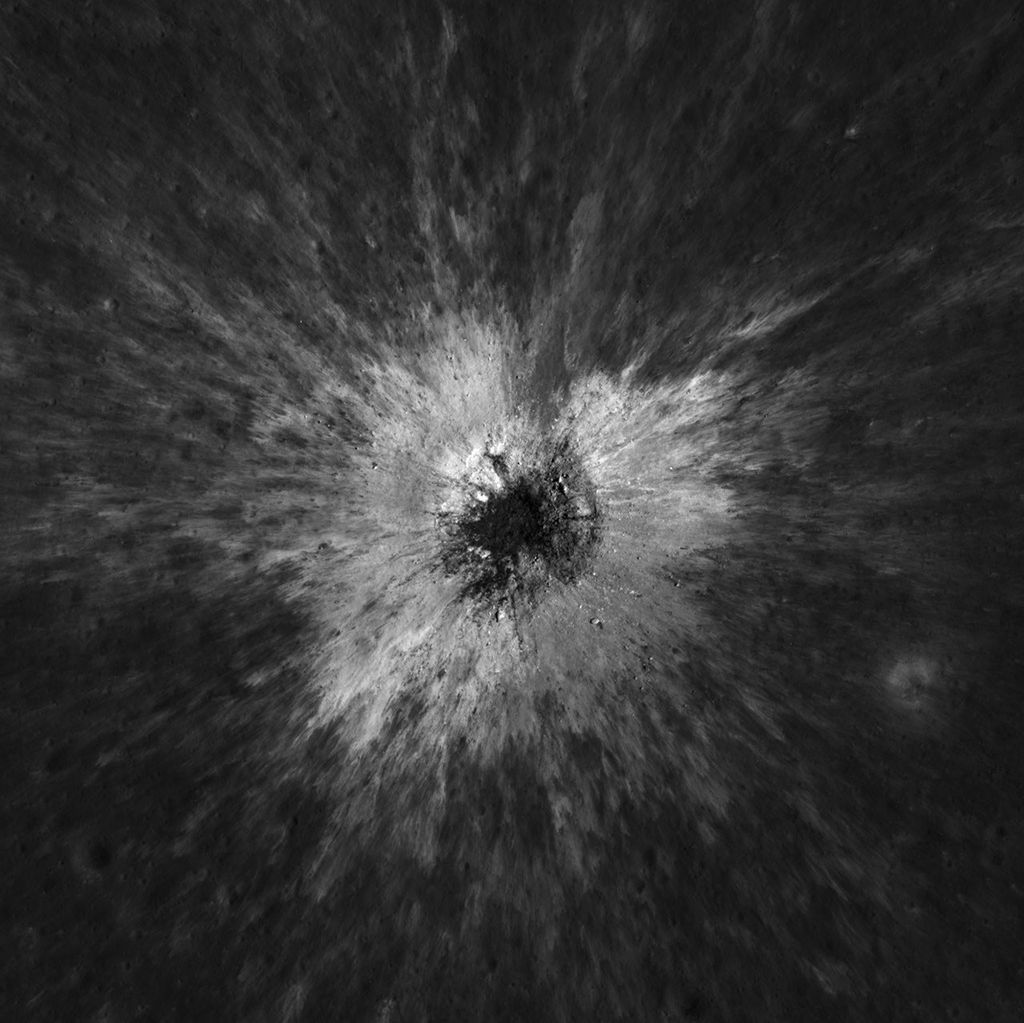
Sometime between April 11 and May 22, 2024, a comet or asteroid roughly the height of a three- to six-story building smashed into the Moon, leaving a crater 728 feet (222 meters) wide in its wake. A year and a half later, a NASA scientist spotted it, making it the largest newly formed crater humans have ever discovered in the solar system.
The crater is named McGetchin after the late lunar geologist Tom McGetchin, who shaped our understanding of lunar volcanoes and impact craters and provided field geology training for the Apollo crews. Robert Wagner, an image-processing specialist at Intuitive Machines and a Lunar Reconnaissance Orbiter (LRO) team member, discovered McGetchin on Oct. 24, 2025, while manually reviewing images from the Lunar Reconnaissance Orbiter Camera (LROC). An unusually large bright spot surrounded by a dark ring, the impact site stood out immediately.
“I just stopped, dropped everything, and started looking into what that spot was,” Wagner said in a statement. “It was by far the most obvious impact debris pattern I’ve ever seen in one of these images.”
RELATED: Why does one side of the Moon have a lot of craters, while the other does not?
Two papers published Sept. 16 in Science Advances explore how McGetchin informs our current models of crater formation and how newly formed craters like McGetchin affect lunar surface temperatures and regolith, with follow-up studies on the way. As the Artemis program picks up speed, scientists say the discovery can also inform human exploration on the Moon.
Watching the Moon change
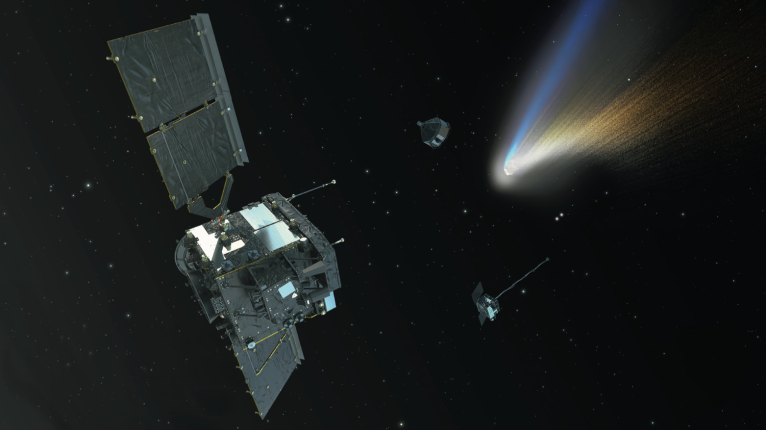
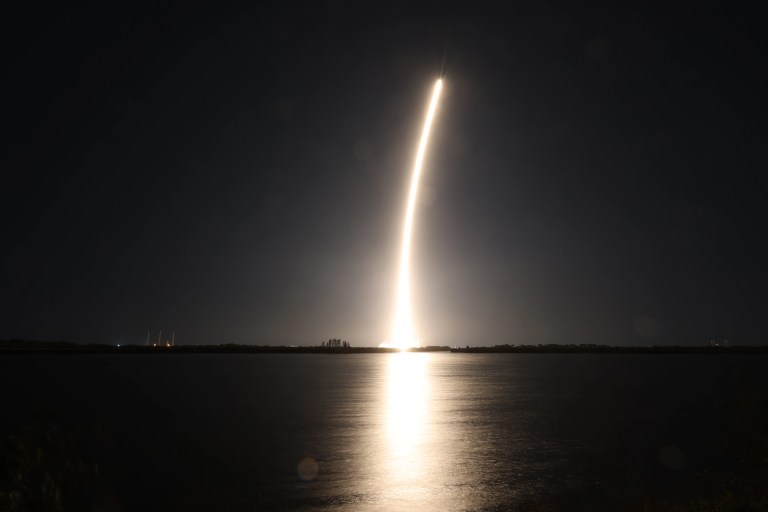
Launched on June 18, 2009, from Cape Canaveral, NASA’s LRO orbits the Moon roughly 12 times a day and has been orbiting the Moon longer than any spacecraft in history, completing its 50,000th orbit in August 2020. Over those tens of thousands of orbits, LRO and its suite of instruments has helped build the most-detailed topographic maps of the Moon, found the coldest measured spots in the solar system (deep in the Moon’s permanently shadowed regions), and identified more than 1,000 new craters on the lunar surface, along with a host of other contributions.
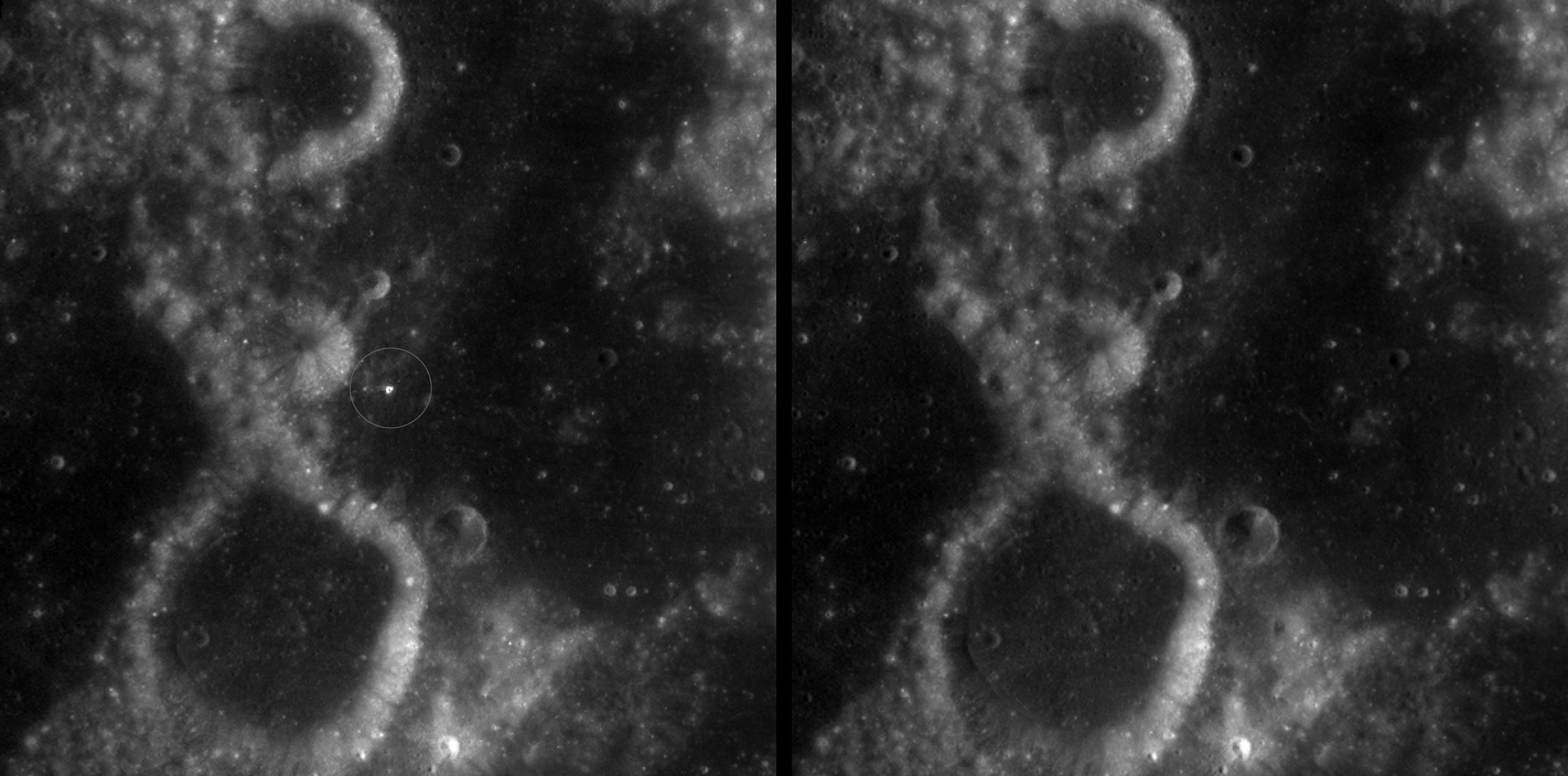
One of the instruments aboard LRO is its Wide-Angle Camera, which snaps pictures at roughly 330 feet (100 m) per pixel across a 37-mile (60 km) stretch of lunar terrain. Every few years, members of the LROC team compare new images with old ones to look for new features 150 feet or wider. To do this, the researchers stack hundreds of Wide-Angle Camera shots of the same location and run them through a computer program that turns any unchanged features gray while brightening or darkening anything new.
This process is far from perfect, often creating hundreds of false positives, as even the slightest change in the way a shadow falls can trigger a result. Human team members manually comb through each flagged result to verify whether it represents an actual change in the Moon’s surface. The telltale sign of a new crater is a single bright pixel ringed by a dark, blurry halo of freshly displaced lunar soil.
That day in October, during a routine check of new LROC data, Wagner stumbled upon McGetchin. Rather than a single pixel, the spot and its halo sprawled across hundreds of pixels, a signature far larger than any the team had seen before. By comparing the spot with older images, the team constrained McGetchin’s formation to sometime between April 11 and May 22, 2024.
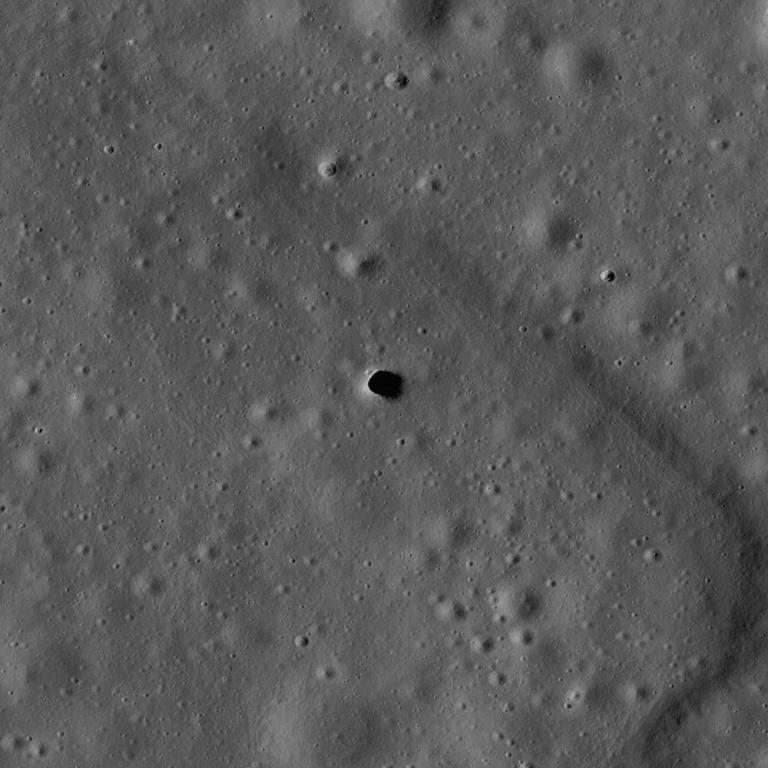
For a closer look, they turned to LROC’s Narrow-Angle Camera, which can resolve features about 3 feet (1 m) across. On Dec. 5, 2025, as LRO swung back over the site, the camera caught McGetchin from directly overhead. That image shows a dark, round pit inside a bright, ragged ring, with streaks shooting out in every direction. A second pass on March 3, 2026, captured the crater again from a fresh angle.
A once-in-a-century hit
The Moon takes a steady beating from space debris as, unlike Earth, it has no atmosphere to slow down incoming objects. The bulk of new craters are formed by tiny impacts that leave holes far too small for a camera to see. Scientists estimate that the Moon picks up about 140 new craters a year at the smallest scale LRO can reliably detect: craters about 30 feet (9 m) wide, carved by rocks roughly 43 inches (1.1 m) across. Impacts on McGetchin’s scale are far rarer. Crater production models predict a strike this size only about once every 132 years.
A record-breaking crater
The first of the two Science Advances papers, led by LROC principal investigator Mark Robinson of Intuitive Machines, investigates the crater and the ejecta zone around it. At 728 feet (222 m) across and 141 feet (43 m) deep, McGetchin more than triples the width of the previous record holder for largest fresh lunar crater, a 230-foot (70 m) crater that LRO caught forming in October 2012.
McGetchin sits near the Moon’s eastern edge, on the border between a patch of dark volcanic plains and the bright, heavily cratered highlands. The crater is slightly irregular, deviating from the typical circular shape created by impact craters. Its rim is lopsided, with the western half tracing a wider arc than the eastern. The team argues this likely comes from the differing terrain, with the impactor punching into loose soil on the western, highland side and a solid buried lava flow beneath the eastern, volcanic side. In most respects, the crater’s depth, rim height, and ejecta match what models predict, but due to its unusual shape, the authors note that it is “not completely law-abiding.”
RELATED: Why are craters perfectly round even though meteorites are irregularly shaped?
The paper also suggests McGetchin can help inform models of what scientists call “jetting” — the process by which a stream of vaporized material shoots out from an impact site at high speeds and low angles. Current models suggest that jetting shoots materials at very low angles of less than 2° above the surface. However, material the researchers found near McGetchin would have required launch angles above 13°. The mismatch gives scientists new data points to further refine their jetting models.
Out in the cold
The second paper, led by Tyler Powell, a planetary scientist and postdoctoral fellow at Johns Hopkins University’s Applied Physics Laboratory, looks at how the impact affected the lunar surface beyond the crater’s rim. Between November 2025 and February 2026, LRO’s Diviner Lunar Radiometer Experiment mapped the site’s temperatures and compared them with readings taken before the impact. It turned up a so-called “cold spot” about 4.3 miles (7 km) wide, centered on the crater. During the lunar night, that zone runs 14 to 16 degrees Fahrenheit (8 to 9 degrees Celsius) cooler than its surroundings.
Scientists have known about cold spots around young craters for more than a decade; they believe such spots form when an impact loosens the regolith for miles around a new crater, leaving it less dense. That loosely packed soil surrenders its warmth faster than compacted ground does. But by geologic standards, the features are short-lived, and most had already faded considerably by the time anyone saw them. That makes McGetchin a useful data point: It’s the largest fresh cold spot ever observed.
The team also measured nighttime temperatures around 20 other newly formed craters wider than 66 feet (20 m) that LRO has discovered. Every one larger than about 100 feet (30 m) had a cold spot, and the bigger the crater, the colder the spot, a sign that the soil had been loosened more deeply.
Using a computer model based on the Diviner data, the researchers estimate that any given patch of ground on the Moon falls inside a fresh cold spot roughly once every 10 million years, loosening its top inch or two of soil. That rivals the pace of so-called impact gardening, the churning of soil within a crater’s rim, meaning cold spots are a major force in shaping the lunar surface.
Lessons for explorers
Along with giving scientists a new window on lunar geology, McGetchin carries lessons for the explorers headed there. NASA notes that the loosened soil around craters like McGetchin could affect how rover wheels interact with the surface. When Apollo 16 landed on a cold spot around South Ray Crater in 1972, for example, the astronauts’ bootprints sank deeper there than elsewhere.
For their part, both research teams want a closer look. Robinson’s group writes that a mobile asset exploring McGetchin could sharpen our understanding of crater formation. Powell’s team wants future missions to measure how the density of lunar soil changes with depth, something orbiters like LRO can’t see.
As the largest fresh crater ever discovered, McGetchin gives scientists a rare look at an impact and its aftermath. A future paper will estimate the size and force of the object that formed it, NASA says, and LRO will keep watching the site to see how it changes over time.
Brooks Mendenhall is a staff writer at Astronomy, based in Chattanooga, Tennessee, fueled by an unending curiosity about the universe. A former classroom teacher, he has a knack for breaking down complex concepts for a wide audience.