Looking for a sky event this week? Check out our full Sky This Week column.
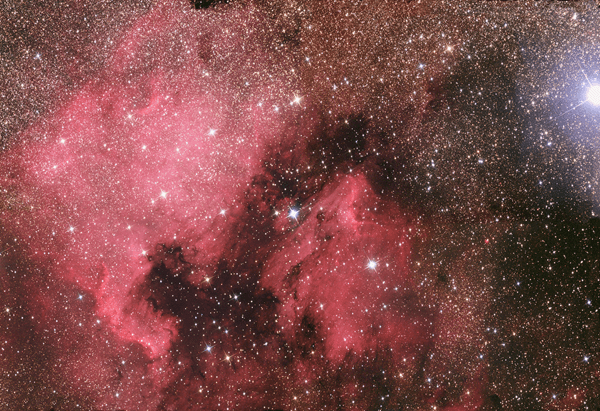
June 22: Visit the North America Nebula
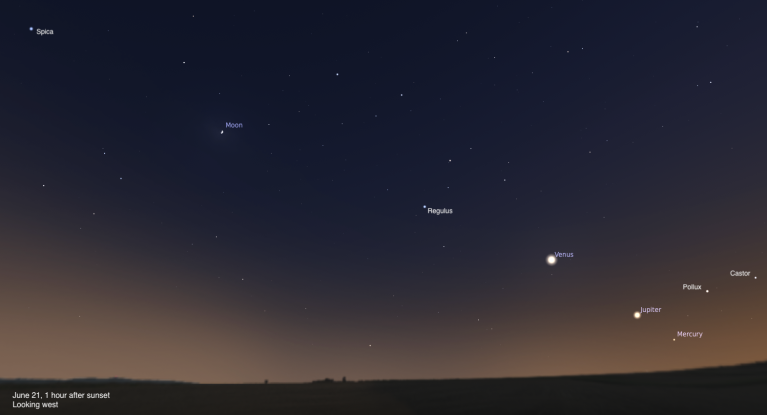
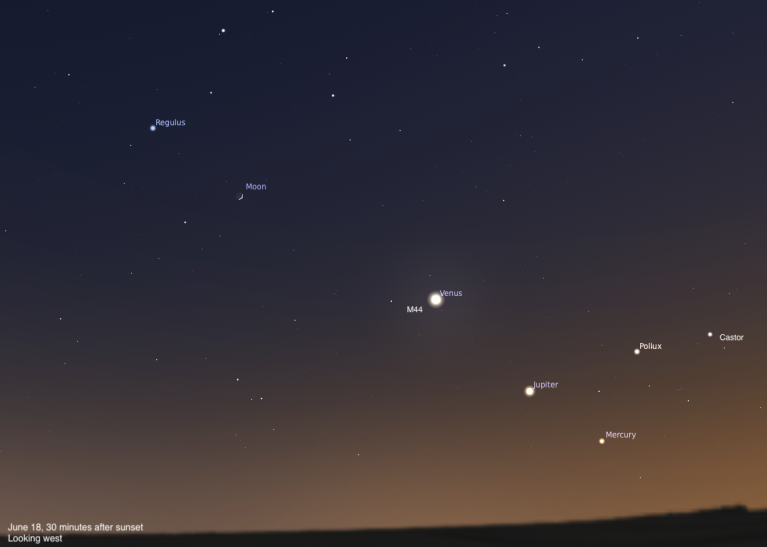
Mercury passes 7° due south of Pollux in Gemini at 3 P.M. EDT. By evening, Mercury, Jupiter, and Pollux create a skinny, tall triangle with the two planets forming the base and the star at the apex, visible in the western sky for short time after sunset.
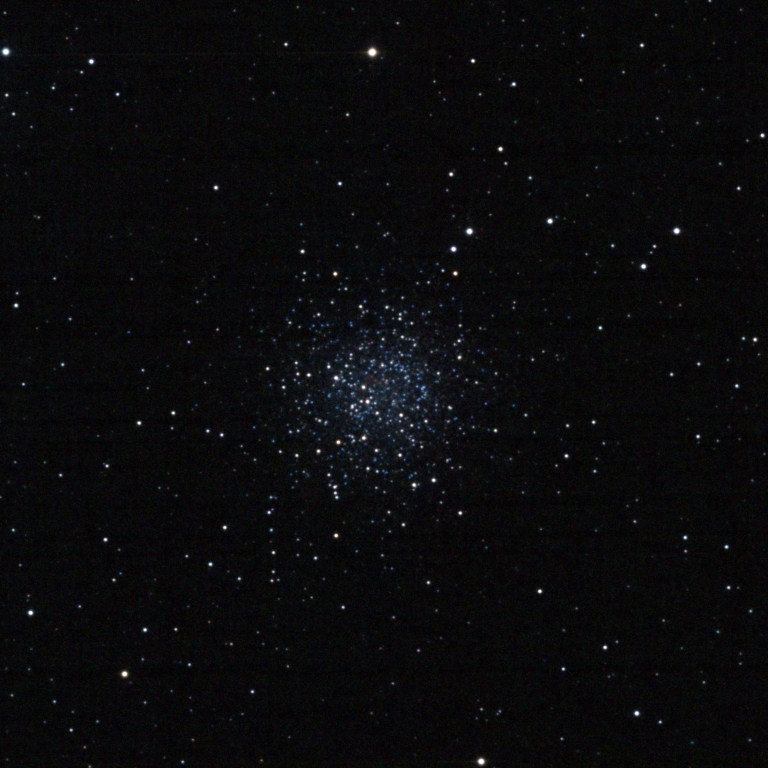
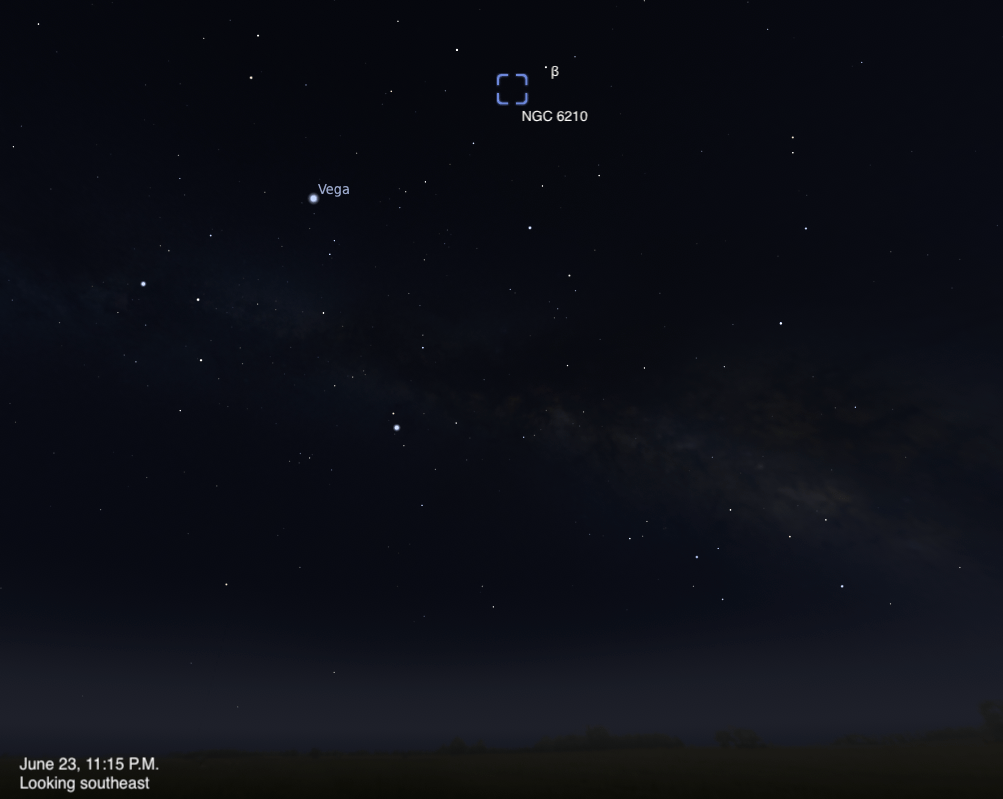
After the sky has grown fully dark, scan over toward the southeast, where the mighty constellation Hercules is already quite high. Although best known for its globular cluster M13, the Strongman holds many other treasures as well, such as the bright planetary nebula NGC 6210, also called the Turtle Nebula. This puff of gas signaling a dying star is a great small scope target, shining at 9th magnitude and spanning a mere 14”. That’s quite small — but the size works in your favor, because it concentrates the nebula’s light and makes it easier to spot.
To find it, all you need to do is scan 4° northeast of magnitude 2.8 Kornephoros (Beta Herculis), located in western Hercules. The nebula gives off a bluish glow and appears just slightly oval-shaped if you’ve got a large scope and high magnification.
Sunrise: 5:32 A.M.
Sunset: 8:33 P.M.
Moonrise: 3:03 P.M.
Moonset: 1:18 A.M.
Moon Phase: Waxing gibbous (72%)
*Times for sunrise, sunset, moonrise, and moonset are given in local time from 40° N 90° W. The Moon’s illumination is given at 10 P.M. local time from the same location.
Alison Klesman is senior editor of Astronomy magazine. She holds a Ph.D. in astronomy and has studied a variety of topics, from minor planets to supermassive black holes.