Looking for a sky event this week? Check out our full Sky This Week column.
June 27: Mars meets the Pleiades
The planet Mercury stands stationary tonight at 10 P.M. EDT. Mercury was previously moving eastward, or prograde, against the background stars. After today, it will begin retrograde motion, moving westward.
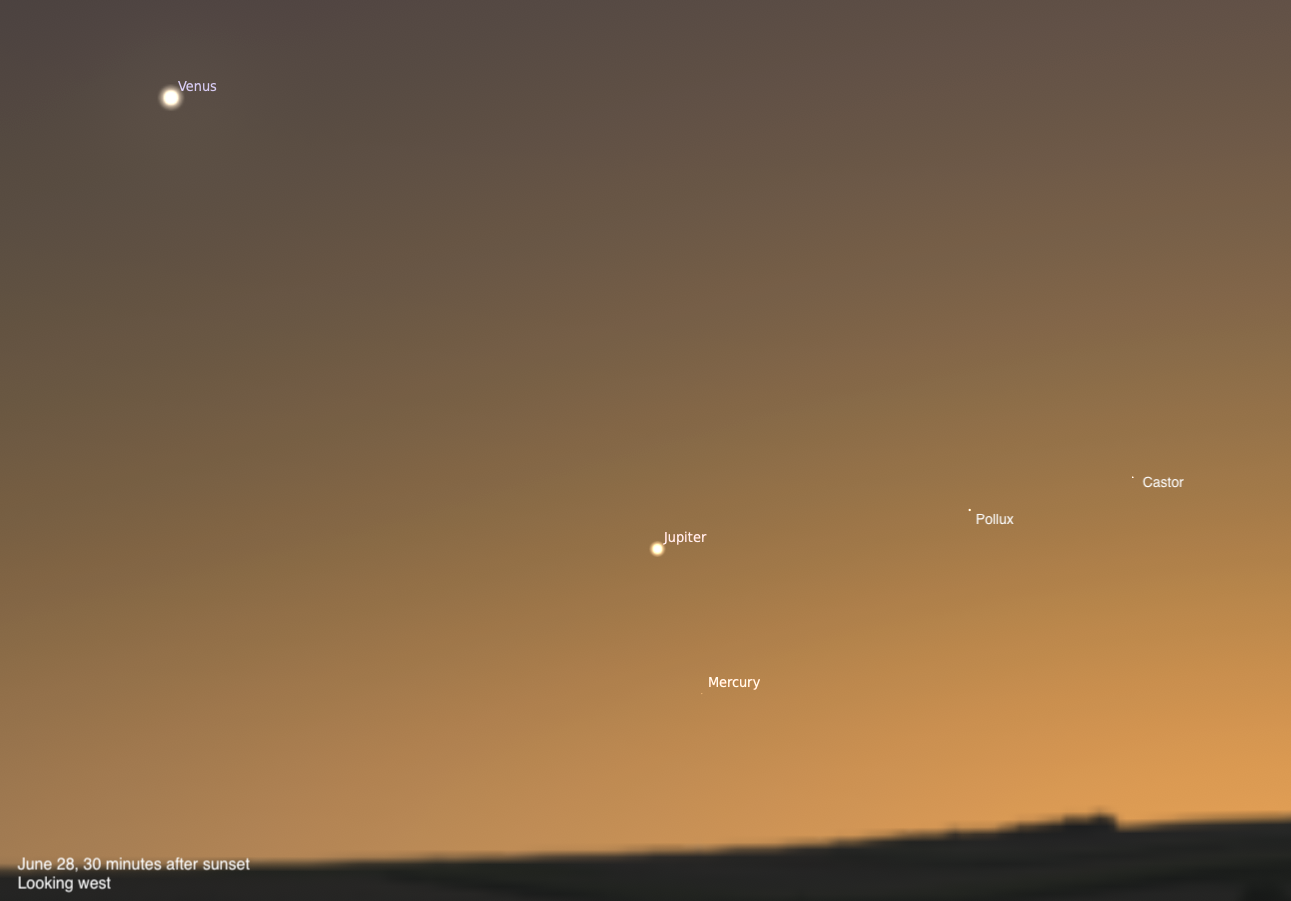
Located in far eastern Gemini, the tiny planet isn’t far from mighty Jupiter, which lies to the east in Cancer. Shining at magnitude 1.7, Mercury sets soon after the Sun. If you want to catch it, you’ll want to be ready with binoculars or a telescope at sunset, but take care not to use these instruments until the Sun has fully disappeared from view.
By 30 minutes after sunset, Venus should be visible, a bright point of light in the western sky. You may also spot Jupiter, fainter but still bright in the falling twilight and far to Venus’ lower right. Mercury lies about 4.3° southwest of Jupiter, below and a little to its right. If you can’t spot it by eye, try with your optics. Mercury is just 4.7° high at this time, so you’ll need a clear western horizon. If you can get to a location above your surroundings, that will also help.
If you’re able to capture Mercury in a telescope, note how its disk is only a slender crescent. It is now just 15% lit and spans 11”. Compare that to Venus, higher in the sky, which spans 16” and is some 70% lit.
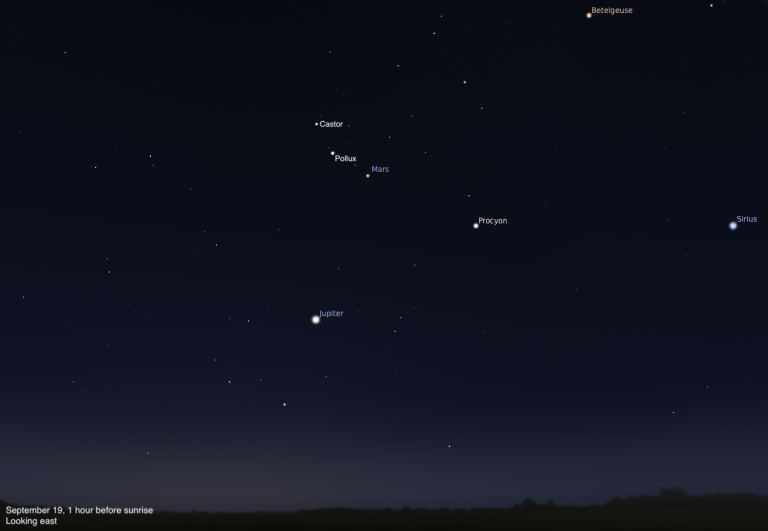
You might also notice the stars Castor and Pollux, the heads of Gemini the Twins, peeking out to Jupiter’s right as the sky starts to darken.
Sunrise: 5:34 A.M.
Sunset: 8:33 P.M.
Moonrise: 8:04 P.M.
Moonset: 3:58 A.M.
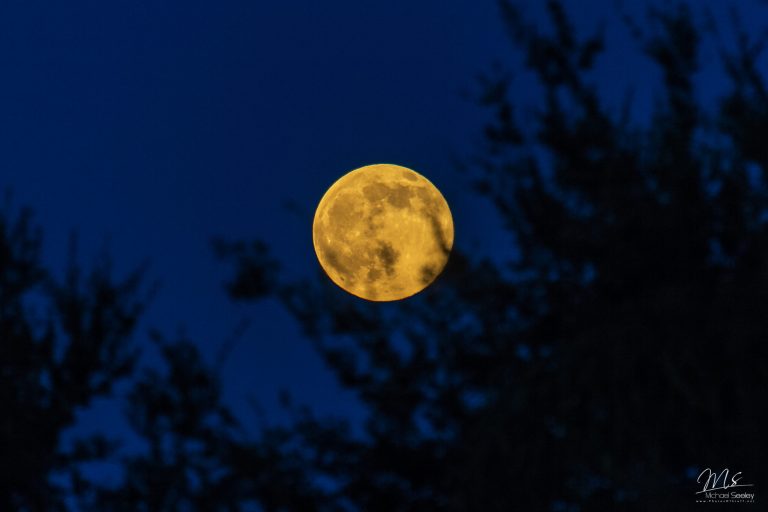
Moon Phase: Waxing gibbous (99%)
*Times for sunrise, sunset, moonrise, and moonset are given in local time from 40° N 90° W. The Moon’s illumination is given at 10 P.M. local time from the same location.
Alison Klesman is senior editor of Astronomy magazine. She holds a Ph.D. in astronomy and has studied a variety of topics, from minor planets to supermassive black holes.