In Steven Spielberg’s Disclosure Day, opening tomorrow, protagonists race across the globe to expose a decades-long government cover-up and reveal to the world that extraterrestrial life is real. It’s a question Spielberg has been asking since his 1977 Close Encounters of the Third Kind: How would the knowledge of extraterrestrial intelligence change us? Spielberg makes his answer explicit in an appearance in the film’s final trailer. “I believe for the better,” he says in a filmed interview spliced into the movie clips. “It will remind us of our capacity for empathy. And that there is something bigger out there. Than just ourselves.”
It’s impossible to predict how the global community might respond to the discovery of extraterrestrial intelligence. But there is a protocol for how the scientific community responds — who calls the shots, what they’re allowed to say, and when — and on June 1, it got its first major update in more than 15 years.
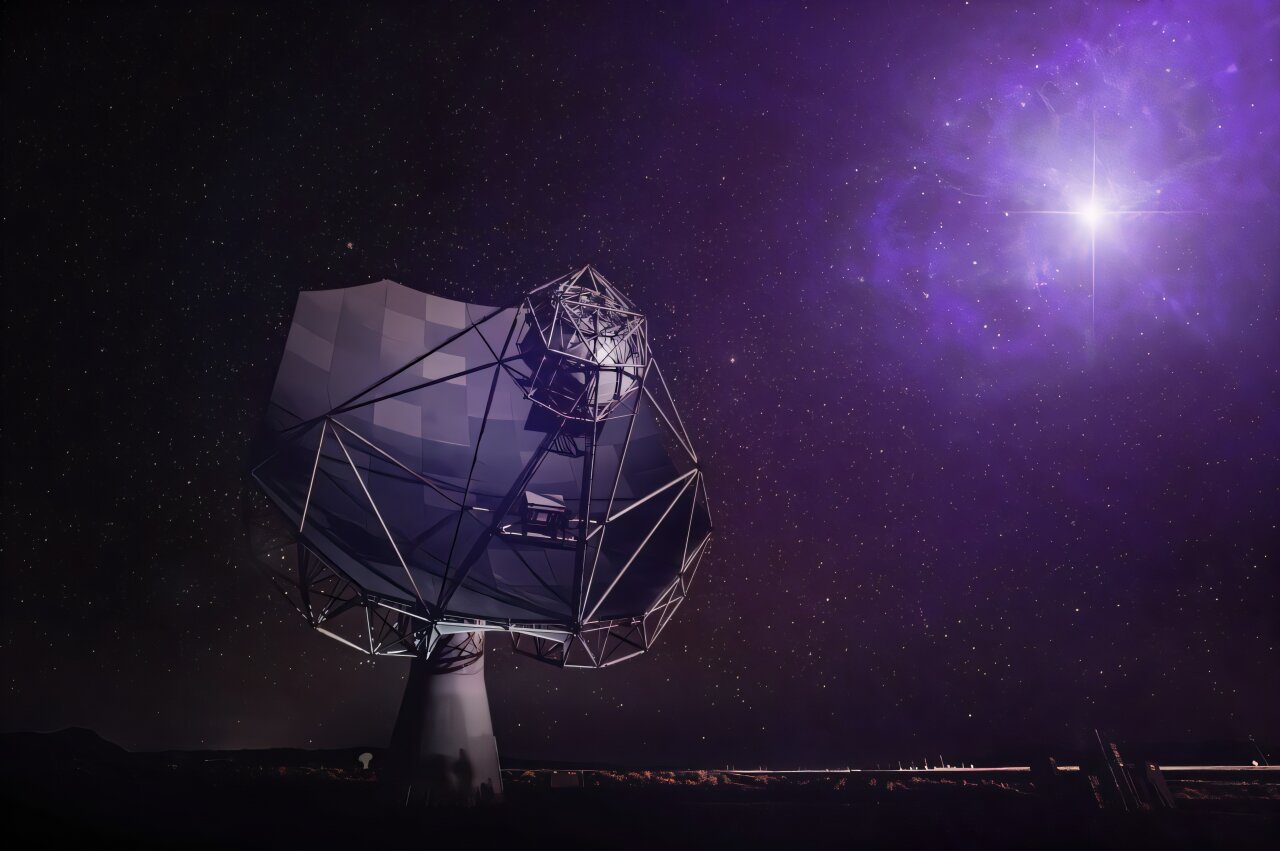
The International Academy of Astronautics (IAA) ratified an updated “Declaration of Principles” governing how scientists verify and announce evidence of extraterrestrial intelligence. The updates, led by Michael Garrett, University of Manchester professor and chair of the IAA SETI (search for extraterrestrial intelligence) committee, reflect a world the original authors didn’t anticipate: one shaped by AI deepfakes, social media, UAP congressional hearings, and a public more inquisitive around the question of alien life than it was in 2010.
“The release of these updated rules and protocols marks an important step in acknowledging both the radically different media landscape that science functions within today, and the vastly expanded efforts in terms of technology and resources being deployed in the search for intelligent life beyond Earth” Bill Diamond, SETI Institute CEO and IAA SETI Committee member, said in a press release.
RELATED: The search for aliens levels up
The protocol for disclosing aliens
The bedrock principles from the 2010 declaration remain intact, among them that any detection of ETI must be confirmed before anything goes public. “Such efforts should ideally include, but not be limited to independent observations or other examinations by multiple facilities and by more than one organisation utilising different instrumentation and methods,” the declaration states.
There is no obligation for researchers or authorities to disclose the detection candidate while verification is underway. The discovering team retains the right to make the first announcement. A confirmed detection must be reported to the public, the scientific community, and the Secretary General of the United Nations. And no one — no institution, no government, no individual — gets to reply to an extraterrestrial signal without international consultation through the UN. Those rules were settled in 2010 and the 2026 declaration keeps them unchanged.
But there are several updates that reflect how the world has changed in the past 16 years.
One of the biggest additions is language protecting the scientists themselves. The new declaration acknowledges that researchers involved in a potential detection could face harassment or career damage and places an obligation on institutions to shield them. Individual scientists now have the right to step back from media engagement, as long as their organization keeps the public informed.
The declaration also introduces a new obligation that didn’t exist before: if a candidate signal is investigated and ruled out, scientists must promptly and clearly say so. The 2010 version only required disclosure of confirmed detections. In other words, scientists now have to tell the public when something isn’t intelligent aliens, not just when it is.
The updated declaration also draws a harder line around Unidentified Anomalous Phenomena (UAP), explicitly stating that the document applies to the astronomical search for intelligent extraterrestrial life and not to UAP observed in Earth’s atmosphere. This change comes at a moment when UAP has become more involved in the public conversation, moving from a somewhat fringe topic to congressional testimony.
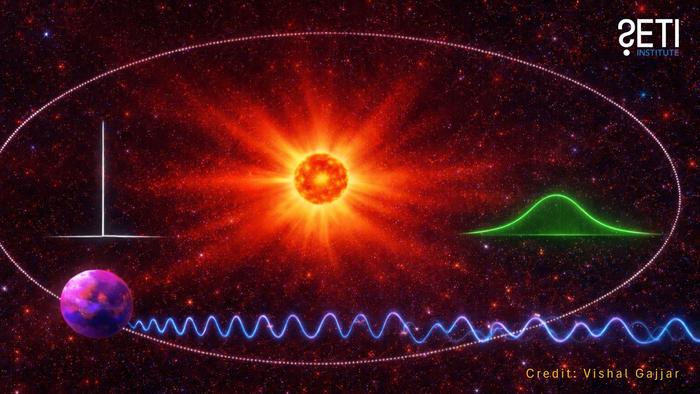
The scope of what counts as a SETI detection has also been formally expanded. The 2010 declaration largely implied it was referring to radio signals. The 2026 version explicitly covers the full range of technosignatures, including “narrow-band radio signals, laser emission, infrared excess associated with large-scale energy usage, anomalies in astronomical measurements due to megastructures,” or evidence of physical artifacts.
The finer details of ETI disclosure
Several other changes filled in gaps the original document left open. The notification list for a confirmed detection grew, adding the Committee on Space Research (COSPAR) of the International Science Council, the International Institute of Space Law (a global non-governmental organization that develops legal frameworks for peaceful outer space activities), the UN Committee on the Peaceful Uses of Outer Space, and several other bodies alongside the original requirement to notify the International Astronomical Union.
Data archiving requirements got more specific, now requiring storage in at least two geographically separate locations in open formats in order to make the data “accessible to observers and to the scientific community for replication of results and further analysis.” And the IAA took on an explicit new role coordinating with social media platforms to counter misinformation in the event of a detection. The update also notes that procedures for international consultation before any reply to ETI will be worked out in a separate future agreement.
The declaration will be presented to the broader scientific community at the International Astronautical Congress in Turkey later this year.
Whether disclosure will bring a renewed sense of empathy to humanity as Spielberg imagines remains to be seen. But if the signal does ever come, the scientists listening for it have already decided how the world will find out.
Brooks Mendenhall is a staff writer for Astronomy and is based in Chattanooga, Tennessee.