
Sky This Week is brought to you in part by Celestron.
Friday, May 15
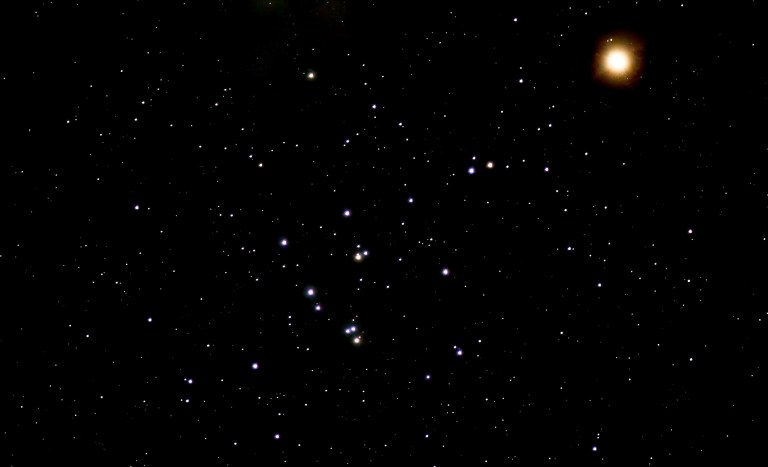
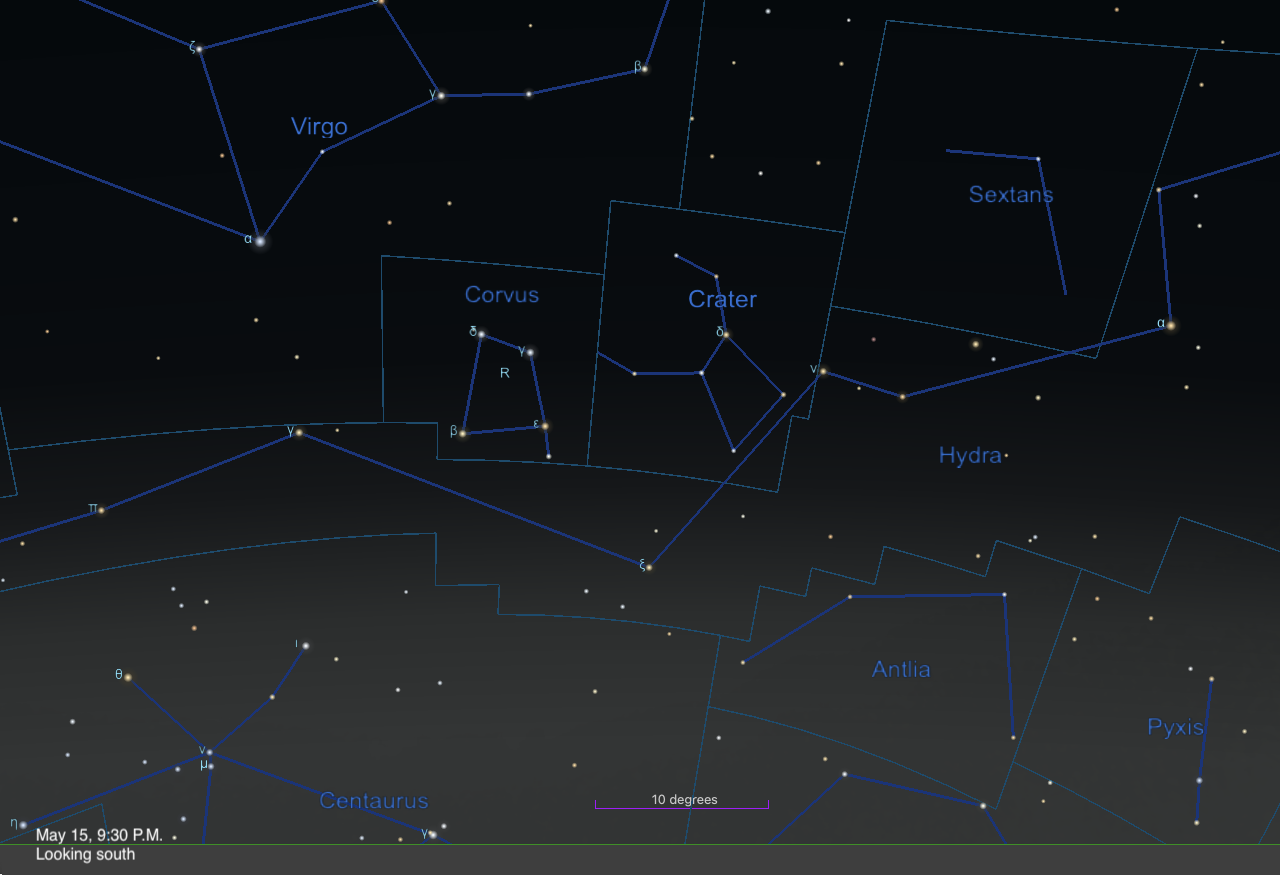
Are you familiar with the constellation Crater the Cup? If not, don’t worry — you’re about to spot it tonight.
This mid-sized constellation, measuring 53rd in size among the 88 official constellations, sits about 30° high in the south an hour after sunset. It is located to the right (west) of Corvus the Crow, and both appear to the lower right of larger Virgo. Crater also hangs directly beneath the hindquarters of Leo the Lion at this time of year and night.
Despite being of reasonable size, Crater is not bright — it ranks much lower, 82nd, in terms of brightness. Its alpha star is the only star in the constellation with a name: Alkes. It shines at magnitude 4.1. However, this is fainter than Delta (δ) Crateris, which has no official name but shines at magnitude 3.6. To find Delta Crt, start at brighter magnitude 2.6 Gamma (γ) Corvi in Corvus. From here, slide about 13.8° west-northwest to find Delta Crt.
Check out the map below for a detailed look at Crater’s shape and stars to help you find it in the sky.
Sunrise: 5:45 A.M.
Sunset: 8:09 P.M.
Moonrise: 4:31 A.M.
Moonset: 7:15 P.M.
Moon Phase: Waning crescent (1%)
Times for sunrise, sunset, moonrise, and moonset are given in local time from 40° N 90° W. The Moon’s illumination is given at 10 P.M. local time from the same location.
Saturday, May 16
New Moon occurs at 4:01 P.M. EDT, leaving the evening sky perfect for deep-sky observing.
By 10 P.M. local time, the sky should be dark. High in the south is the constellation Canes Venatici, where our target for tonight is located. We’re hunting down NGC 4631, also known as the Whale Galaxy. You’ll find it just 6.5° south-southwest of Cor Caroli (Alpha [α] Canum Venaticorum), which shines at magnitude 2.9.
The Whale glows softly at magnitude 9.2, stretching some five times longer than it is wide (15’ by 3’). Try an 8-inch or larger scope with a magnification of 200x to see detail. This galaxy is an edge-on spiral, meaning we’re looking directly into the plane of the disk. You may notice a mottled appearance, caused by dust lanes blocking out light along the galaxy’s brighter disk. It is thicker toward the east than the west, giving the object the appearance of a whale with a larger, rounder head and body that taper into a thinner tail.
You may also notice a tiny dwarf galaxy, NGC 4627, nearby, glowing at 12th magnitude to the Whale’s northwest. The pair is indeed close in real space as well — the two galaxies have interacted in the past, triggering a burst of bright star formation in the larger Whale.
Sunrise: 5:44 A.M.
Sunset: 8:09 P.M.
Moonrise: 5:07 A.M.
Moonset: 8:36 P.M.
Moon Phase: New
Sunday, May 17
The Moon reaches perigee, the closest point to Earth in its orbit, at 9:44 A.M. EDT. At that time, our satellite will be 222,498 miles (358,076 kilometers) away.
Springtime viewing of the zodiacal light will soon come to an end — so give it a try tonight, while the Moon won’t interfere. The zodiacal light appears as a soft, cone-shaped glow that spikes above the western horizon after sunset, stretching up through Taurus into Gemini and Cancer. You can use the bright planets Venus (in Taurus) and Jupiter (in Gemini) to guide you, as they outline the ecliptic, the plane of the solar system. This is also where the zodiacal light is concentrated.
The zodiacal light is generated by sunlight scattering off dust left behind by comets as they travel through the inner solar system and are heated by the Sun. Over time, this dust settles onto the ecliptic, which is why the glow is found there.
The zodiacal light becomes increasingly difficult to see as spring turns into summer, but will reappear in the predawn sky in late summer and early fall.
Sunrise: 5:43 A.M.
Sunset: 8:10 P.M.
Moonrise: 5:53 A.M.
Moonset: 9:55 P.M.
Moon Phase: Waxing crescent (3%)
Monday, May 18
The Moon is now just over two days old, a sliver of its eastern limb lit by the Sun as sunrise slowly crawls across the nearside. Catch the delicate crescent this evening, when it stands just 2° from Venus in the darkening sky after sunset. The pair is visible for more than 2½ hours after sunset, slowly sinking to disappear below the horizon shortly before 11 P.M. local daylight time. That means you have plenty of time to get out and enjoy them.
Venus is a blazing magnitude –3.9, the brightest point of light in the sky. It’s located in far northeastern Taurus — but it will move into western Gemini, near the Twins’ feet, by tomorrow evening. It joins bright Jupiter, which is closer to the heads of the Twins, shining at magnitude –1.9.
Check out Venus through a telescope and you’ll see a lovely 12”-wide disk that appears 83 percent lit. The best time to view it is before the sky gets too dark, as Venus is so bright that the bright sky around it actually aids in viewing it. After dark is the time to check out Jupiter, which stretches 34” wide and sports four bright moons visible around it: Europa (closer) and Callisto to the east, and Io (closer) and Ganymede to the west. At least, that’s the moons’ orientation early in the evening — Ganymede is moving east, while Io is moving west. Around 11:20 P.M. EDT, these two moons stand in a north-south line; after this, they swap places, with Ganymede closer to Jupiter’s western limb than Io.
The Moon passes 3° north of Venus at 10 P.M. EDT and stands between Venus and Jupiter tomorrow evening, so make sure to come back and enjoy the view then (and keep reading).
Sunrise: 5:42 A.M.
Sunset: 8:11 P.M.
Moonrise: 6:50 A.M.
Moonset: 11:04 P.M.
Moon Phase: Waxing crescent (8%)
Tuesday, May 19
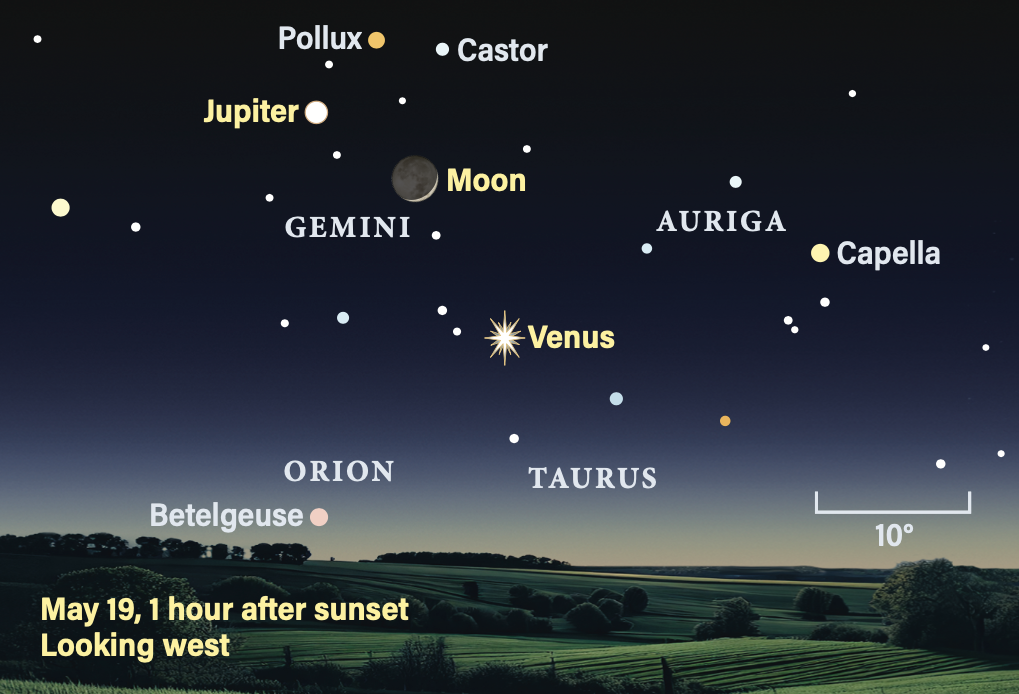
Venus has now entered Gemini and the Twins host two planets: brighter Venus near their feet, and mighty Jupiter near their heads. The Moon has also moved, outpacing Venus so that our satellite now hangs suspended with Jupiter to its upper left and Venus to its lower right. Together, the three bodies easily trace out the line of the ecliptic in the sky — the plane of our solar system.
As the sky darkens, you might try to glimpse open cluster M35 with binoculars or a telescope. Glowing at magnitude 5.3, this bright, young grouping of stars lies just 1.3° southeast of Venus tonight. You may catch them together in the same field of view, especially in binoculars or at lower magnification in your telescope.
Keep an eye on this region of the sky for the remainder of the month. Venus will trek upward, closing in on Jupiter and ending May about 8° from the gas giant. The pair will come even closer and undergo a conjunction next month.
Sunrise: 5:41 A.M.
Sunset: 8:12 P.M.
Moonrise: 8:00 A.M.
Moonset: Midnight
Moon Phase: Waxing crescent (16%)
Wednesday, May 20
The waxing Moon now passes 3° north of Jupiter at 9 A.M. EDT; in the evening sky our satellite has moved into Cancer the Crab and sits just over 7° east of Jupiter. Like last night, the Moon, Jupiter, and Venus (in western Gemini) still trace out the plane of the ecliptic in the sky.
About 8.5° to the Moon’s upper left (east), in central Cancer, is the lovely open cluster M44. Also called the Beehive Cluster, this grouping of stars can be visible to the naked eye, though it might be a bit of a challenge to view unaided with the Moon nearby. However, the Moon is still only about 25 percent illuminated, so give it a try.
You will definitely spot M44 through binoculars or any telescope. Stretching some 95’ across, it’s a loose, broad grouping that you can even view comfortably in your finder scope. Glowing at magnitude 3.7, this cluster has been known since antiquity and was once called Phatne in Greek and Praesepe in Latin, both meaning “manger.”
Sunrise: 5:41 A.M.
Sunset: 8:13 P.M.
Moonrise: 9:15 A.M.
Moonset: —
Moon Phase: Waxing crescent (25%)
Thursday, May 21
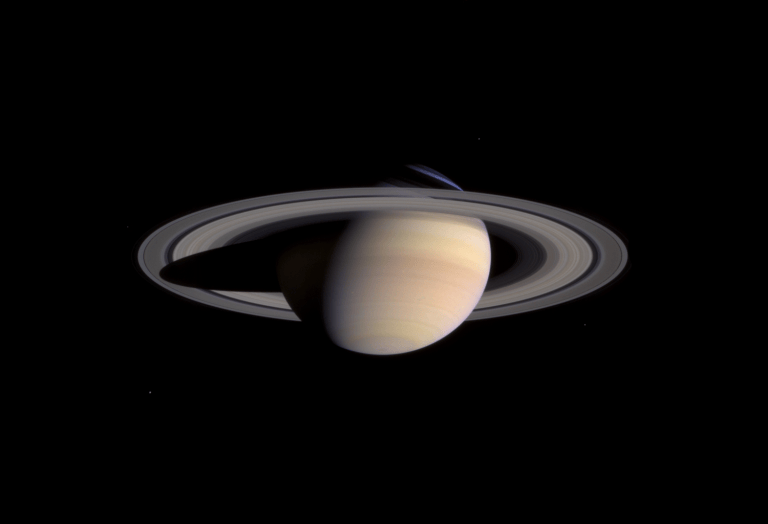
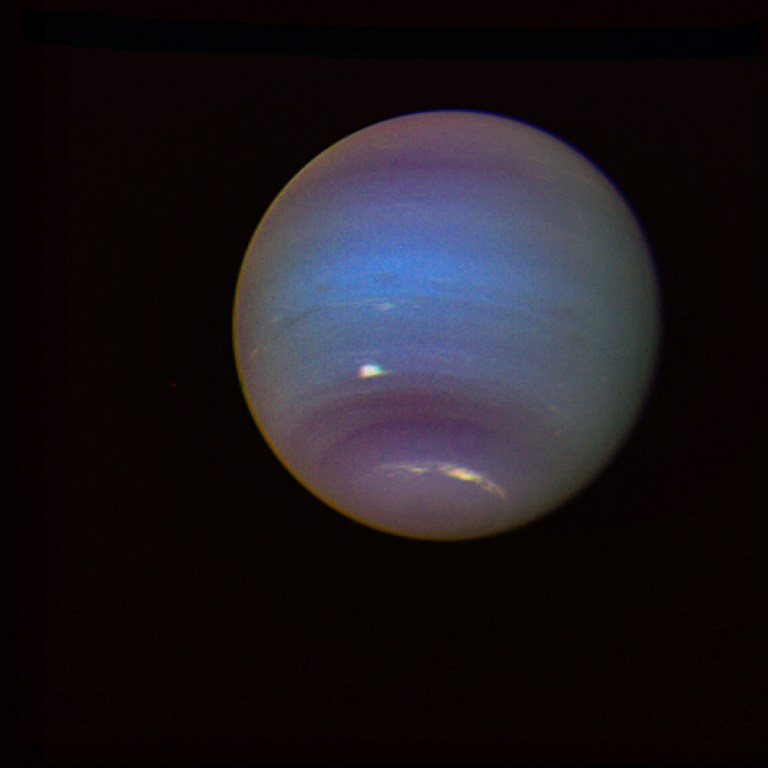
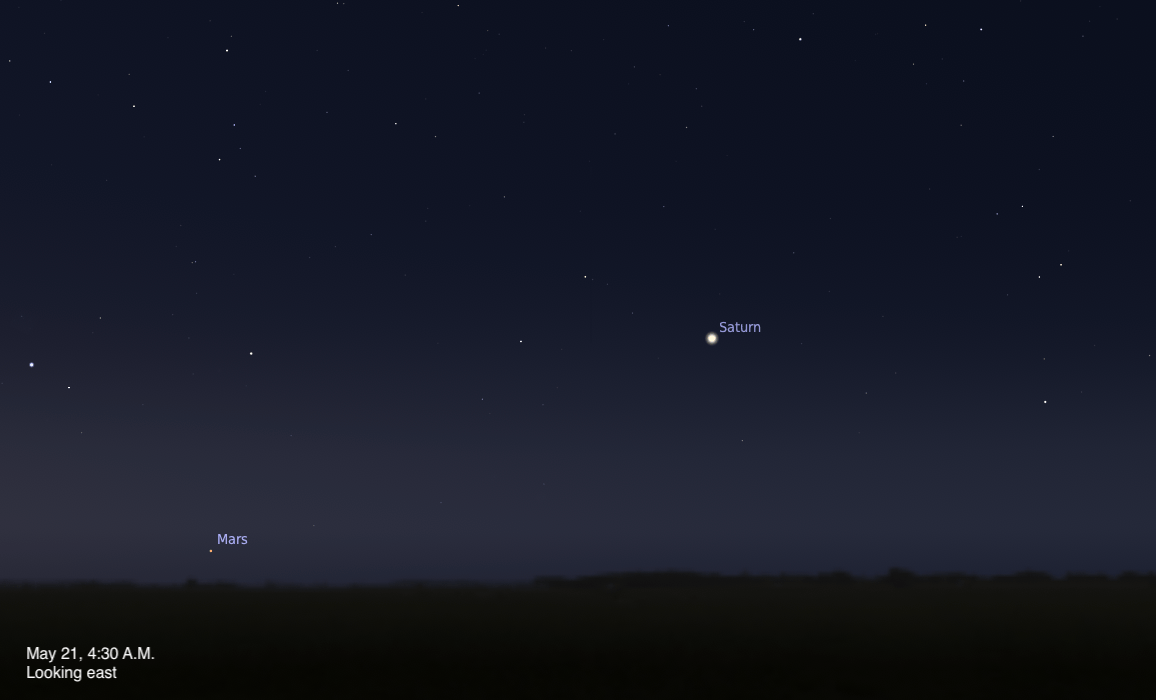
Saturn now dominates the predawn sky and Mars is growing easier to view as it rises slightly earlier each day. Neptune, the most distant planet in the solar system, is also visible before sunrise, although it remains relatively low while the sky is still dark and doesn’t rise out of the horizon haze until closer to sunrise.
By 4:30 A.M. local daylight time, 1st-magnitude Saturn is 10° high in the eastern sky. It’s the brightest point of light here, outshining any of the stars around it. Magnitude 1.3 Mars is just a tad fainter, but it’s also still very close to the horizon, only about 1.5° high and located to Saturn’s lower left. Try to follow it as the sky brightens — it will rise higher the closer you get to sunrise, but the twilight will begin to wash it out as well. You can opt to view it through a telescope, but make sure to put away your optics at least several minutes before sunrise from your location, which may differ from the time we give below.
Saturn is a better telescopic object — its rings are clearly visible, and you might even glimpse its brightest moon, Titan, far west of the planet in a dark sky before twilight begins. Saturn’s disk is 16” wide, framed by rings stretching about 37” from end to end. Compare this to tiny Mars if you can catch it, whose disk is just 4” across.
Sunrise: 5:40 A.M.
Sunset: 8:14 P.M.
Moonrise: 10:32 A.M.
Moonset: 12:43 A.M.
Moon Phase: Waxing crescent (36%)
Friday, May 22
Uranus is in conjunction with the Sun at 10 A.M. EDT. Although we cannot view the distant ice giant now, it will reappear in the sky next month, visible in the morning.
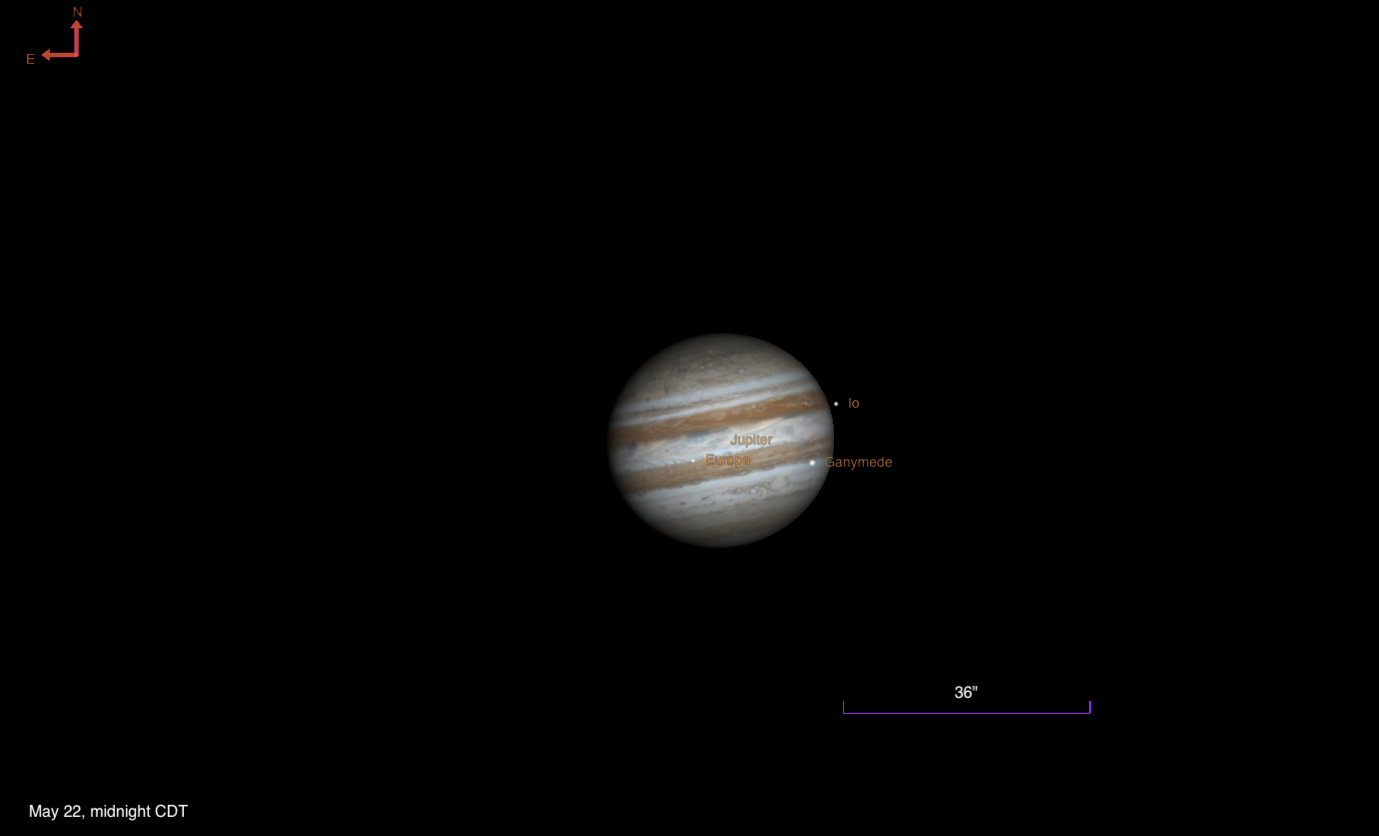
Tonight we’re focused on Jupiter, as two of its Galilean moons cross the planet’ disk this evening. East Coast observers can zoom in on the gas giant shortly after sunset to see Io alone to the planet’s west, with Ganymede (closest), Europa, and Callisto all to the east. Ganymede is closing in on the eastern limb and begins transiting first, starting at 9:57 P.M. EDT, as darkness is falling across the Central time zone. Then it’s a bit of a wait for more — Europa finally reaches the eastern limb and begins transiting 2 hours later, with Ganymede slightly more than halfway across.
The two moons continue across the disk together, and the planet sets with the pair visible against the cloud tops for observers in the eastern half of the U.S. In the meantime, Io is approaching the western limb. At 11:02 P.M. MDT (note the time change, as Jupiter has now set farther east), with Ganymede very close to the western limb, Io winks out of view, passing behind the planet in an occultation. Ganymede finishes its transit 20 minutes later, with Europa now in the center of Jupiter’s disk.
Pacific time zone observers are now in for a real treat: About 10:55 P.M. PDT (again, note the time zone), both Europa’s and Ganymede’s shadows appear at the eastern limb, nearly at the same time. Europa’s arrives just 2 minutes before than Ganymede’s, but the latter shadow is larger and likely easier to see. Europa’s shadow may be smaller but it is moving faster, so pulls ahead quickly and the two become easier to view separately as Jupiter sets along the West Coast. Any observers in Alaska and Hawaii will get the best view of the two shadows crossing the gas giant’s disk.
Sunrise: 5:39 A.M.
Sunset: 8:15 P.M.
Moonrise: 11:46 A.M.
Moonset: 1:17 A.M.
Moon Phase: Waxing crescent (46%)