Friday, August 21
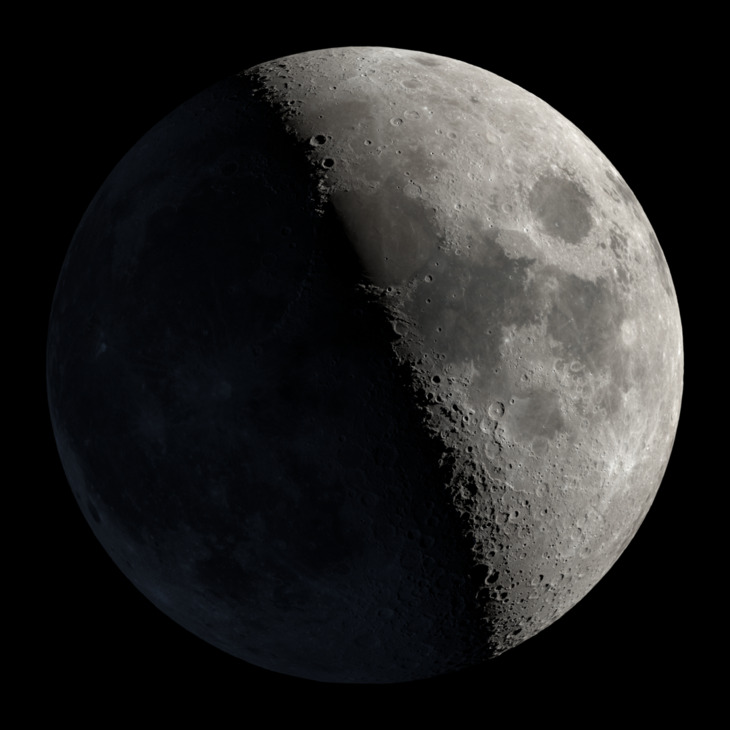
The Moon passes 0.6° south of Antares in Scorpius at 1 A.M. EDT. By the time darkness falls this evening, the Moon has already pulled more than 10° away, now standing side by side with the bright red giant in the nighttime sky, to the far left of the star. An hour after sunset, they are still 20° high in the south and visible for the rest of the evening, setting shortly after midnight.
The Moon has crossed into the southern region of Ophiuchus, not far from the globular cluster M62, which lies a little over 3° to the Moon’s southwest. Located at the border of Ophiuchus and Scorpius, M62 is a bright (magnitude 6.5) cluster that spans about 15’ on the sky. In space, its diameter is roughly 100 light-years. Through a telescope, you may note something odd: it’s not very spherical, unlike most globular clusters. Instead, its more concentrated on one side, with a “fan” of stars spreading out along its northwestern side.
If the view is a bit hard to make out, just wait about a week or so — the nearby Moon’s light may be washing out the cluster’s fainter stars, which will pop out better under a darker sky. Once the Moon has moved on from the evening sky, the view will get even better.
Sunrise: 6:17 A.M.
Sunset: 7:48 P.M.
Moonrise: 3:52 P.M.
Moonset: —
Moon Phase: Waxing gibbous (69%)
*Times for sunrise, sunset, moonrise, and moonset are given in local time from 40° N 90° W. The Moon’s illumination is given at 10 P.M. local time from the same location.
Saturday, August 22
The Moon reaches apogee, the farthest point from Earth in its orbit, at 4:21 A.M. EDT. At that time, our satellite will be 251,433 miles (404,642 kilometers) away.
Titan, Saturn’s largest moon, was near the planet yesterday and remains close to its parent world today as it moves through its 16-day orbit. Visible in the early-morning sky, Saturn is highest in the sky (in the south) around 4 A.M. local daylight time. Through a telescope, the planet’s rings always take center stage. We are now looking “up” at the planet and get a great view of its southern hemisphere, including the southern side of the rings, which are tilted nearly 9° to our line of sight.
Titan shines at mid-8th magnitude and this morning sits northwest of Saturn, nearly a full arcminute away. It is moving westward, pulling farther away from the planet as time goes by. Closer in, several smaller, fainter moons may be visible. Tenth-magnitude Tethys, Rhea, and Dione are the brightest of these. This morning, Rhea sits east of Saturn, with Dione and Tethys to the west; Tethys is closer to the ringed world than Dione. It is also getting closer, approaching the planet’s southwestern limb. Around 5:40 A.M. MDT, Tethys disappears into the planet’s shadow, just a few arcseconds away from the limb. Its disappearance is visible in the western half of the U.S. only, and is best seen along the Pacific Coast, where the sky is still darkest.
Sunrise: 6:18 A.M.
Sunset: 7:47 P.M.
Moonrise: 4:43 P.M.
Moonset: 12:36 A.M.
Moon Phase: Waxing gibbous (77%)
Sunday, August 23
Let’s check out a lovely binary star in Corona Borealis the Northern Crown. Still high in the west around 10 P.M. local daylight time, this curved constellation lies to the upper left of kite-shaped Boötes, whose brightest star, Arcturus, dominates the western sky.
Situated in northwestern Corona Borealis, our target today is 5th-magnitude Zeta (ζ) Coronae Borealis, just under 6° northeast of brighter magnitude 3.5 Delta (δ) Boötis. Perfect for a small telescope, this star splits easily into two components separated by about 6”. The brighter sun here is magnitude 5.0, while its fainter companion is magnitude 5.9. Both shine blue-white, but because they’re so close, their colors may look noticeably different from each other. What hues do you see?
In truth, this is likely more than a binary star system. Spectroscopic studies show that although the more easterly star (dubbed Zeta2 [ζ2]) cannot be split, it, too, is a multi-star system with as many as four components. The data have been hard for astronomers to parse, so they’re not actually sure how many stars this system could contain! If you want the gory details, check out this star’s page on the late stellar astronomer Jim Kaler’s STARS website.
Sunrise: 6:19 A.M.
Sunset: 7:45 P.M.
Moonrise: 5:29 P.M.
Moonset: 1:30 A.M.
Moon Phase: Waxing gibbous (85%)
Monday, August 24
This morning’s observation is a challenge, but if you’ve got a large scope or have some astroimaging experience, it’s one you’ll want to try.
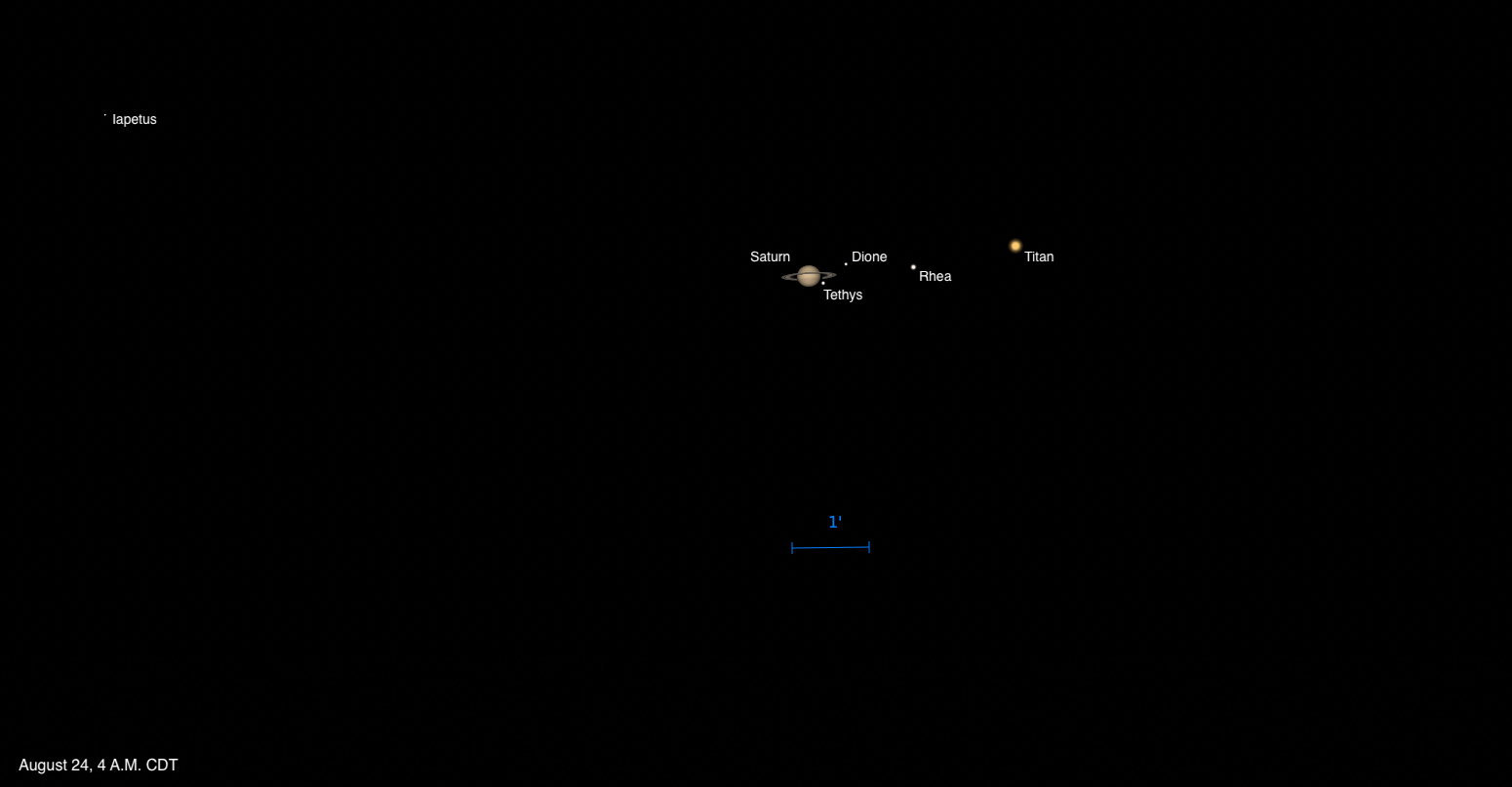
Saturn’s moon Iapetus has a two-toned surface, with one hemisphere much brighter than the other. Iapetus is also tidally locked to Saturn — as it orbits, it slowly rotates so that the same side always faces its parent planet. But from our point of view here on Earth, we get to see the changing faces of the moon as it turns in time with its orbital motion. At western elongation, when it reaches its farthest point west of the ringed planet, its brighter hemisphere is turned earthward and it is at its brightest, around magnitude 10. On the other side of its orbit, at eastern elongation, its darker side faces us and the moon plunges to 12th magnitude.
Today, Iapetus reaches eastern elongation, when it is at its faintest. That already makes it harder than usual to spot, but the difficulty is increased by its large distance from Saturn as well. You’ll find it some 9.4’ east of the planet. Because it is both faint and far from Saturn, it will be challenging to spot visually, but dark skies and a large telescope will aid your efforts. It should show up on astrophotos, too, so give that a try if you’ve got the setup.
Sunrise: 6:20 A.M.
Sunset: 7:44 P.M.
Moonrise: 6:06 P.M.
Moonset: 2:29 A.M.
Moon Phase: Waxing gibbous (91%)
Tuesday, August 25
Charles Messier’s famous list of non-cometary objects largely contains star clusters, nebulae, and galaxies — faint fuzzies it could be easy to confuse for a cometary nucleus in a telescope of the type the comet-hunter was using. But M73 is a bit of an outlier, and you’ll see why when you catch it in your sights tonight. A small scope is perfect for the job.
Located in Aquarius the Water-bearer, M73 is already above the horizon by sunset and in great viewing condition as soon as the sky gets dark. About 30° high in the southeast shortly before 10 P.M. local daylight time, you can find it just under 3° southwest of magnitude 4.5 Nu (ν) Aquarii.
Although the bright Moon is nearby in Capricornus, you don’t have to worry about it obscuring this particular Messier object. That’s because M73 is a small group of just four stars, with three in the shape of an equilateral triangle and the fourth just to the northwest. Even with the bright background of moonlight, they should show up in your scope.
Astronomers don’t believe this grouping is physically bound; instead, these suns just happen to fall close together as we look out into 3D space and see a 2D view of the sky. They are apparently only on Messier’s list because, according to the SEDS Messier Index, he charted its location at the same time as M72 — a true globular cluster of stars just 1.3° west of M73. This spherical conglomeration of old stars is definitely easier to confuse for a comet, and much more indicative of the average Messier object. But it will also be difficult to see with the Moon nearby, so wait a few days and then come back to this region to check it out.
Sunrise: 6:21 A.M.
Sunset: 7:42 P.M.
Moonrise: 6:38 P.M.
Moonset: 3:32 A.M.
Moon Phase: Waxing gibbous (96%)
Wednesday, August 26
One of the most famous stars in the sky lies in Ophiuchus the Serpent-bearer, still high in the west and southwest (it’s a big constellation) two hours after sunset. In its northeastern corner is Barnard’s star — although you’ll need some optical aid to observe it, as it’s too faint to see with the unaided eye. Binoculars or any small scope will show it.
To find Barnard’s star, look 3.6° east of Cebalrai (Beta [β] Ophiuchi), which shines at magnitude 2.8 in Ophiuchus’ northeastern region. At magnitude 9.5, Barnard’s star won’t stand out for its brightness but for its color: a deep red. For added contrast, there’s a fainter (11th magnitude) white-hued star nearby, just 1’ east-southeast of this ruddy sun. But its color is not Barnard’s star’s actual claim to fame — that is its huge proper motion.
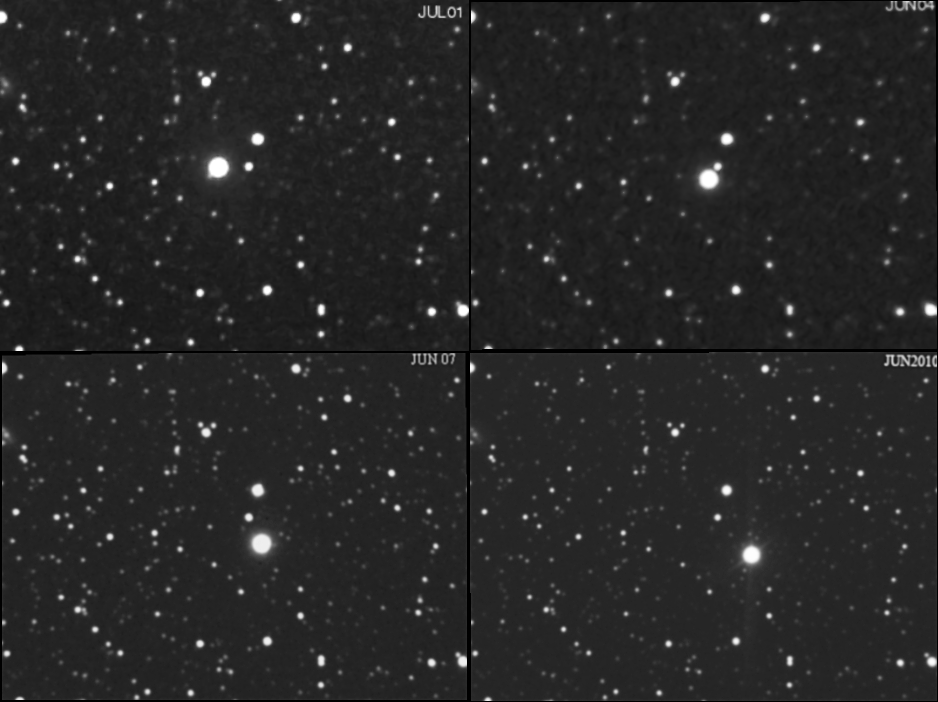
Proper motion refers to a star’s apparent movement across our sky relative to more distant (and seemingly fixed) background stars. Because nearer objects appear to move faster than farther ones, this tells us Barnard’s star, which slides 10.3” each year across the sky, is quite close. That’s the greatest proper motion of any star we know. Perhaps unsurprisingly, Barnard’s star is just 6 light-years away, making it the next-farthest star after the Alpha Centauri system.
Sunrise: 6:22 A.M.
Sunset: 7:41 P.M.
Moonrise: 7:05 P.M.
Moonset: 4:37 A.M.
Moon Phase: Waxing gibbous (99%)
Thursday, August 27
Asteroid 2 Pallas is stationary at 8 A.M. EDT. Now in the constellation Cetus the Whale, after today Pallas will begin moving slowly westward, or retrograde, against the background stars.
Rising around 10:30 P.M. local daylight time, Pallas isn’t far from 4th-magnitude Theta (θ) Ceti — you can find it just 6° northeast of that star tonight. Over the next few days, Pallas is moving largely southward, ending the month some 5.3° northeast of Theta. For the best views, let the region rise for a few hours and give Pallas a try after midnight, when it reaches more than 20° above the eastern horizon.
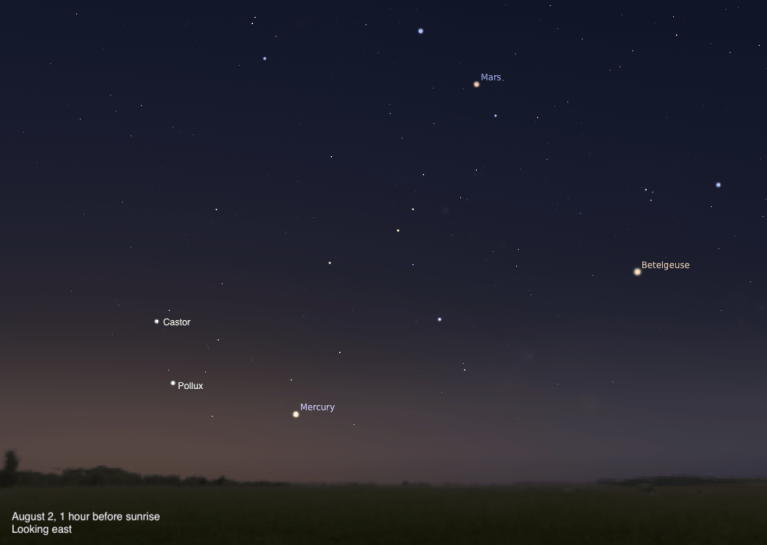
Mercury reaches superior conjunction at 1 P.M. EDT, hiding in the Sun’s glare. It will return in early September, when it will be visible in the evening sky.
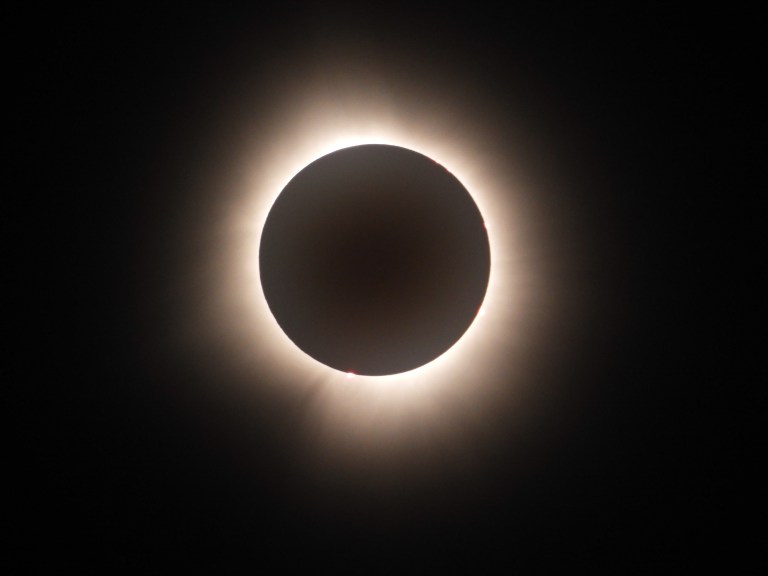
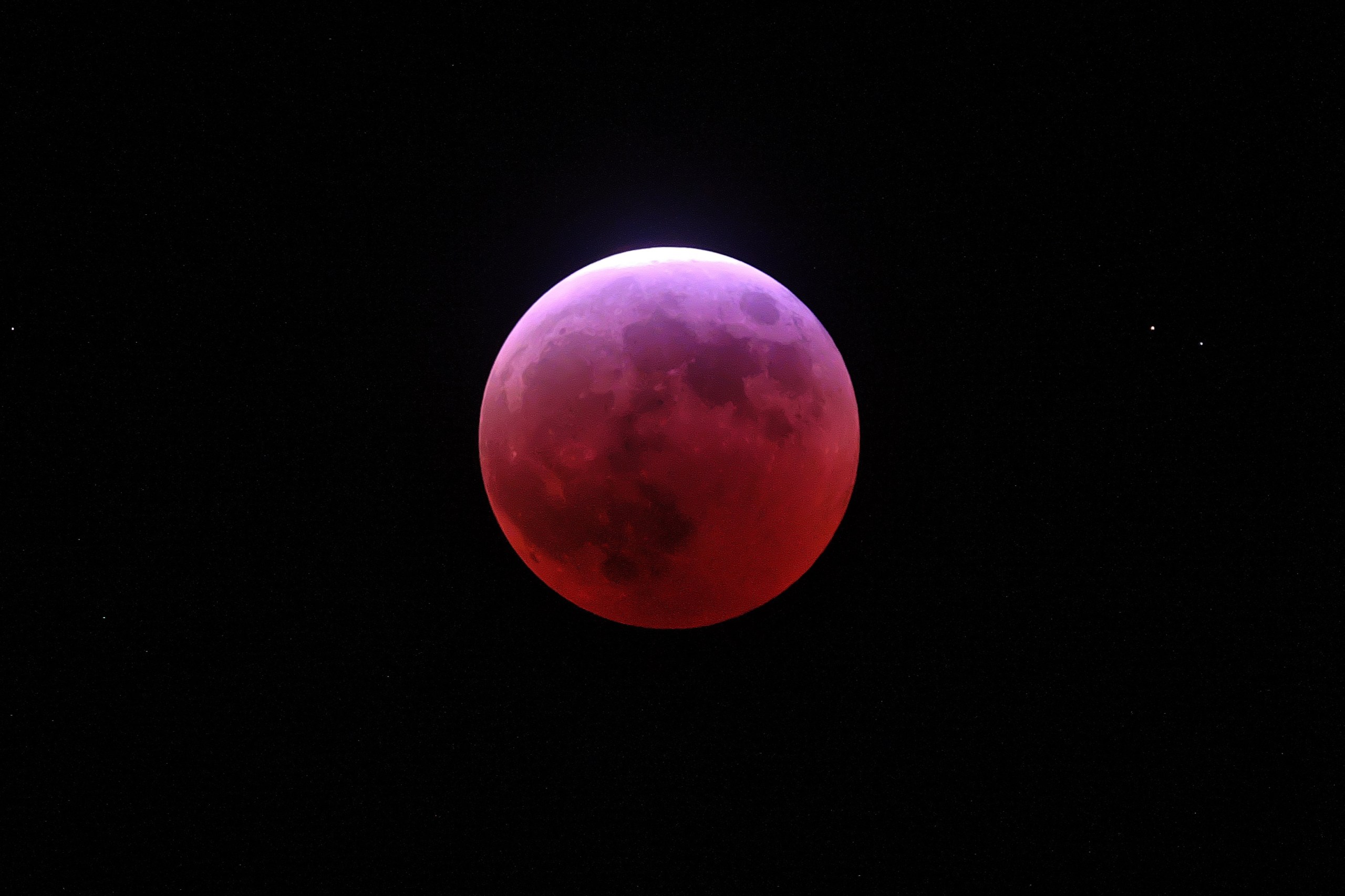
The real showstopper today is a partial eclipse of the Moon, following August 12th’s total eclipse of the Sun. The deep lunar eclipse is visible across North and South America, Africa, and western Europe. The Moon rises around 7:30 P.M. local daylight time, located in Aquarius the Water-bearer.
The eclipse begins at 9:23 P.M. EDT, as the Moon first enters the outer part of Earth’s shadow, the penumbra. But the real visual effects really start at 10:33 P.M. EDT, when the Moon first passes into the umbra — the darker, inner portion of our planet’s shadow — and the partial eclipse begins. This means the start of the partial eclipse is visible in the eastern half of the U.S., while the Moon is eclipsed shortly after rising in the Mountain time zone and right around the time of moonrise along the West Coast.
The eclipse continues overnight for the eastern half of the U.S. Maximum eclipse occurs at 12:13 A.M. EDT on the 28th (in the Eastern time zone only for the U.S.), with 96% of our satellite’s total area covered by Earth’s inner shadow. Only a thin sliver along the Moon’s northeastern limb will remain bright white, while the rest of our satellite will appear a dim, dusky orange or red.
The partial eclipse ends at 1:51 A.M. EDT (now the 28th in the Eastern and Central time zones).
Lunar eclipses are not like solar eclipses — they proceed slowly and can be viewed without any equipment or eye protection at all, making them readily accessible and enjoyable. There’s no rush to catch only a few minutes of action, either, as the Moon slides slowly into and out of Earth’s shadow, its appearance changing the whole time. You can opt to catch just part or all of the event, checking on its progress every few minutes without worry you’ll miss a vital moment. If you do choose to view for only a short while, try to make it around the time of maximum eclipse, as this is when the Moon will appear most dramatic.
Sunrise: 6:23 A.M.
Sunset: 7:39 P.M.
Moonrise: 7:29 P.M.
Moonset: 5:43 A.M.
Moon Phase: Full
Friday, August 28
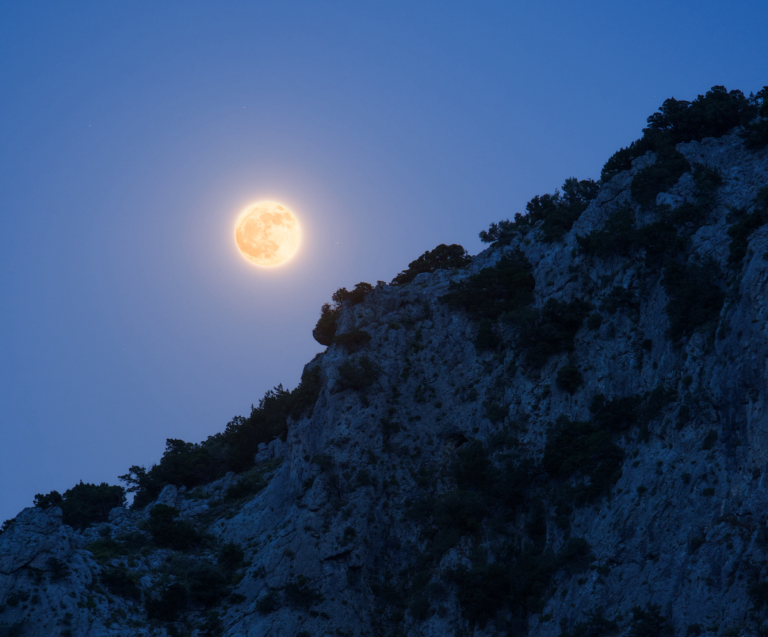
The August Full Moon officially occurs at 12:19 A.M. EDT, just minutes after maximum eclipse during a deep partial lunar eclipse. August’s Full Moon is also called the Sturgeon Moon, after the plentiful lake fish Native Americans relied on as a food source during this time of the year.
Although the eclipse is not total, the majority of our satellite will sit within Earth’s shadow at maximum eclipse, leaving only a sliver of the surface fully illuminated by the Sun. Every lunar eclipse is different, with the color of the shadowed lunar surface often taking on a ruddy or orangey hue. The time around maximum eclipse is most dramatic, but even as the Moon begins to slide out of Earth’s shadow, its appearance will continue to change as more of its surface sees sunlight return. The partial eclipse ends at 1:51 A.M. EDT (the 28th in the Eastern and Central time zones only) as the Moon exits the darker, inner part of Earth’s shadow, and the eclipse ends completely just before 3:02 AM EDT, when our satellite slips completely free of the outer portion of Earth’s shadow.
Asteroid 9 Metis reaches opposition at 10 A.M. EDT. It is in the constellation Aquarius and rises around sunset and sets around sunrise. However, with the bright, nearly Full Moon still nearby this evening, the 9th-magnitude asteroid will be a challenge to spot.
Asteroid Vesta is stationary at 6 P.M. EDT; like Pallas, it is also in the constellation Cetus, close to its northern border with Pisces. Not only is it farther from the Moon than Metis this evening, it is also two magnitudes brighter, so you’ve got a much better chance of spotting it with binoculars or a telescope. You can find the large main-belt asteroid by dropping just 2.3° southwest of Alrescha, Pisces’ 4th-magnitude alpha star. The region rises shortly after 10 P.M. local daylight time, so you may want to wait until around midnight or even later to give viewing Vesta a try.
Also like Pallas, Vesta is making a switch from prograde (eastward) to retrograde (westward) motion relative to the background stars.
Sunrise: 6:24 A.M.
Sunset: 7:38 P.M.
Moonrise: 7:52 P.M.
Moonset: 6:48 A.M.
Moon Phase: Waning gibbous (99%)
Alison Klesman is senior editor of Astronomy magazine. She holds a Ph.D. in astronomy and has studied a variety of topics, from minor planets to supermassive black holes.