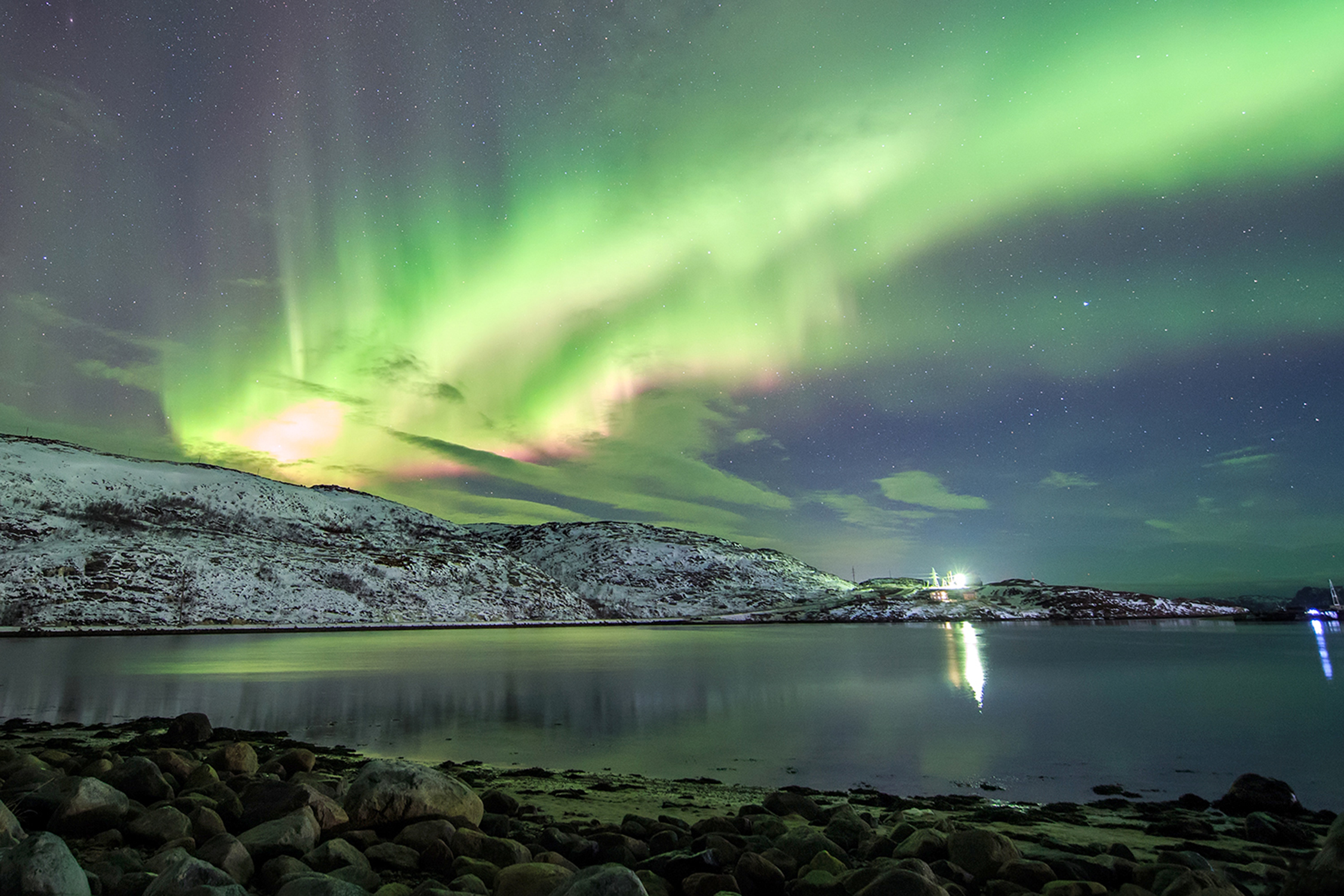
The shimmering curtains of the northern and southern lights — aurora borealis and aurora australis, respectively — loom large in our imaginations. These shifting apparitions provide a cosmic connection not only to beauty and mystery, but also to our physical world.
Unlike the rhythms of the Sun, Moon, and stars, aurorae appear to be capricious and elusive. As the sky darkens, a glow may be seen in the sky that grows as the night progresses, eventually becoming shimmering curtains of red, green, and perhaps blue, only to fade away. While modern science explains the phenomenon and tour companies even offer trips to remote locations for those who long to see the lights, it’s hard to imagine the effect they had on those watching the skies long ago.
Related: Aurorae throughout our solar system and beyond
Early thoughts
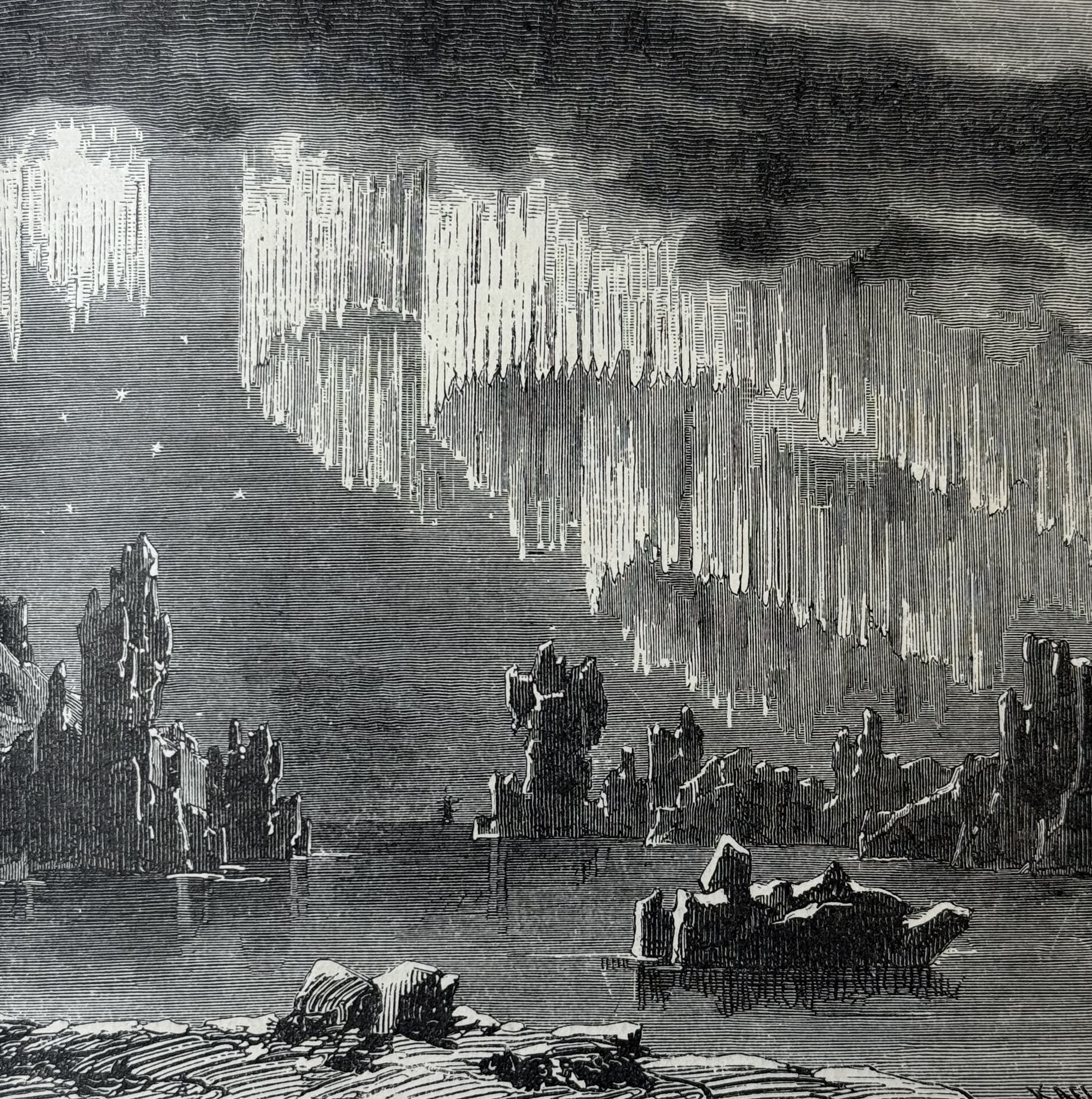
Aurorae are seen in Earth’s northern and southern latitudes, and fascination with them is ingrained in many cultures. The Sámi, Indigenous people of Lapland, believed the dancing lights to be the souls of their ancestors, and showed respect by never whistling or pointing at them. The Māori of New Zealand traditionally imagined the aurora as campfires of their departed ancestors, while Aboriginals in Australia feared raging celestial brush fires and saw in them omens of future catastrophes.
The 3,000-year-old Chinese Bamboo Annals may contain the oldest reference to the aurora, although some scholars believe Cro-Magnons drew them on rocks and cave walls. Ancient observers such as the Roman general Pliny the Elder, who died during the eruption of Mount Vesuvius, wrote about beams of light and red flames descending from the sky. Aristotle expounded on this phenomenon in his 340 B.C.E. book Meteorology. And references in the Old Testament to “a great stormwind [that] came from the North, a large cloud with flashing fire, a bright glow all around it” may be sightings of these lights.
The northern lights received their current moniker in 1619. Three comets had dazzled Europe the year before and had pulled Galileo into a controversy about their nature. In his 1619 pamphlet, Discorso delle Comete, he wrote that comets were atmospheric phenomena like the northern lights. Galileo also speculated that the shimmering lights were caused by sunlight reflected in the atmosphere. He was wrong about the nature of comets, but right about the atmospheric nature of the lights. In his pamphlet, he coined the term aurora borealis, which combines the names Aurora, the Roman goddess of the dawn, and Boreas, the Greek god of the cold north wind.
About 150 years later, Benjamin Franklin, who was all about things electric, suggested that the aurora was caused when electric charge was drawn to the north and south magnetic poles and released curtains of light when the charge became too great. This idea stuck well into the 19th century.
In 1851, Edward Sabine, an English military officer and polar explorer, made a fundamental discovery about aurorae. He learned about the work of the German amateur astronomer, Samuel Schwabe, who had recorded sunspots for 30 years. These extended observations revealed the cyclic nature of sunspots. Sabine had observed the aurora many times during his polar expeditions. He compared his records of auroral occurrences with Schwabe’s observations and saw a correlation between the two. The astronomical community dismissed Sabine’s idea as being without merit. How could the Sun, 93 million miles away, cause an atmospheric phenomenon?
Sabine would not be vindicated until the 20th century. But tentative connections between sunspots and aurorae came less than a decade later.
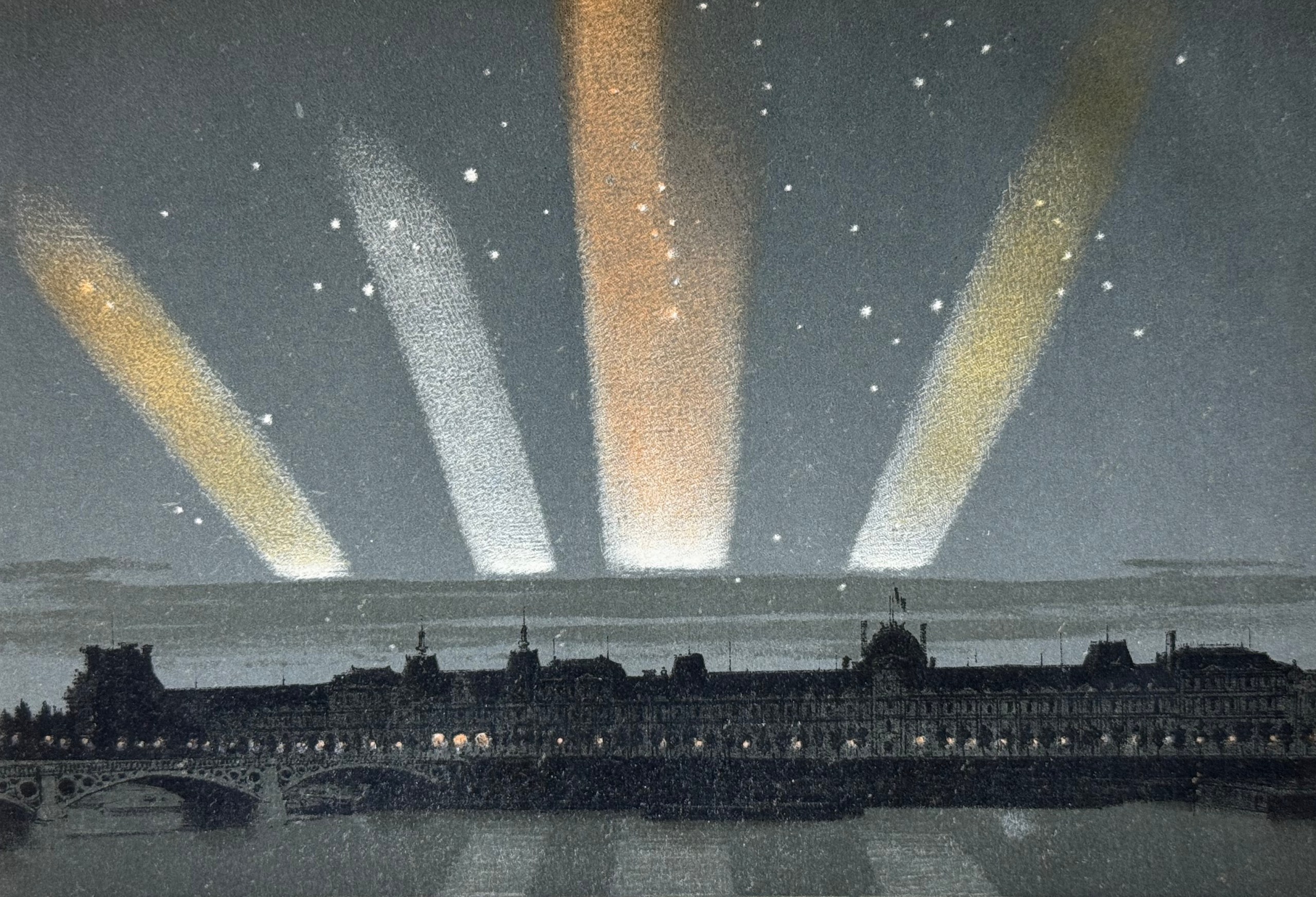
On the night of Aug. 28, 1859, telegraph offices across America and Europe began failing. The wires leading to the telegraph keys got so hot that the contacts on the equipment nearly melted. One unfortunate operator came too close to a ground wire and received a severe electric shock to his forehead. Technicians disconnected the battery systems, but telegraphists could send messages because currents were still running through the lines. After the system was restored, reports began coming in of incredibly bright aurorae seen across America, Europe, Australia, and even Cuba.
Just a few days later, on Sept. 1, amateur astronomer Richard Carrington reported a monstrously big sunspot. Carrington sent a report to the Royal Astronomical Society describing his astounding observations. He even suggested that particles were being blown from these bright spots. A fellow amateur, Richard Hodgson, also saw the sunspot and the brilliant explosions, confirming the event. Carrington and Hodgson were the first humans to directly witness solar flares — part of an outburst that enveloped Earth in a week-long geomagnetic storm now known as the Carrington Event. These observations provided the first real links of the Sun-Earth-aurora connection.
Electricity from the sky
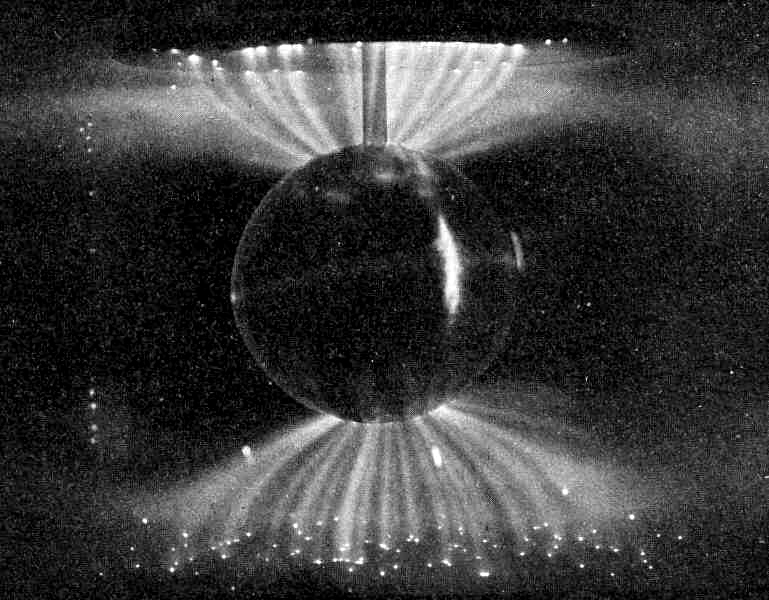
Kristian Birkeland provided yet another link in the connection between the Sun and Earth’s atmosphere. Something of the Nikola Tesla of Norwegian physics, he made detailed observations of aurorae from Arctic stations in the late 19th century. His studies led him to the idea that polar electrical currents, now called electrojets, drive and shape aurorae. To demonstrate this, he even built equipment that could create miniature aurorae in the laboratory. Birkeland’s polar electric currents were dismissed as fantasy for years, but were eventually understood to play a key role in auroral structure and how disturbances in our planet’s magnetic field cause electromagnetic phenomena at Earth’s surface during geomagnetic storms. In March of 2025, NASA launched the Electrojet Zeeman Imaging Explorer (EZIE) to study these auroral electrojets.
Modern science
Scientific discovery is built on previous successes and mistakes. Carrington speculated that the bright flashes he saw had sent particles flying toward Earth, but the idea that the Sun was spewing a particle “rain” was hard to believe. Two decades later, in 1880, the French physicist Henri Becquerel made a strong case that aurorae were caused by these particles.
In 1957, astrophysicist Eugene Parker theorized that the Sun produces a constant output of these particles. The idea was dismissed by some as nonsense. Early in the space race, however, the existence of the solar wind was verified by the Soviet Luna spacecraft. The cosmic connection was finally complete.
We now understand that the Sun is a churning mass of plasma, flowing from deep within its interior to its surface. Also, the Sun’s polar regions rotate more slowly than the equatorial areas, twisting its magnetic fields and plasma. When the plasma erupts into the photosphere (the visible surface) we see sunspots. They look dark because they’re cooler than the surrounding area. These spots crackle with magnetic energy and release solar flares, which spew tremendous amounts of charged particles that cause aurorae when they impact Earth’s atmosphere. The smallest A-class flares are powerful, but X-class flares are capable of creating Carrington Event-level disruptions.
Light show
Earth’s atmospheric envelope is protected by a magnetic forcefield called the magnetosphere. The solar wind is made of protons and electrons stripped from atoms in the Sun’s corona. Those charged particles are trapped by the magnetosphere, where they build up energy. The impact of a powerful coronal mass ejection can release this pent-up energy. The charged particles then penetrate the magnetosphere and are funneled into our upper atmosphere, where the magic begins.
Electrons that spin around the nucleus of an atom have specific energies. When the fast-moving solar particles impact oxygen and nitrogen molecules, their electrons get an extra kick of energy, moving them to a higher level. When that energy boost is released, light is emitted. Neon lights work on the same principle.
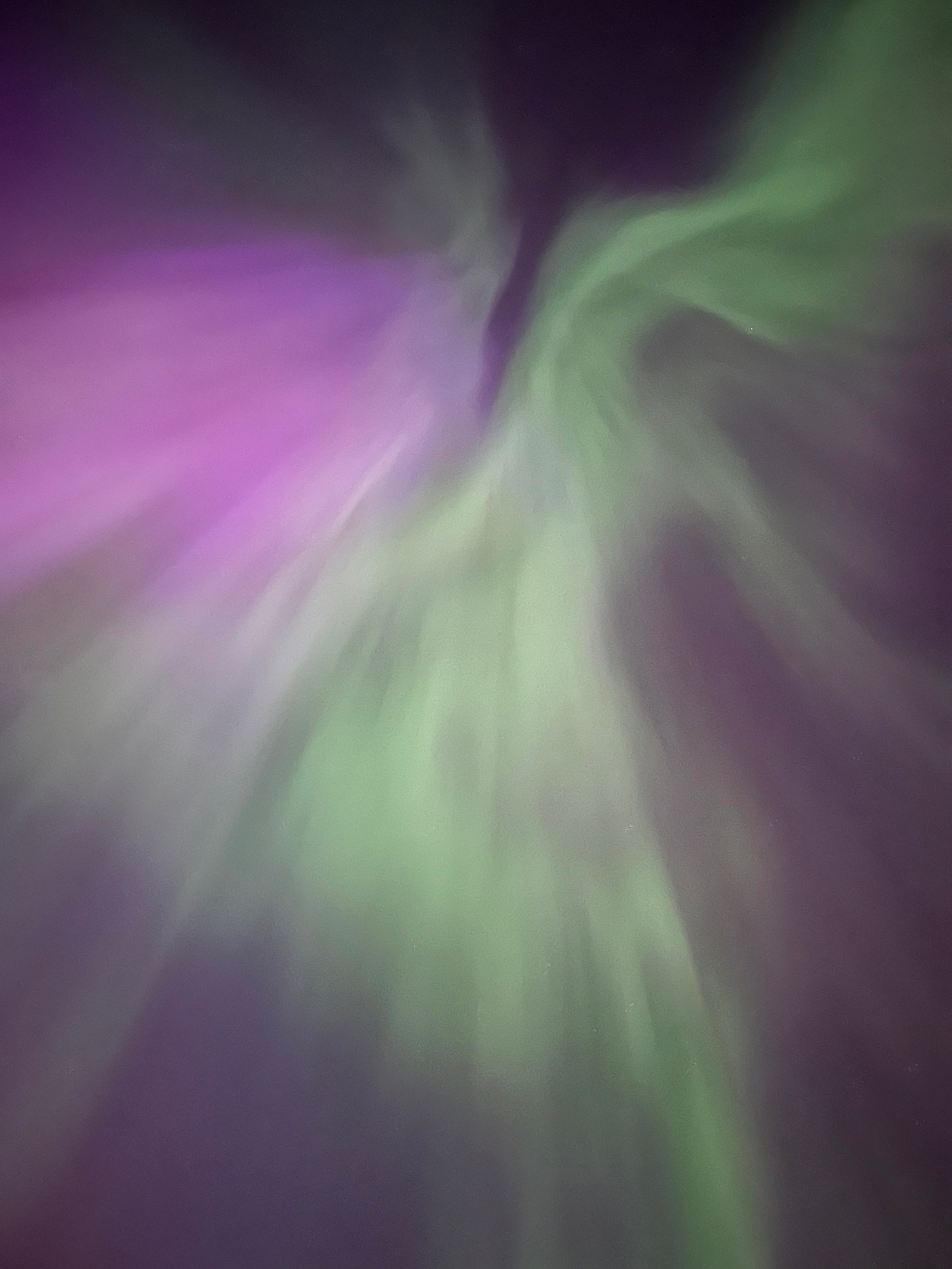
Just like with a neon light, the color you see depends on the gas that is being excited. Aurorae can appear green, red, blue, and even a little purple or pink. When oxygen is excited, it produces a vivid green or an intense red. Nitrogen glows a beautiful blue during this process, along with shades of purple and pink. All of this happens between 60 and 120 miles (95 to 195 kilometers) above Earth’s surface.
Aurorae appear more frequently in high Arctic and Antarctic areas in what’s called the auroral oval or zone. This zone is roughly centered along the Arctic and Antarctic circles near 67° north and south latitudes.
The corona aurora, the most dramatic of the forms, is only seen if the observer is under the oval. This aurora encircles the watcher and spirals away from the zenith. Other types of displays include curtains, pillars, rays, arcs, bands, and even dunes. Recently, STEVEs (Strong Thermal Emission Velocity Enhancement) have been added along with proton pancakes. STEVEs are purple and green streaks that often appear with auroral displays, while pancakes are flat red blobs caused by excited protons rather than electrons.
As the Sun reaches the peak of solar activity and sunspots, called the solar maximum (or solar max), the chances of seeing aurorae dramatically increase. There’s also an aurora season around the equinoxes caused by the Russell-McPherron effect, which provides a “magnetic” connection between Earth and the Sun. Most of the year, the magnetic poles of these two celestial bodies are misaligned. At the equinoxes, our magnetic field comes into alignment with the solar wind, creating more aurorae.
You may love the Finnish stories of firefoxes brushing their tails against mountains and making the sky glow, or Inuit ancestors lighting the sky with a celestial ball game. Perhaps you’re even saving for a trip that will let you stand under an auroral arc in Iceland. Whether you’re a scientist or a casual observer, the aurora will always have the power to inspire wonder and connect us to the cosmos in ways few celestial events can.