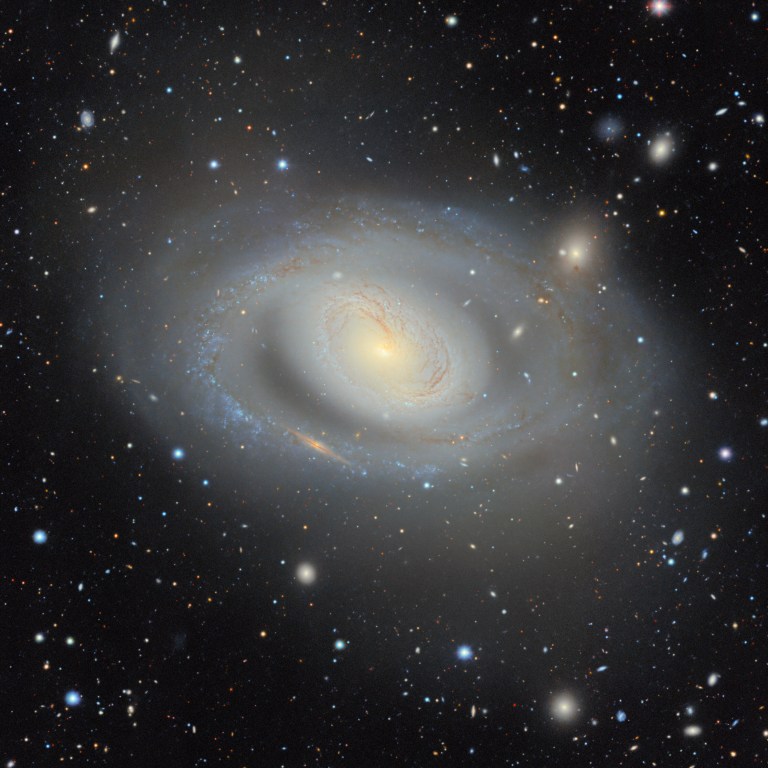
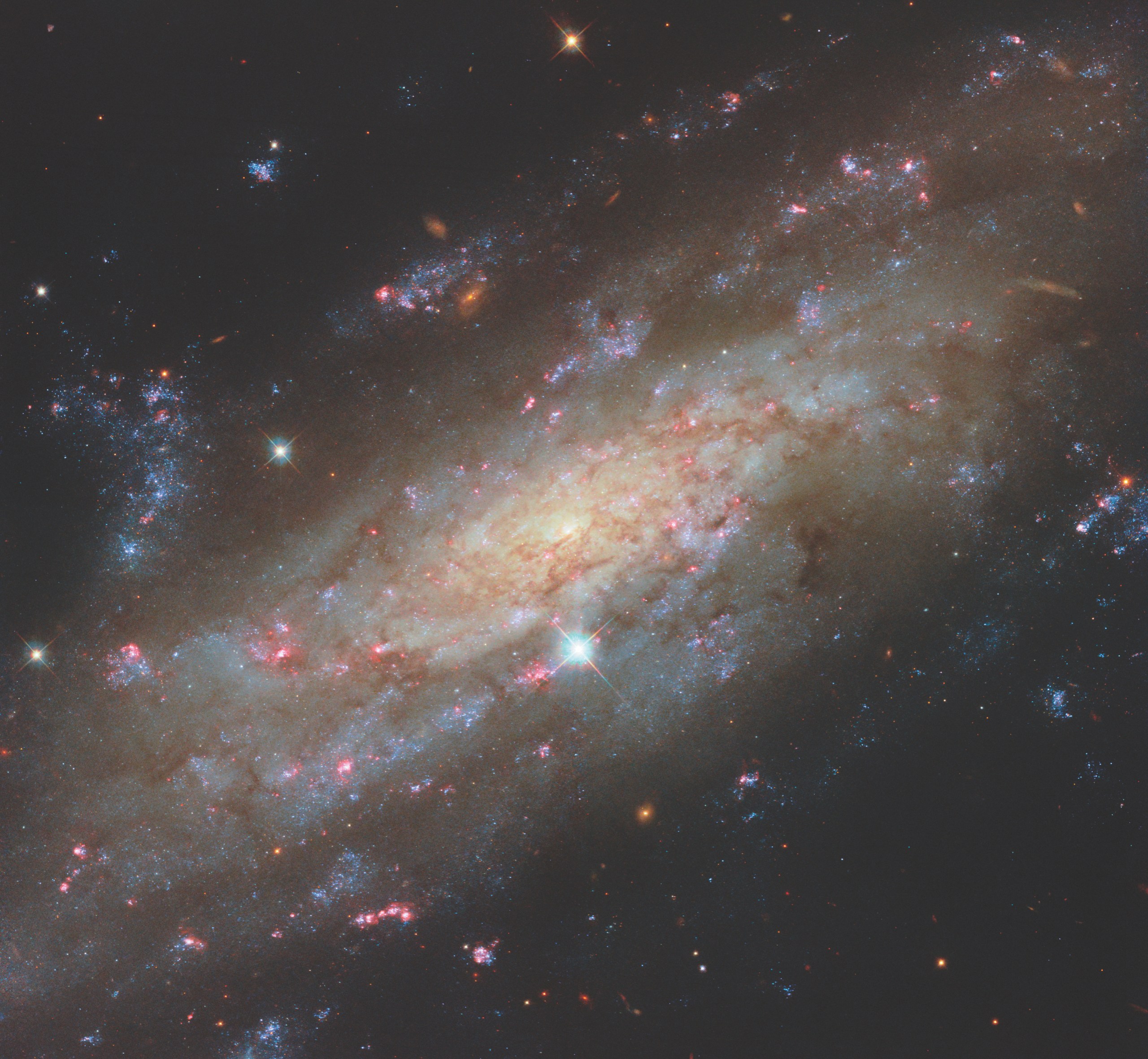
Glittering star clusters and ruby-colored emission nebulae pepper the star-studded spiral arms of NGC 3137. The galaxy, which spans nearly 140,000 light-years, spills out of this Hubble image’s frame. The nebulae are stellar nurseries, glowing with emission from hydrogen atoms excited by the massive stars forming inside. The bluish star clusters represent the next stage in the galaxy’s evolution, after radiation from these young stars blows the surrounding gas away. The galaxy harbors a supermassive black hole of about 60 million solar masses in its core. Astronomers suspect NGC 3137 and its large spiral neighbor, NGC 3175, mimic the Milky Way and Andromeda galaxies in our Local Group. Dozens of smaller dwarf galaxies in both groups enhance their similarities. NGC 3137 lies some 53 million light-years from Earth in the constellation Antlia the Air Pump.
Richard Talcott is a former senior editor and current contributing editor of Astronomy.