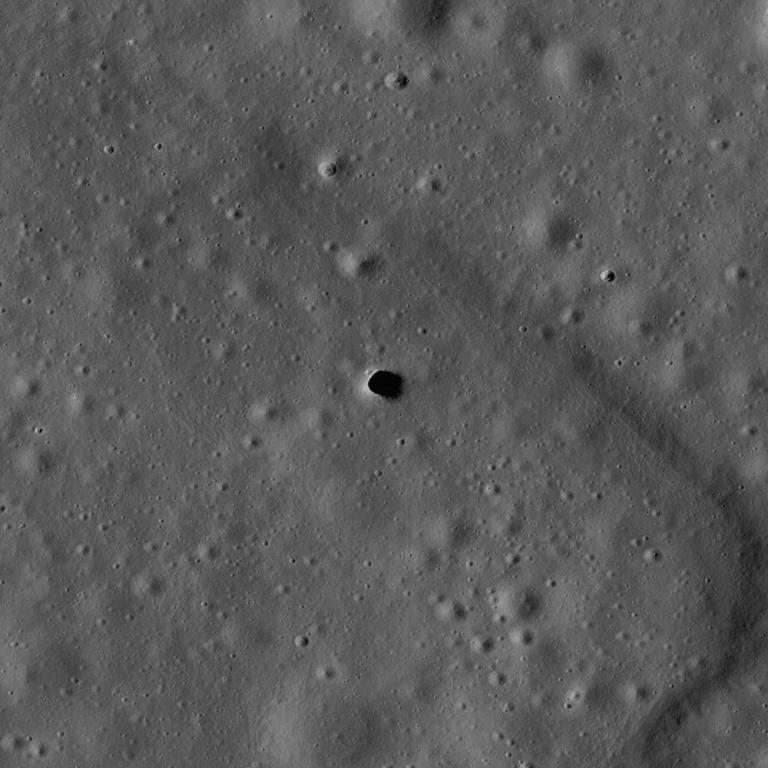
Credit: NASA/GSFC/Arizona State University
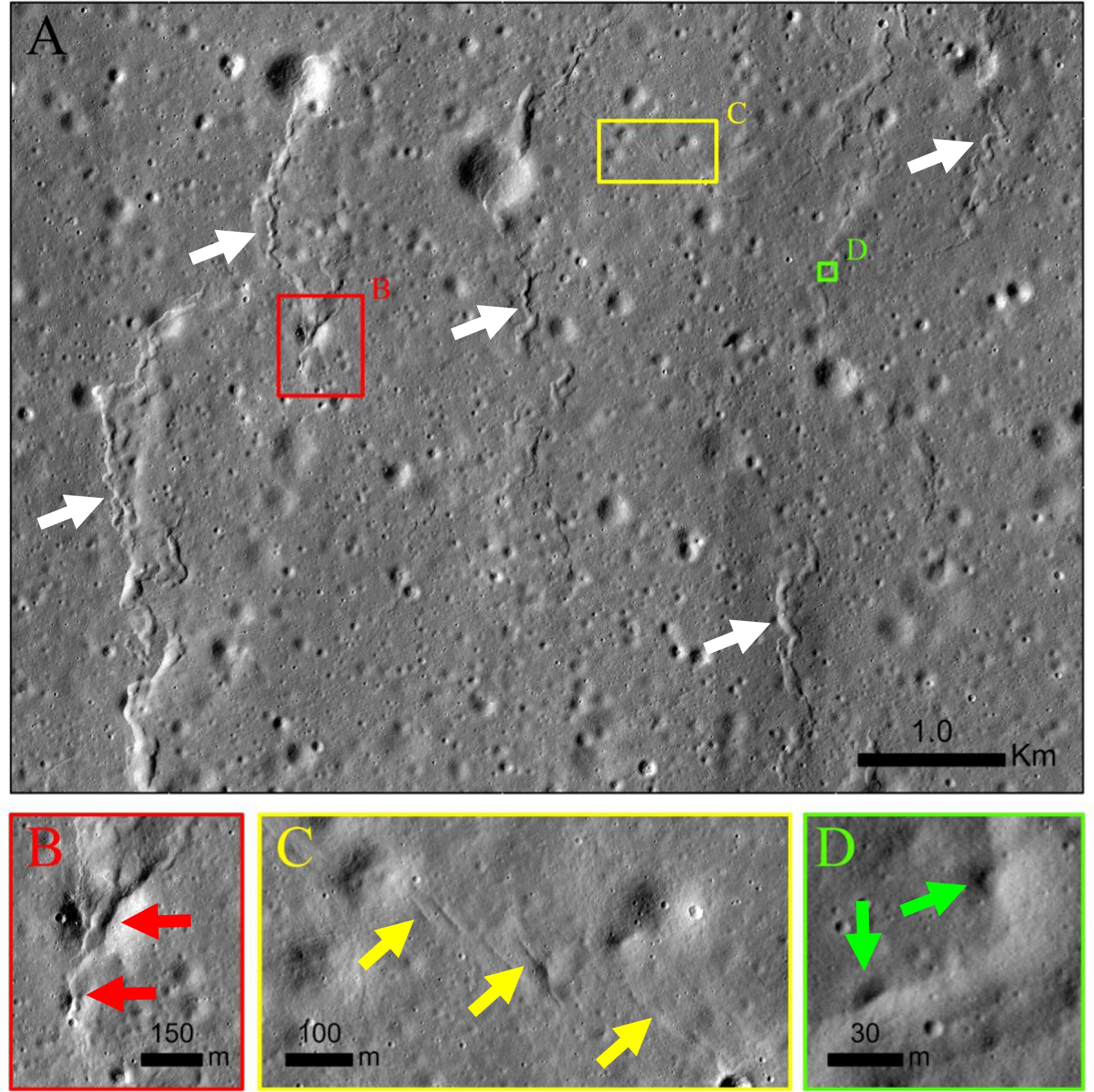
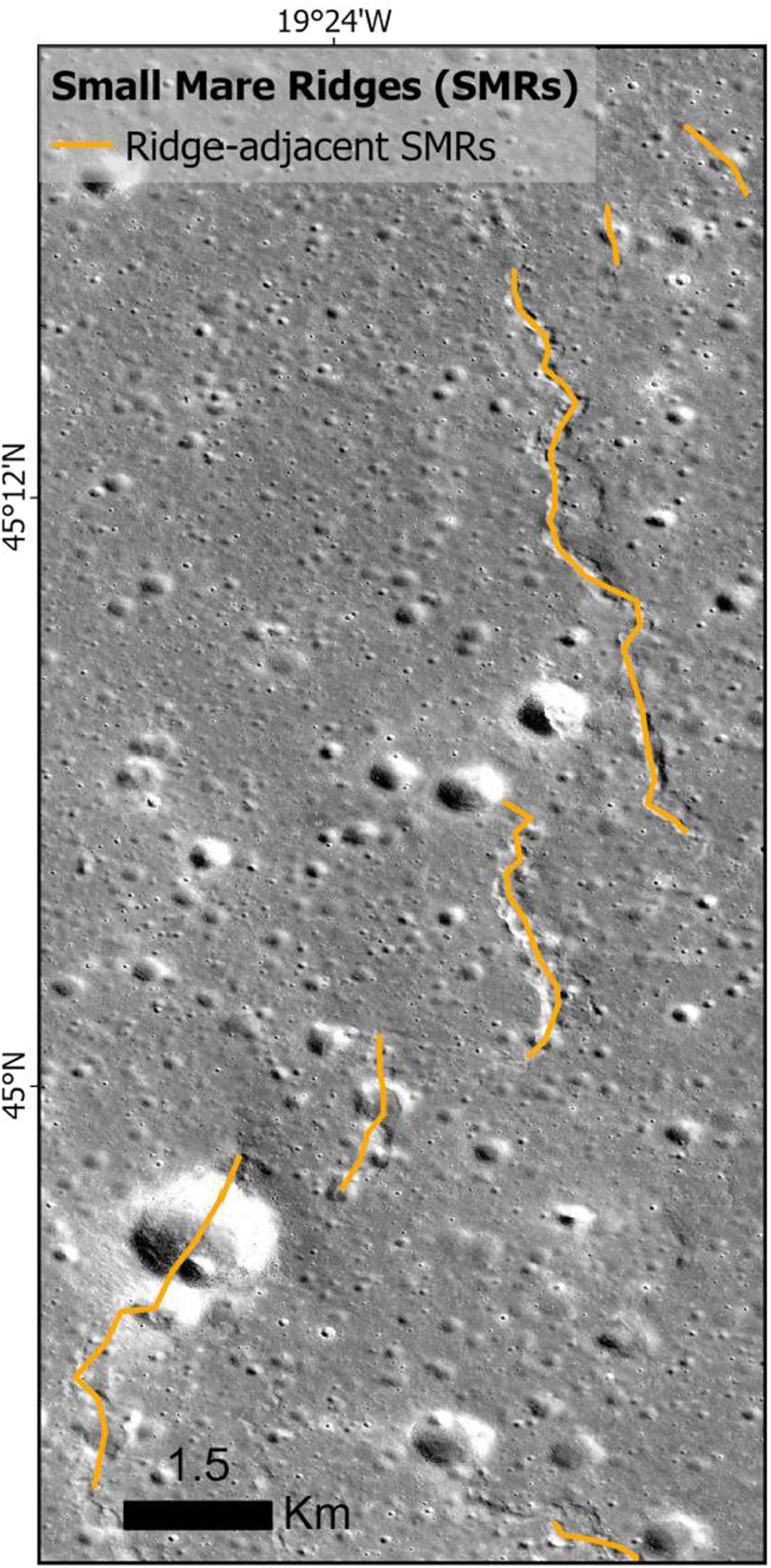
A recent story in The Planetary Science Journal reported that scientists at the National Air and Space Museum’s Center for Earth and Planetary Studies and colleagues have produced the first global map and analysis of small mare ridges (SMRs) on the Moon, a feature created by tectonic activity. The analysis showed that SMRs are geologically young and are widespread across the lunar maria — the vast, dark plains on the Moon’s surface most people call seas. The team’s discovery of how SMRs form introduces a new set of potential moonquake sources that could affect future site selections for lunar landings.
Both the Moon and Earth are tectonically active, but in different ways. Our planet’s crust is divided into plates that slide past each other to produce mountain ridges, ocean trenches, and a ring of volcanoes around the Pacific Ocean. The Moon’s crust is not divided into plates, but stresses within it give rise to several distinct landforms. One of the most common is lobate scarps, which form when the crust compresses and the resulting forces push material up along a fault. This activity creates a ridge. These scarps, found in the lunar highlands, have formed within the last billion years, which is roughly the last 20 percent of the Moon’s history.
The Moon’s getting smaller
In 2010, Tom Watters, a senior scientist emeritus at the Center for Earth and Planetary Studies and co-author of this story, discovered that the Moon is slowly shrinking. Over time, this slow contraction created the lobate scarps in the lunar highlands. But the shrinkage doesn’t account for the SMRs because, although they’re caused by the same forces that form scarps, SMRs are found only in the maria. The research team mapped them out and analyzed their connection to recent tectonic activity.
“Since the Apollo era, we’ve known about the prevalence of lobate scarps throughout the lunar highlands, but this is the first time scientists have documented the widespread prevalence of similar features throughout the lunar mare,” said Cole Nypaver, a post-doctoral research geologist at the Center for Earth and Planetary Studies and the first author on the paper. “This work helps us gain a globally complete perspective on recent lunar tectonism on the moon, which will lead to a greater understanding of its interior and its thermal and seismic history, and the potential for future moonquakes.”
Cataloging the SMRs
The team discovered 1,114 new SMR segments across the nearside lunar maria, increasing the number of known SMRs across the Moon to 2,634. They also found that the average SMR was 124 million years old. This is similar to the 105 million years that’s the average age of lobate scarps. The average ages suggest that both features are among the youngest on the Moon. Finally, the analysis shows that lobate scarps in the highlands often transition to SMRs in the mare, suggesting a similar origin for these two structures.
“Our detection of young, small ridges in the maria, and our discovery of their cause, completes a global picture of a dynamic, contracting moon,” Watters said.
Credit: NASA/GSFC/Arizona State University
More moonquakes coming?
Previously, Watters found a link between the tectonic activity that causes lobate scarps to form and the incidence of moonquakes. The discovery that SMRs originate from the same type of tectonic activity indicates that moonquakes could also occur across the lunar maria. Studying new moonquakes will help researchers better understand the tectonics of the Moon. However, such seismic activity presents an elevated risk for future humans who venture to the Moon.
“We are in a very exciting time for lunar science and exploration,” Nypaver said. “Upcoming lunar exploration programs, such as Artemis, will provide a wealth of new information about our Moon. A better understanding of lunar tectonics and seismic activity will directly benefit the safety and scientific success of those and future missions.”