Why does the daily moonrise time change by as much as 60 minutes from the previous day, and as little as 30 minutes during the same month?
Jim Wakefield
Bend, Oregon
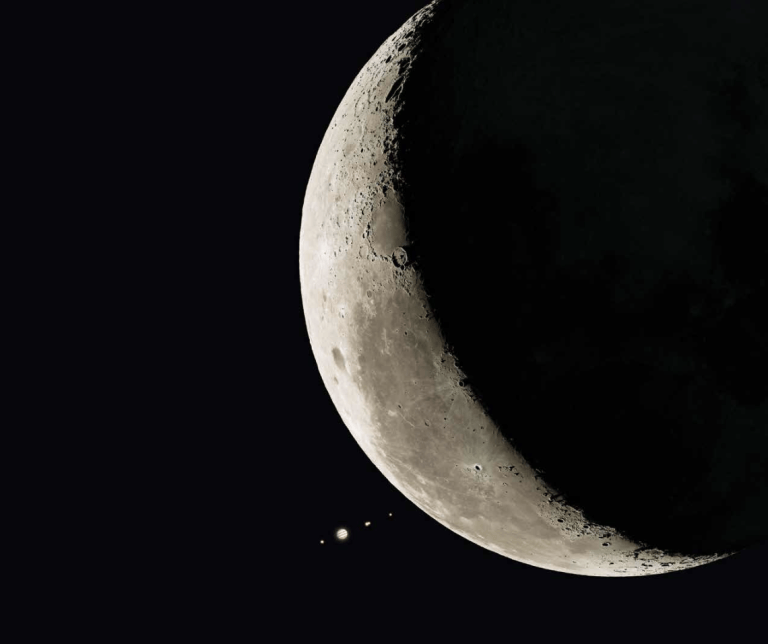
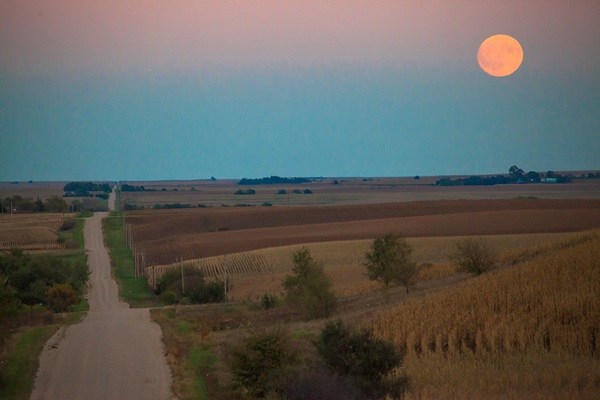
It depends on how far the Moon dips below the horizon from one day to the next. Our satellite moves, on average, 13.2° per day relative to the background stars. But the angle at which the Moon’s orbit (tilted 5° to Earth’s orbit around the Sun) intercepts the eastern horizon varies considerably during any given month. When the angle is steep, the Moon will lie well below the horizon at the same time the following night and Earth must rotate more to bring it into view. When the angle is shallow, Luna dips only a few degrees below the horizon from one night to the next and rises with much less lag time.
Take September 2026 as an example. From 40° north latitude, the biggest lag in moonrise occurs with the waning crescent Moon on the 8th, which rises 76 minutes later than it did the previous night. The smallest delay happens at the waxing gibbous phase on the 25th, which comes up 22 minutes later than it did the previous day.
A number of other variables play into the time difference. The Moon’s orbital speed is not constant, so its motion relative to the stars can be up to 12% faster or slower than the average during the month. Latitude also changes the numbers significantly because it alters the angle at which the lunar orbit meets the eastern horizon. In September 2026, the moonrise delay ranges from 29 to 70 minutes at 30° north and from 13 to 87 minutes at 50° north. In general, the closer you live to the equator, the less variation you will see.
Richard Talcott
Contributing Editor