Is it possible for us to send a spaceship to Comet 3I/ATLAS to collect samples of its gas, dust, and surface and bring them back to Earth for analysis?
Raymond Tanguay
It would be great to get a spacecraft to an interstellar object to see it up close and to sample what it is made of. We learned a lot about comets from spacecraft encounters like the European Space Agency’s (ESA) Rosetta mission, or NASA’s Stardust.
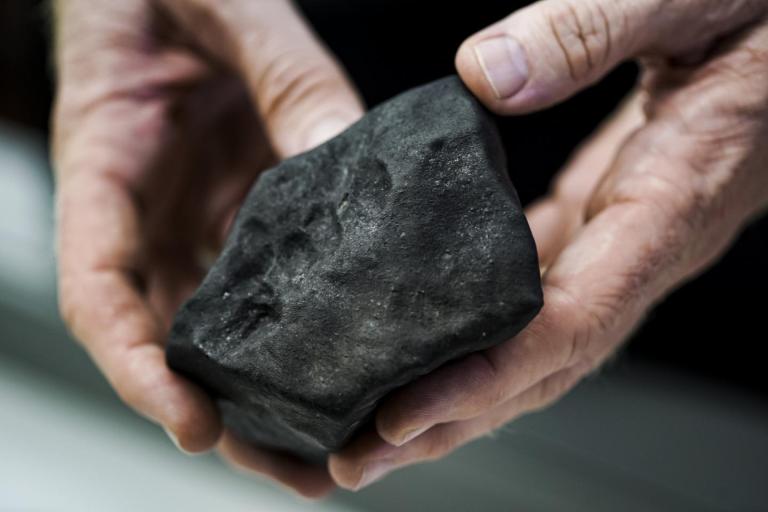
Getting to a comet is difficult though, and getting back even more so. Rosetta took 10 years to match orbits with Comet 67P/Churyumov-Gerasimenko and then studied it with its onboard instruments for two and a half years, but it wasn’t designed to bring any samples home. Stardust collected samples of the dust in the coma around Comet 81P/Wild as it flew past it and brought these samples back to Earth years later, and the tiny grains did reveal a lot about the composition and formation of the comet. (Trying to bring back a sample of gas from a comet, or ice from the surface, has never been attempted and would be technically very difficult.)
But both of these missions took many years of planning and were targeted at short-period comets that were well known. The challenge of visiting a newly discovered comet — either a long-period comet from the outer edge of our own solar system, or an interstellar visitor — is that we don’t have enough warning time to design and build a spacecraft, and to get to the comet, before it’s gone. An extreme gravitational slingshot maneuver like that proposed by the Project Lyra team as a method for catching up with an interstellar visitor hasn’t ever been used in practice — it works mathematically but there are huge practical challenges in building a spacecraft that could pull it off.
Even if you assume that it could work, encountering a small body far from the Sun is very hard: We don’t know these comets’ outbound trajectories with enough precision to aim a spacecraft to meet them; the spacecraft would need to relocate the object to navigate toward it, long after the object is lost from the views of the biggest telescopes on Earth (and even the James Webb Space Telescope). Very far from the Sun, a small body like a comet nucleus reflects so little light that the spacecraft won’t see it until it is right on top of it unless it has an unrealistically large telescope on board, so it would probably miss by millions of miles.
And even if we ignore that problem and assume we can get a spacecraft there somehow, you then have the problem of getting any data you take back from these vast distances — weeks to download each image — and you would need nuclear power to operate a spacecraft so far from the Sun. These are all big practical challenges that would require a very large and very expensive mission.
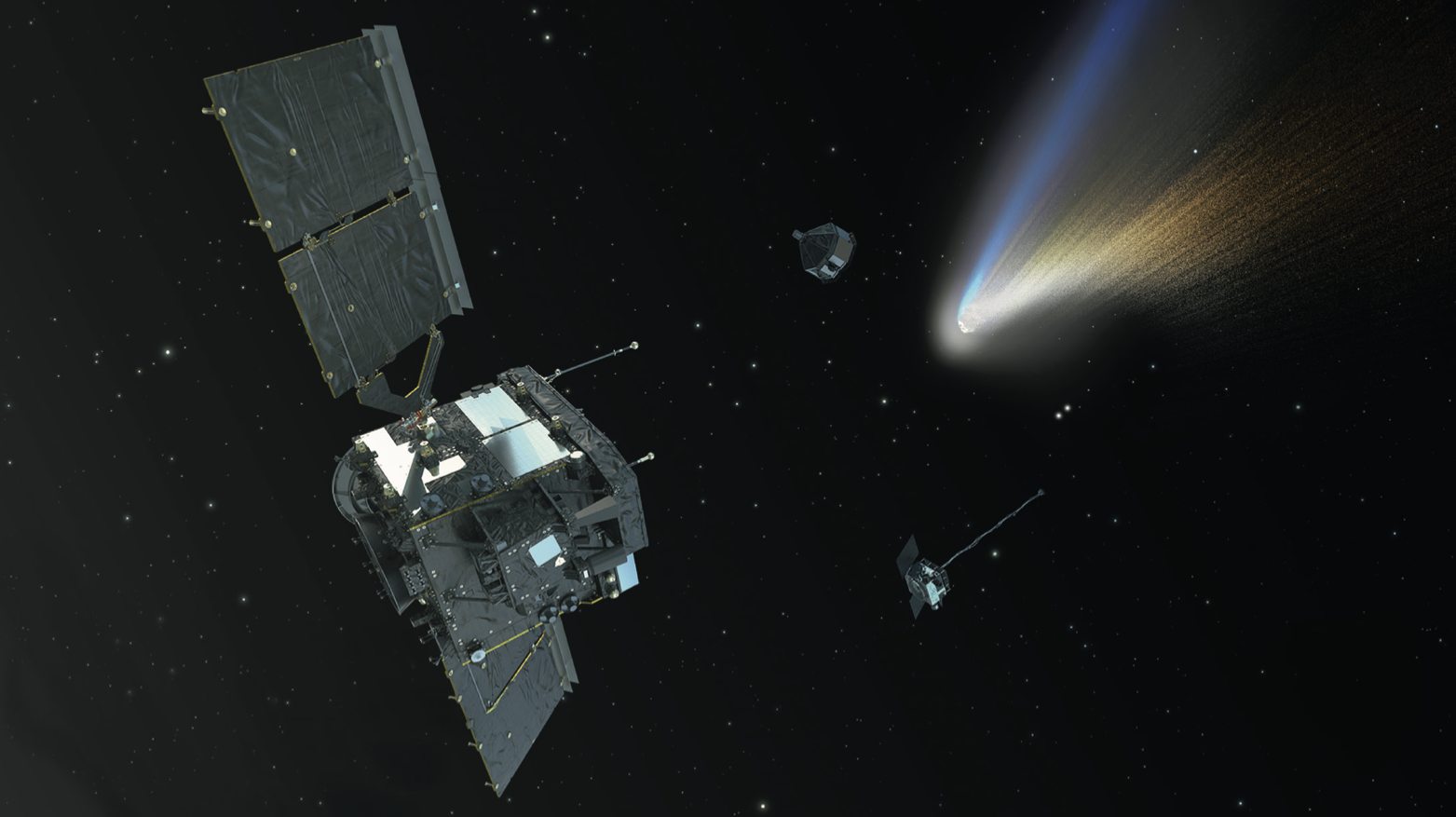
But ESA is working on a new mission called Comet Interceptor that will try to solve these problems by launching into a “parking orbit” in space and waiting there so it can visit a new comet that is passing the Sun for the first time. It will study the comet with onboard instruments, though, rather than bringing a sample back.
Comet Interceptor would not have been able to reach 3I/ATLAS even if it was already waiting in space, as 3I/ATLAS did not pass close enough to Earth to reach with the amount of fuel that Comet Interceptor will have. But the mission will launch in 2028 or 2029 and, if we are lucky, could visit a future interstellar object discovered in the 2030s.
Colin Snodgrass
Professor of Planetary Astronomy, University of Edinburgh, Scotland