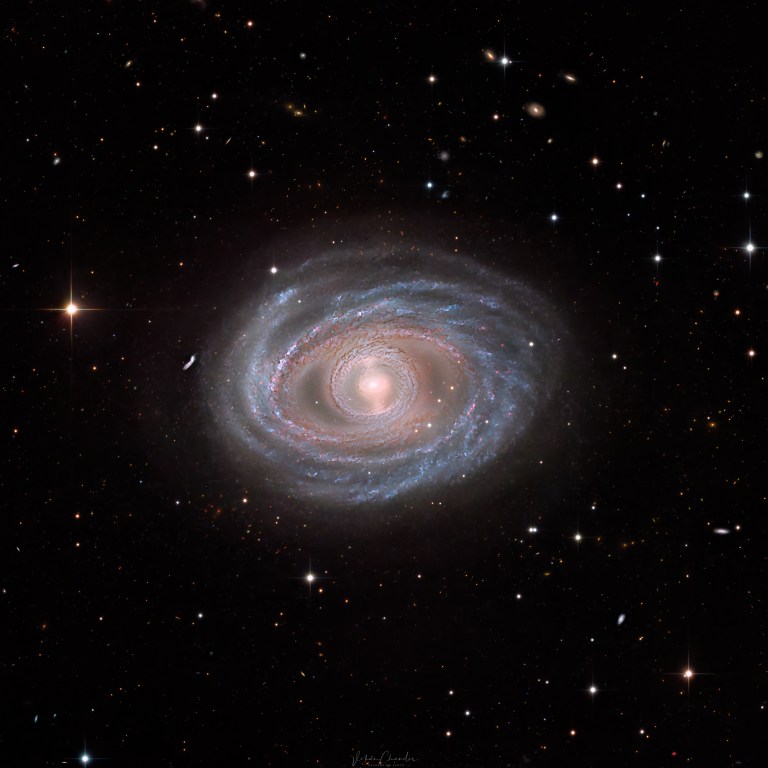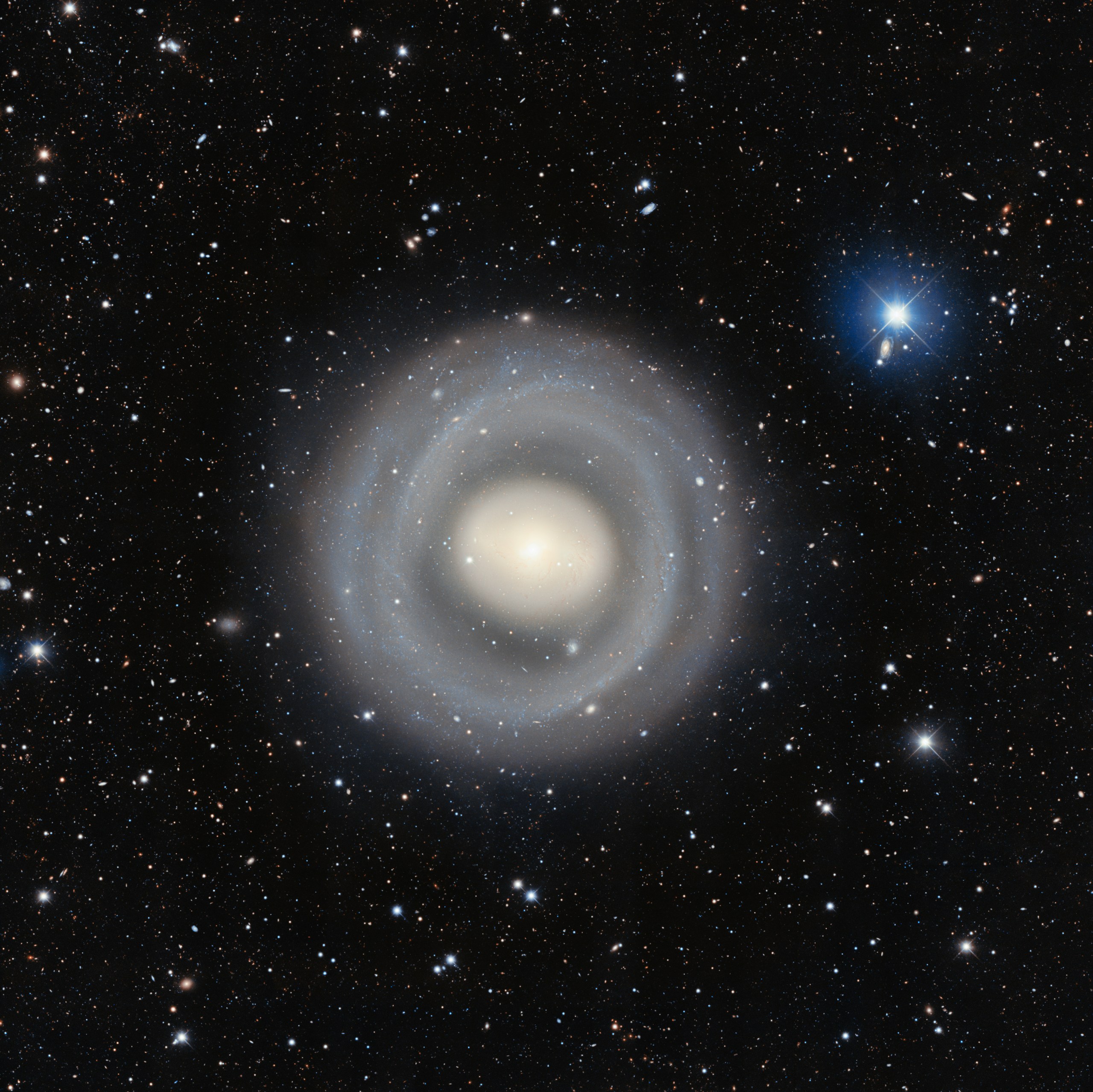
The galaxy you see here has an identity crisis. Scottish astronomer James Dunlop discovered it in 1826, and John Dreyer included it as the 1,291st entry in his New General Catalogue. Ten years after Dunlop’s sighting, English astronomer John Herschel stumbled across the same object and, not knowing of Dunlop’s observation, christened it NGC 1269. Whichever moniker you prefer, the 9th-magnitude object presents a stunning example of a nearly face-on barred lenticular galaxy. It possesses a pronounced bar-shaped central bulge surrounded by an inner and outer ring. The rings likely formed when a smaller galaxy merged with NGC 1291. The collision stripped the resulting galaxy of its interstellar gas, so it no longer creates many stars. NGC 1269 lies 33 million light-years from Earth in the constellation Eridanus the River.
Richard Talcott is a former senior editor and current contributing editor of Astronomy.