Why do bars form in some spiral galaxies, but not in others?
Joe Rusz
Herndon, VA
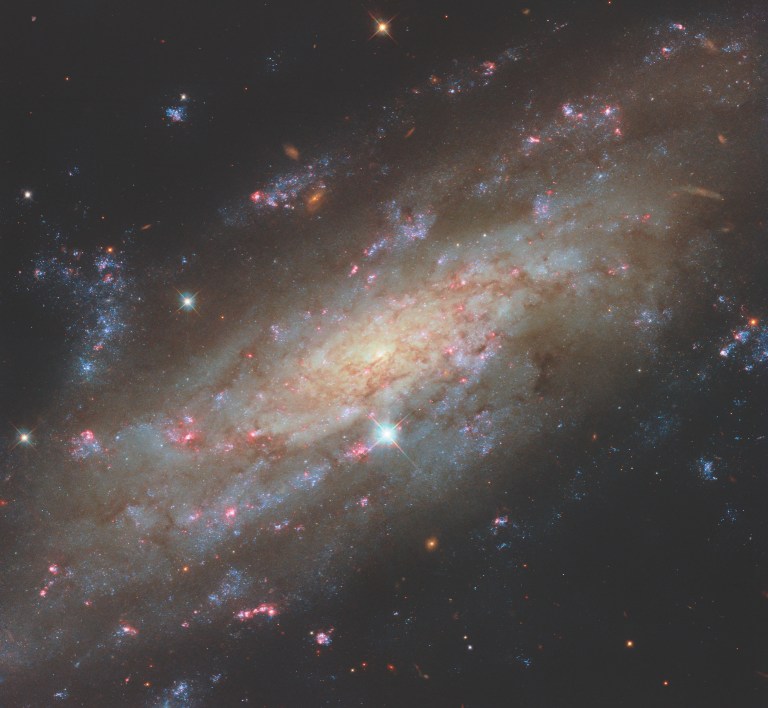
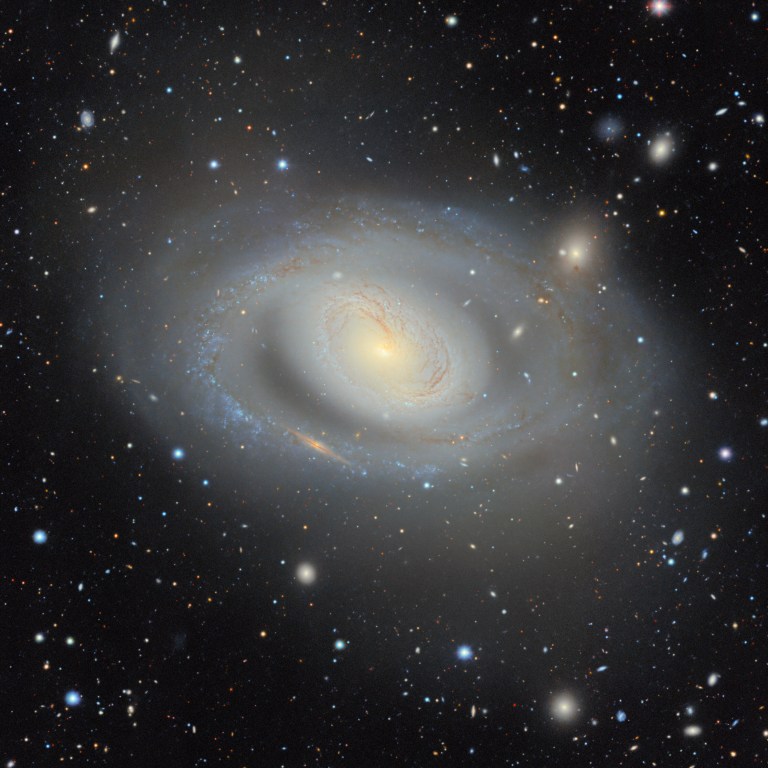
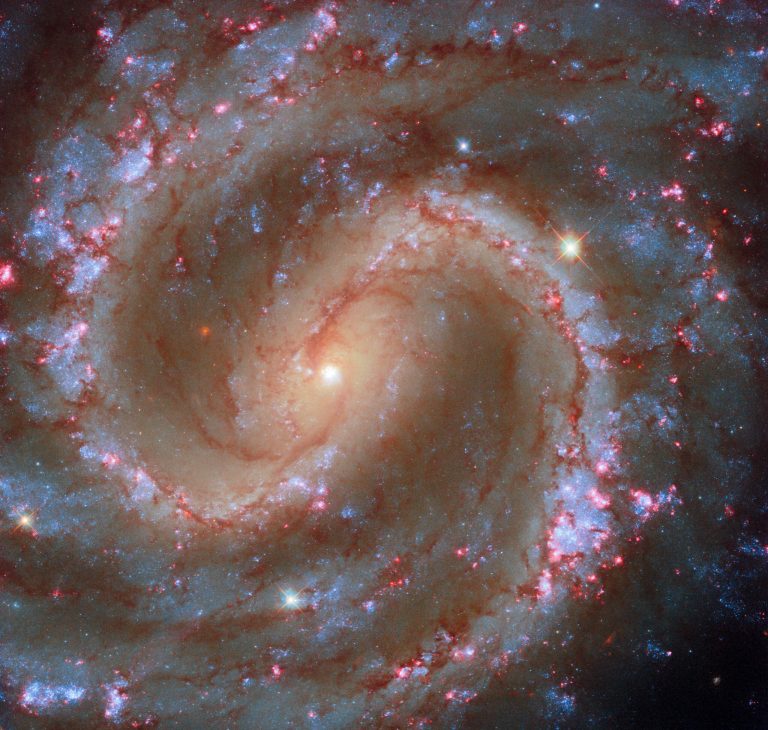
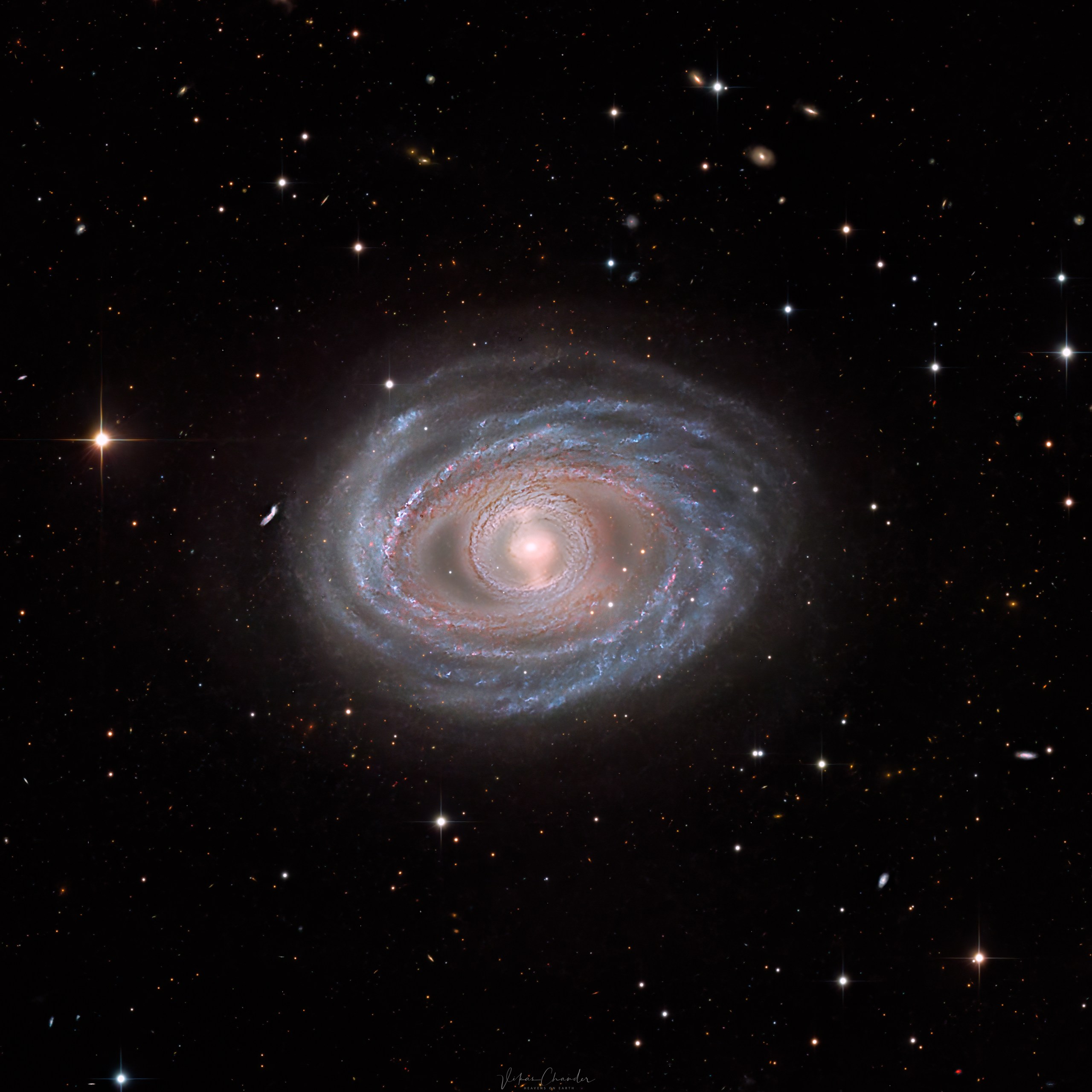
We believe that stellar bars can form in any galaxy that displays ordered rotation. This includes galaxies with disks of spiral arms, but also many lenticular galaxies, which feature disks with no spiral arms. When disk galaxies are perturbed — for instance, by the gravitational wake of a nearby passing companion — ripples run through the plane of the galaxy. These waves elongate the orbits of stars in the center of the disk. As stars in those elongated orbits pull on one another, their orbits align and form a resonance — a relationship between the periods of different orbits that can help stabilize them. We observe the effect as the boxy shape of a bar.
Around two-thirds of spiral galaxies today have a bar, including our own Milky Way. In fact, the instability that leads to a bar forming is so natural that decades ago it was difficult to explain why so many disk galaxies didn’t have bars. Scientists working on simulations just couldn’t come up with a way to stop them from forming in every galaxy they modeled.
Thanks to extensive work on the subject, we now know that significant turbulence in a galaxy’s gas content or a particularly high dark matter content can prevent a bar from forming. This is also why disk galaxies in the early universe did not tend to develop bars: Early galaxies were much too turbulent. In the present day, now that galactic disks have become more settled, it is primarily the quantity of dark matter that controls whether a stellar bar is present.
Daniel Ivanov,
Graduate Student, Department of Physics & Astronomy, University of Pittsburgh