Looking for a sky event this week? Check out our full Sky This Week column.
April 21: Could this be your last glimpse of Comet PanSTARRS?
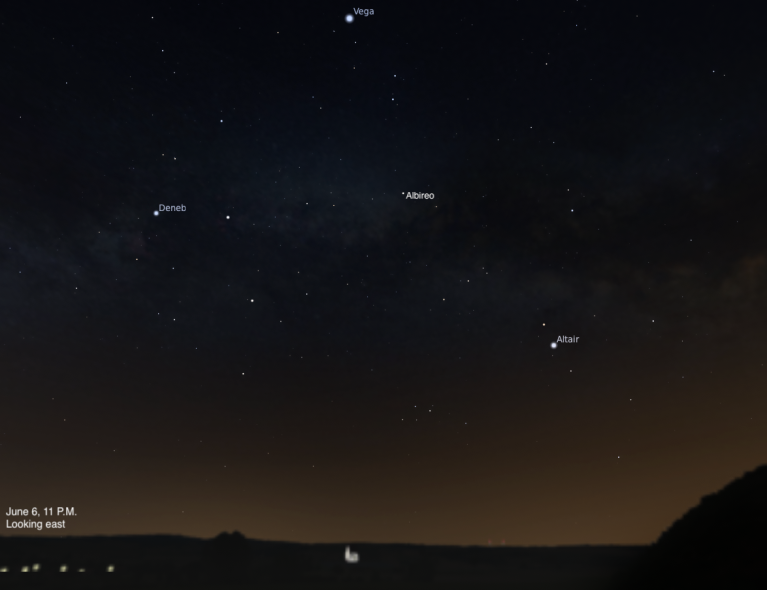
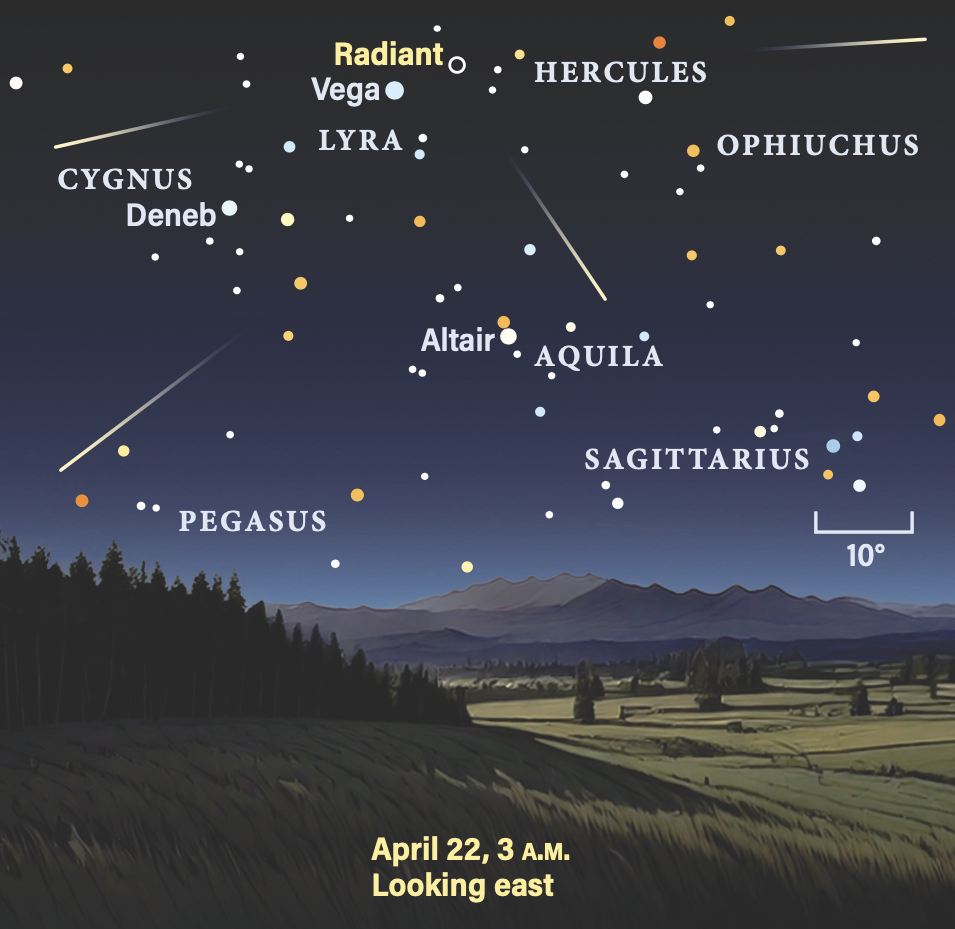
The Lyrid meteor shower peaks this morning with minimal moonlight to interfere. The shower’s radiant — the point from which its meteors appear to originate — rises late in the evening and stands more than 60° high in the east by 3 A.M. local daylight time. This point is located just to the right of the blazingly bright star Vega, Lyra’s alpha star and one point in the famous Summer Triangle asterism, now visible in its entirety in the east.
The best time to view the shower is in the early-morning hours after the Moon sets (shortly before 1:30 A.M. local daylight time), when the sky is darkest and the radiant is high above the horizon. The maximum zenithal hourly rate of meteors expected — the very highest the rate can be — is about 20 meteors per hour, which means you should still see several meteors each hour you stargaze as sunrise draws closer. Most Lyrid meteors are considered medium-fast meteors, streaking through our atmosphere at some 30 miles per second (48 km/s). These streaks originated as dust shed by comet C/1861 G1 (Thatcher), whose orbit around the Sun takes more than 400 years to complete.
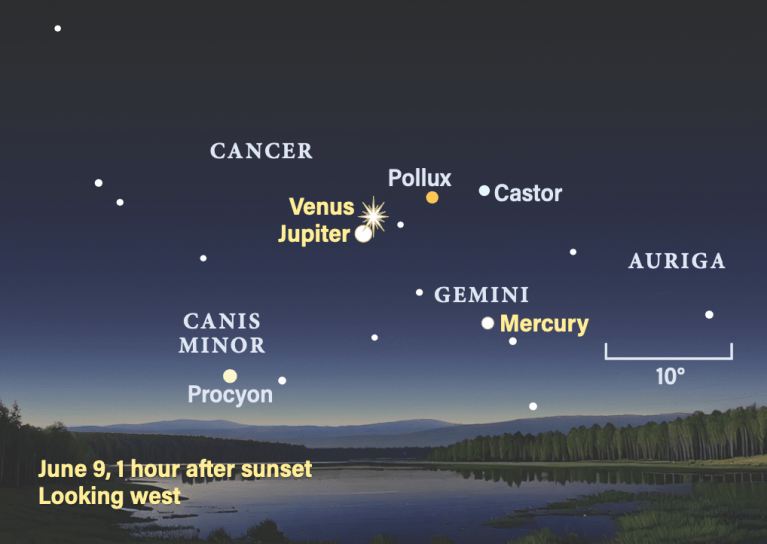
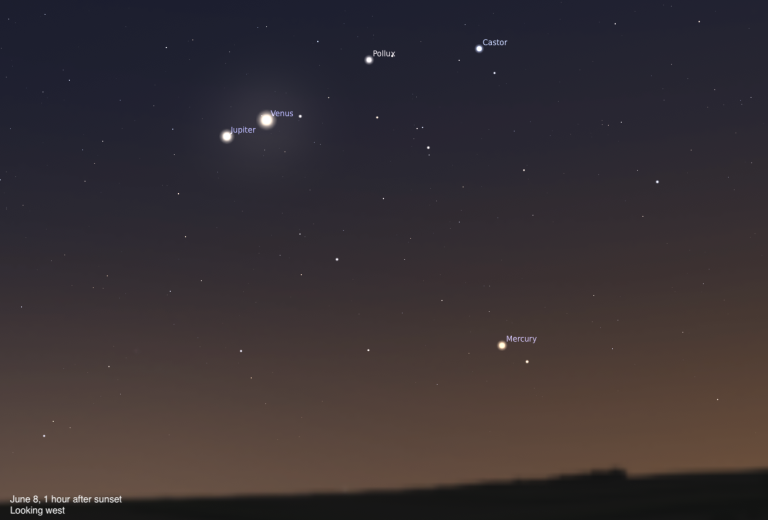
The Moon passes 4° north of Jupiter in Gemini at 6 P.M. EDT. If you prefer to observe in the evening, you can catch the pair high in the west after sunset, with our satellite standing just to the upper right of bright Jupiter, both below the two bright stars making the heads of the Twins, Castor and Pollux. They are visible until well after midnight.
Sunrise: 6:12 A.M.
Sunset: 7:46 P.M.
Moonrise: 10:17 A.M.
Moonset: 1:18 A.M.
Moon Phase: Waxing crescent (39%)
*Times for sunrise, sunset, moonrise, and moonset are given in local time from 40° N 90° W. The Moon’s illumination is given at 10 P.M. local time from the same location.