Looking for a sky event this week? Check out our full Sky This Week column.
May 11: Egeria moves along
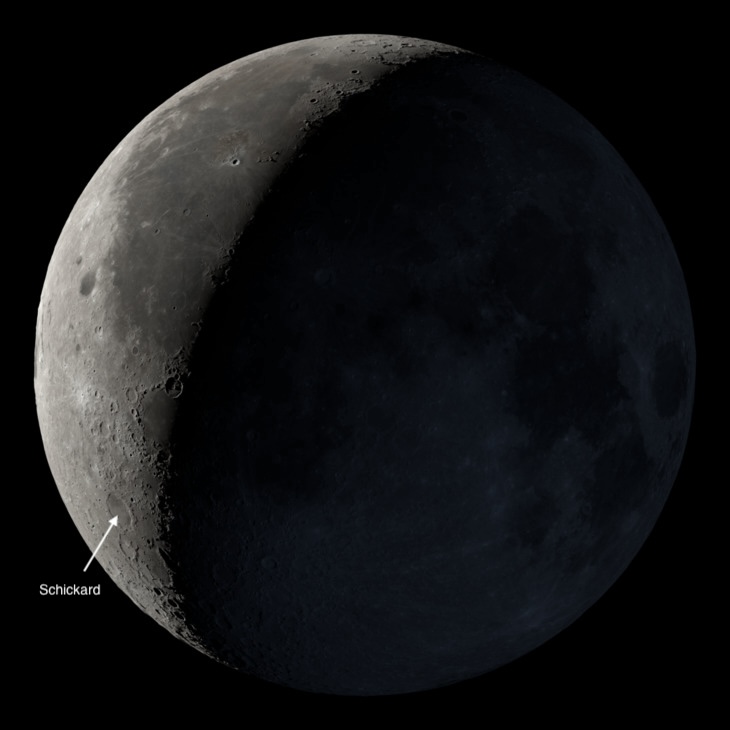
Early risers have a great view of a lunar feature normally located near the limb this morning. An hour before sunrise, the Moon is roughly 20° above the eastern horizon. About 25 percent of its nearside is still lit, as sunset slowly occurs across the lunar disk.
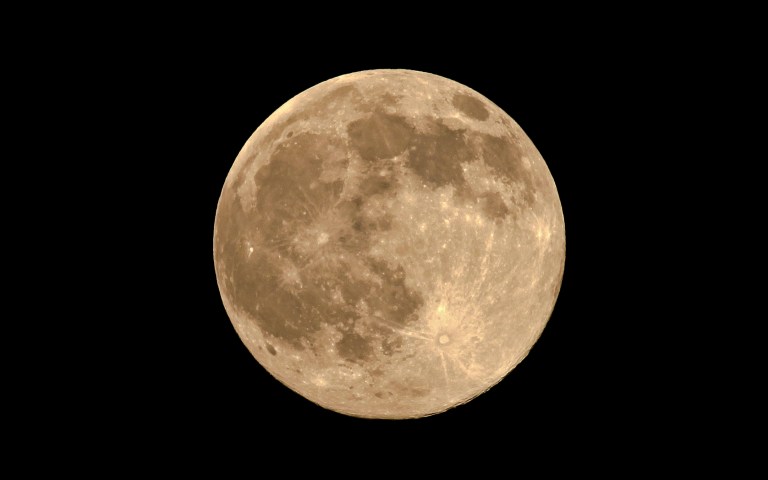
Zoom in on the lunar southwest with a telescope and you’ll immediately notice a broad, shallow crater with a bright eastern rim and a dark, flat floor. This is 132-mile-wide (212 kilometers) Schickard, a circular feature that often appears artificially elongated thanks to its location near the limb. Today, though, it should look more round than on other occasions, as lunar libration — the nodding or wobbling motion of our Moon as it orbits — brings it more into view, carrying it farther from the limb.
Look particularly at Schickard’s floor: Some but not all of it has been flooded with lava. There should be a noticeable textural difference between the southwest and northeast regions within the walls. Additionally, several smaller craterlets pockmark the floor, showing that they came much later than the initial impact that formed the larger Schickard.
Sunrise: 5:48 A.M.
Sunset: 8:06 P.M.
Moonrise: 3:13 A.M.
Moonset: 3:30 P.M.
Moon Phase: Waning crescent (18%)
*Times for sunrise, sunset, moonrise, and moonset are given in local time from 40° N 90° W. The Moon’s illumination is given at 10 P.M. local time from the same location.
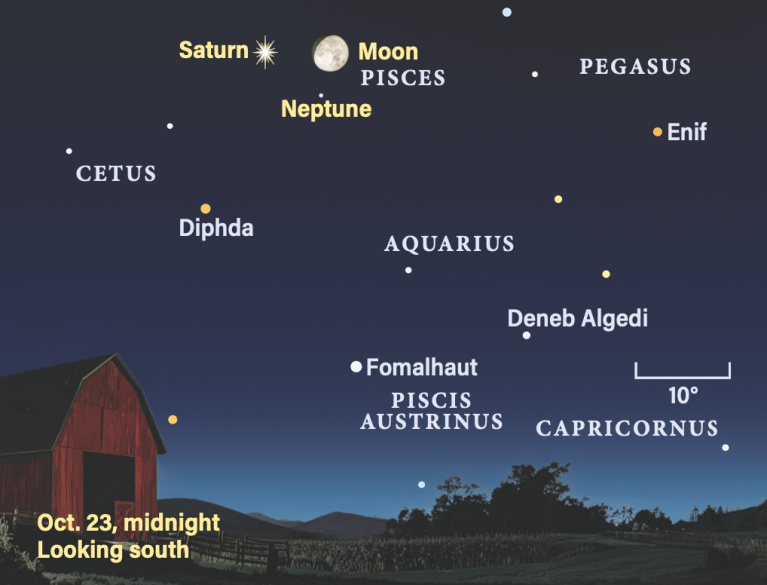
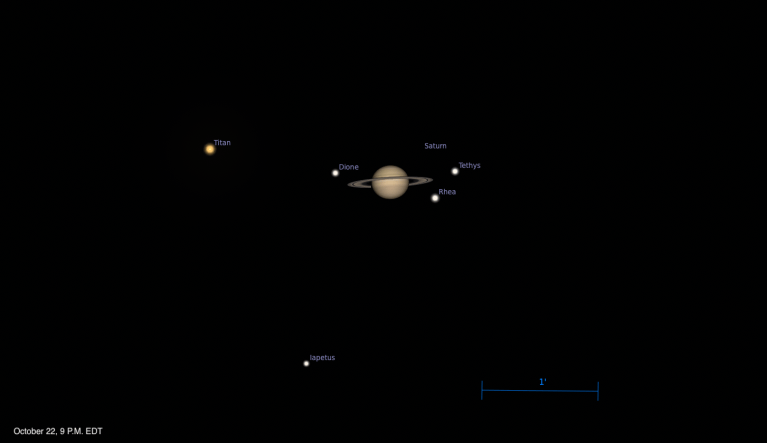
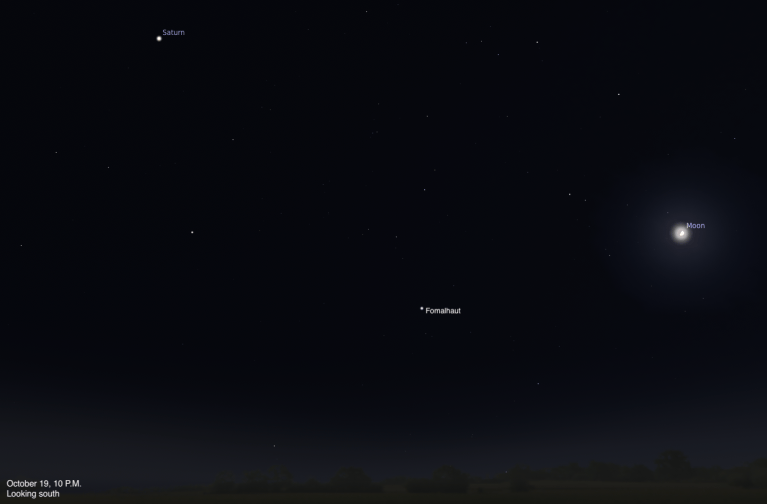
Rising around 3:30 A.M. local daylight time on May 14, the Moon then passes 4° north of Neptune at 5 A.M. EDT. Both are in Pisces. While the Moon will be easy to view shortly after rising, distant, faint Neptune will be more of a challenge, as it fails to climb very high above the horizon before dawn starts to lighten the sky. However, you’ll more easily catch magnitude 0.9 Saturn to the Moon’s lower right in the hour or two before dawn — it’s the brightest point of light in this region of the sky, although telescopic views may still be a bit muddy. The Moon will pass 6° north of Saturn at 6 P.M. EDT Wednesday evening.