Looking for a sky event this week? Check out our full Sky This Week column.
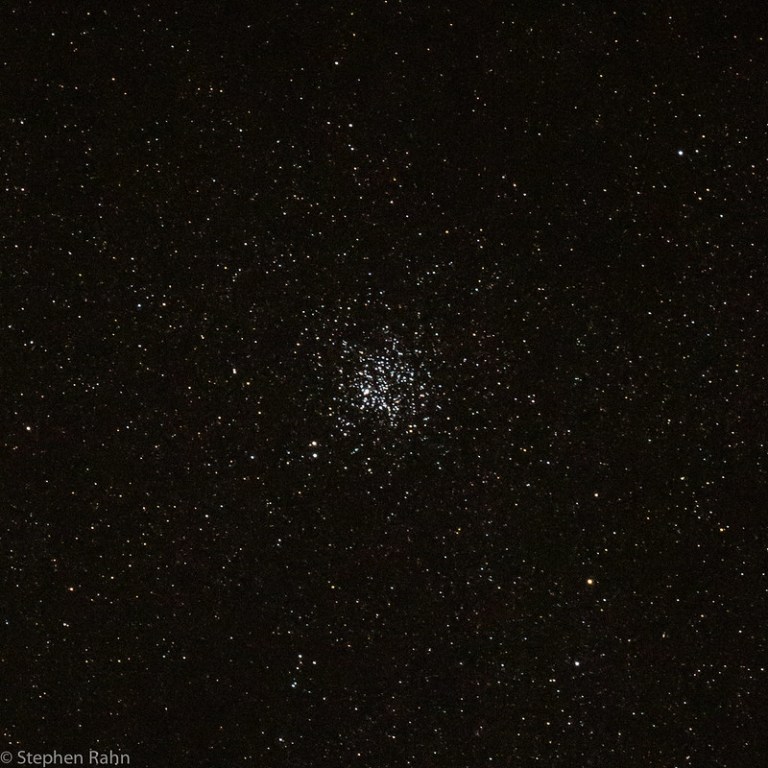
October 17: Watch Wild Ducks
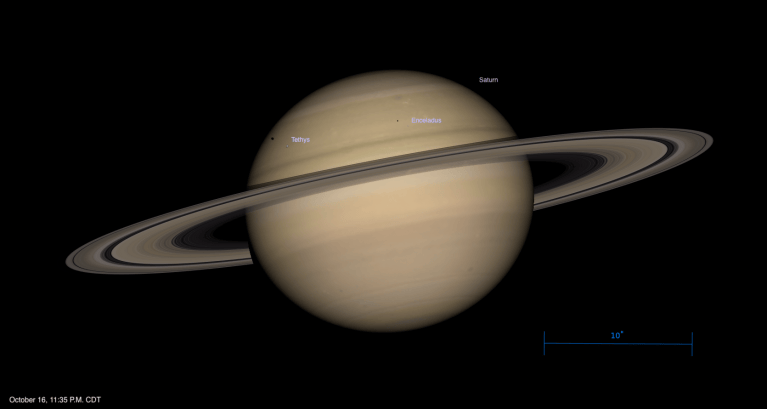
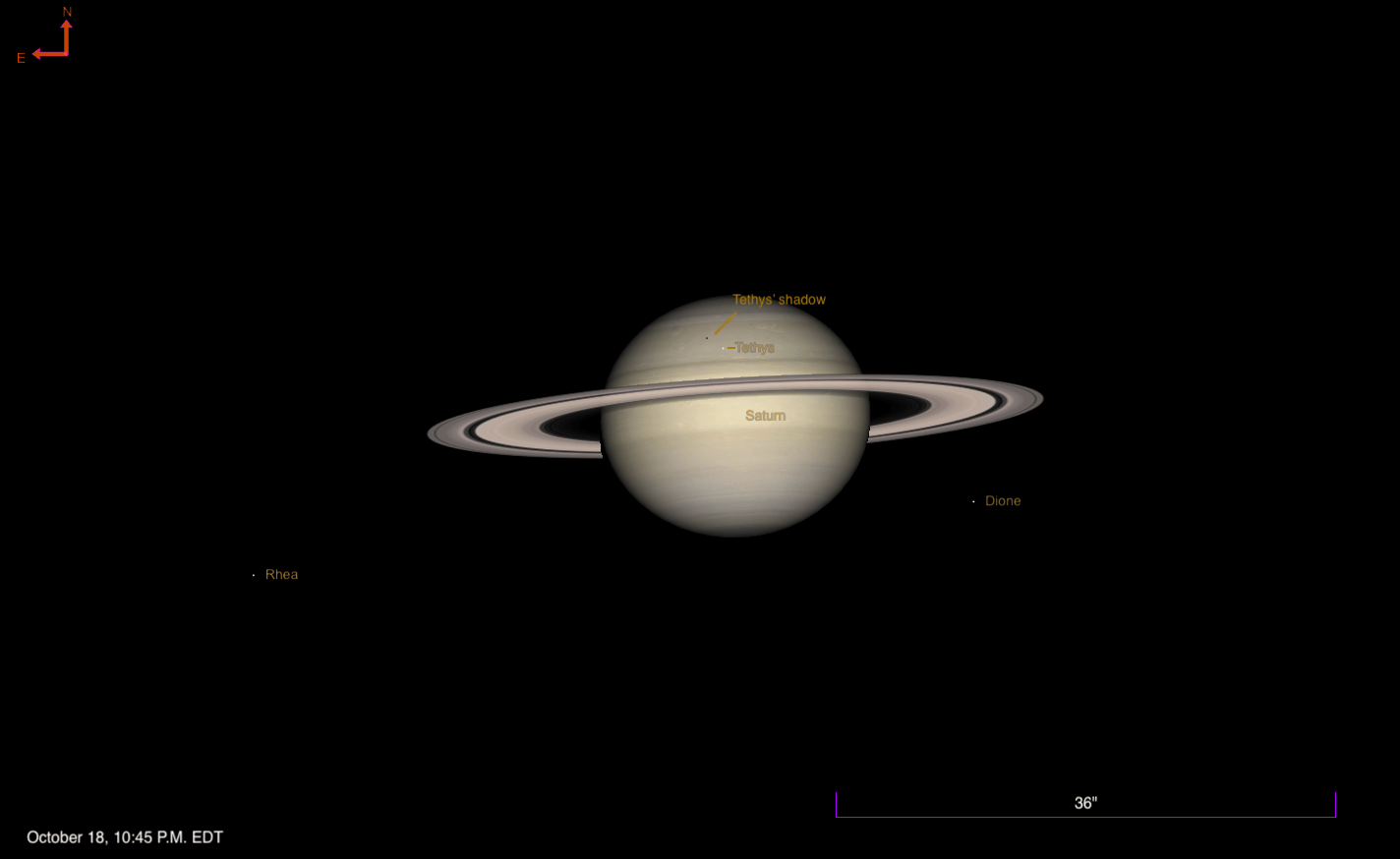
Tiny Tethys is transiting the disk of Saturn beginning around 9:35 P.M. EDT, most easily visible from the eastern half of the U.S.
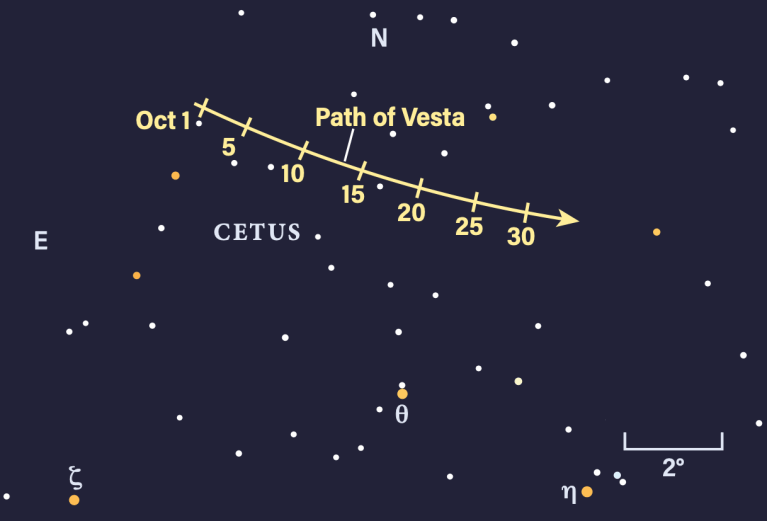
Saturn is easy to locate in Cetus the Whale — it’s the brightest light in the southeast around 9 P.M. local daylight time. Through any telescope, you’ll easily see Saturn’s disk and broad rings, as well as its brightest moon, Titan, which now lies far to the planet’s east. You might also spot its three next-brightest moons, 10th-magnitude Tethys, Dione, and Rhea. Tethys is closing in on the planet’s northeastern limb, while Rhea sits southeast and Dione southwest of the planet.
Tethys will be easy to track until the transit begins — then it grows much harder, as the tiny disk offers little contrast with Saturn’s much brighter cloud tops. The moon’s journey is followed by its equally tiny shadow, which appears just northeast of Tethys around 9:50 P.M. EDT. Both moon and shadow will only be visible to astroimagers using advanced video-capture techniques. Tethys finally leaves the northwestern limb shortly after midnight EDT.
Even if you can’t watch Tethys’ transit, you can still admire Saturn’s stunning rings and its other visible moons. Note that Dione is moving closer to Saturn’s southeastern limb — it will disappear behind the planet in an occultation just before 12:45 A.M. EDT (the 19th in the Eastern time zone only). And once the transit is through, visual observers should be able to pick up Tethys once more as it moves away from the planet, now on the western side of the planet, north of the rings.
Sunrise: 7:14 A.M.
Sunset: 6:16 P.M.
Moonrise: 2:35 P.M.
Moonset: —
Moon Phase: Waxing gibbous (54%)
*Times for sunrise, sunset, moonrise, and moonset are given in local time from 40° N 90° W. The Moon’s illumination is given at 10 P.M. local time from the same location.
Alison Klesman is senior editor of Astronomy magazine. She holds a Ph.D. in astronomy and has studied a variety of topics, from minor planets to supermassive black holes.