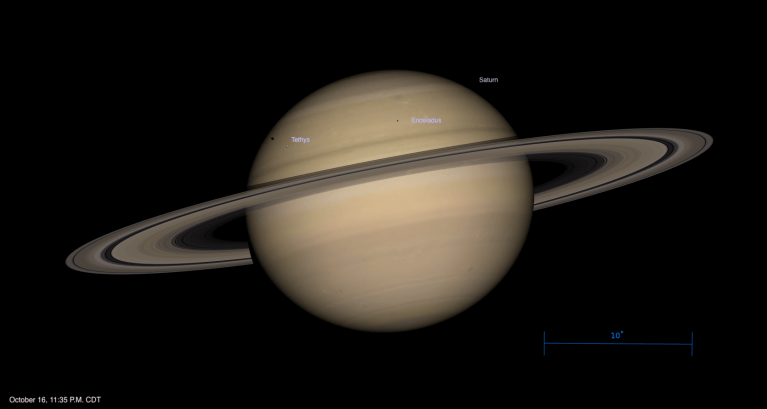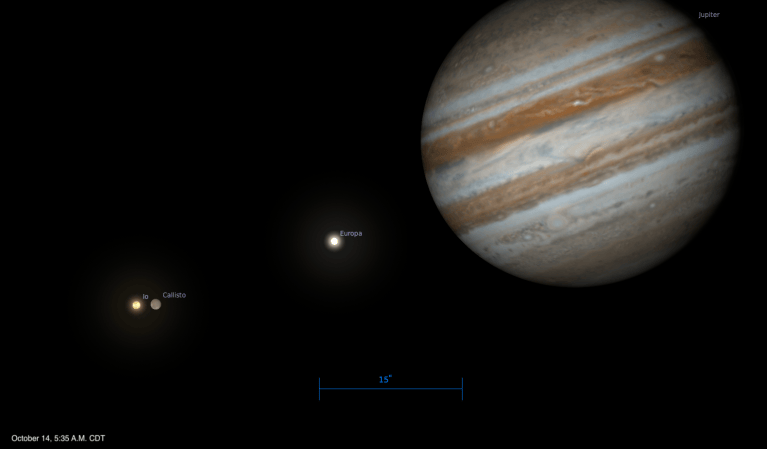
Looking for a sky event this week? Check out our full Sky This Week column.
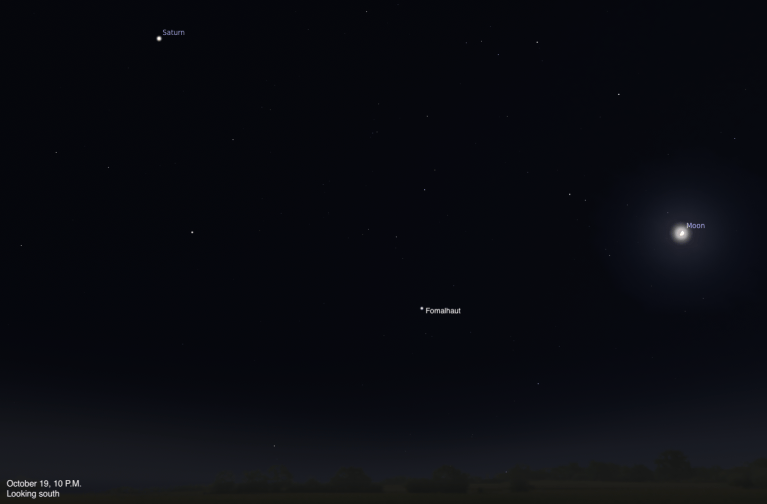
October 19: Feast your eyes on the Southern Fish
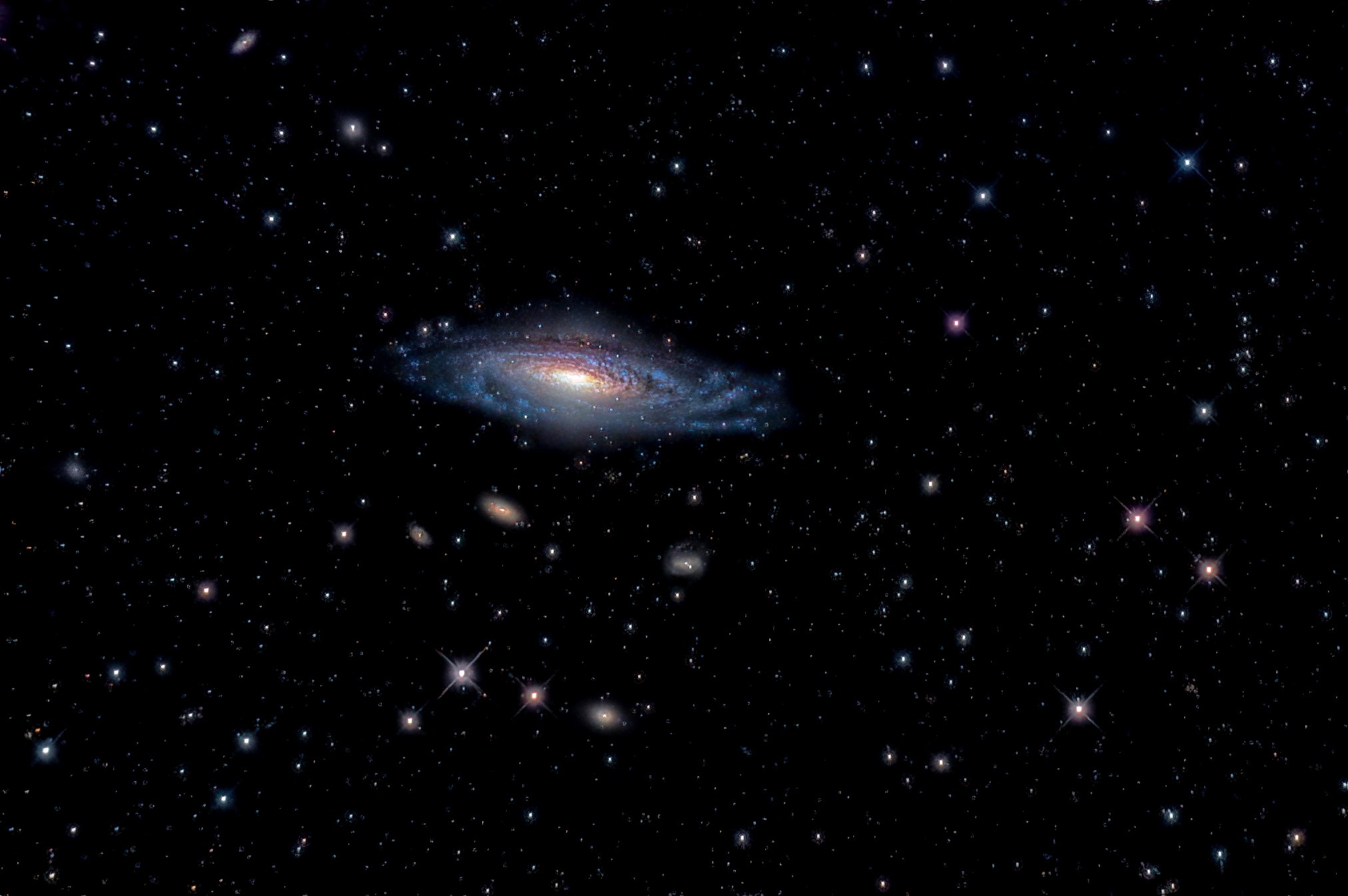
Located in northern Pegasus, NGC 7331 is a bright galaxy that is the largest in a group of five galaxies collectively known as the Deer Lick Group. It’s best viewed in early evening, standing highest around 10 P.M. local daylight time, when it is more than 80° above the southwestern horizon.
You’ll find NGC 7331 glowing at 10th magnitude just 4.4° north of 3rd-magnitude Matar (Eta [η] Pegasi). Stretching some 11’ long and 4’ wide, this lovely galaxy has a large, bright nucleus with no bar, surrounded by delicate spiral arms. Even though the galaxy is nearly edge-on, larger scopes will allow you to see exquisite detail in those arms.
We see NGC 7331 from a distance of 40 million light-years, but it’s not the only galaxy in sight. Again, a larger scope (11 inches or more) is needed, but will reveal at least three of the Deer Lick Group’s other members, collectively called the “fleas” because they appear much smaller than NGC 7331, clustering around it. But these aren’t smaller dwarf galaxies swarming a larger central body — instead, the fleas are not physically associated with NGC 7331 at all, but lie far beyond it, at distances some 290 million to 370 million light-years away.
Sunrise: 7:16 A.M.
Sunset: 6:13 P.M.
Moonrise: 3:32 P.M.
Moonset: 1:11 A.M.
Moon Phase: Waxing gibbous (73%)
*Times for sunrise, sunset, moonrise, and moonset are given in local time from 40° N 90° W. The Moon’s illumination is given at 10 P.M. local time from the same location.
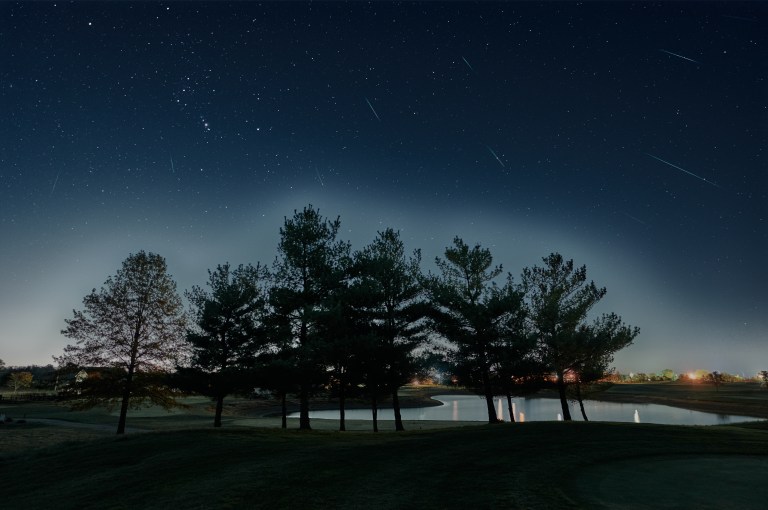
The Orionid meteor shower peaks the morning of October 21 — the perfect time to watch for shooting stars, as Earth turns into the meteoroid stream of dusty debris responsible for the show.
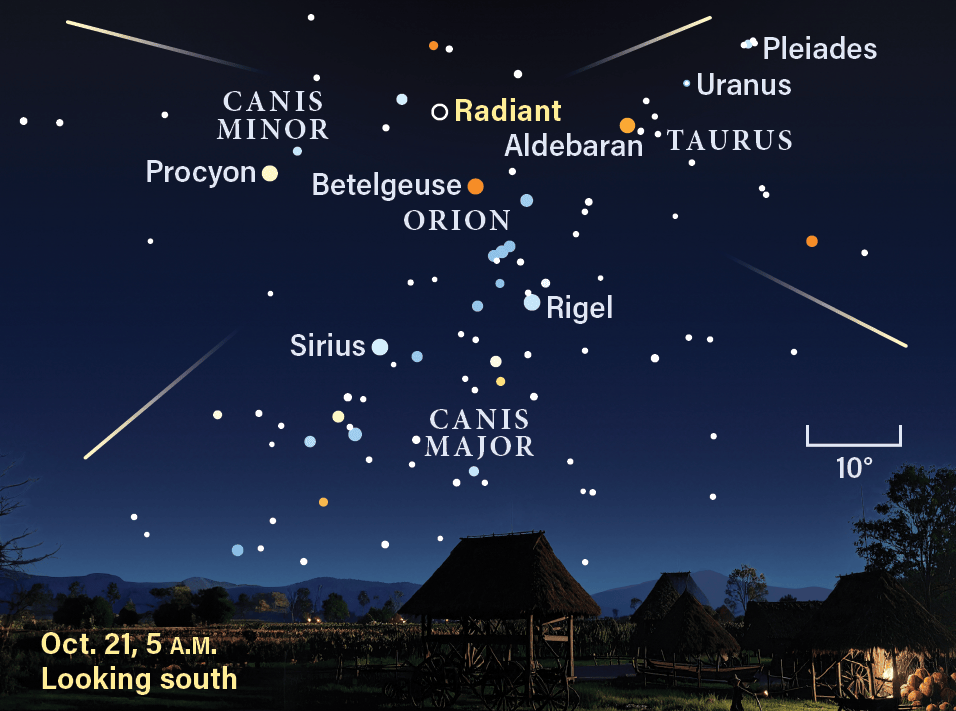
The best time to do some meteor-watching is between 2 A.M. local daylight time and dawn, as the radiant in Orion rises higher and the Moon has already set. Around 5 A.M., the Hunter stands above the southern horizon, his famous three-star Belt easy to find. Meteors in the Orionid shower appear to originate just to the upper left (northeast) of Betelgeuse, the bright red giant that serves as one of Orion’s shoulders. Once you’ve found this star, cast your gaze some 40° to 60° to either side, away from it — that’s where you’ll see meteors with the longest trains.
This year’s shower is expected to produce some 15–18 meteors per hour in the early-morning hours. And if you aren’t able to get out in the morning, you can try again late tonight after Orion rises and overnight into tomorrow morning. Even though the peak has passed, meteor rates will still be higher than the sporadic six or so per hour that are visible even without any showers active.
Alison Klesman is senior editor of Astronomy magazine. She holds a Ph.D. in astronomy and has studied a variety of topics, from minor planets to supermassive black holes.