Looking for a sky event this week? Check out our full Sky This Week column.
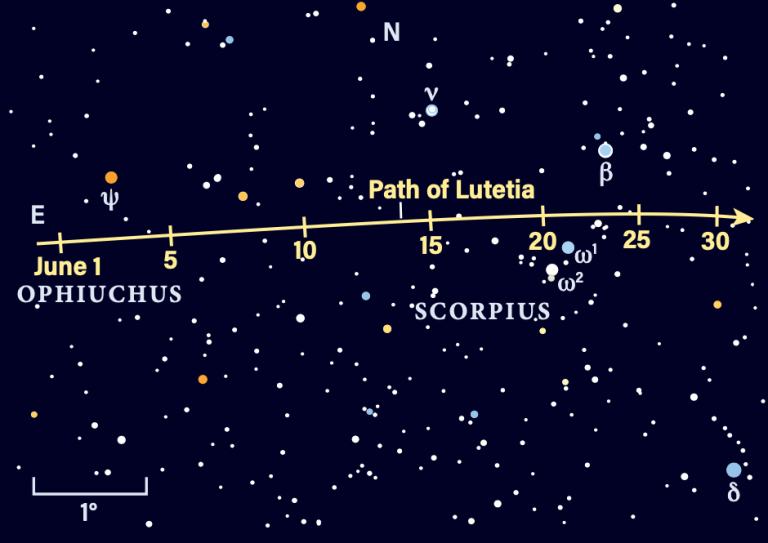
June 24: Look for Lutetia’s light
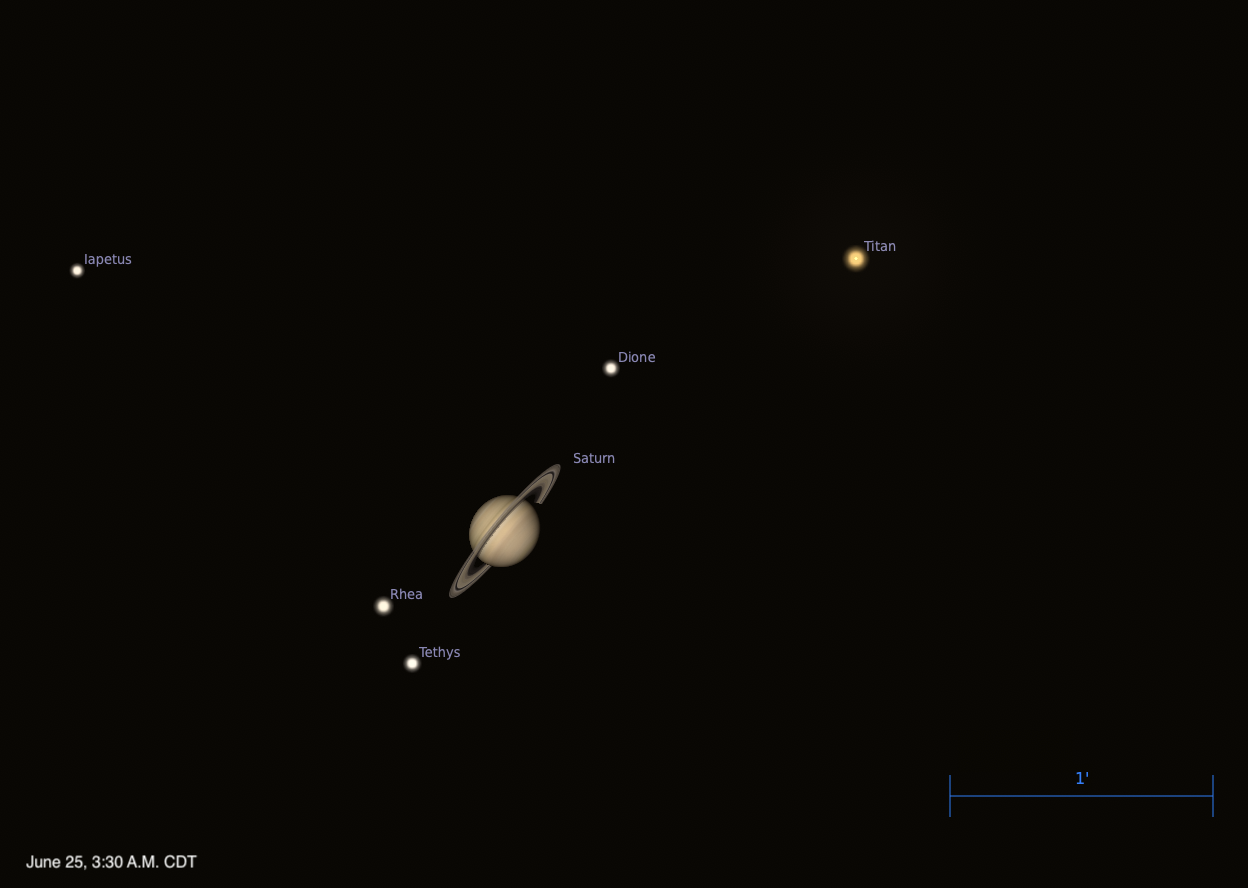
Saturn’s two-toned moon Iapetus is now halfway between its eastern and western elongations. Heading toward the latter, which it will reach in just a few weeks, the moon sits 1.9’ due north of Saturn in the early-morning sky. Shining around 11th magnitude, Iapetus has brightened roughly a magnitude from its fainter eastern elongation and will continue to brighten as it moves westward.
Pull out your telescope about two hours before sunrise, when Saturn has reached an altitude of 20° in the eastern sky. It’s easy to find the ringed world, as it’s the brightest object in this part of the sky. Once you home in on Saturn, you’ll of course see its stunning ring system, stretching nearly 40” across as it encircles the planet, whose angular size is 17”.
Saturn’s brightest moon, Titan, should be easy to spot some 1.7’ to the planet’s west. Tenth-magnitude Tethys, Rhea, and Dione are visible as well, clustered closer to Saturn. Dione sits west of Saturn, while Rhea and Tethys are to the planet’s east. And, again, 11th-magnitude Iapetus is north of the planet, about 1.9’ from its center.
Iapetus will remain near Saturn for the next two or three days, so if you aren’t able to catch it this morning, you can try again tomorrow or the next day.
Sunrise: 5:33 A.M.
Sunset: 8:33 P.M.
Moonrise: 5:09 P.M.
Moonset: 2:07 A.M.
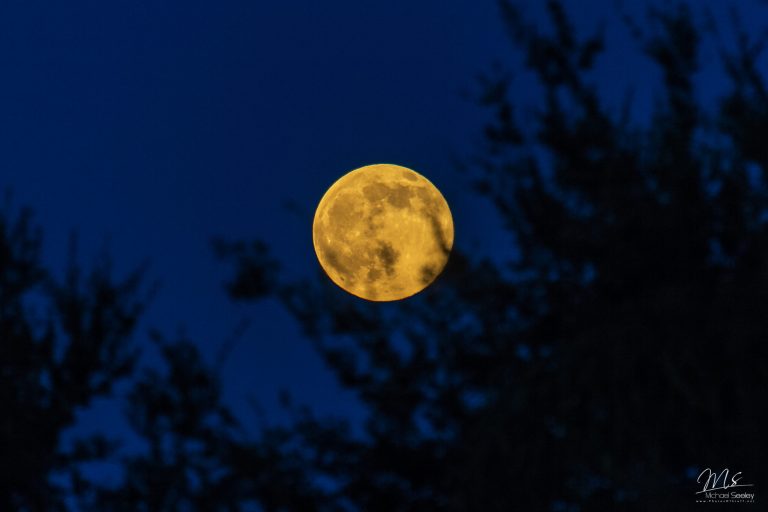
Moon Phase: Waxing gibbous (87%)
*Times for sunrise, sunset, moonrise, and moonset are given in local time from 40° N 90° W. The Moon’s illumination is given at 10 P.M. local time from the same location.
Alison Klesman is senior editor of Astronomy magazine. She holds a Ph.D. in astronomy and has studied a variety of topics, from minor planets to supermassive black holes.