Most amateur astronomers live with light pollution. When a free schedule, the New Moon, and the ability to travel to a dark site align, you have a night to remember. But like finding a valuable old coin in your change, such nights are the exception, not the rule.
However, there’s no need to consider the rest of your time unworthy. Observing in the city is easier and, believe it or not, more rewarding than you might think.
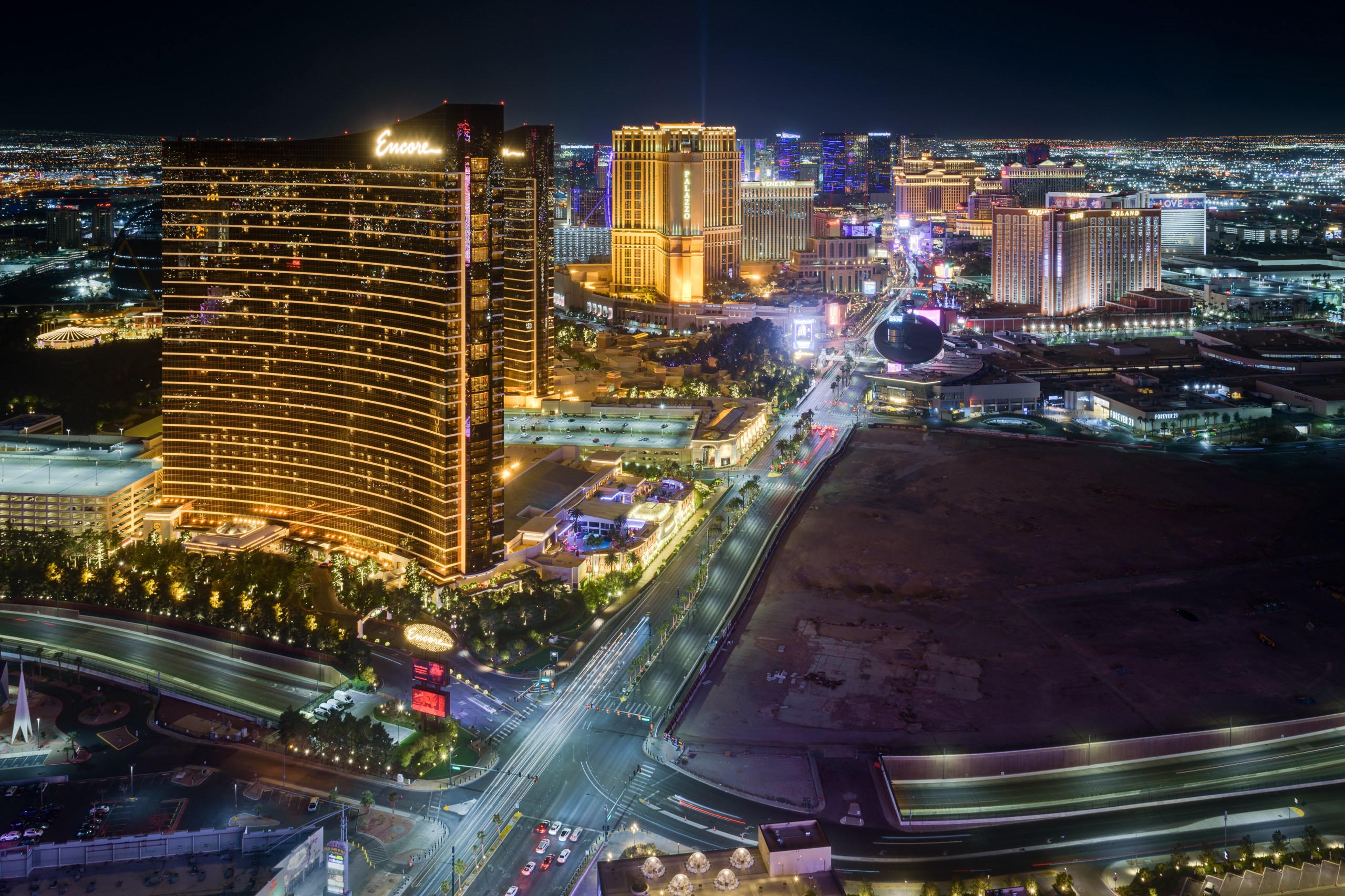
True, the “anti-darkness” filter of an urban environment offers challenges. The ideal observer’s solution is to at least get out of town. Head to a park or a location with good horizons (especially south), away from the city’s light pollution dome. But sometimes that’s not possible: Throughout much of the eastern half of the U.S., towns have small but obvious light domes that may overlap.
So, rather than waiting to use the telescope in darker pastures, adapt. The rewards and challenges are still there, even if you can’t go as deep. After all, you can still see more under such conditions than under a dark sky with clouds!
Personal history
I have observed under skies with varying degrees of light pollution for decades, and my sketchbook has numerous pages proving that light pollution shouldn’t keep you from pulling out your telescope.
My introduction to observing under light pollution started with attempts to see Comet Kohoutek (C/1973 E1) in late 1973, touted as the comet of the century. That object turned out to be a disappointment.
My first great comet wouldn’t be until Comet West (C/1975 V1) became visible to amateur astronomers in March 1975. But in the span between these two icy visitors, I became familiar with the Moon and planets in my backyard “observatory”: open air with blanket-covered ladders to block the neighbors’ back porch lights. I was lucky to have a family farm with a dark sky for weekends and summers, but I observed on school nights much more frequently.
Eventually I moved beyond the solar system and fell in love with the deep sky. Years of observing from those urban skies gave me an understanding of what success under those conditions looks like. Over time, I developed six rules that I offer here.
Rule No. 1: Know what’s up
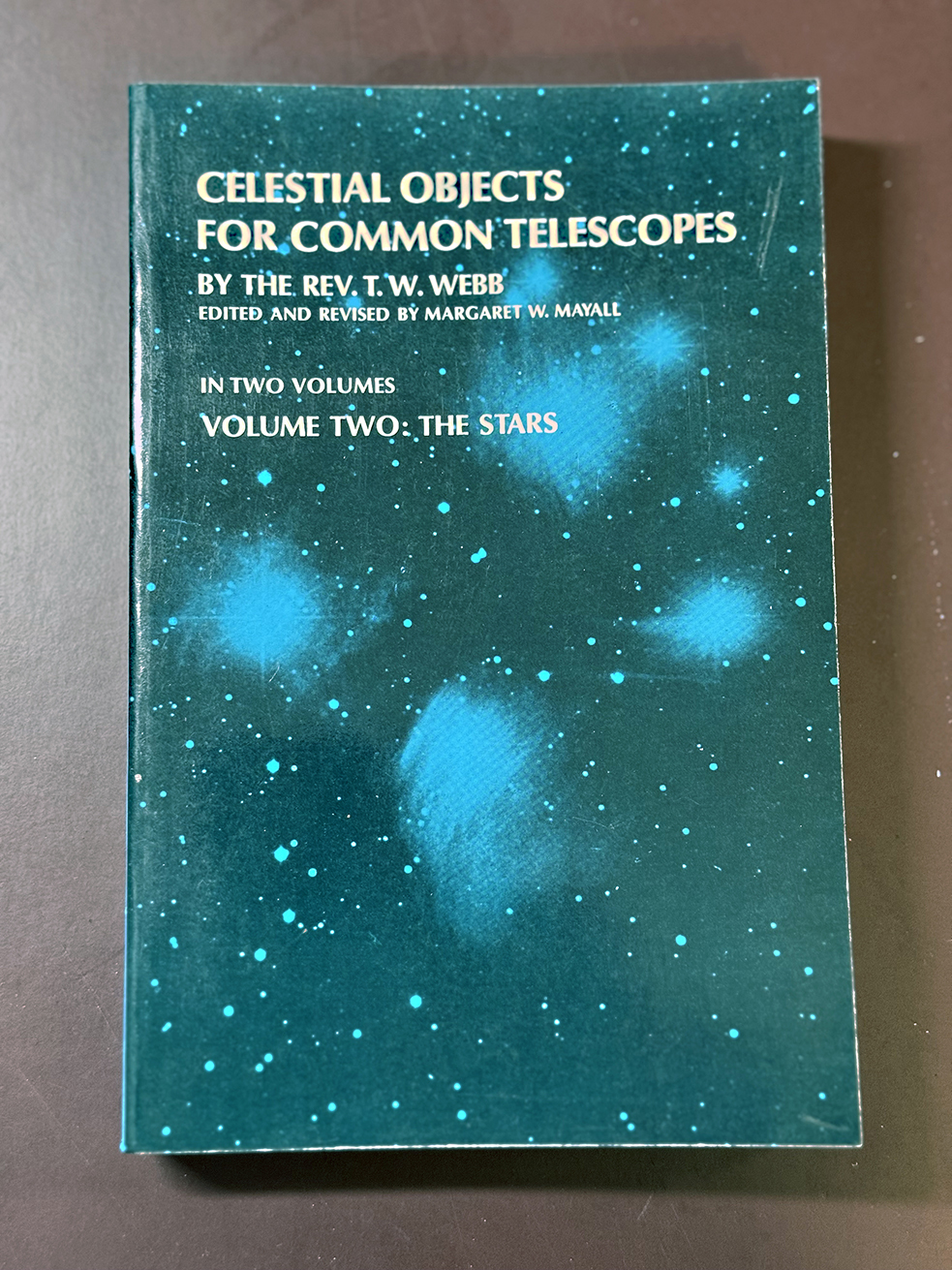
Before you can figure out which objects you might be able to observe, you need to know what’s up. As a new observer, my bible was a reprint of Rev. Thomas William Webb’s 1859 classic, Celestial Objects for Common Telescopes, Volume 2, The Stars. In it, I read descriptions of double stars, vivid red stars, open and globular star clusters, nebulae, and distant galaxies, and I wanted to find them all. Many other books and magazines (including this one) can help you figure out what’s visible from your location, as well as online resources like Stellarium, The Sky Live, and In-The-Sky.org.
Rule No. 2: Go for brighter deep-sky objects
Ideal deep-sky objects for urban observing include planetary nebulae and globular clusters. Both tend to be compact and bear magnification well.
Charles Messier’s catalog of deep-sky objects is by far the best list of targets for urban observers. He developed his catalog by finding fuzzy objects easily mistaken as comets. At that time, lists of deep-sky objects were virtually nonexistent, so he noted sky objects that might be misconstrued as a comet using telescopes. Messier hunted comets from downtown Paris in the late 18th century, and while his urban skies were better than most urban areas today, his list remains a great resource for those seeking brighter deep-sky targets.
There are other lists of bright deep-sky objects as well, such as Sir Patrick Moore’s Caldwell Catalog. Essentially, if you expand Rule No. 1 to learning some basic characteristics (brightness, size, location) about your target objects before you begin, that will help a lot.
Objects for city observing
| Winter | Spring | Summer | Fall |
|---|---|---|---|
| The Orion Nebula (M42), the Pleiades (M45), the Crab Nebula (M1), open cluster M35, the Owl Cluster (NGC 457), the Lion Nebula (NGC 2392) | Elliptical galaxy M87, the Sombrero Galaxy (M104), globular cluster M13, Bode’s Galaxy (M81), the Cigar Galaxy (M82), the Beehive Cluster (M44) | The Ring Nebula (M57), the Double Double (Epsilon Lyrae), Albireo (Beta Cygni), the Lagoon Nebula (M8), globular clusters M22 and M5 | The Andromeda Galaxy (M31), the Double Cluster (NGC 869 and NGC 884), the Blue Snowball (NGC 7662), globular cluster M15, Almach (Gamma Andromedae) |
After you set up your telescope under a light-polluted sky, here are a few objects in each season you can target. Wait for a clear, moonless night and start with a low-power eyepiece. Then increase the magnification if conditions warrant.
Rule No. 3: Know the best telescopes to use
A telescope with a long focal length at f/8 or higher will provide a darker field of view than a fast telescope with a focal length at f/6 or lower. As a teen, I used a 4-inch f/16 refractor and an 8-inch f/10 Schmidt-Cassegrain in my suburban backyard. This was long before the go-to systems commonly used today, and I discovered that star-hopping with a finder scope is challenging under urban skies. So, if you want to spend time observing rather than hunting for objects, opt for a telescope with a computerized go-to system.
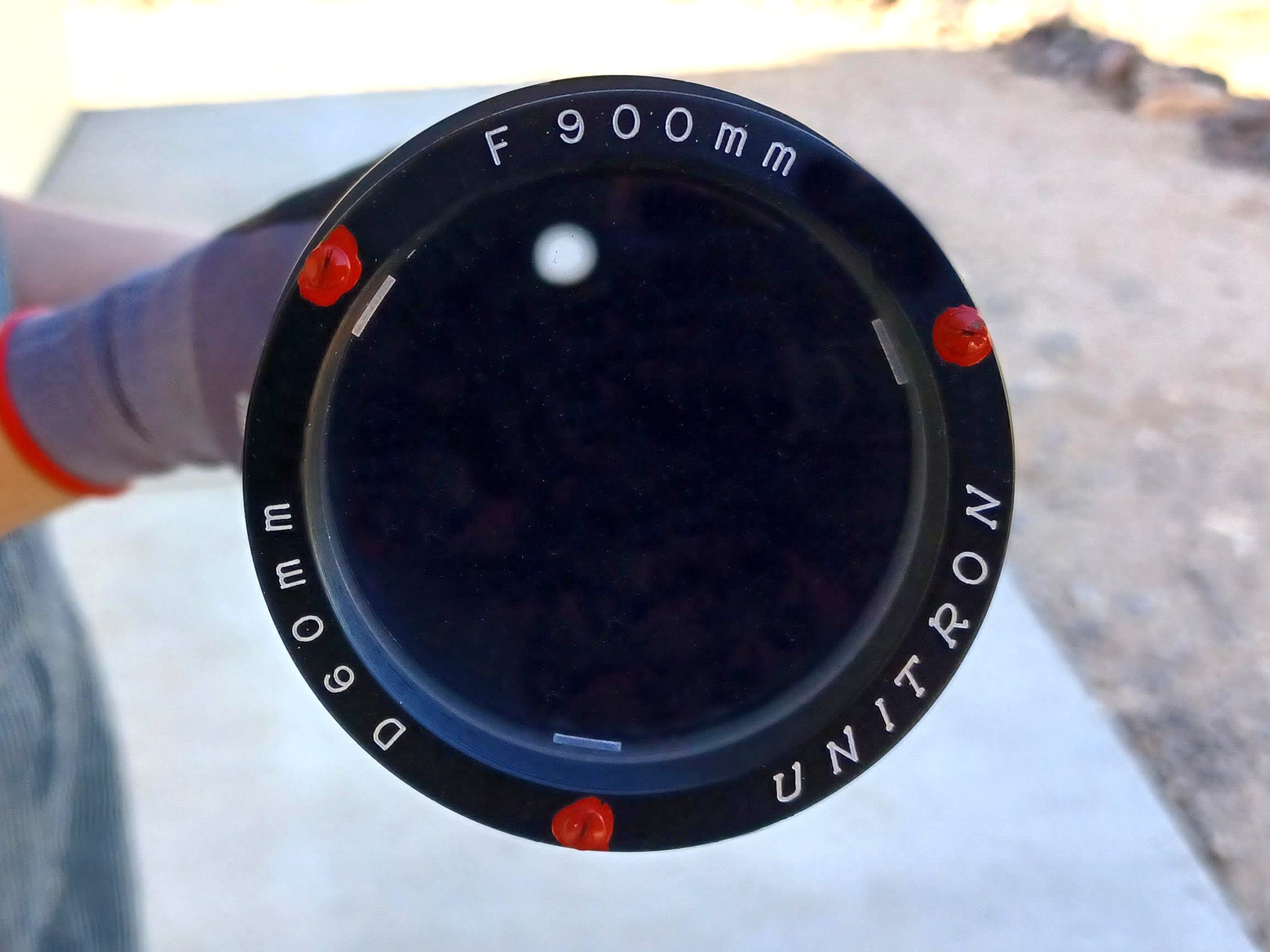
The lens of this Unitron refractor has a focal ratio of f/15, much “slower” than most modern telescopes. But this f-ratio is a good one for targeting celestial objects from a city. Credit: Michael E. Bakich
Rule No. 4: Start with stars
When observing in a city, the stars are a good place to start. You can see hundreds of double and multiple stars despite light pollution. Resolving a double star just depends on the aperture, magnification, and the seeing (atmospheric steadiness). Summer skies usually have worse clarity than winter because of higher humidity, but a pool of moist, stagnant air can often translate into steady seeing. A 3-inch scope can resolve many double stars. Move up to a 6-inch, and you’ll add fainter and closer pairs.
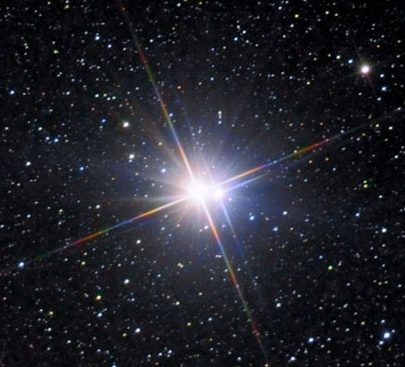
Double and multiple star showpieces include Albireo (Beta [β] Cygni), the Double Double (Epsilon [ε] Lyrae), and Mizar (Zeta [ζ] Ursae Majoris). These are great for whetting your appetite, not to mention showing family and friends. Hundreds more can keep you at the eyepiece for years.
Open clusters are akin to double stars in that those with brighter members are easy to resolve with more aperture. Compact clusters are better suited for city observing than expansive ones. And bright skies can even bring out features within the clusters that would be otherwise hard to observe: I named NGC 2169 in Orion the “37 Cluster” when observing it from my backyard because when it is not overwhelmed with background stars, the shapes of the numbers 3 and 7 appear conspicuous.
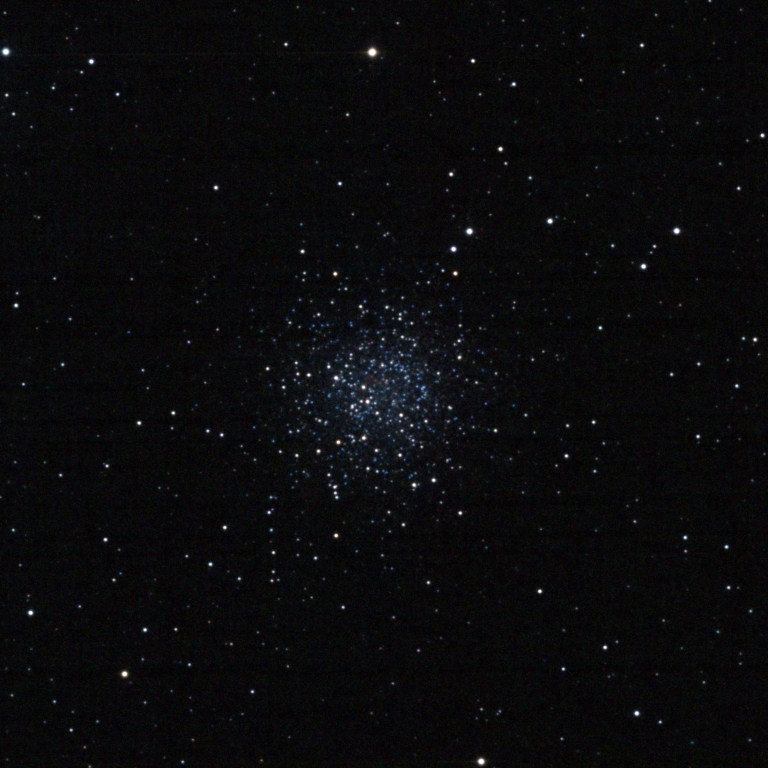
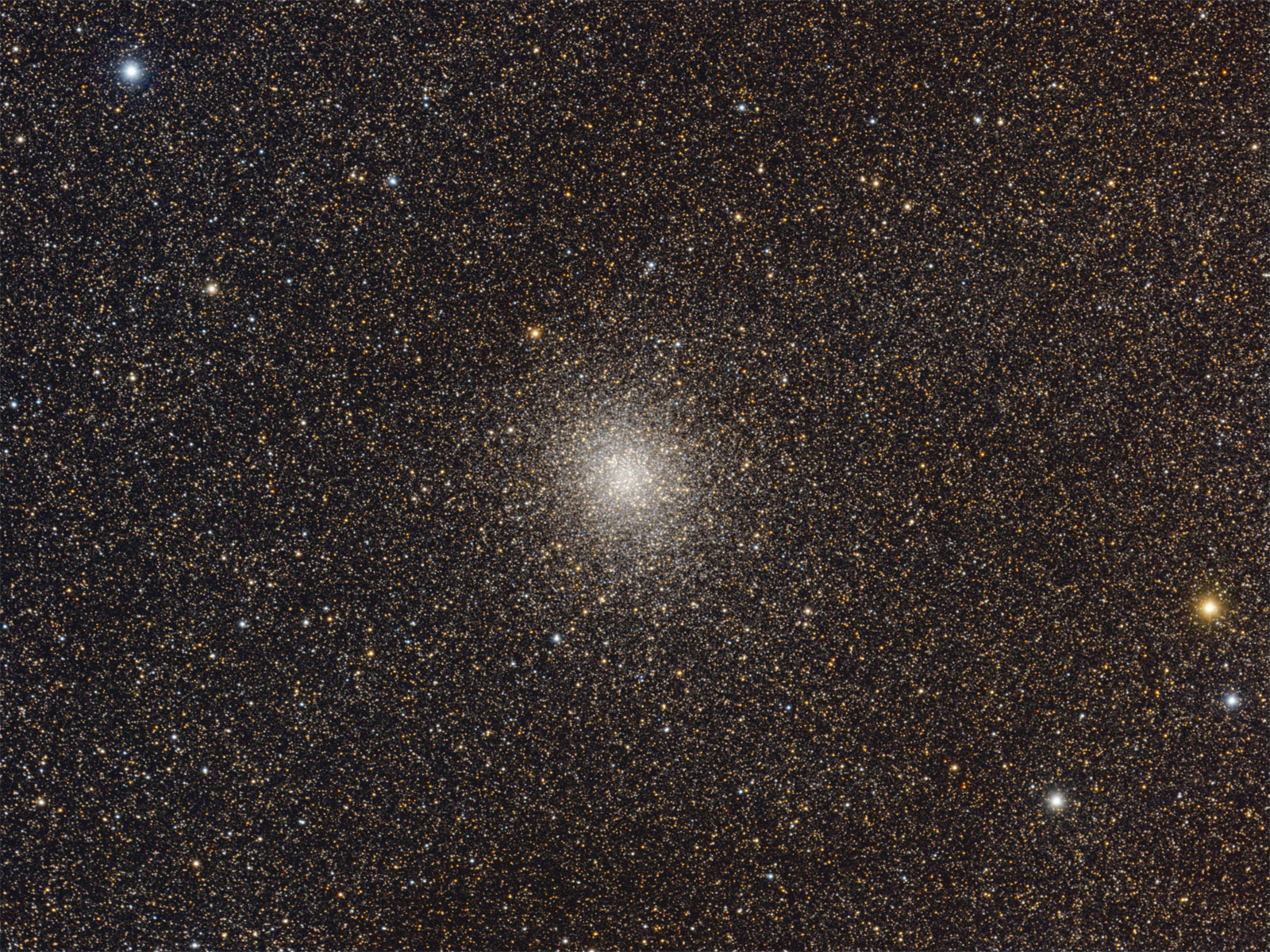
While most globular clusters are better under dark skies, the closest are bright and easy to see in suburban skies. M3, M4, M5, M13, and M22 may be partially resolved into stars through a 6- to 8-inch telescope under urban skies.
Rule No. 5: Contrast is king
Photons are emitted from the millions of streetlights, business signs, spotlights, and other ways humans have devised to wrap us in light as much as possible. The effect, especially in humid air rich in microscopic water droplets, is that lights dance across the atmosphere, brightening the night.
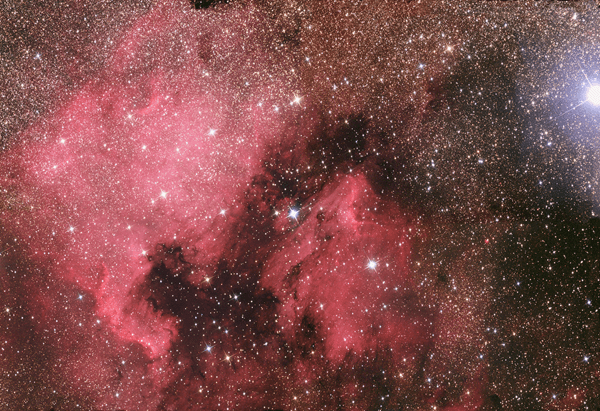
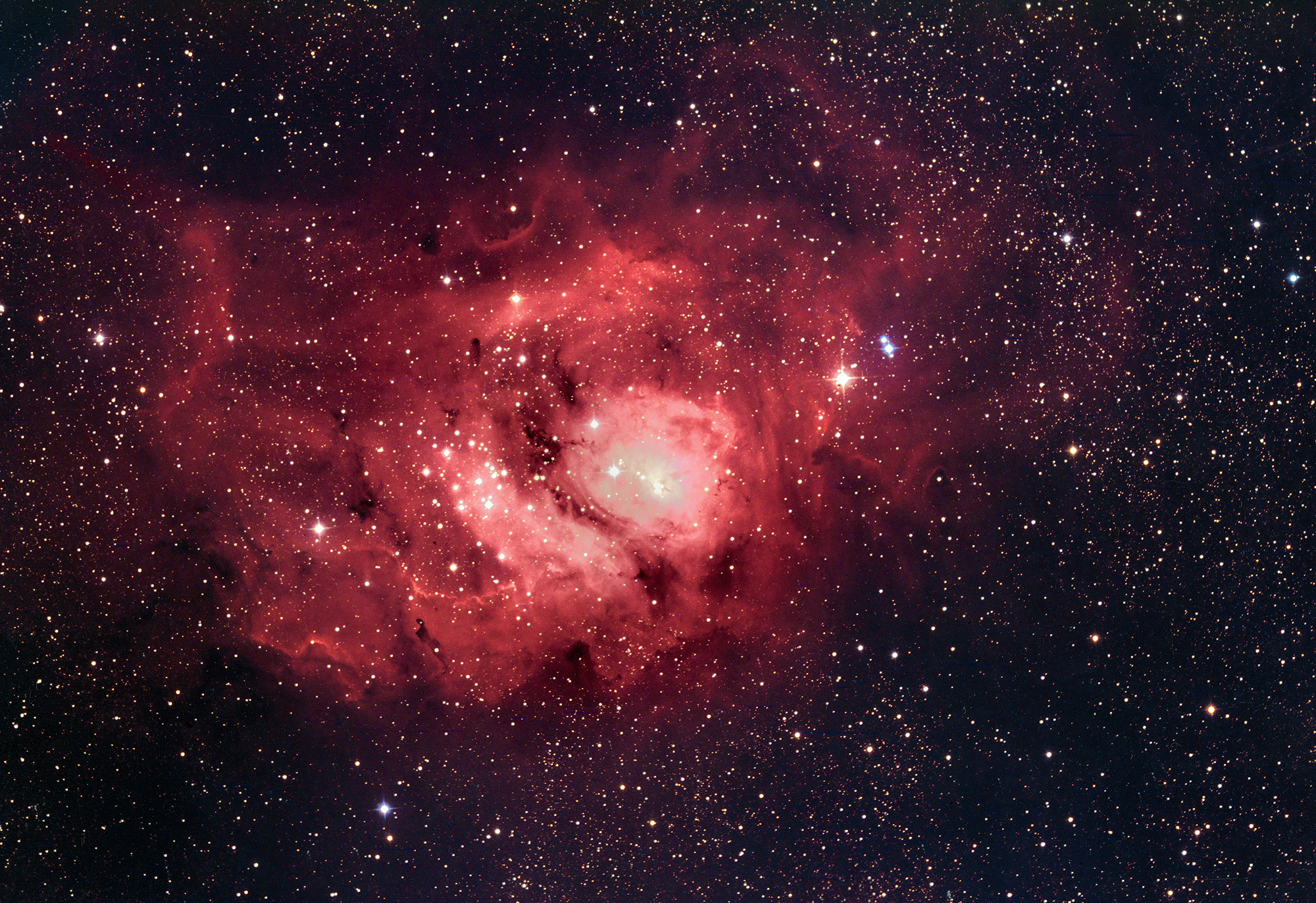
Though the fuzzy glows of distant clusters, nebulae, and galaxies do the same thing from above, ground-based photons overwhelm the light from the sky, making them indistinguishable. But depending on the degree of light pollution, the densest parts of the brightest emission nebulae, like the Orion Nebula (M42), the Lagoon Nebula (M8), and the Omega Nebula (M17), may remain visible under city skies, even as the extensive nature of these star-forming regions is swamped.
Brighter galaxies fare well, too. Here, star density is what counts. Elliptical and lenticular galaxies, which are billions of older stars packed together, can remain visible even under bright skies. And although the arms of spiral galaxies are not visible under city conditions because, like emission nebulae, they are low-contrast features and get lost in the skyglow, their dense central hubs can be seen.
Rule No. 6: Filters help — a little
Light-pollution filters have been around for more than 40 years and are effective — but they have limits. They work by allowing certain wavelengths to pass through while blocking everything else: Ambient light pollution has a broad spectrum (white light), so only allowing a narrow band of light through means the view through the eyepiece will be darker. With dark-adapted eyes, ideally you should be able to see the object’s light while the background light pollution is blocked. (If not, the only way around the problem is to use a larger telescope.)
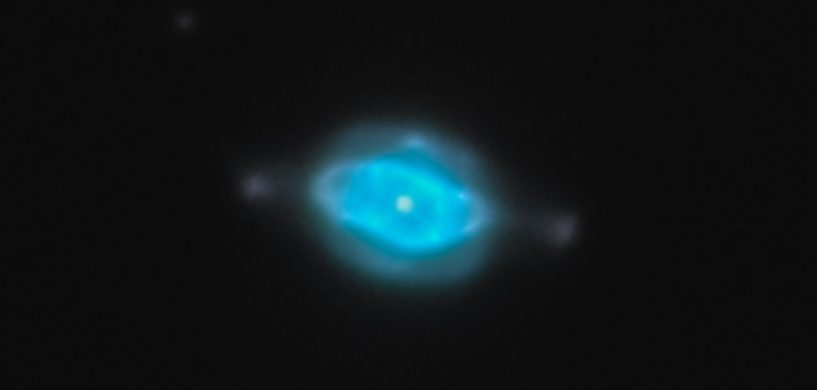
The objects such filters help the most are planetary nebulae. These are the gas shells of dying Sun-like stars that emit a significant portion of light in green wavelengths. There are two factors in your favor: Human eyes are most sensitive to green light, and many planetary nebulae are compact, meaning their light is concentrated. As a result, you can see many of them under light-polluted skies. And for an even better look, try an Oxygen-III (OIII) filter.
Several bright planetaries populate the sky in every season. A few are even visible in small scopes. Among my favorites are the Lion Nebula (NGC 2392) in Gemini, the Ring Nebula (M57) in Lyra, the Cat’s Eye Nebula (NGC 6543) in Draco, the Saturn Nebula (NGC 7009) in Aquarius, and the Blue Snowball (NGC 7662) in Andromeda. These are large enough to be visible at moderate magnification (around 100x) and look even better at 200x or more when atmospheric turbulence is minimal.
One of the inconsistencies when observing these dying suns is the brightness of the central star, the source of the nebula’s glow. But some have bright central stars you might spot from the city. The Lion Nebula’s central star glows at magnitude 10.5 and can be seen in a 2-inch telescope. The Cat’s Eye’s central star is slightly fainter at 11th magnitude.
Oh, what a night!
Don’t have time to drive to a dark site? Stargazing under the light dome of your community can still be rewarding. There are plenty of objects visible. Go-to telescopes allow you to easily find and focus on the objects you can see from your backyard — and invite your neighbors to take a peek.
Alan Goldstein is a longtime observer of the skies and a frequent Astronomy contributor.