Looking for a sky event this week? Check out our full Sky This Week column.
May 2: Venus stands north of Aldebaran
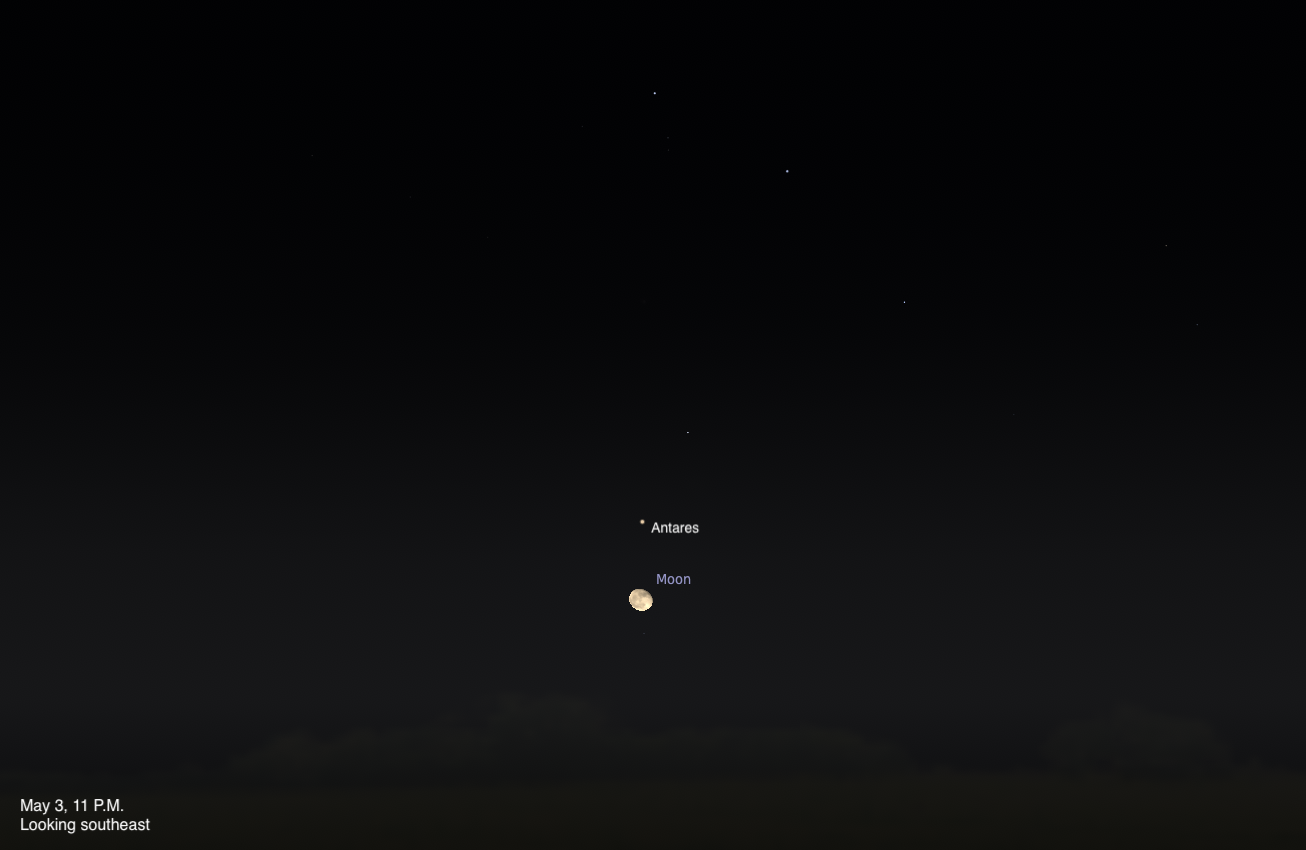
The Moon rises around 10:30 P.M. local daylight time in northwestern Scorpius and passes 0.5° south of Alpha (α) Scorpii, better known as Antares, at 11 P.M. EDT. Some locations in the Southern Hemisphere — parts of South America, Antarctica, and very southern Africa and a small portion of Madagascar — will see an occultation as the Moon passes in front of Antares. The rest of the world, including the U.S., will just see the two objects nestled close in the sky.
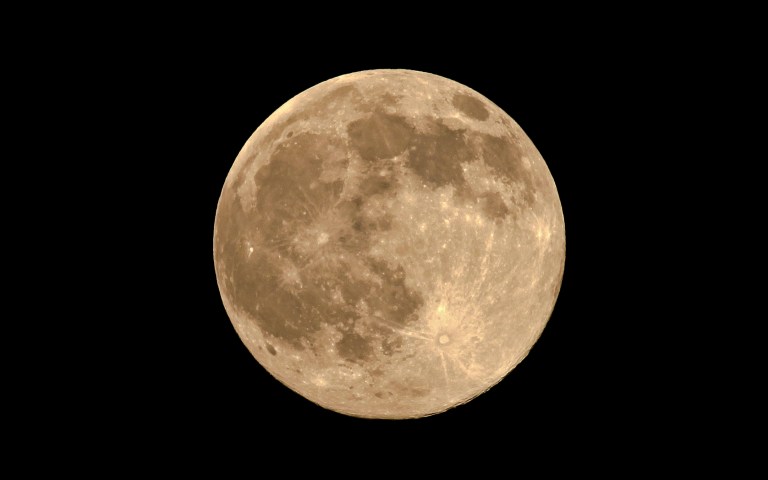
The pair spends the late evening low in the southeast, rising higher over time. They’re unmissable with the Moon not long past Full, still some 95 percent lit. But Antares is also bright — magnitude 1.1 — and won’t be drowned out by the Moon’s light. As the hours pass overnight and into the early morning of May 4, you’ll notice the Moon seems to lag behind Antares, pulling away to the east over time. That’s because the Moon is much closer, making it appear to move faster than the background stars in the sky as they rise and set. Our satellite appears to move at an average of roughly 13° per day across the sky.
Related: See the Moon meet Antares
Sunrise: 5:58 A.M.
Sunset: 7:57 P.M.
Moonrise: 10:25 P.M.
Moonset: 6:36 A.M.
Moon Phase: Waning gibbous (95%)
*Times for sunrise, sunset, moonrise, and moonset are given in local time from 40° N 90° W. The Moon’s illumination is given at 10 P.M. local time from the same location.