Looking for a sky event this week? Check out our full Sky This Week column.
January 2: Harmonia at opposition
Full Moon officially occurs at 5:30 A.M. EST. The January Full Moon is also known as the Wolf Moon. This month’s Full Moon is also a Super Moon — a Full Moon that occurs while our satellite is near perigee, the closest point to Earth in its orbit, which it reached January 1.
According to the late astronomer Fred Espanek’s webpage astropixels.com, this is the last Super Moon in the sequence of four Super Moons that began with the October 2025 Full Moon. The next Super Moon will not occur until November this year.
The Moon is located in Gemini, visible in the west this morning standing just to the lower right of bright Jupiter. The two hang directly below the Twins’ heads, Castor and Pollux, as the constellation sets in the hours before dawn. The Moon will pass 4° north of Jupiter at 5 P.M. EST this afternoon and will rise in Cancer, which lies east of Gemini, tomorrow evening.
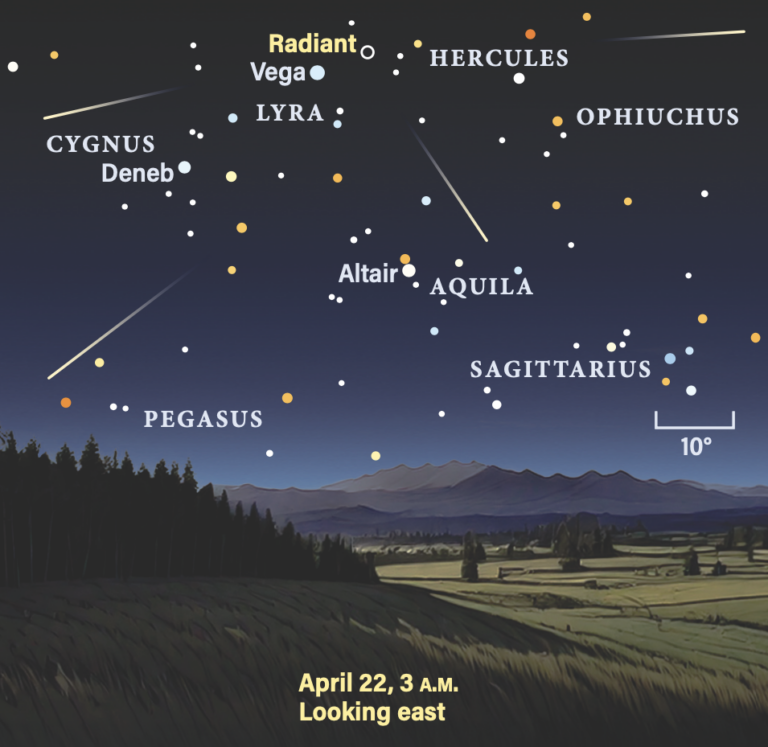
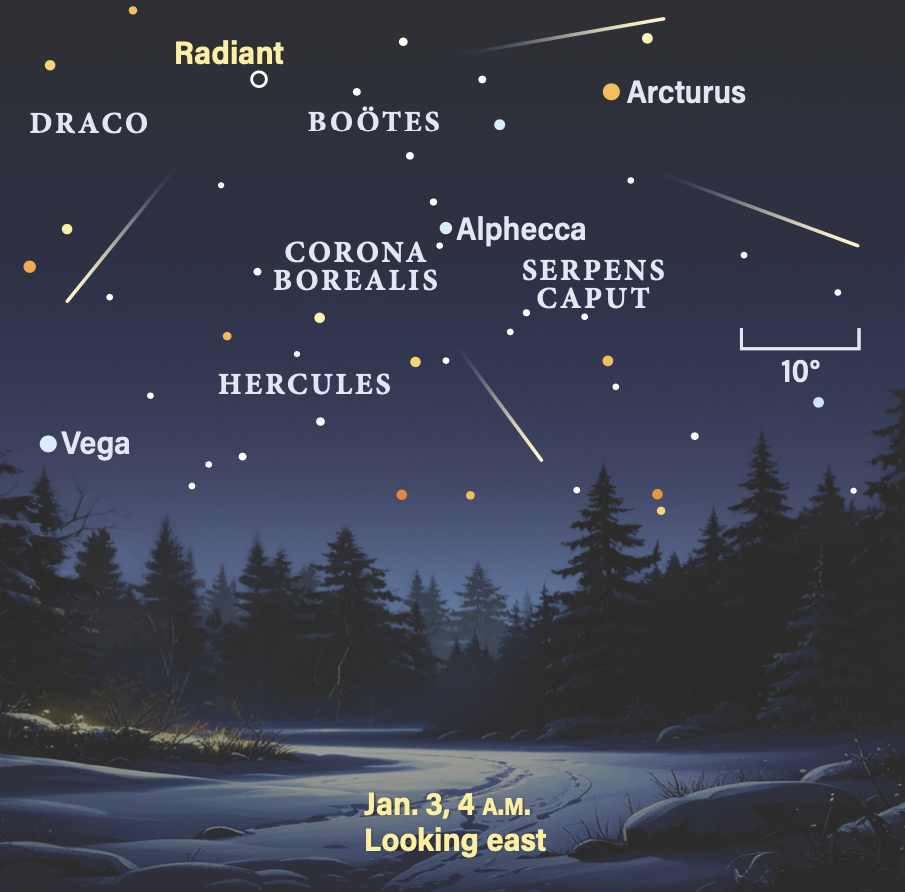
The Quadrantid meteor shower peaks today, unfortunately suffering from the bright moonlight flooding the sky. Nonetheless, if you’re up in the hours before dawn, the radiant is already some 40° high in the northeast by 4 A.M. local time and rising higher as sunrise approaches. Although the Super Moon will reduce the visible rate of meteors to likely less than a dozen an hour, the Quadrantids are known for producing brighter fireballs — and these will still be visible, even in the moonlit sky.
Earth reaches perihelion, the point where our planet stands closest to the Sun in our year-long orbit, at noon EST. At that time, Earth will be 91.4 million miles (147 million kilometers) from our star.
Sunrise: 7:22 A.M.
Sunset: 4:47 P.M.
Moonrise: 5:05 P.M.
Moonset: 7:55 A.M.
Moon Phase: Waning gibbous (99%)
*Times for sunrise, sunset, moonrise, and moonset are given in local time from 40° N 90° W. The Moon’s illumination is given at 10 P.M. local time from the same location.