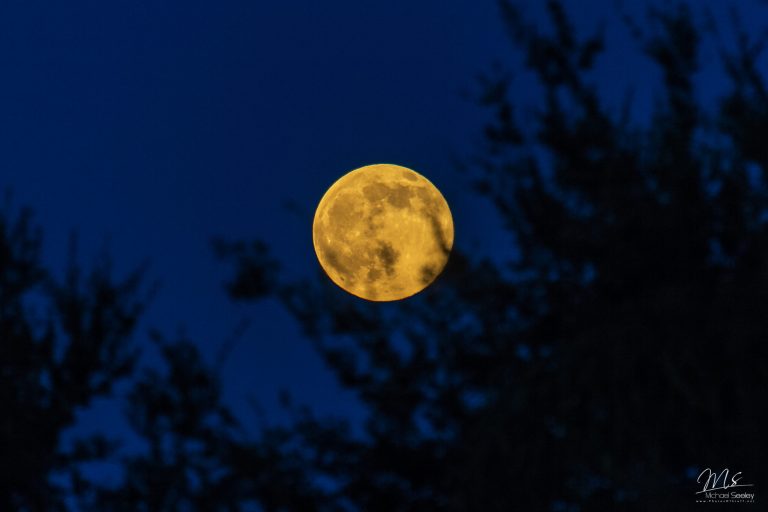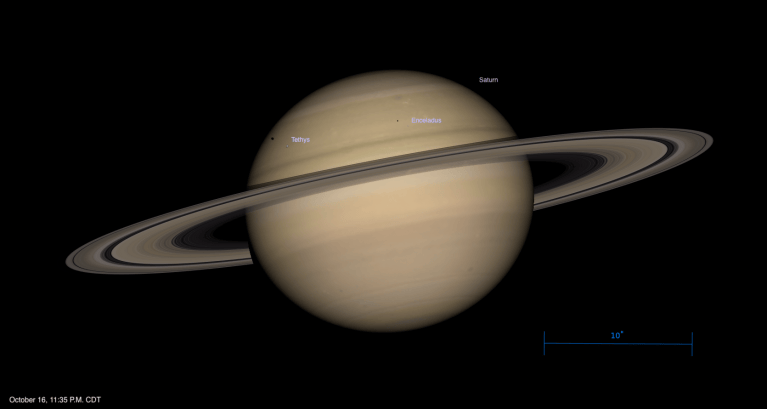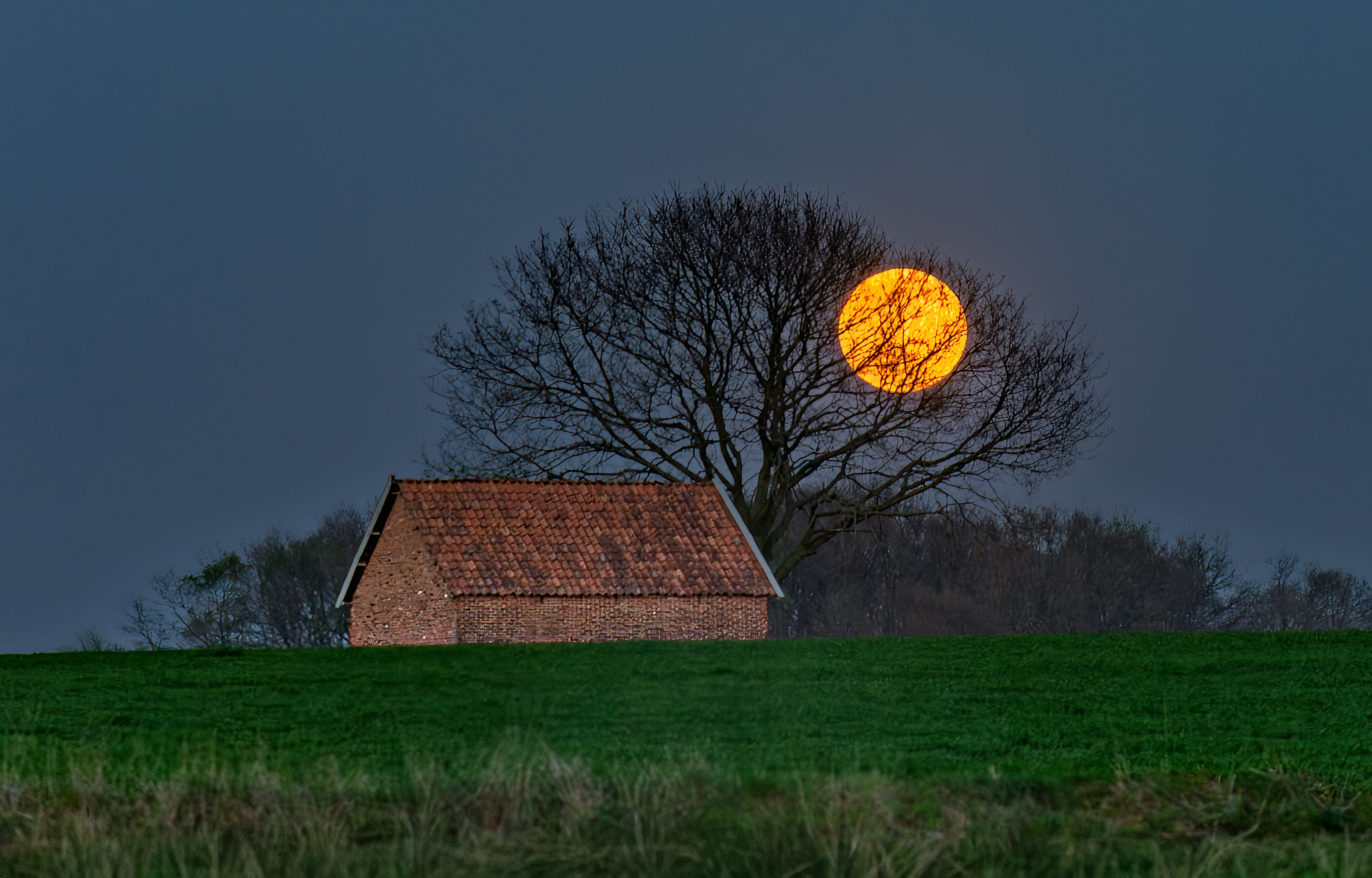
Full Moon occurs late tonight at 11:48 P.M. EDT. October’s Full Moon is traditionally called the Hunter’s Moon. But this October’s Full Moon also has two other names: It is both a Super Moon and the 2025 Harvest Moon.
A Super Moon occurs when the Full phase coincides with the Moon reaching (or close to) its nearest point to Earth in its orbit, called perigee. This month, the Moon will reach perigee Wednesday morning. Super Moons appear slightly larger and brighter in the sky than an “average” Full Moon, but typically the effect is not overly obvious — and it may be particularly subtle this month, with perigee more than 24 hours away. For comparison, the Full Moon usually has an angular size of 31’; tonight, the Moon will appear roughly 33’ wide.
Tonight’s Full Moon is also the Harvest Moon, the name given to the Full Moon that occurs closest to the autumnal equinox (which was September 22). Often, the September Full Moon is the Harvest Moon, but this year September’s Full Moon was on the 7th, 15 days before the equinox. October’s Full Moon is 14 days after the equinox, which means it takes the Harvest Moon title this year.
Sunrise: 7:02 A.M.
Sunset: 6:33 P.M.
Moonrise: 6:14 P.M.
Moonset: 6:20 A.M.
Moon Phase: Full
*Times for sunrise, sunset, moonrise, and moonset are given in local time from 40° N 90° W. The Moon’s illumination is given at 12 P.M. local time from the same location.
For a look ahead at more upcoming sky events, check out our full Sky This Week column.