Looking for a sky event this week? Check out our full Sky This Week column.
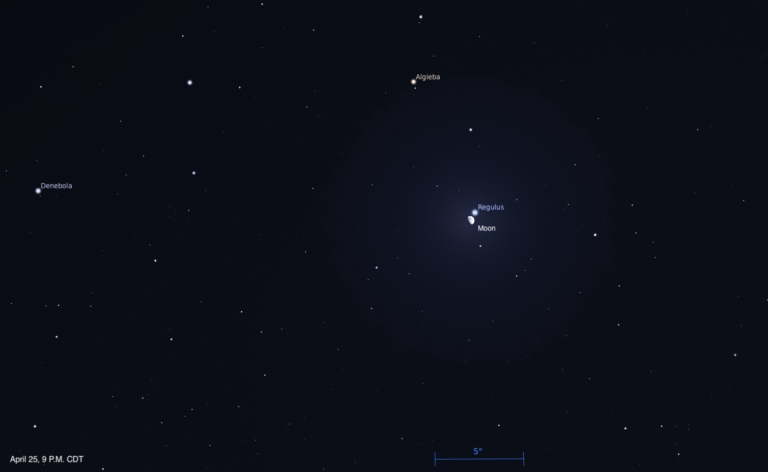
March 29: The Moon in Leo
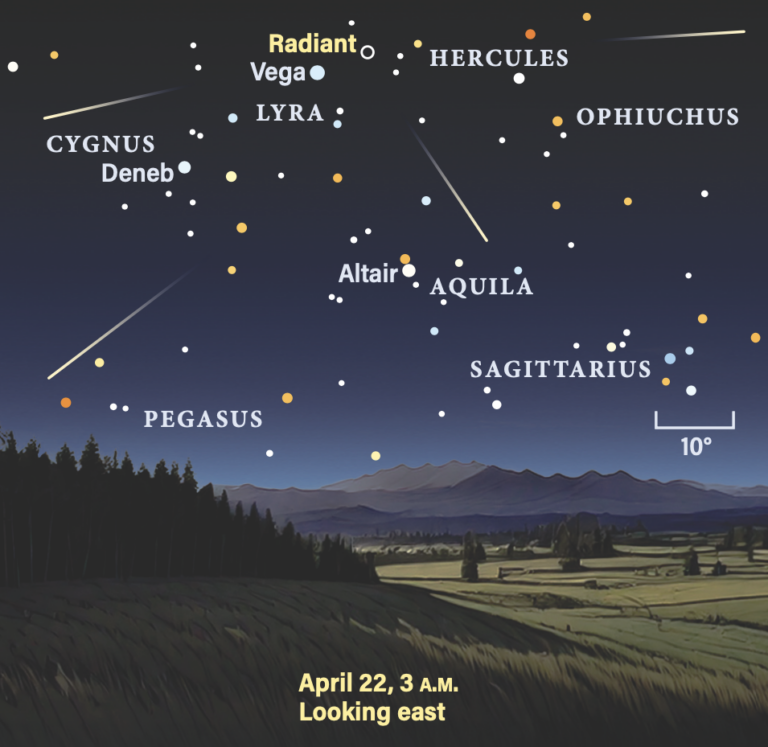
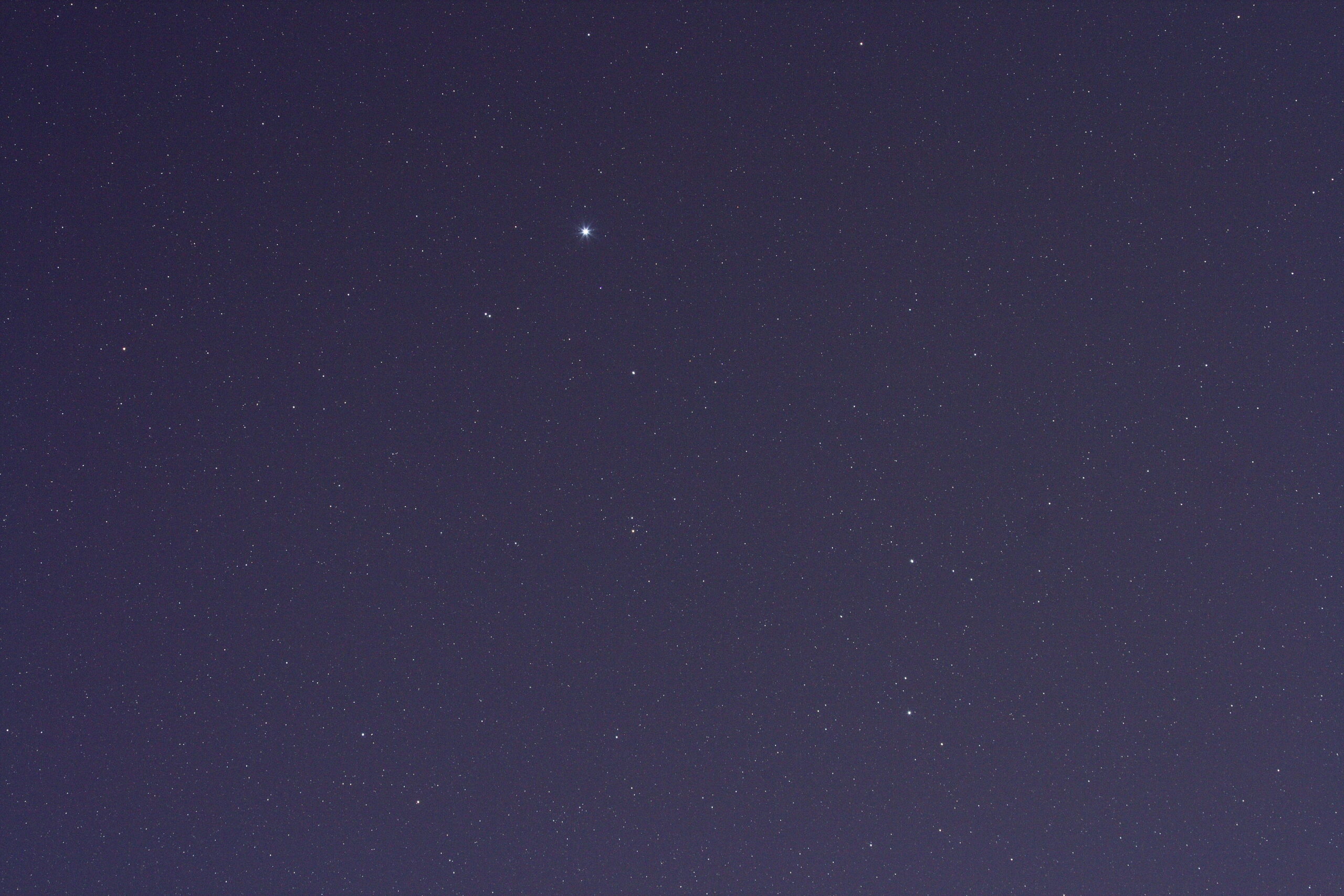
By local midnight, a familiar summertime friend has finally arrived on the scene: The stunning star Vega in Lyra. Cataloged as Alpha Lyrae, this magnitude 0.0 star is the fifth-brightest sun in the sky. It forms one point of the famous Summer Triangle asterism, which flies high overhead late on summer nights and is anchored at its other two points by Deneb in Cygnus and Altair in Aquila.
You can find Vega more than 10° above the northeastern horizon around local midnight, rising higher into the early-morning hours. It’s the brightest star in this region of the sky, and will rise earlier each day as spring progresses into summer.
Vega is about twice as massive as our Sun and nearly 40 times as luminous. Despite the fact that it is much younger than our Sun — 400 million years, versus our star’s 4.5 billion — both stars are roughly halfway through their normal (main sequence) hydrogen-burning lifetimes, thanks to Vega’s higher mass. Stars with more mass evolve more swiftly and live shorter lives.
Vega is particularly unusual in that it is oriented in space such that its pole is pointed nearly directly toward Earth, so we see it spinning on its side. As it rotates, its shape becomes slightly out of round, so that it is very slightly wider at the equator than the poles. This causes the poles to glow hotter and brighter than the equator, which results in so-called gravity darkening. On Vega, because it is tilted toward us, the outer edges (limb) of the star appear darker than the center (the pole).
Sunrise: 6:47 A.M.
Sunset: 7:23 P.M.
Moonrise: 5:11 P.M.
Moonset: 5:37 A.M.
Moon Phase: Waxing gibbous (96%)
*Times for sunrise, sunset, moonrise, and moonset are given in local time from 40° N 90° W. The Moon’s illumination is given at 10 P.M. local time from the same location.