Looking for a sky event this week? Check out our full Sky This Week column.
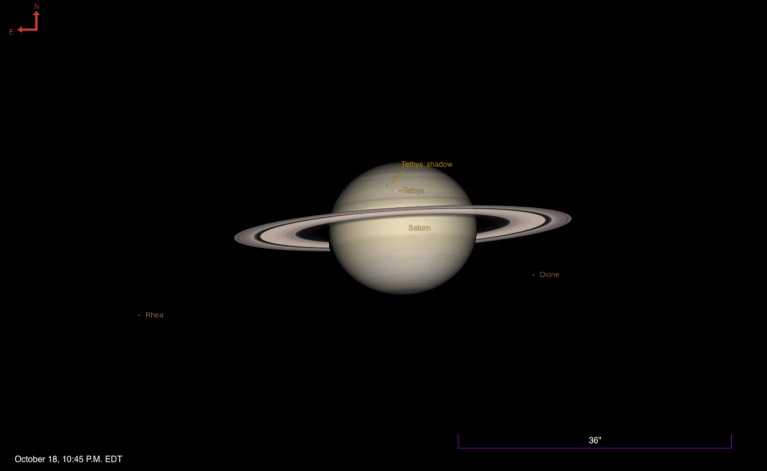
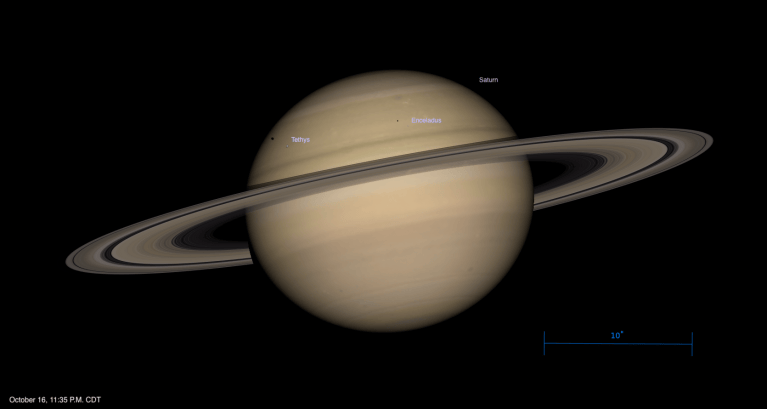
June 25: Iapetus passes north of Saturn
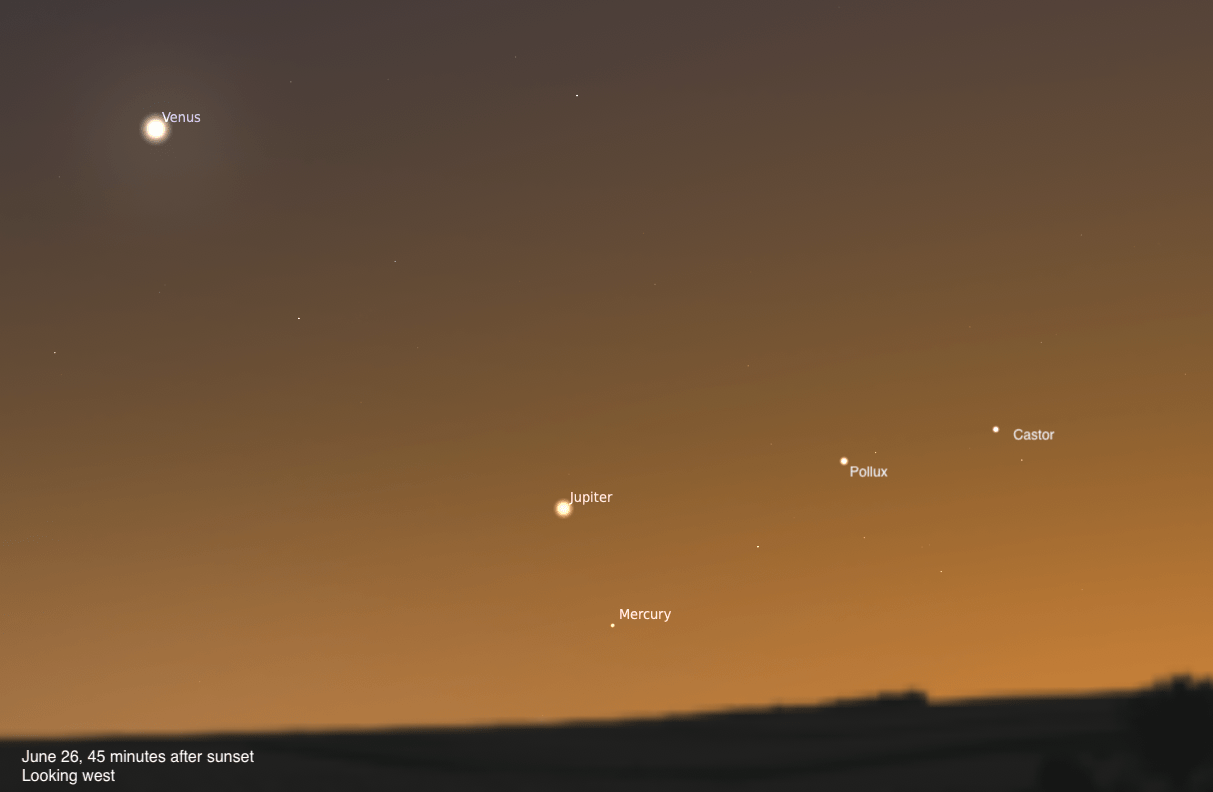
Let’s check in on Mercury’s progress. The tiny planet has been moving closer to Jupiter in the west, although Mercury’s brightness has been fading day by day. This evening, Mercury shines at magnitude 1.4, standing just under 4° west of Jupiter, to the brighter planet’s lower right.
You may need binoculars or a telescope to spot Mercury, which is now just 4° high 45 minutes after sunset. Through a telescope, the rocky world appears 18% lit and spans 10”. Compare that to Jupiter, which appears fully illuminated and 32” across. You can also take in Venus to the pair’s upper left, now near the eastern border of Cancer. Venus is some 71% lit and 16” in apparent width.
Sunrise: 5:33 A.M.
Sunset: 8:33 P.M.
Moonrise: 6:11 P.M.
Moonset: 2:38 A.M.
Moon Phase: Waxing gibbous (93%)
*Times for sunrise, sunset, moonrise, and moonset are given in local time from 40° N 90° W. The Moon’s illumination is given at 10 P.M. local time from the same location.
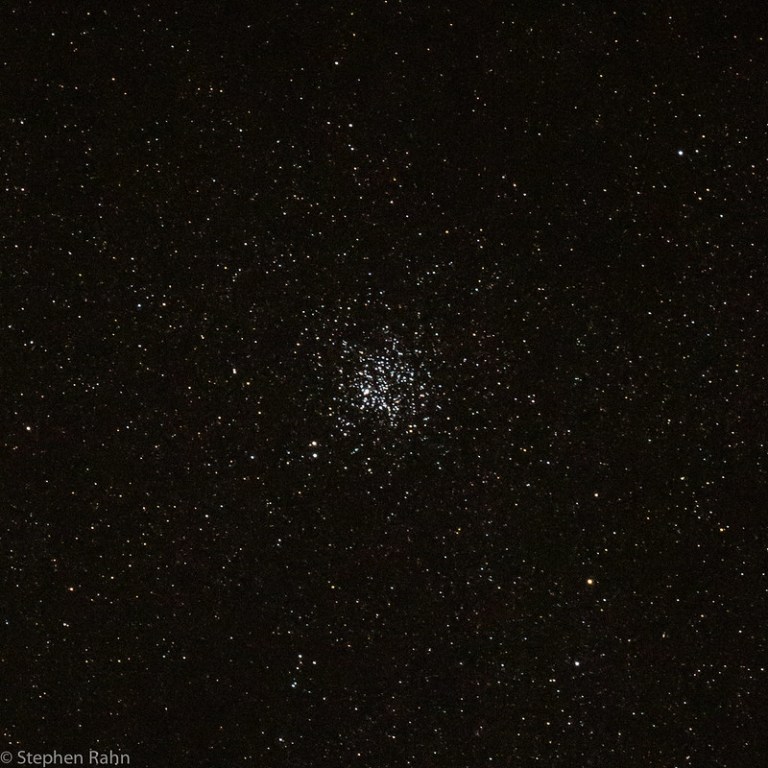
Mars now lies in Taurus, visible in the early-morning sky before sunrise on June 27. Today, the Red Planet is less than 5° from the famous Pleiades star cluster (M45). If you happen to be up roughly an hour and a half before sunrise, you can try to catch them, low in the eastern sky.
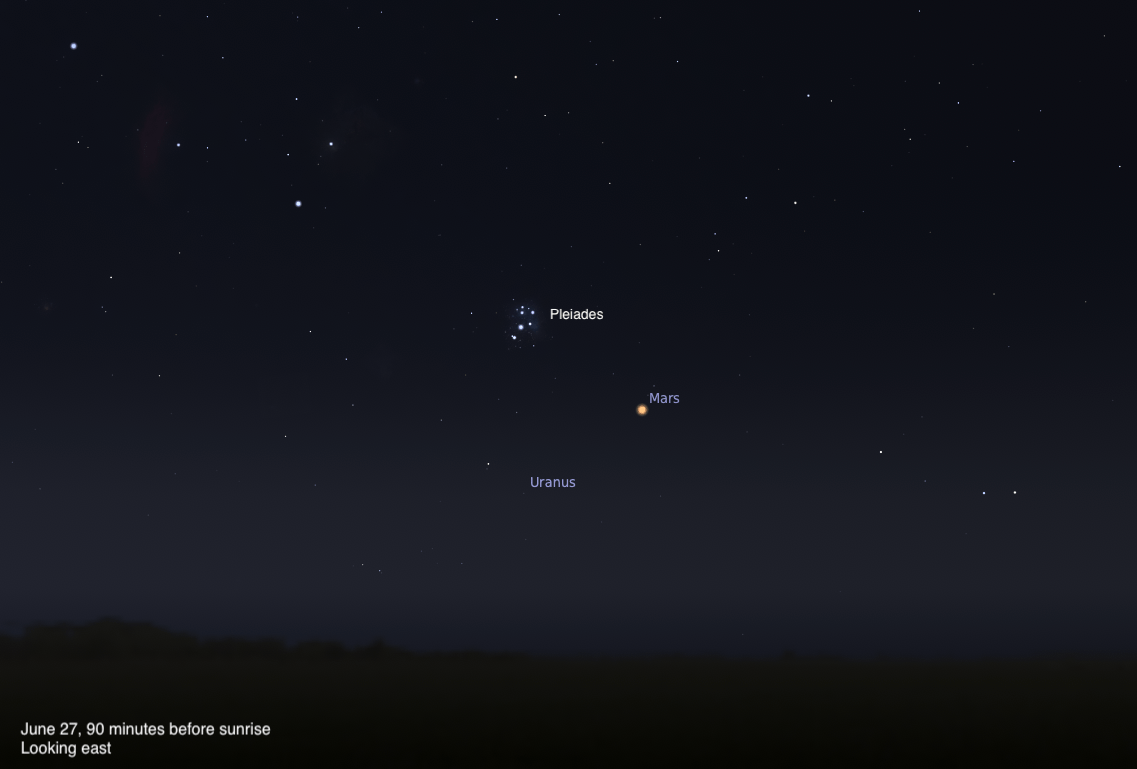
By 4 A.M. local daylight time, Mars has reached an altitude of about 8°. Glowing at magnitude 1.3, it’s a relatively bright point of light low in the east. To its upper left is the Pleiades, a young open cluster of stars and one of the most recognizable naked-eye deep-sky objects, even among beginners. Together with Mars, the Pleiades will slowly rise higher in the east as time passes, but the sky will also grow lighter, washing them out as sunrise approaches.
The Moon passes 0.4° south of Antares in Scorpius at 11 A.M. EDT, while neither is visible. By this evening, our satellite has moved from Scorpius into Ophiuchus, lying near the border of these two constellations.
Alison Klesman is senior editor of Astronomy magazine. She holds a Ph.D. in astronomy and has studied a variety of topics, from minor planets to supermassive black holes.