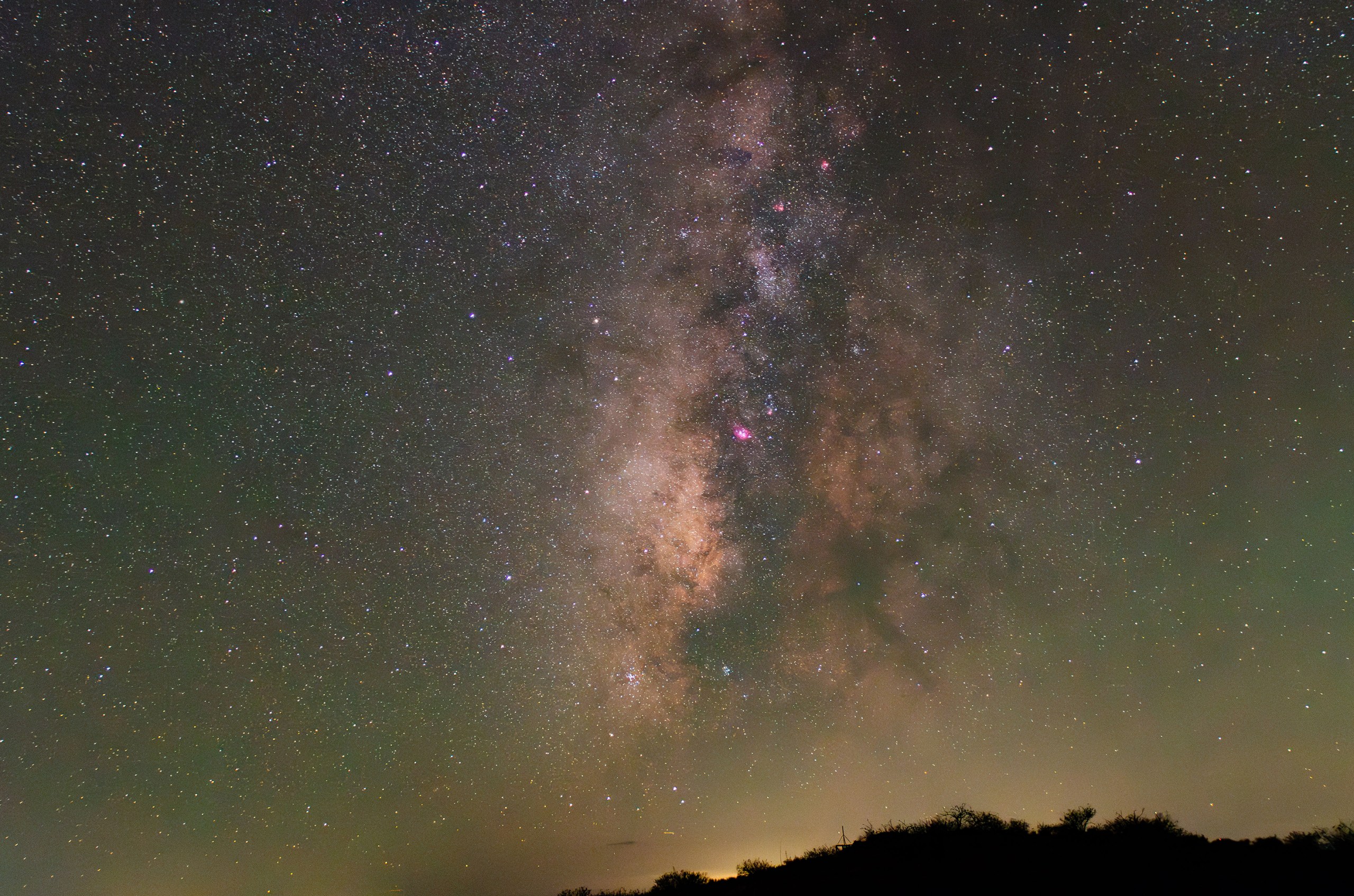
There comes a point in many astrophotographers’ lives when we realize that our standard DSLR just isn’t going to cut it anymore, and there’s just one reason why. There’s a noticeable lack of red in astroimages, and the stock UV/IR filter over the sensor is the culprit. To better mimic the human eye, these filters have low transmission in the red region of the visible spectrum. But for imagers, that’s where all the glowing hydrogen is that’s scattered across the universe.
Whether you’re shooting wide-field Milky Way nightscapes or long exposures of the Lagoon Nebula (M8) through a telescope, using an astromodified DSLR will bring much more color — particularly in the Hydrogen-alpha red region — to your images. (Note: I say DSLRs for short, but the same is also true for newer mirrorless cameras.) While your images may come out with an unfamiliar overall red cast, proper color-balancing techniques will get you to a better final product. I had long envied the colorful Milky Way nightscapes I’ve seen others take, but had been unable to replicate before I got a modified camera. Now, however, I’m taking much better shots.
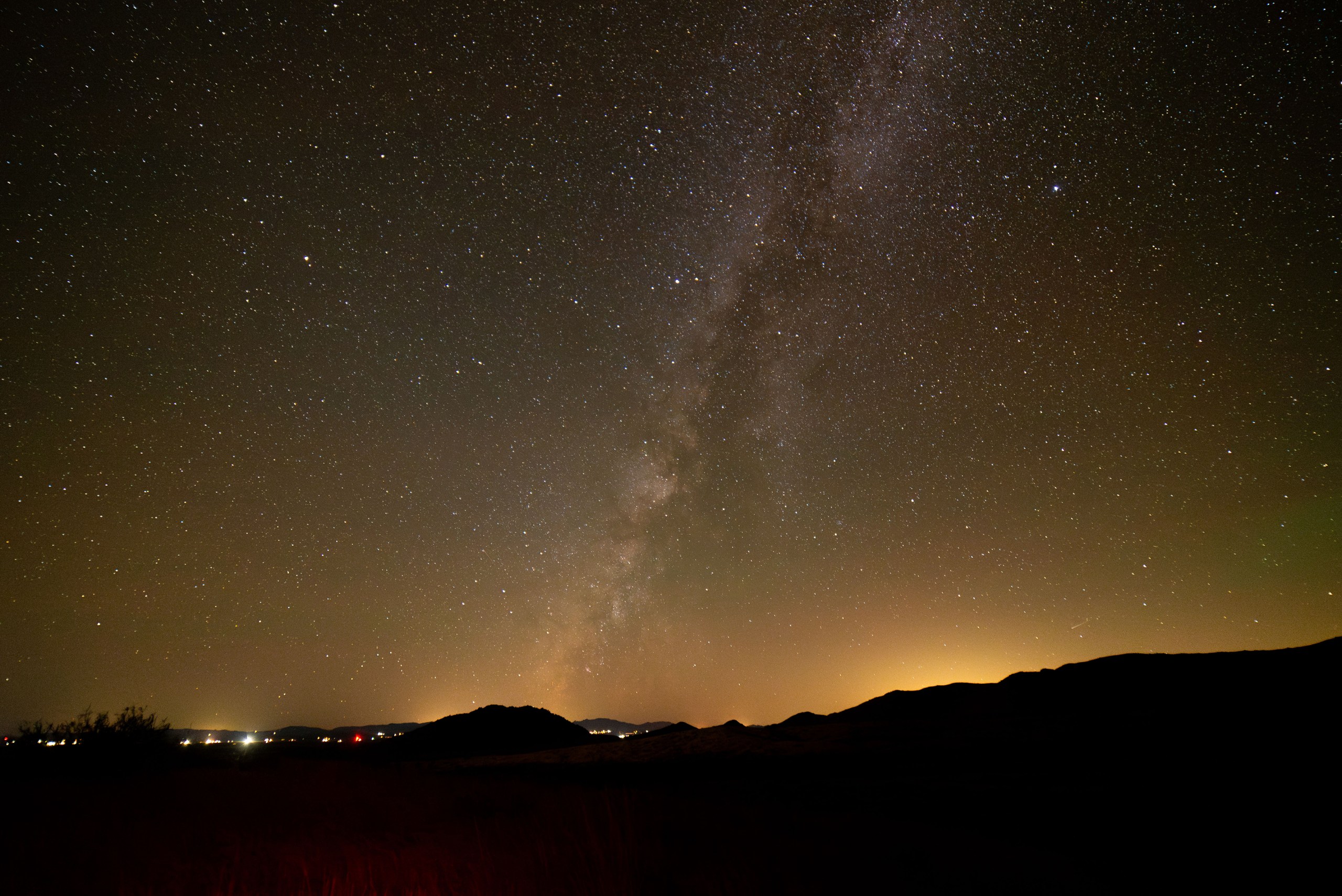
There are two primary options: astromodification, which replaces the existing UV/IR filter with one that passes more of the red spectrum, and full spectrum conversion, which completely removes the UV/IR filter and replaces it with glass to maintain the focus point. The latter can work for those interested in infrared photography, but it can cause problems when using optics with any refractive elements due to ultraviolet and infrared light not being focused to the same point as the visible light. In this case, however, you can simply use a UV/IR cut filter somewhere in your optics train to regain normal use of the camera. And although the initial color balance looks much different, you can still use your astromodified DSLR for normal daytime photography as well just by adjusting the color balance.
While it is technically possible to do the mod yourself, I wouldn’t recommend it unless you have some old DSLRs you don’t mind breaking while you practice. Instead, there are several companies that are experienced at performing this service. My Nikon D7000 was modified by Spencer’s Camera & Photo in Utah, which also modified two DSLRs for NASA to use aboard the International Space Station.
Why I would pay to modify a DSLR rather than just use one of my deep-sky astrophotography cameras paired with a lens, which are essentially already “modified” and have the added bonus of being cooled? The answer is that being tethered to a computer and a power supply makes shooting nightscapes difficult and less fun. DSLRs have the flexibility of having their own built-in computer, power, and control. With the higher red sensitivity, my modified DSLR is also better for aurorae and lightning storm-spawned sprites as well.
So it seems I’ve come full circle in my astrophotography career. I started with an ordinary DSLR, and now I find myself wanting to use a DSLR again — but this one better suited for capturing the true colors of the universe.