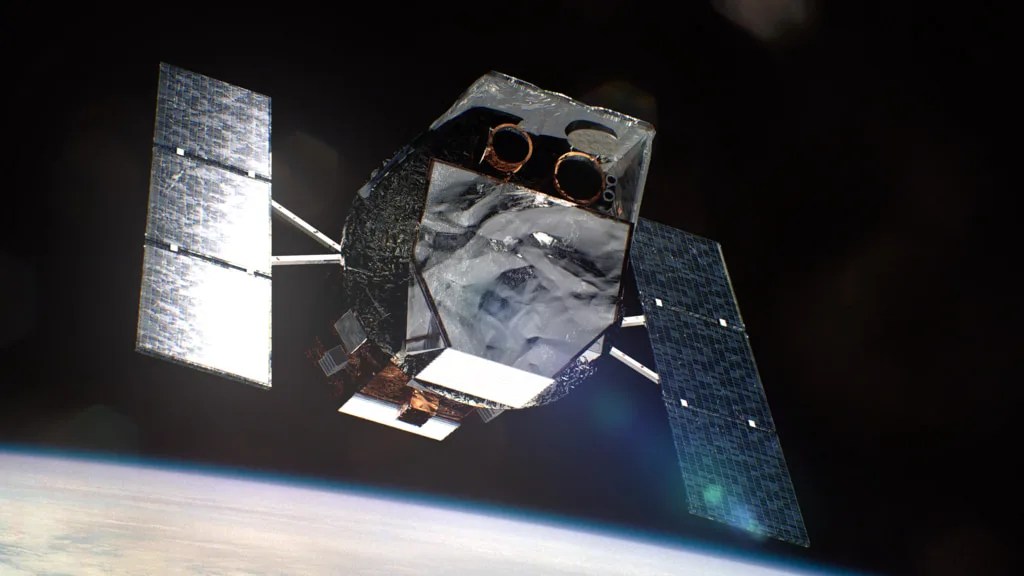
The one-off spacecraft built to save a struggling NASA space telescope is now in trouble of its own. Over the weekend, Katalyst Space’s LINK spacecraft lost two of its three reaction wheels, sending it into an uncontrolled spin and interrupting its communications link with the ground.
What is LINK?
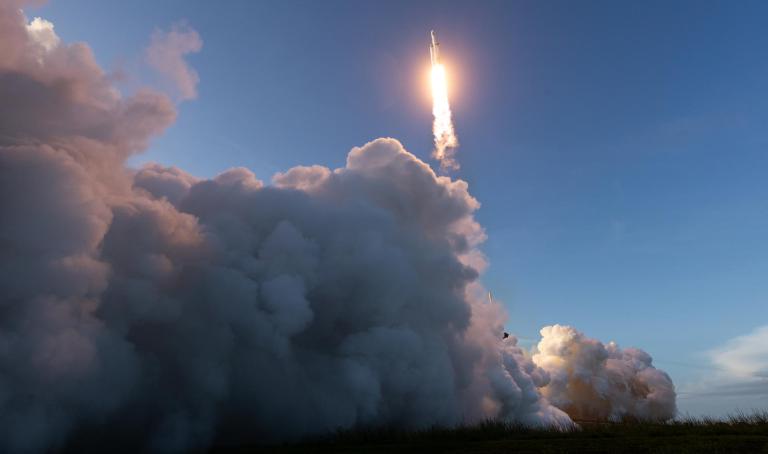
The Northrop Grumman Pegasus XL rocket that carried NASA’s Swift Boost Mission to orbit took off on July 3 in the belly of a modified Stargazer L-1011 aircraft. The plane dropped the rocket at a height of around 40,000 feet, at which point the rocket ignited and carried its payload, the LINK spacecraft, to low Earth orbit.
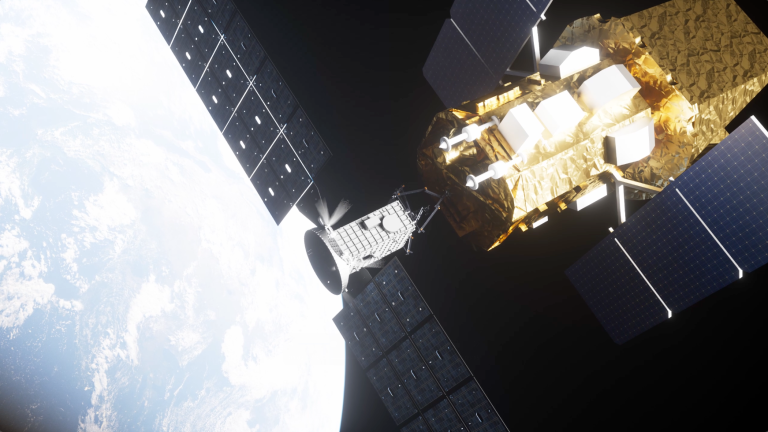
The spacecraft was built with a singular purpose: catch up to NASA’s Neil Gehrels Swift Observatory, latch onto it, and push it into a higher orbit. Katalyst Space won the contract to build it just 10 months earlier, in September 2025, and took the spacecraft from design to fully integrated payload in roughly eight months — an unprecedented pace for a complex servicing mission. That compressed timeline left little slack for the kind of extended testing that larger, slower-developed spacecraft typically get. It was a tradeoff that NASA and Katalyst accepted because Swift’s orbit was decaying too fast to wait.
Swift has spent two decades watching the sky for gamma-ray bursts and other high-energy flashes, but its altitude has been decaying for years, and without a boost, atmospheric drag will eventually drag it to a fiery reentry. LINK is designed to dock with the telescope and slowly raise its orbit over several months, buying Swift years of additional science.
RELATED: NASA launches Swift Boost mission to rescue space telescope
LINK takes a tumble
Two weeks ago, NASA said the mission was still on track. A July 15 update from NASA reported LINK was about halfway done with commissioning, with its solar arrays, power systems, and propulsion checked out. The same update mentioned an early stumble — one reaction wheel had briefly caused communications and attitude control troubles — but NASA said software updates and operational tweaks had fixed it, restoring control.
But in a July 28 update, NASA said LINK’s attitude control failed again, this time more seriously: Two of the spacecraft’s three reaction wheels had stopped working, and its cold gas thruster system lost some functionality too. The combination sent LINK spinning and left communication intermittent. Everything else aboard the spacecraft is reportedly working, and LINK remains in touch with Katalyst’s operators — even if communication is spotty.
What are reaction wheels?
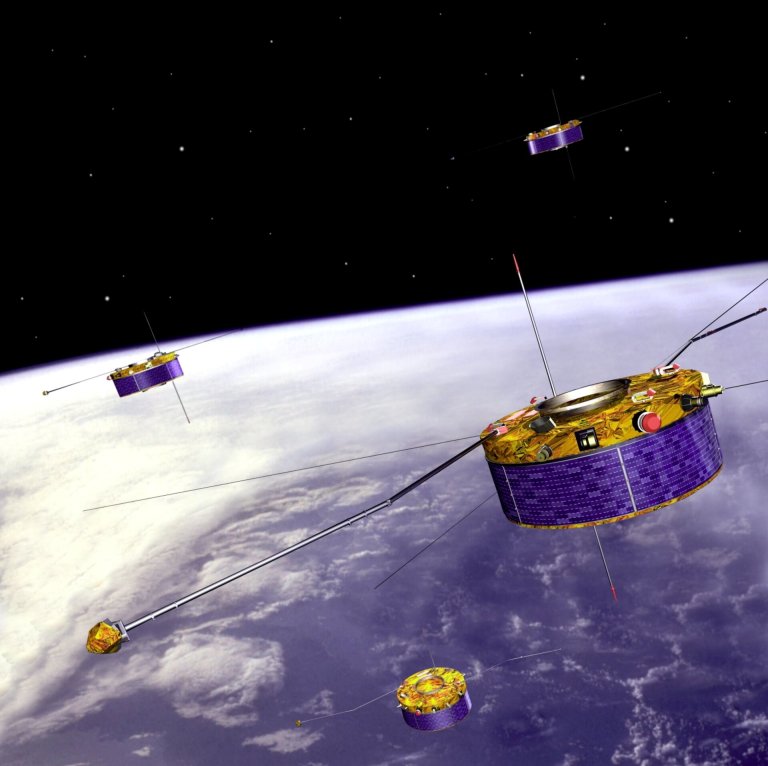
Reaction wheels allow a spacecraft to orient itself precisely without using propellant. Each reaction wheel is composed of a flywheel attached to an electric motor. Spinning that flywheel faster or slower nudges the spacecraft in the desired direction thanks to the conservation of angular momentum. Three wheels then can control a spacecraft’s pitch, roll, and yaw, giving it three dimensions of attitude control and allowing it to stabilize and point in any direction.
But lose two of those three as LINK has, and a spacecraft is significantly less capable. For comparison, NASA’s Nancy Grace Roman Space Telescope and James Webb Space Telescope both carry six reaction wheels — triple the minimum, so any single failure leaves the spacecraft fully redundant. LINK has no such cushion.
Can LINK still save Swift?
Katalyst and NASA’s plan for the next few days is to stop the spin using LINK’s electric propulsion thrusters rather than the single operational reaction wheel. Once the spacecraft is stable, engineers will dig into what failed and update LINK to work with whatever attitude control it has left. After that, engineers will decide whether an approach to Swift is still possible.
Whether a spacecraft can safely close in on and grapple a 20-year-old telescope using one reaction wheel is an open question; rendezvous and proximity operations require finely tuned adjustments that will no doubt be hampered by LINK’s current state. But Swift was already living on borrowed time before LINK ever left the ground, its orbit decaying with no other rescue on the way. If LINK can be nursed back to some form of stable control, even an imperfect approach may be worth the risk as the alternative is watching the telescope come down anyway.
In an update posted to LinkedIn, Katalyst Space noted that it’s already firing LINK’s electric propulsion thrusters to slow the tumble, and reports “seeing the intended effect.” For now, the company says, “the mission remains active.”
NASA will continue posting updates as Katalyst works through the recovery process.
Brooks Mendenhall is a staff writer for Astronomy magazine and is based in Chattanooga, Tennessee.