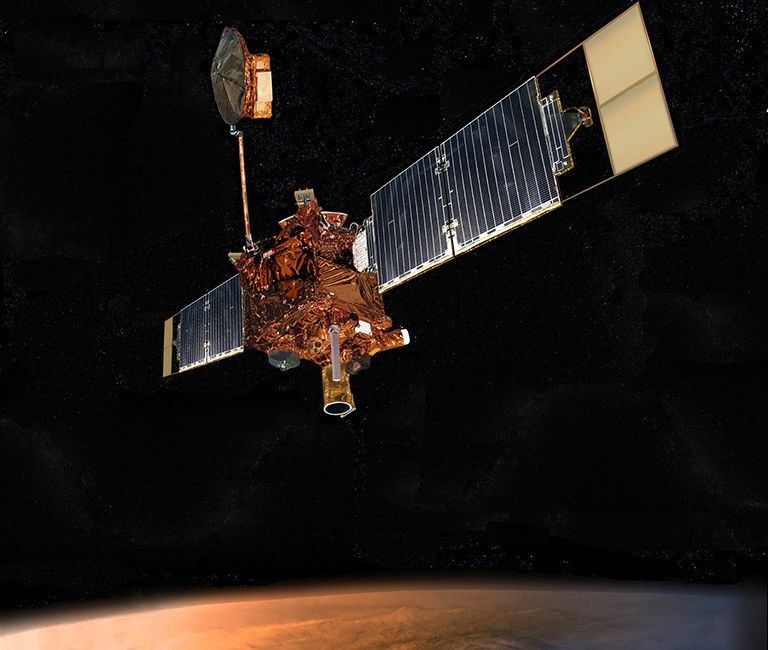
Designed to study Mars in a comprehensive way, examining its atmosphere, its interior, and its surface, the Mars Global Surveyor (MGS) launched Nov. 7, 1996. By Sept. 12, 1997, it would reach Mars and slip into orbit around the Red Planet. Over the next nine years, it revealed an evolving world of ongoing geological dynamism, analyzed the history of water on Mars, tracked the movements of ice at its poles, and analyzed its topography and weather. With nearly 200,000 photos captured, MGS supplied more images of Mars than all the missions before it – combined. It also helped NASA plan for future rover missions to the Red Planet.
MGS substantially exceeded its two-year mission, but on Nov. 2, 2006, the orbiter signaled to NASA that it was experiencing difficulties with its solar panels. Two days without communication followed. On Nov. 5, more signals were sent, and then MGS went silent. The mission officially ended on Nov. 14, with NASA concluding a battery failure had caused a computer error that closed out MGS’s tour.