Space travel is, of course, an inherently dangerous undertaking. In addition to concerns about equipment malfunctions and the risks of manufacturing an Earth-like environment in the vacuum of space, time in space is also incredibly hard on astronaut’s bodies, with zero-G affecting muscle mass, bone density, heart function, fluid distribution, and more.
One of the greatest risks comes from space radiation: Outside the protective bubble of Earth’s magnetosphere, astronauts are exposed to high-energy cosmic rays, the Van Allen radiation belts, and solar events like coronal mass ejections (CME) and flares. If not mitigated, these levels of radiation could have profound effects on their bodies, causing nausea, radiation poisoning, DNA strand breakage, and damage on a cellular level, and increasing the risk of cancer. And if an astronaut were ever caught outside their spacecraft during a solar event, the radiation could even be lethal.
While the Apollo astronauts also ventured outside the magnetosphere and faced the same risks, the danger is heightened for the Artemis 2 crew: Their mission launched during one of the most active solar periods in recent history, at the height of the Sun’s 11-year cycle, making CMEs and flares more frequent.
Spacecraft safety
NASA is countering these risks on two fronts: physical shielding, and prediction and monitoring systems.
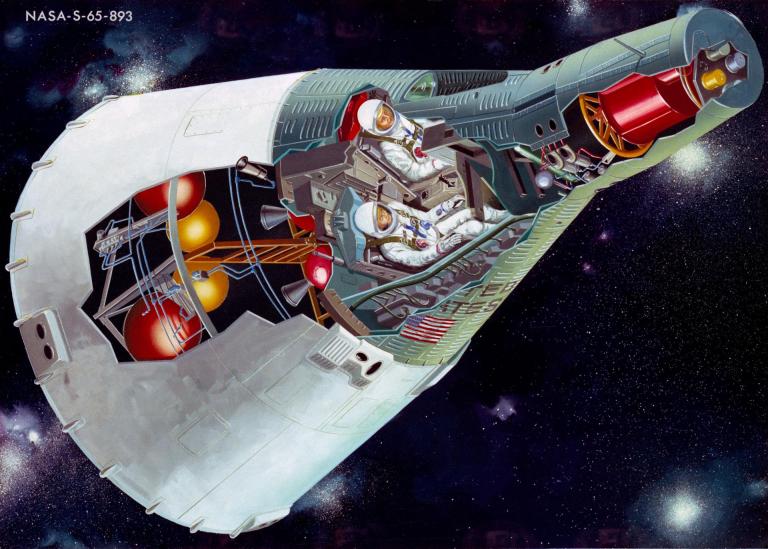
The Orion spacecraft is built to limit radiation exposure, with shielding made from materials rich in hydrogen, including plastics and food and water. As much as possible, the shielding is made from materials that would be on the spacecraft anyway, to reduce the amount of mass added to the vehicle. The uncrewed Artemis 1 mission included sensors throughout the spacecraft to test radiation levels, to help plan for the astronauts’ safety on Artemis 2.
“Our goal is to limit the risk of radiation exposure over an astronaut’s lifetime,” said Kerry Lee, a radiation system manager for Orion, in 2016, discussing the process of developing a radiation protection plan for today’s astronauts. “It’s not likely you’d see acute effects of radiation during a mission or immediately upon return, but we are concerned about long term effects.”
In addition to the structural shielding, the Orion spacecraft features a “storm shelter” plan: In the event of a solar storm, astronauts are trained to reconfigure their cabin to place more mass between them and the incoming radiation by securing equipment and stowage bags along the spacecraft’s walls.
“Once crews add mass to the places that tend to be hotter in terms of radiation exposure, they can then continue to go about their duties,” said space radiation analyst Stuart George in a NASA press release.
Advance notice
To ensure the Artemis 2 astronauts have the necessary warning time to safely ride out a solar event, NASA is closely monitoring the risk from onboard the spacecraft, elsewhere in space, and on Earth. Onboard Integrity, the Hybrid Electronic Radiation Assessor (HERA) system continually measures radiation levels throughout the craft, with an alarm system ready in case levels rise. Each astronaut also wears a personal radiation monitor.
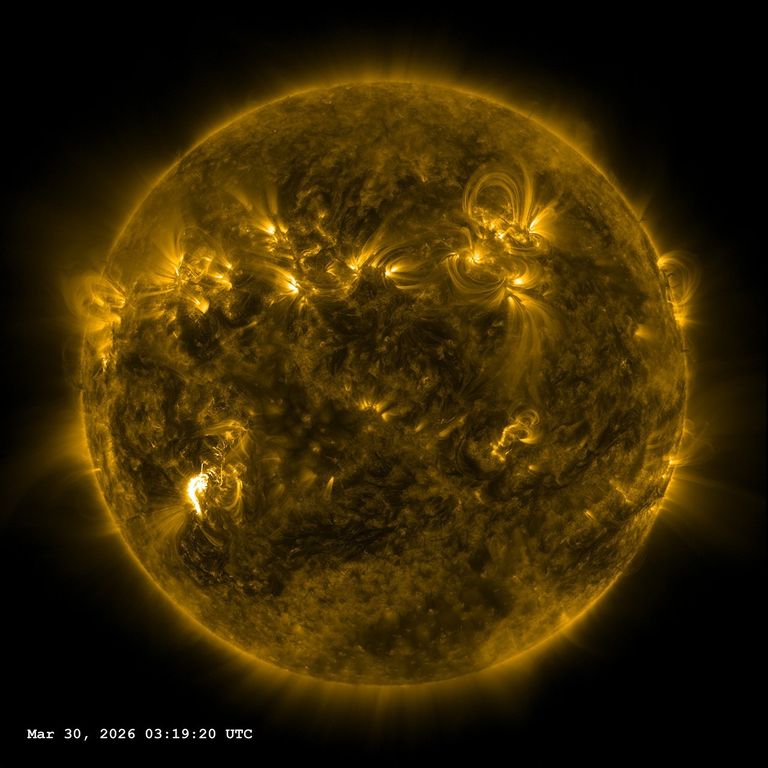
Outside the craft, a fleet of solar-observing observatories including the Solar Dynamics Observatory (SDO), Solar and Heliospheric Observatory (SOHO), and the National Oceanic and Atmospheric Administration’s GOES-R satellite fleet are trained on the Sun 24/7, watching for early signs of dangerous activity. Even on Mars, Perseverance is focused on the Sun, checking its farside for sunspots.
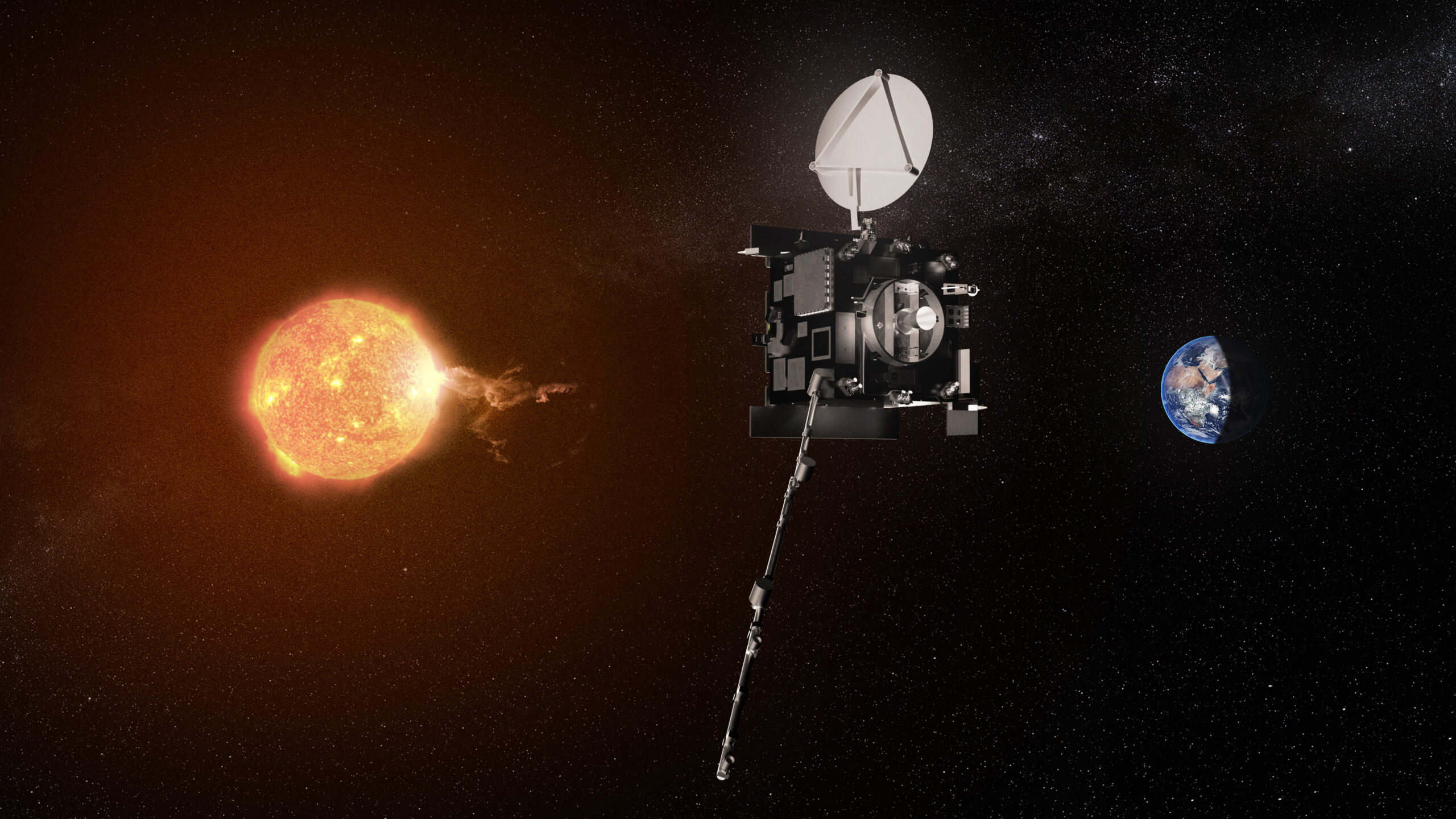
Meanwhile, on Earth, the University of Michigan developed a machine-learning model to forecast solar activity up to 24 hours in advance. The AI was trained extensively with images of the Sun from decades of SDO and SOHO observations, and learned to recognize the patterns and magnetic activity that precede a dangerous solar eruption. Its specialization in the probability of future events is a paired with a physics-based model run on NASA supercomputers, which estimates storm duration and severity. Together, the models provide as much warning as possible to help keep the Artemis 2 astronauts safe.
“We asked NASA to reserve 3,000 processing units on their supercomputer for us during the mission, so the model can run as quickly as possible whenever there is an eruption,” said Lulu Zhao, the principal investigator of the space weather center that developed the NASA-commissioned forecasting tools. “We can’t afford delays because the harmful particles can reach Earth so quickly.”