When NASA added a low Earth orbit test flight to the Artemis program in February, pushing the lunar landing from Artemis 3 to Artemis 4, it left the details sparse. On Tuesday, the agency filled them in.
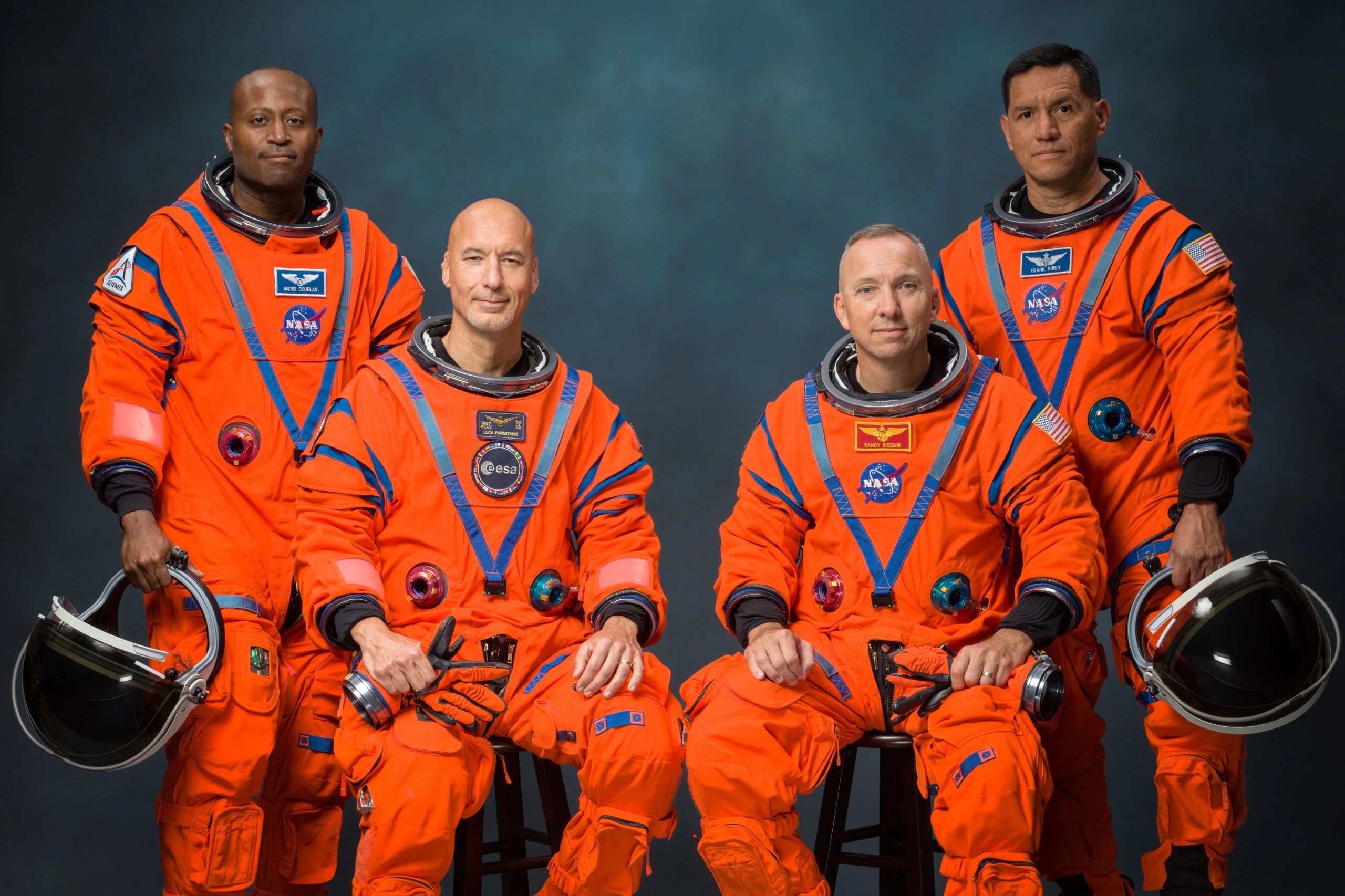
At a press conference, NASA named the four-person crew for Artemis 3, a 2027 Earth-orbit test flight that will attempt to rendezvous and dock with test articles (prototype versions of spacecraft designed for a test environment and not for full flight) of both the Blue Origin and SpaceX lunar landers. Artemis 3 will be a complex, multi-launch mission the likes of which has never been tried before. NASA veteran Randy Bresnik will command. European Space Agency (ESA) astronaut Luca Parmitano will serve as pilot — the first ESA astronaut to be selected for an Artemis mission. NASA astronauts Frank Rubio and Andre Douglas round out the crew as mission specialists, with Bob Hines named backup.
“This mission will require the most awe-inspiring coordination of heavy-lift rocket launches in history,” NASA Administrator Jared Isaacman said in a NASA press release.
A very different Artemis 3
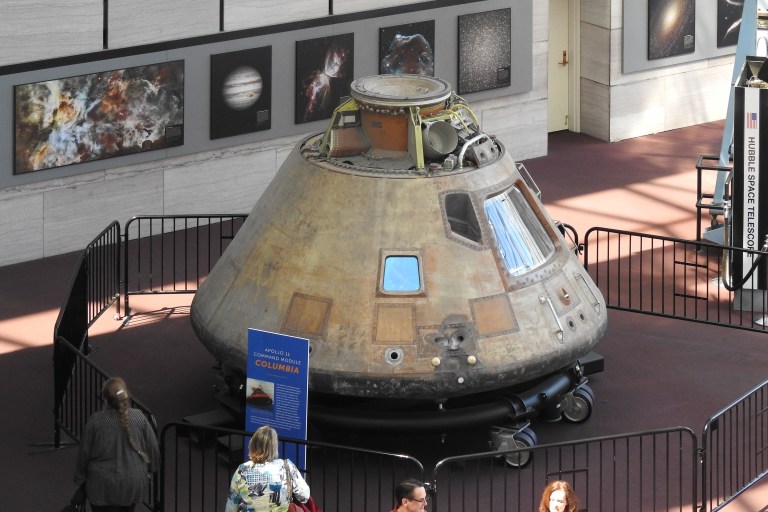
The mission Bresnik and his crew will fly bears little resemblance to the Artemis 3 of three years ago. Originally planned as the first crewed lunar landing since 1972, it was redesigned in February as an orbital systems test, with the landing shifted to Artemis 4 in 2028. The logic is the same as the Apollo missions. Just like Apollo 9 was sent to low Earth orbit before Apollo 11 went to the Moon, NASA wants to test the hardware close to home on Artemis 3, before attempting a landing.
“This mission is deliberately designed to take calculated risks so that future crews will be safer and ultimately successful when we put boots on the lunar surface,” said Jeremy Parsons, NASA’s Moon to Mars acting assistant deputy associate administrator. “The complexity of our integrated operations across multiple launches, spacecraft, rendezvous, [and] docking is greater in many ways than Artemis 2.”
The mission has three distinct phases. First, a test article of Blue Origin’s Blue Moon lander launches on the company’s heavy-lift New Glenn rocket and parks in orbit, where it can wait for up to 90 days. Orion and its crew follow on NASA’s Space Launch System (SLS) rocket, rendezvous with the Blue Origin lander, and spend roughly two days docked. During that time they will cross the hatch separating the two craft in order to test the lander and life support systems which need to be verified in space before being used on a landing mission. Then Orion detaches from Blue Origin. SpaceX’s test article Starship Human Landing System (HLS) launches, catches up for a second docking, and the two spacecraft spend about a day connected. When describing the mission in detail, NASA officials made no specific mention of whether the crew will cross the hatch and enter the SpaceX HLS as well. Finally, the crew prepares for reentry and splashdown in the Pacific. The entire mission will last around two weeks.
“Think about how many spacecraft — all of which will eventually carry human beings — will be in orbit at the same time,” Isaacman said at the conference. “This seems like the very beginning of Earth’s first Starfleet to me.”
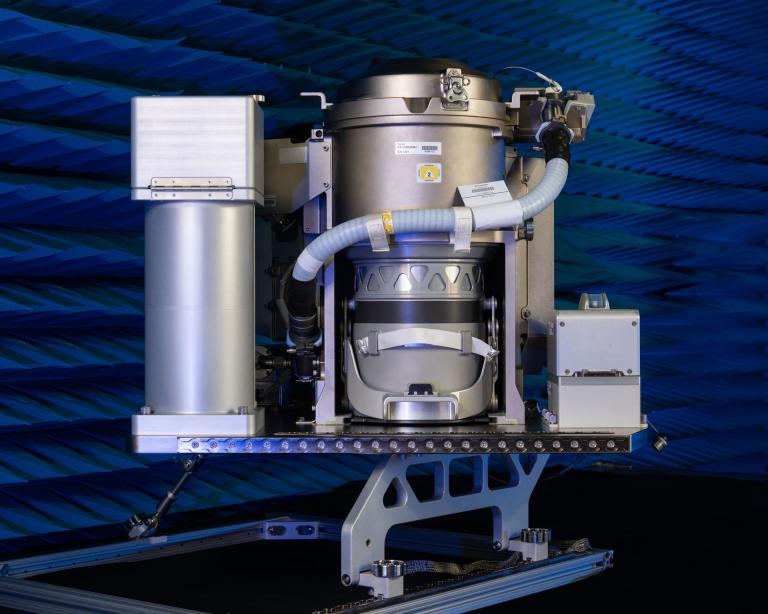
The spacesuits for Artemis landing missions will be the AxEMU, co-designed by Axiom Space and Prada, built to withstand the extreme conditions of the lunar south pole. While testing on the ground is ongoing, the International Space Station (ISS) and Artemis 3 will serve as early on-orbit test beds for the suit. “We are going to fly the spacesuit aboard the International Space Station to check it out in 2027,” Parsons said, “and we will perform hardware interface checkouts on at least one lander in a spacesuit during Artemis 3.”
Who’s going
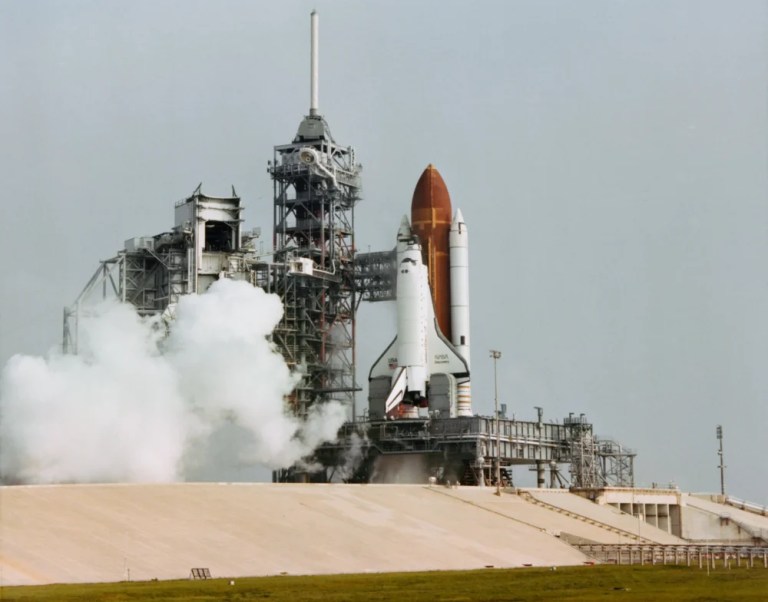
Bresnik is a retired U.S. Marine colonel who will be returning to space for the third time. He flew to the ISS on space shuttle Atlantis during the STS-129 mission in 2009, then again via Soyuz MS-05 in 2017, serving as commander of Expedition 53. Since 2018, he has helped oversee Artemis hardware development from the Astronaut Office.
At the ceremony, he invoked the mission’s place in the longer arc of exploration. “We, the Artemis 3 crew, are honored to carry this torch forward,” Bresnik said, “to execute our mission, to make that flame burn brighter and pass it on … echoing the immortal words of Apollo 11’s Michael Collins, to be carrying the fire.”
Parmitano becomes the first ESA astronaut assigned to an Artemis mission. An Italian Air Force colonel and test pilot, he previously commanded Expedition 61 in 2019, becoming the first Italian to hold that role. ESA Director General Josef Aschbacher offered a pointed reminder of why his selection matters. During a 2013 spacewalk outside the ISS, Parmitano’s helmet began filling with water from a leak in the suit’s cooling system — a potentially catastrophic situation. He managed to navigate back to safety inside the ISS without losing his cool. “That tells you more about an astronaut than any CV ever could,” Aschbacher said at the press conference. “[He] is precise, composed, and determined.”
Rubio holds the U.S. record for the longest single-duration spaceflight: 371 days aboard the station in 2022–2023. A physician and Army aviator selected to serve as an astronaut in 2017, he expressed immense gratitude in his remarks Tuesday, directing most of it at his family. “Thank you first and foremost to my wife and our four amazing kids,” he said. “Thank you for your sense of adventure and your resiliency. You guys have made all this possible.”
For Douglas, Artemis 3 will be his first trip to space. Selected by NASA to serve as an astronaut in 2021, he most recently served as backup and closeout crew for Artemis 2. A Coast Guard officer with a doctorate in systems engineering from George Washington University, he addressed his sons directly from the stage with a message of hope and perseverance: “If you put in the hard work and you think big, you can do just about anything you want to do.”
Three of the four Artemis 2 crew — Reid Wiseman, Victor Glover, and Christina Koch — attended the ceremony, and passed an actual metal baton to the new crew, symbolizing the Artemis program’s progression. “You guys know because you work in the office: We’ve been carrying these batons around for way too long,” Wiseman joked. “You got the controls.”
Pressure on the hardware
On May 28, New Glenn exploded during a static fire test at Cape Canaveral Space Force Station. The explosion destroyed the rocket and damaged Blue Origin’s single New Glenn launch pad. John Couluris, senior vice president of lunar permanence at Blue Origin, said the company is making progress on the investigation and pad cleanup, and will begin rebuilding once cleanup is complete while simultaneously continuing construction on a second pad at LC-36B. He said Blue Moon Mark 1 serial number 1 will complete testing and be ready to launch this year, and that the Artemis 3 Mark 2 lunar crew module is already in production on around-the-clock shifts. “We will measure ourselves not only by our successes, but how we respond to setbacks,” Couluris said at the press conference.
Parsons was direct about the New Glenn mishap. “While we recognize there are questions about how Blue Origin’s recent anomaly impacts our plans, setbacks are a learning opportunity,” he said. “We are confident that New Glenn will be ready for Artemis 3. NASA is stepping in and bringing all of our expertise and capabilities to bear.”
SpaceX’s situation is different but no less complicated. Starship’s 12th test flight, on May 22, ended in a partial failure when the Super Heavy booster could not light all its engines on descent and crashed into the Gulf of Mexico. The FAA classified the event as a mishap and ordered a company-led investigation before Flight 13 can proceed. SpaceX Vice President Jessica Jensen, speaking at Tuesday’s press conference, said the company is currently building several ships and boosters in parallel at Starbase and is actively building out three additional launch pads in Florida and Texas. She confirmed that the long-awaited ship-to-ship propellant transfer demonstration — a technology essential to refueling Starship in orbit before any lunar mission — is targeted for this year. “The V3 design of Starship is planned to be the vehicle for propellant transfer, our uncrewed missions to the Moon, and for the HLS crewed lunar landing,” Jensen said.
What comes next
Artemis 3 is the on-ramp to Artemis 4, the first crewed lunar landing since Apollo 17 in December 1972, targeted for 2028. NASA also disclosed a significant change to that mission’s flight plan. SpaceX’s Starship will now dock with Orion in Earth orbit — not near the Moon as originally planned — before using its engines to push both vehicles on a direct route to low lunar orbit. “This approach improves crew safety by first conducting the critical docking event in Earth orbit, just like we’re going to practice in Artemis 3,” Jensen said, “and the crew can also abort off the lunar surface nearly any time versus waiting up to days from NRHO [near-rectilinear halo orbit].”
Bresnik put the stakes plainly. “Spaceflight is hard,” he said. “And that’s why the most important Artemis mission will always be the next Artemis mission.”
Brooks Mendenhall is a staff writer for Astronomy and is based in Chattanooga, Tennessee.