The Chilean energy company AES Andes has announced plans to cancel its massive INNA project, a green energy plant that was poised to ruin some of the planet’s darkest skies and observations at the European Southern Observatory’s (ESO) Paranal Observatory.
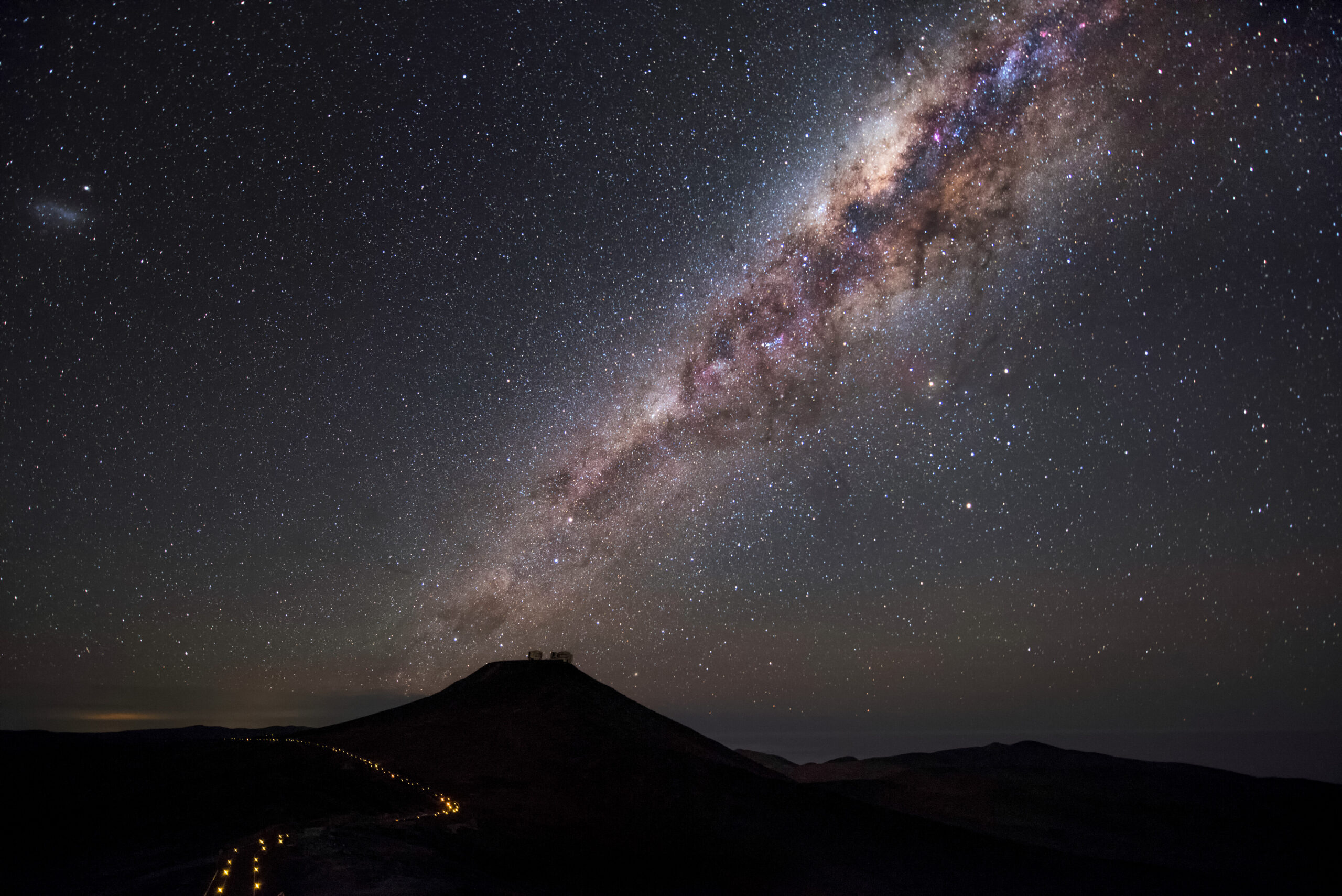
Dark skies have become something of a rarity these days, with recent studies suggesting the night sky brightens about 10 percent each year. This is why the ESO’s Paranal Observatory, located in the Atacama Desert of Northern Chile — one of the world’s darkest sky locations — is such an important facility. AES Andes has been planning since 2024 to construct a large-scale green hydrogen and green ammonia facility near the Paranal Observatory. Studies showed that if the facility were built, it would cause severe, irreversible damage to the instruments stationed at Paranal. The recent announcement from AES Andes that those plans are being scrapped is great news for astronomy and a rare win against the constant creep of light pollution.
“Due to its planned location, the project would pose a major threat to the darkest and clearest skies on Earth and to the performance of the most advanced astronomical facilities anywhere in the world,” Xavier Barcons, director general of the ESO, said in a press release.
Paranal hosts a suite of important astronomical instruments, including the Very Large Telescope (VLT), the VLT Interferometer, and the upcoming Extremely Large Telescope (ELT), which ESO refers to as “the world’s biggest eye on the sky.” The site is also set to host the Cherenkov Telescope Array South (CTAO-South), a sensitive gamma-ray observatory. A technical analysis from the ESO warned that the INNA project — a sprawling industrial hub roughly the size of a small city — would have increased light pollution by 35 percent over the VLT and 55 percent over the CTAO-South site.
Beyond the light pollution from over 1,000 planned light sources, the facility’s wind turbines threatened to increase atmospheric turbulence by up to 40 percent. This is particularly damaging because Paranal relies on a stable atmosphere that minimizes the “twinkling” of objects it observes. Furthermore, small vibrations from the turbines and dust from construction posed a direct risk to the delicate mirrors and seismic-sensitive equipment of the ELT and VLT, potentially rendering these multi-billion-dollar investments unable to perform their scientific tasks.
INNA was designed as a massive green energy complex covering more than 3,000 hectares for the production of green hydrogen and green ammonia — low-carbon emission energy sources. In an announcement on January 23, 2026, AES Andes stated it would desist from the project “to focus its efforts on the development and construction of its renewable energy and energy storage portfolio, in line with the guidelines of its parent company in the United States.” The company maintained that INNA was “fully compatible” with regional activities but notably omitted any mention of the specific scientific concerns raised by the ESO.
It’s not clear whether the AES decision is a direct result of the pressure from the ESO and the science community as a whole. Regardless, Barcon thanked the community for its support in the fight to protect dark skies and astronomical observations. “It has been incredibly reassuring to see so many people in Chile and around the world care deeply about, and actively speak up for, the protection of dark and quiet skies in the context of the INNA project,” Barcons noted in the press release.
Barcon also added that industry and astronomy have to work together in the future to ensure that the two are able to peacefully coexist. “Green-energy projects … are fully compatible with astronomical observatories, if the different facilities are located at sufficient distances from one another,” he stated in the press release. “ESO and its Member States are fully supportive of energy decarbonisation and initiatives that ensure a more prosperous and sustainable future.”