Top 10 space stories of 2025

Amid federal funding uncertainty, commercial spaceflight saw highs and lows, a comet from another star surprised us, and the Vera C. Rubin Observatory began its 10-year survey.

Scroll to explore
Space background

Our picture of the cosmos is ever-changing, transformed by new discoveries. In 2025, we learned evidence is now piling up to suggest that the mysterious dark energy that guides the evolution of our universe may not be constant over cosmic history, but might grow weaker over time. A new interstellar visitor swung past the Sun, while observations from our own solar system and beyond continued to shape the way we look for life.

The year wasn’t without its challenges, as the submission of several competing budgets for NASA science included a proposed massive reduction in the number of current and future missions. And despite the lauded success of Firefly Aerospace’s Blue Ghost 1, the first commercial landing on the Moon, other companies failed to re-create the triumph. Nonetheless, our satellite remains a tempting target and valuable science goal for future endeavors, and will be a prime destination throughout 2026.

As astronomers build on past successes and follow new avenues for discovery, the field is poised for change as the Vera C. Rubin Observatory begins its 10-year Legacy Survey of Space and Time. We are now preparing to ask questions about the cosmos we haven’t even thought of yet.

Blue Ghost lunar lander

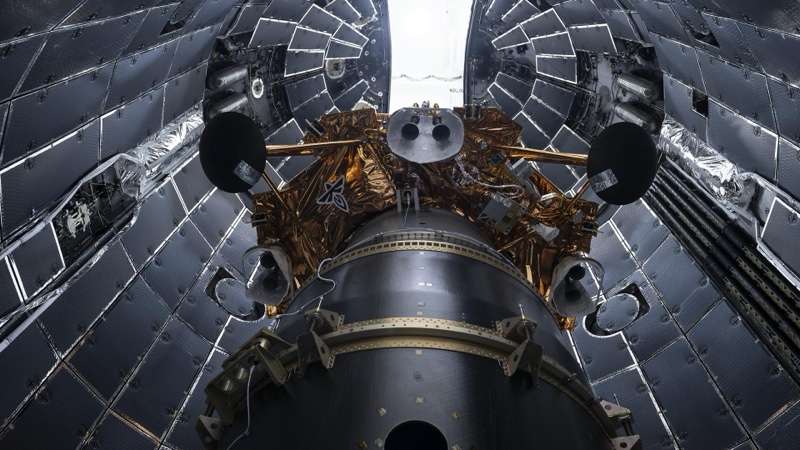
Firefly Aerospace’s Blue Ghost lunar lander waits inside a SpaceX rocket fairing ahead of its Jan. 15, 2025, launch. Firefly’s successful Blue Ghost Mission 1 was the company’s first flight to the Moon as part of NASA’s Commercial Lunar Payload Services initiative. NASA/SPACEX

10

Blue Ghost succeeds amid private Moon mission struggles

Last year in these pages, we referred to 2024 as the new golden age of lunar exploration. That golden age continued in 2025, though not without drama. While communication with NASA’s Lunar Trailblazer orbiter mission was lost shortly after its February launch and ispace’s Hakuto-R Mission 2 crashed in June, Firefly Aerospace’s Blue Ghost Mission 1 delivered a historic success. The mission launched on a SpaceX Falcon 9 alongside Hakuto-R, each spacecraft setting its own course to the Moon.

Nicknamed “Ghost Riders in the Sky,” the mission launched Jan. 15, 2025, and began a-plowing through the ragged skies on a rambling, energy-saving path that included 25 days orbiting Earth, a four-day lunar transit, and 16 days in lunar orbit. This allowed the team to perform robust health checks before the final descent. It paid off: On March 2, the lander executed a picture-perfect autonomous landing near the volcanic mountain Mons Latreille on the eastern edge of Mare Crisium — a large, dark volcanic plain on the Moon’s visible face.
FIREFLY AEROSPACE

Operating on the lunar surface for over 14 Earth days, Blue Ghost sent home a trove of data totaling more than 119 GB. The mission was a success, meeting all of its NASA objectives. This included key milestones from payloads like the Lunar GNSS Receiver Experiment (LuGRE), which showed GPS and Galileo signals could be used for lunar navigation, and the Next Generation Lunar Retroreflector (NGLR), which bounced laser pulses back to Earth, providing submillimeter measurements of the distance from Earth to the Moon.

The mission also flawlessly performed experiments that touched and sampled the surface. The Lunar PlanetVac (LPV) used a gas jet to collect lunar soil, while the Lunar Instrumentation for Subsurface Thermal Exploration with Rapidity (LISTER) drilled about 3 feet (1 meter) into the surface to measure heat flow. The Electrodynamic Dust Shield and Regolith Adherence Characterization experiments also provided valuable data on lunar dust.

Blue Ghost also captured high-definition imagery of a total solar eclipse from the lunar surface — where the Earth blotted out the Sun — a first for a commercial company. Blue Ghost’s triumph served as an ideal demonstration of NASA’s Commercial Lunar Payload Services program, showing how the program can act as a crucial steppingstone for the future of commercial exploration and help pave the way for a lasting human presence on the Moon.

SpaceX Starship test flight

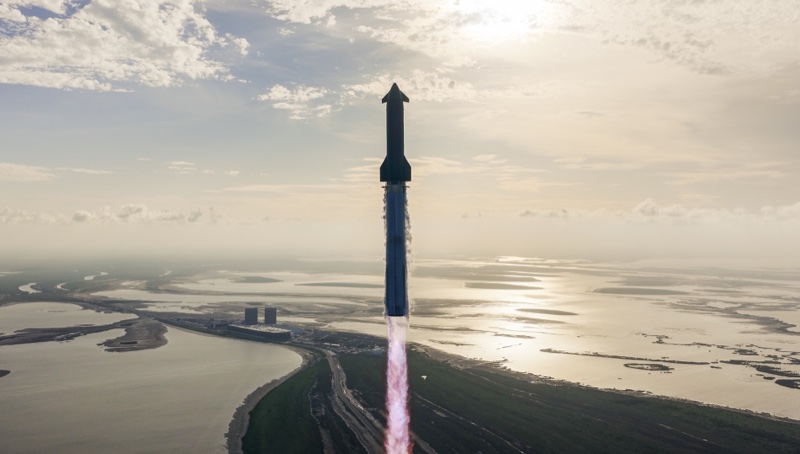
Starship Test Flight 10 launched from Starbase, Texas, on Aug. 26. 2025, completing all its major mission objectives. SPACEX

09

Starship’s busy year of test flights

In the biggest year yet for private spaceflight, SpaceX led the charge. As of September, the company had conducted over 120 orbital launches with its Falcon 9 rocket and was aiming for a total of 170 by year’s end. But none of those launches commanded as much attention as the test flights of the company’s Starship — and for good reason. Its success is integral for America’s return to the Moon.

The Starship system, comprising the Super Heavy booster and the Starship Human Landing System (HLS) spacecraft, is unique in its immense size, stainless steel construction, and ambitious goal of full and rapid reusability. It is the most powerful launch vehicle ever built. While NASA’s Space Launch System (SLS) and Orion capsule will launch astronauts to lunar orbit, the Super Heavy booster will send a Starship Human Landing System (HLS) spacecraft to Earth orbit. The booster will also launch the multiple Starship “tanker” spacecraft that will refuel HLS before its journey to the Moon.

While previous years were defined by initial Starship tests, 2025 was all about flight. But early test flights faced failures. January’s Test Flight 7 suffered a propellant leak, which caused the upper stage vehicle to break apart over the Caribbean. Test Flights 8 and 9, in March and May respectively, failed to achieve their primary objectives due to issues with the vehicle’s heat shield and landing system. These setbacks provided invaluable data, however, for SpaceX’s signature rapid-iteration approach. Elon Musk, the company’s CEO and founder, has famously remarked, “Failure is an option here. If you’re not failing, you’re not taking enough risks.”

The breakthrough came in August with Starship Flight 10, which achieved a flawless ascent and reached a stable orbit for the first time. It then deployed a payload mass simulator, demonstrating its capability to deliver cargo. On the way back, the ship executed a perfect belly-flop descent and soft landing.

This was followed by the 11th test flight Oct. 13. While the Super Heavy booster tested a unique, hovering landing burn before its splashdown in the Gulf of Mexico, the Starship upper stage successfully deployed eight Starlink simulators, performed the hot jettison (separation in space) of its Raptor engines, and gathered critical data during a stress test of its heat shield upon reentry before its own soft splashdown in the Indian Ocean.

This concluded the test flights for the Version 2 vehicle and cleared the path for the upgraded Version 3, expected in early 2026. A number of milestones remain before the vehicle is ready for crewed missions, including in-space refueling demonstrations and further testing of critical life-support systems. The year was punctuated by other milestones in private space exploration. Blue Origin launched its New Glenn rocket for the first time, while ULA’s Vulcan Centaur Launch Vehicle and Rocket Lab’s Neutron rocket also showcased continued reliability. Rocket Lab’s Neutron rocket also made critical strides, hinting at a future where access to space is more routine and affordable than ever before.

Comet 3I/ATLAS

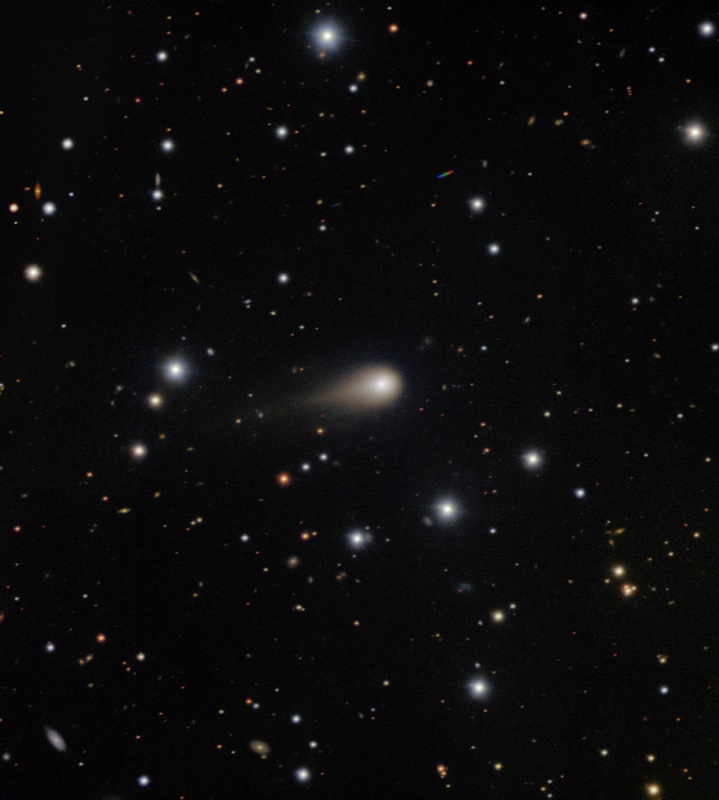
The 8.1-meter Gemini South telescope in Chile captured this image of Comet 3I/ATLAS on Aug. 27. Credit: International Gemini Observatory/NOIRLab/NSF/AURA

08

An interstellar comet comes to visit

On July 1, the Asteroid Terrestrial-impact Last Alert System (ATLAS) reported a new find some 418 million miles (673 million kilometers) from the Sun, inside the orbit of Jupiter. Calculations quickly showed that although the object was moving through the solar system, it was not from the solar system. Called 3I/ATLAS, it became the third-known interstellar object (ISO); within 24 hours, signs of cometary activity earned it the additional designation Comet C/2025 N1 (ATLAS).

Moving at 130,490 mph (210,000 km/h) — faster than the two previously discovered ISOs, 1I/ʻOumuamua and 2I/Borisov — 3I/ATLAS’ path brought it close to Mars Oct. 3, passing some 18.6 million miles (30 million km) from the Red Planet. It made its closest approach to the Sun Oct. 29 (126 million miles [202.9 million km]), still outside the orbit of Earth. Then it went streaking toward the outer solar system again, never to return. On that same day, it passed Earth Dec. 19 at a distance of 167.8 million miles (270 million km), posing no threat to our planet.

As only the third known interstellar visitor, 3I/ATLAS is adding valuable details to our still-murky picture of these objects. Each new example teaches us about conditions elsewhere in the galaxy, particularly how planets, asteroids, and comets form around other stars.

The comet grew difficult to pin down, with early estimates suggesting it could be as large as 6 to 10 miles (10 to 20 km). By late August, astronomers had downsized its breadth, based in part on observations by Hubble Space Telescope (JWST), to between 0.3 and 3.5 miles (0.4 to 5.6 km) across — still suggesting there may be more large ISOs than previously thought.

Based on its speed and direction of origin in Sagittarius, a paper published Sept. 1 in The Astrophysical Journal Letters suggests the comet could be some 7.6 billion years old, predating our solar system, and contain a high fraction of water. Speaking at the Royal Astronomical Society’s July meeting in Durham, U.K., study first author and University of Oxford researcher Matthew Hopkins called 3I/ATLAS “very likely to be the oldest comet we have ever seen.”

As the comet approached the Sun, astronomers looked for chemical fingerprints as ices on the surface sublimated, creating a coma of gas and dust, and a lengthening, teardrop-shaped tail. A study posted Sept. 30 to the arXiv preprint server and submitted to Astronomy & Astrophysics noted an “extremely puzzling” abundance of iron and nickel in the coma compared to other solar system comets or Comet Borisov. And a Sept. 30 paper in The Astrophysical Journal Letters reported signs of water spewing from the comet as hydroxyl (OH), a byproduct of water production, was spotted while 3I/ATLAS was still three times the distance of Earth from the Sun. Like all other interstellar visitors, 3I/ATLAS will never return, taking its secrets with it. But with the commencement of the Vera C. Rubin Observatory’s Legacy Survey of Space and Time, astronomers expect to identify some five to 50 new ISOs in the next decade, soon increasing dramatically the pool of galactic wanderers available to teach us about other star systems.

Solar observation missions

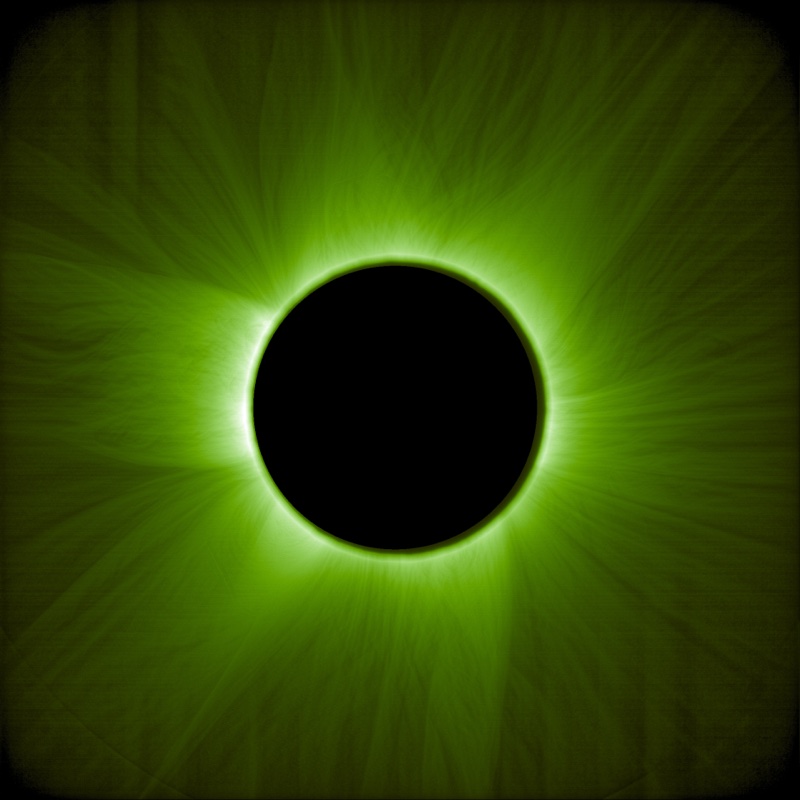
The solar corona was imaged by Proba-3’s ASPIICS coronagraph. ESA/PROBA-3/ASPIICS/WOW ALGORITHM, CC BY-SA 3.0 IGO

07

Solar Orbiter, PUNCH, and Proba-3 show us the Sun

With a convergence of major missions delivering groundbreaking new insights into the Sun and its dynamic environment, 2025 was a landmark year for heliophysics. Rather than a single event, the field celebrated a series of wins that transformed our understanding of our star. At the forefront of this new era were the Polarimeter to Unify the Corona and Heliosphere (PUNCH), Solar Orbiter, and Proba-3 missions, each providing a unique perspective on the Sun.

The NASA PUNCH mission launched in March and quickly began its work. Its first stunning images of coronal mass ejections (CMEs) were unveiled in June at the 246th American Astronomical Society meeting, showing the CMEs blasting out from the Sun and traveling across the inner solar system. Composed of four small satellites flying in precise formation, PUNCH’s cameras work together as a single “virtual instrument” to capture a continuous, three-dimensional view of the solar wind of charged particles flows from the Sun’s outer corona. By stitching together images from the Wide Field and Narrow Field Imagers, the mission creates videos with unprecedented detail of CMEs evolving, marking a big step in improving solar weather forecasting.

The European Space Agency’s (ESA) Solar Orbiter mission delivered a world first in 2025, providing humankind’s first direct images of the Sun’s south pole. From Earth, as seen from the plane of the planets and asteroids, the Sun’s poles is impossible because the planets and asteroids all orbit within a flat plane. To work around this, Solar Orbiter used a series of gravity assists from Venus that let it orbit the Sun and getting a unique perspective on the Sun’s poles. The images, captured by its Polarimetric and Helioseismic Imager and Extreme Ultraviolet Imager instruments, revealed a chaotic, messy magnetic field at the pole. This is a key sign that the Sun’s magnetic field is undergoing its periodic pole flip at the peak of the solar cycle, as both positive and negative magnetic fields were present. These never-before-seen images will help researchers understand how the Sun’s global magnetic field operates.

Finally, ESA’s Proba-3 mission successfully executed an audacious technological feat, creating the world’s first sustained artificial solar eclipse. By flying two satellites in precise formation 490 feet (150 m) apart, the mission’s lead satellite was able to perfectly block the Sun’s blinding disk for the secondary craft, allowing the latter to image the faint inner corona. This innovative approach provides an unprecedented and continuous viewing platform for a region previously only observable during fleeting natural eclipses, offering invaluable data on the Sun’s atmosphere and helping to improve space-weather predictions.

Asteroid Bennu

Bennu

Asteroid Ryugu

Ryugu

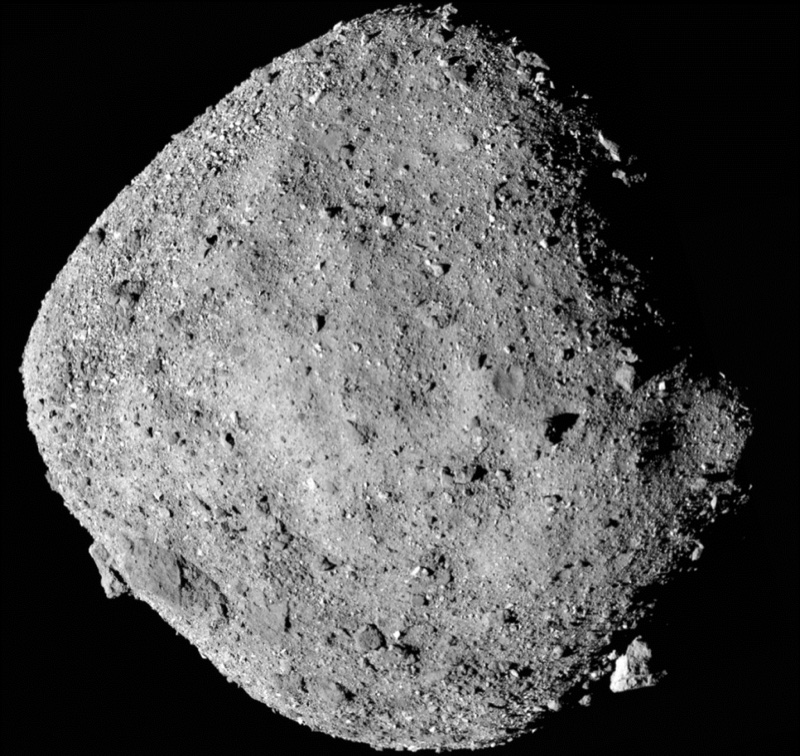
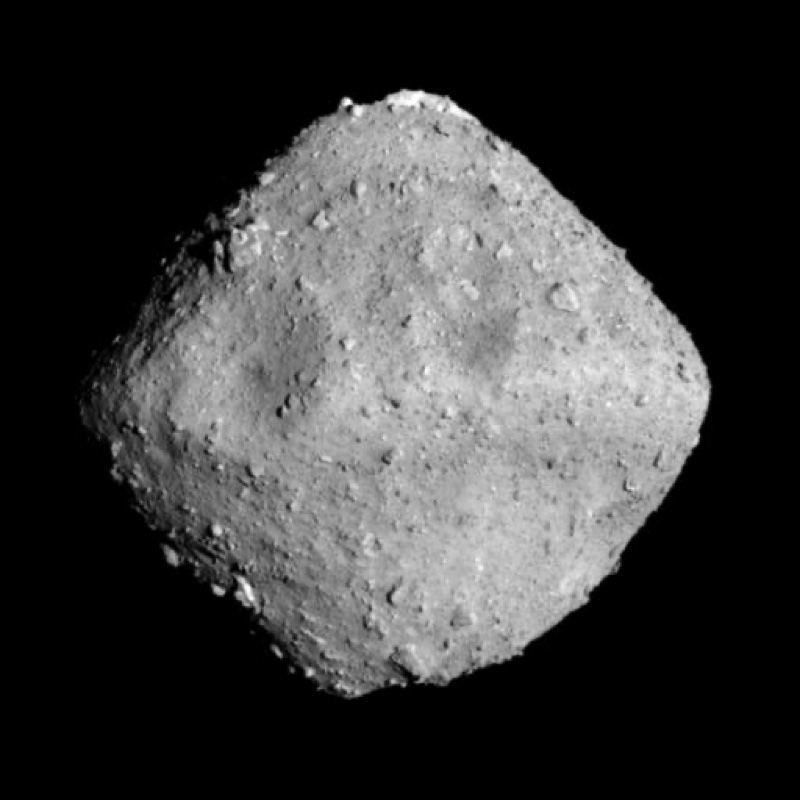
Asteroids Bennu (left) and Ryugu have much in common: their shape, structure, and the fact they have both been visited by spacecraft. Now, researchers believe both are the product of a single collision, which also left behind the main-belt asteroid Polana. NASA/GODDARD/UNIVERSITY OF ARIZONA; JAXA, UNIVERSITY OF TOKYO, KOCHI UNIVERSITY, RIKKYO UNIVERSITY, NAGOYA UNIVERSITY, CHIBA INSTITUTE OF TECHNOLOGY, MEIJI UNIVERSITY, UNIVERSITY OF AIZU, AIST

06

Bennu and Ryugu may be siblings

Asteroids 101955 Bennu and 162173 Ryugu share many similarities. Both are near-Earth asteroids that orbit between Earth and Mars. But neither formed there — they were forged farther out in the solar system and later pushed into their current orbits, likely by Jupiter’s gravity. Both are carbon-rich “rubble pile” asteroids assembled from smaller pieces of a parent body following a collision. They are even similarly shaped, though 0.6-mile-wide (0.9 km) Ryugu is about twice Bennu’s size. And both are in an elite club of asteroids whose material has been returned to Earth: Japan’s Hayabusa2 dropped off samples of Ryugu in December 2020 and NASA’s OSIRIS-REx delivered pieces of Bennu in September 2023.

Yet another similarity came to light in a paper in The Planetary Science Journal: Astronomers think Ryugu and Bennu may have come from the same parent body, the largest piece of which is 34-mile-wide (55 km) main-belt asteroid 142 Polana.

The study, led by postdoctoral researcher Anicia Arredondo at the Southwest Research Institute (SwRI) in San Antonio, Texas, picked apart the light each asteroid reflects in the infrared portion of the spectrum. The team compared data from Bennu and Ryugu samples in the lab as well as those taken by the spacecraft that visited them with new JWST observations of both asteroids and Polana. Ultimately, “they are similar enough that we feel confident that all three asteroids could have come from the same parent body,” Arredondo said in a press release.

They are not a perfect match. Bennu and Polana are B-type asteroids; Ryugu is classified as a Cb-type asteroid. Both categories fall under the same family of carbon-rich bodies, with slight differences in their underlying composition. There are differences between Polana and Bennu’s spectra. However, the team believes these differences can be explained by the asteroids’ varying histories. “Polana, Bennu, and Ryugu have all had their own journeys through our solar system since the impact that may have formed them,” said co-author Tracy Becker, also of SwRI. Differences in the amount of space weathering each body has experienced — bombardment by bombardment by micrometeoroids as well as solar photons — as well as variations in the size of their surface grains and the way dust asteroids assembled from this debris could all create their subtle differences today.

The team now hopes to use the results to better understand how an asteroid’s unique history affects its spectrum, which in turn will improve our picture of the solar system’s formation and evolution with time.

K2-18 b exoplanet

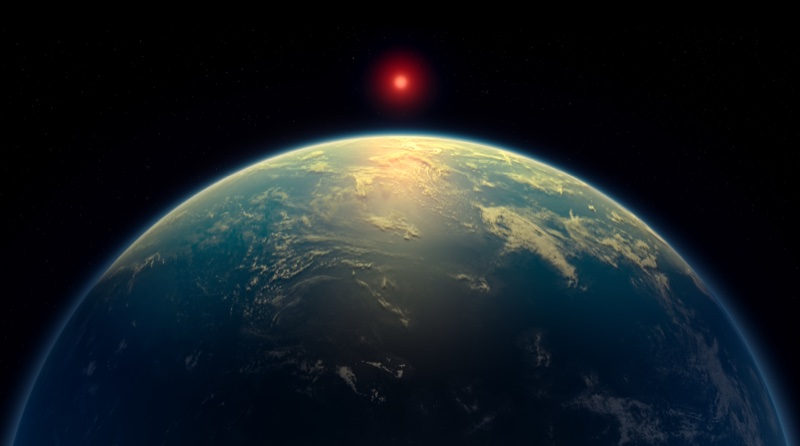
One team of researchers thinks that K2-18 b is what they call a hycean world — one with a global water ocean and a hydrogen-rich atmosphere, as shown in this artist’s concept. A. SMITH, N. MADHUSUDHAN (UNIVERSITY OF CAMBRIDGE)

Cheyava Falls rock on Mars

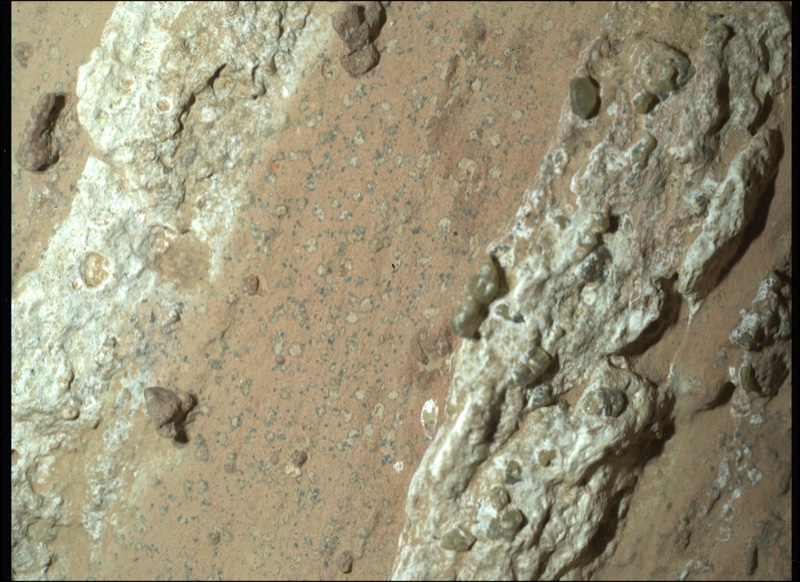
The “leopard spots” found by Perseverance in the rock called Cheyava Falls told researchers that unusual chemistry had taken place there. NASA/JPL-CALTECH/MSSS

05

Biosignatures buzz

Are we — and have we always been — alone in the universe? Two high-profile studies in 2025 raised these age-old questions, with one drawing significant controversy along the way.

On April 16, U.S. and U.K. news outlets heralded findings led by astronomer Nikku Madhusudhan of the University of Cambridge. Using data from JWST of K2-18 b — a planet roughly half the mass of Neptune — the team had “detected the most promising signs yet of a possible biosignature outside the solar system,” said a press release. The team claimed a highly suggestive — but not definitive — detection of dimethyl sulfide (DMS), a molecule that on Earth is only known to be produced by life. Based on the planet’s other spectral features, the team suspected it is a water world, potentially with a massive ocean.

“Currently, there is no way to explain DMS at the levels we are seeing without life,” Madhusudhan said in an April 17 public lecture. But when independent researchers reanalyzed the data, published April 17 in The Astrophysical Journal, some found no evidence of DMS. Others were critical of the methods, citing an unrealistically simplified baseline model atmosphere. Madhusudhan said that regardless of whether the team had actually found DMS on K2-18 b, it is significant that “we are demonstrating the capability to do that” with JWST. But others, like astrobiologist Kevin Zahnle of NASA’s Ames Research Center, thought JWST was starting to show its limits. “It wasn’t built to detect life on other planets,” Zahnle told Astronomy. “It does as well as it can — or it does as well as it is — but it was built to do other things.”

Attention shifted closer to home Sept. 10 when NASA announced that analysis of a sample collected by its Perseverance rover on Mars had yielded a potential biosignature — possible fossilized evidence of ancient microbial life. The rock, discovered by the rover in July 2024 and named Cheyava Falls, has a peculiar spotted pattern. Analysis revealed spectral signs of organic matter and minerals that could have been excreted by ancient microbes. NASA’s acting administrator, Sean Duffy, called it “the closest we have ever come to discovering life on Mars.”

Researchers say the only way to rule out nonbiological origins for the minerals is to analyze the samples in more powerful labs back on Earth. NASA has spent the last year and a half retooling its plans to do so; it says it will announce a new Mars sample-return mission concept in the second half of 2026.

Cheyava Falls rock on Mars

The “leopard spots” found by Perseverance in the rock called Cheyava Falls told researchers that unusual chemistry had taken place there. NASA/JPL-CALTECH/MSSS

JADES-GS-z13-1 galaxy

The distant galaxy JADES-GS-z13-1 appears here as a tiny, unassuming red dot at the center of the image. But this young galaxy, which existed when the universe was just 330 million years old, is the earliest galaxy ever seen beginning to clear the cosmic fog and end the era known as the Dark Ages. IMAGE: NASA, ESA, CSA, JADES COLLABORATION, BRANT ROBERTSON (UC SANTA CRUZ), BEN JOHNSON (CFA), SANDRO TACCHELLA (CAMBRIDGE), PHILL CARGILE (CFA), JORIS WITSTOK (CAMBRIDGE, UNIVERSITY OF COPENHAGEN), P. JAKOBSEN (UNIVERSITY OF COPENHAGEN), ALYSSA PAGAN (STSCI), MAHDI ZAMANI (ESA/WEBB)

04

Early galaxy spotted clearing cosmic fog

Beginning around 380,000 years after the Big Bang, our universe was plunged into darkness. At this time, it was filled with neutral hydrogen gas, which absorbs light and created a “fog” that pervaded the universe, making it impossible for light to travel great distances. This time was called the Dark Ages.

But as stars and then galaxies formed, they sent out high-energy ultraviolet photons that ionized the hydrogen, knocking the atoms’ electrons away. Ionized hydrogen is transparent to light; over time these early stars and galaxies cleared the cosmos so that today we can see across vast distances and back to early times. This era was the Epoch of Reionization, and it ended about a billion years after the Big Bang. Astronomers don’t yet have a clear picture of this process from start to finish. But that’s changing thanks to discoveries made by JWST, including one reported March 26 in Nature, outlining a galaxy seen just 330 million years after the Big Bang. It is the fifth most distant galaxy ever observed and, according to lead author Joris Witstok, a postdoctoral researcher at the Cosmic Dawn Center at the University of Copenhagen, it is also the earliest galaxy caught in the act of clearing the cosmic fog.

JWST spotted the galaxy, called JADES-GS-z13-1, shining brightly at a specific wavelength called Lyman-alpha, which is highly susceptible to being absorbed by neutral hydrogen. That this light is visible, means the galaxy has ionized the surrounding hydrogen to a far greater extent than expected this early in the universe’s history — clearing a region around itself some 650,000 light-years across. JADES-GS-z13-1 appears to have cleared the view for us to peer across the universe unhindered today.

Exactly how it’s done so, though, is still a mystery. Astronomers aren’t sure whether the Lyman-alpha photons are from an accreting central black hole or a population of hot stars — perhaps the very first stars that ever formed, which have not yet been directly observed. “This fascinating emission line has huge ramifications for how and when the universe reionized,” said study co-author Kevin Hainline, from the University of Arizona, in a press release, as determining the source of JADES-GS-z13-1’s UV photons will help pinpoint the mechanisms responsible for reionization across the cosmos. Regardless of the cause, the team writes that the discovery “readily constrains the timeline of reionization,” favoring an early and gradual process driven (initially) by low-mass galaxies,” as JADES-GS-z13-1 appears — none of which show the same Lyman-alpha signature, meaning they are likely still shrouded in neutral hydrogen.

For now, JADES-GS-z13-1 is unique. But Witstok says the search for more galaxies like it is ongoing. As more are found, astronomers will gain a better understanding of how those lights in the darkness ultimately cleared the view for us to peer across the universe unhindered today.

DESI 3D map of the universe

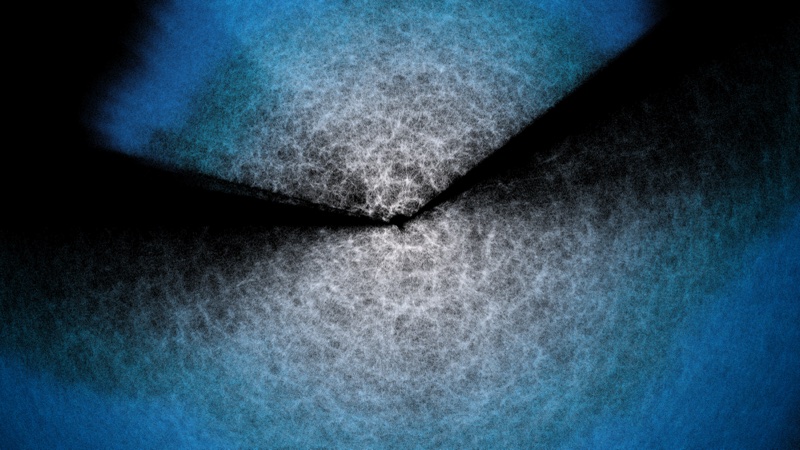
Over its first three years of operation, the Dark Energy Spectroscopic Instrument has mapped nearly 15 million galaxies, shown in this plot as two fans, above and below the plane of the Milky Way. DESI COLLABORATION/DOE/KPNO/NOIRLAB/NSF/AURA/R. PROCTOR

03

Dark energy could be changing

It has been nearly three decades since the stunning discovery that the universe’s expansion is accelerating. Scientists refer to the unknown force driving this phenomenon as dark energy, and its nature remains one of the cosmos’ great mysteries.

In a fresh twist, the Dark Energy Spectroscopic Instrument (DESI) on the 4-meter Mayall Telescope at Kitt Peak National Observatory in Arizona is chipping away at the long-held notion that dark energy is a constant, unchanging force throughout cosmic history. Instead, it may be evolving, weakening over time. The results are not definitive, but they are gathering momentum. The DESI team — made of more than 900 researchers worldwide — had already announced remarkable new evidence of evolving dark energy in 2024. But in 2025, those hints became hard to ignore.

On March 19, in a flurry of papers, the team reported analysis of their first three years of data, which includes nearly 15 million galaxies in the largest 3D map ever made of the universe, spanning 11 billion years of its 13.8-billion-year history. On their own, the DESI results can be squared with the standard model of cosmology, called Lambda-Cold Dark Matter (ΛCDM). But when combined with results from other methods of measuring the universe’s expansion, discrepancies begin to emerge. Depending on the datasets chosen, statistical significances range from 2.8 to 4.3 sigma — approaching the widely accepted 5-sigma standard for a definitive result. “What we’re seeing is deeply intriguing,” said Alexie Leauthaud-Harnett, a cosmologist at the University of California, Santa Cruz, in a statement.

In the ΛCDM model, dark energy is represented by Λ, also known as the cosmological constant, a term first introduced by Albert Einstein. For some astronomers, the idea that the cosmological constant may not be constant after all is hard to stomach.

But for others, the possibility of a dynamic dark energy is a thrilling jolt to the field that opens up new theoretical avenues. The simplest theoretical form of an evolving dark energy posits that it is simply weakening over time according to a power-law or exponential decay. But more exotic theories like gravity changing across time and space or interactions between dark energy and dark matter are also on the table.

Rally to save NASA science

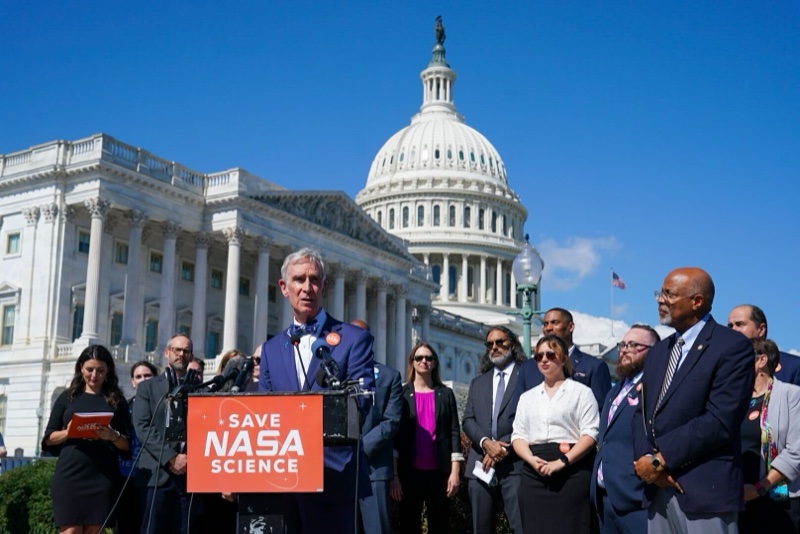
Maryland Democratic Congressman Glenn Ivey (right) looks on as Planetary Society CEO Bill Nye speaks at a rally Oct. 6, 2025, seeking to preserve science funding for NASA.

02

Astronomers rally against NASA, NSF cuts

The first days of President Donald Trump’s second administration were a shock to the scientific system. After Trump took office on Jan. 20, scientists spoke in interviews of a climate of fear and anxiety as the Office of Management and Budget temporarily froze grants and paychecks, and NASA scrambled to scrub content related to diversity programs from websites.

Both NASA and the National Science Foundation (NSF) were early targets of Elon Musk’s Department of Government Efficiency initiative, with deep staffing cuts eventually enacted at NSF. While NASA avoided mass layoffs, White House directives led to reduce workforce led to around 20 percent of employees taking voluntary buyouts. More tumult arrived in spring, when the White House House released its 2026 budget request to Congress proposing reducing NASA’s overall budget by 24 percent. While its human exploration directorate would receive an 8 percent funding boost, its science directorate would see a budget cut of 47 percent, shuttering or severely downscaling dozens of operational missions and canceling several future ones. A proposed 56 percent cut to NSF, the ground-based astronomy supporter of U.S. ground-based astronomy.

The impacts would be devastating, researchers warned. Multiple professors told Astronomy they were especially concerned about impacts on students and postdoctoral researchers, including those for whom speaking out might jeopardize their U.S. immigration status. And with the funding uncertainty, they said U.S. labs would increasingly be leaving the field entirely. The unprecedented proposed cuts prompted a flurry of action from the community. Through rallies, open letters, and outreach to Congress, researchers and organizations raised their voices, warning of a loss of U.S. competitiveness and leadership in science. In July, all seven living former NASA science chiefs spoke out in a joint statement while hundreds of NASA employees signed the so-called Voyager Declaration dissenting to the cuts. And a score of national organizations rallied on Capitol Hill Oct. 6 to “save NASA science” by seeking to hold funding at current levels.

Throughout the summer and into the fall, Senate appropriators sided with researchers; their science spending bill, introduced in July, rejected nearly all of Trump’s NASA and NSF cuts. The House appropriations committee held their own several budget hearings but cut its science directorate by 18 percent, redirecting much of that to human exploration; it also recommended a 23 percent cut to NSF.

Neither chamber passed a budget before the start of the 2026 fiscal year on Oct. 1, 2025, leading to a government shutdown that ended Nov. 12.

Vera C. Rubin Observatory

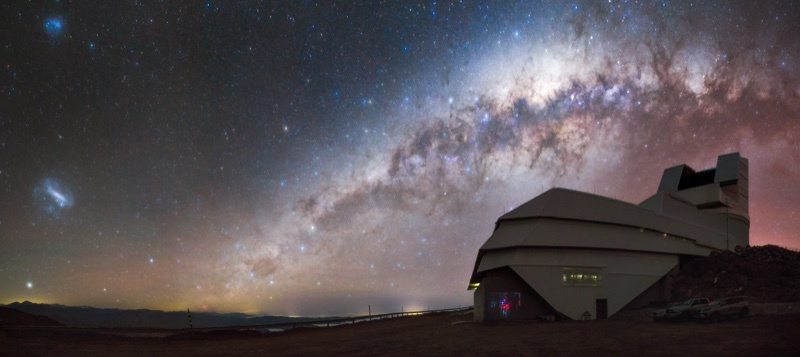
The Vera C. Rubin Observatory sits atop Cerro Pachón, Chile, beneath the starry Southern Hemisphere sky. The plane of the Milky Way arcs at right above the observatory; the Large and Small Magellanic Clouds appear at left. Rubin will survey nearly the entire southern sky every three to four days for the next 10 years. NSF–DOE RUBIN OBSERVATORY/P.J. ASSUNCAO LAGO

01

Vera Rubin Observatory begins its survey

On June 23, the Vera C. Rubin Observatory released its first images to great fanfare. Viewers around the world streamed the press conference from schools, museums, and planetariums, marveling at expansive nebulae and packed fields of galaxies in exquisite detail. Additionally, the observatory released movies of moving asteroids and twinkling stars to highlight its ability to chart the cosmos in real time.

Located in Chile and jointly funded by the National Science Foundation and U.S. Department of Energy (DOE), the project originally known as the Large Synoptic Survey Telescope (LSST) began construction in 2015. In 2019 it was renamed for astronomer Vera Rubin (1928–2016), whose work charting the rotation of galaxies was instrumental in the discovery of dark matter. It houses the 8.4-meter Simonyi Survey Telescope, whose three-mirror design guides light into the 3,200-megapixel LSST Camera — the largest digital camera in the world. It can capture some 9.6 square degrees of sky in one shot. Displaying a single image at full size would require the resolution of 400 4K TVs.

The observatory’s 10-year survey of the Southern Hemisphere sky is called the Legacy Survey of Space and Time. It will image nearly the entire southern sky every three to four days for the next 10 years, taking some 1,000 images per night. An average field will receive 800 to 1,000 visits (9.2 hours total exposure time), with select regions seeing up to 1,100 visits (9.2 hours total exposure time). The result: 20 terabytes of data each night, and some 60 petabytes of raw data and 60 petabytes of processed, calibrated data at the end of 10 years.

This observatory represents a giant leap in our ability to explore the cosmos and unwrap the mysteries of the universe,” said Kathy Turner, U.S. DOE program manager for the observatory, during the first-look press conference. Rubin has four main science goals to: map the Milky Way and its satellites, to map the Milky Way, to inventory the solar system’s small bodies, to map the Milky Way and its satellites — to understand dark matter and dark energy, to inventory the solar system’s small bodies, and to discover and track astronomical transients. By mapping 20 billion galaxies, as well as studying effects such as gravitational lensing — the bending of light from distant objects by foreground galaxy clusters — Rubin will trace out the structure of the universe, which is dictated in large part by the distributions of dark matter and the influence of dark energy. Charting billions of stars in the Milky Way and its satellites will help illuminate the nature and history of our home galaxy.

Rubin aims to create a high-definition movie of the sky to catch billions of events ranging from exploding supernovae and snacking black holes to transiting planets and never-before-seen asteroids and comets. Transients are flagged and a real-time public alert is issued within 60 seconds. Up to 10 million alerts will go out per night. With an archive of combined images over time, “if something strange appears — an explosion, an outburst, a vanishing star — we can rewind the movie and see what led up to it,” said Yusra AlSayyad, who manages the observatory’s image-processing algorithms, in a press release.

Astronomers must often balance the need for long exposures to view faint and faraway objects with scanning events. Both goals are now achievable simultaneously with Rubin. The Vera C. Rubin Observatory is a “tremendous technological achievement” that “truly will bring an understanding of our universe simply not possible before,” said Secretary of Energy Chris Wright during the press conference. “The movie is started, the cameras are rolling, and we’re going to see our cosmos unfold before us.”